
Short Description
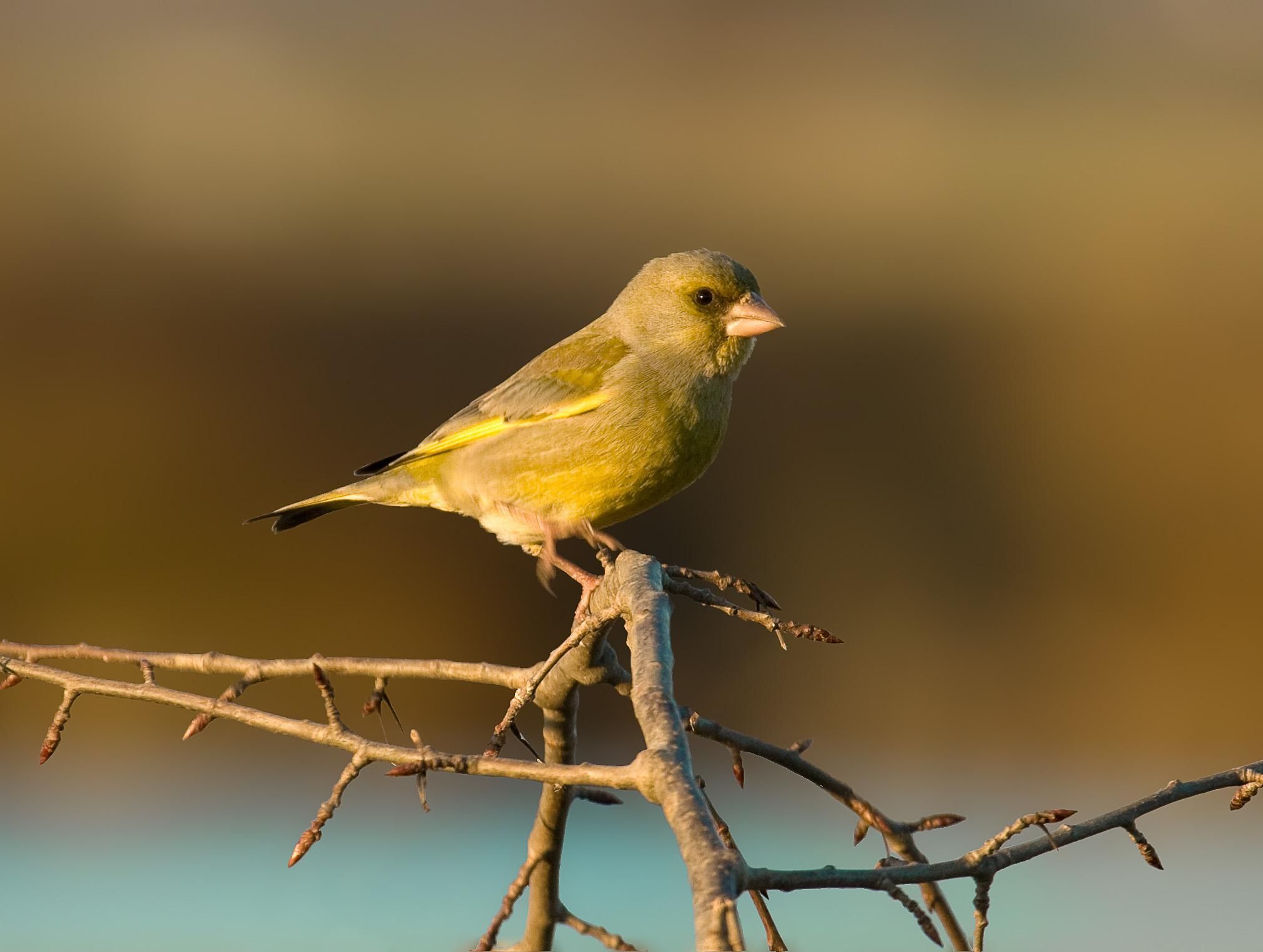
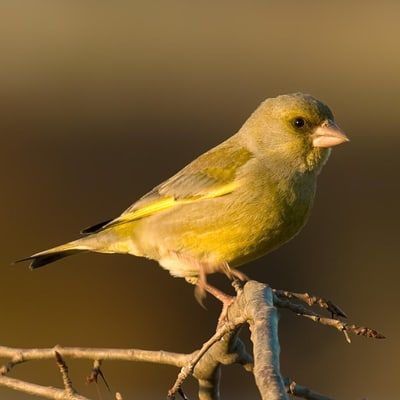
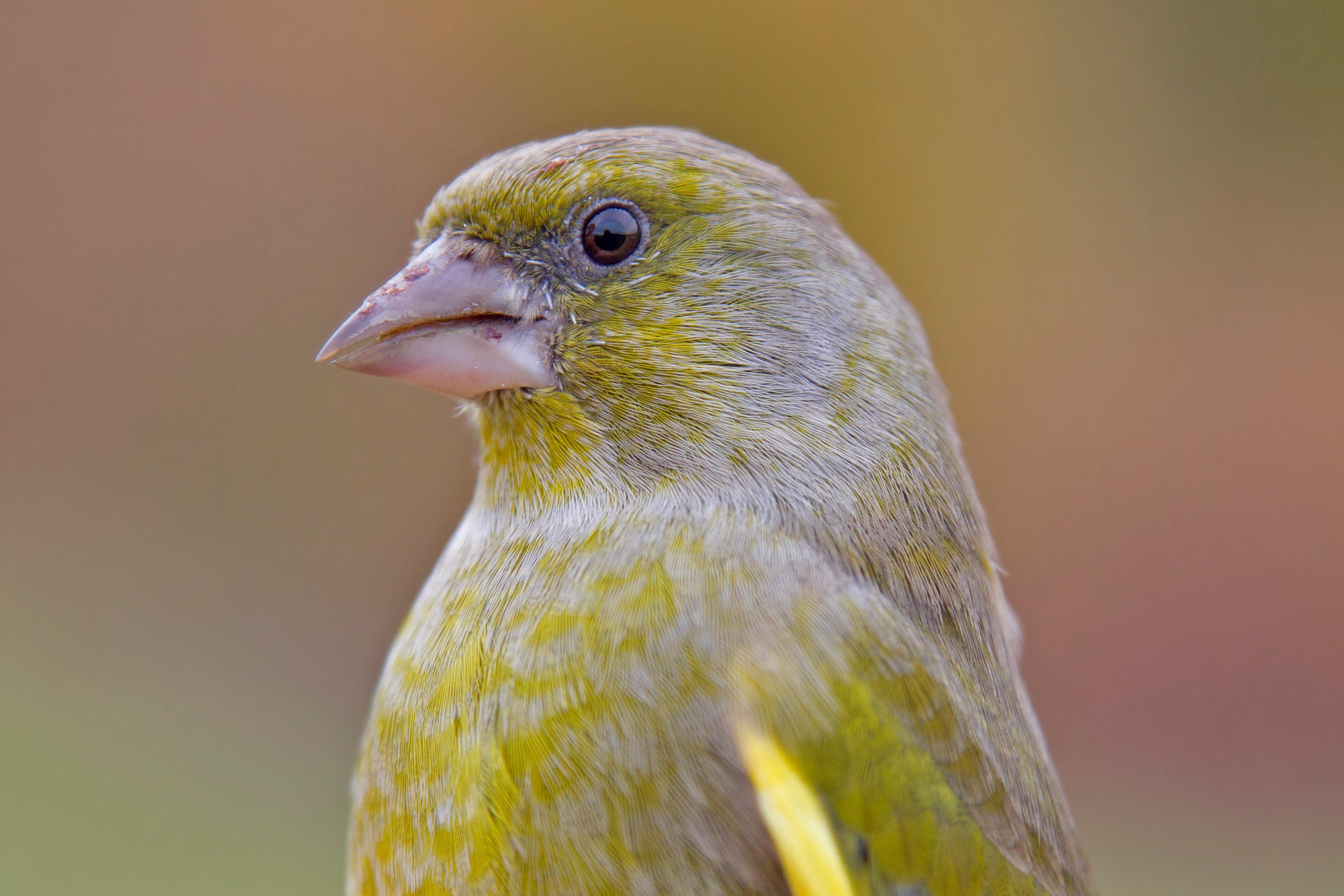
The greenfinch is quite a heavy-built bird with yellow-green to grey-green plumage. It has a narrow yellow stripe on the wing and yellow tail spots are visible in flight. Males and females are not always easy to distinguish.
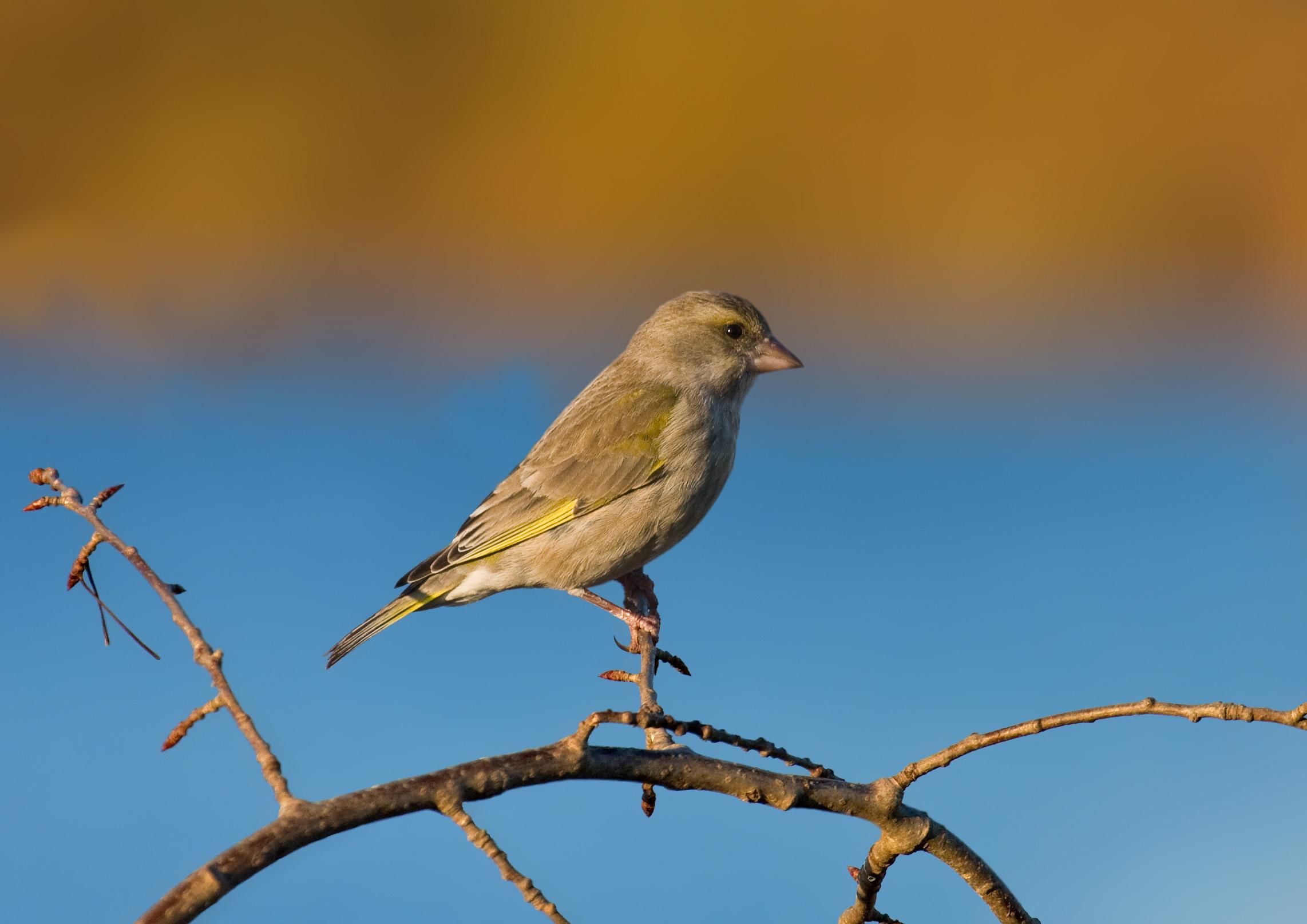
Females are notably paler with a whitish, pale-grey striped underside and a grey-brown upper side.
Features
Greenfinch
Chloris chloris
greenish plumage
Gesang
Frommolt, CC BY-SA 3.0

In the city
Greenfinches are one of the most common urban birds. They live in gardens, parks, tree-lined roads and cemeteries and make few demands on their habitat. All that they need are individual trees or a plant-covered façade.
Greenfinches hibernate in human settlements and like to make use of bird feeders.
Fun Facts
Greenfinches are vegetarians.
From January to July, greenfinches start to sing approx. 15 minutes before sunrise.
Greenfinches hibernate in Germany. Some north-eastern European birds may migrate to central Europe between October and March.
- Endangerment level Germany: not endangered
Sources
Männchen, Andreas Trepte, CC BY-SA 2.5, https://commons.wikimedia.org/wiki/File:European_Greenfinch.jpg

Weibchen, Andreas Trepte, CC BY-SA 2.5, https://commons.wikimedia.org/wiki/File:European_Greenfinch_female.jpg

Kopf, Andreas Trepte, CC BY-SA 2.5, https://commons.wikimedia.org/wiki/File:Greenfinch_Carduelis_chloris.jpg

Harrison, C. (1975) Jungvögel, Eier und Nester aller Vögel Europas, Nordafrikas und des Mittleren Ostens - Ein Naturführer zur Fortpflanzungsbiologie, Hamburg und Berlin: Verlag Paul Parey.
Page „Grünfink“. : Wikipedia, The Free Encyclopedia. Date of last revision: 06.02.2016, 15:25 UTC. URL: https://de.wikipedia.org/w/index.php?title=Gr%C3%BCnfink&oldid=151152658 (Accessed: 10.02.2016).
Fiedler, W. (2015) Die Vögel Mitteleuropas sicher bestimmen - Schlüssel zur Art-, Alters- und Geschlechtsbestimmung, Wiebelsheim: Quelle & Meyer Verlag.
Makatsch, W. (1989) Wir bestimmen die Vögel Europas, Leipzig: Neumann Verlag.
Voigt, A. (2006) Exkursionsbuch zum Studium der Vogelstimmen, Heidelberg: Quelle & Meyer Verlag.
Svensson, L. (2011) Der Kosmos Vogelführer - Alle Arten Europas, Nordafrikas und Vorderasiens, Stuttgart: Franckh Kosmos Verlag.
NABU – Naturschutzbund Deutschland e.V. (2016) Vogeluhr, URL: https://www.nabu.de/nabu_vogeluhr2/index.php?iframed=1 (Accessed: 10.02.2021).