
Short Description
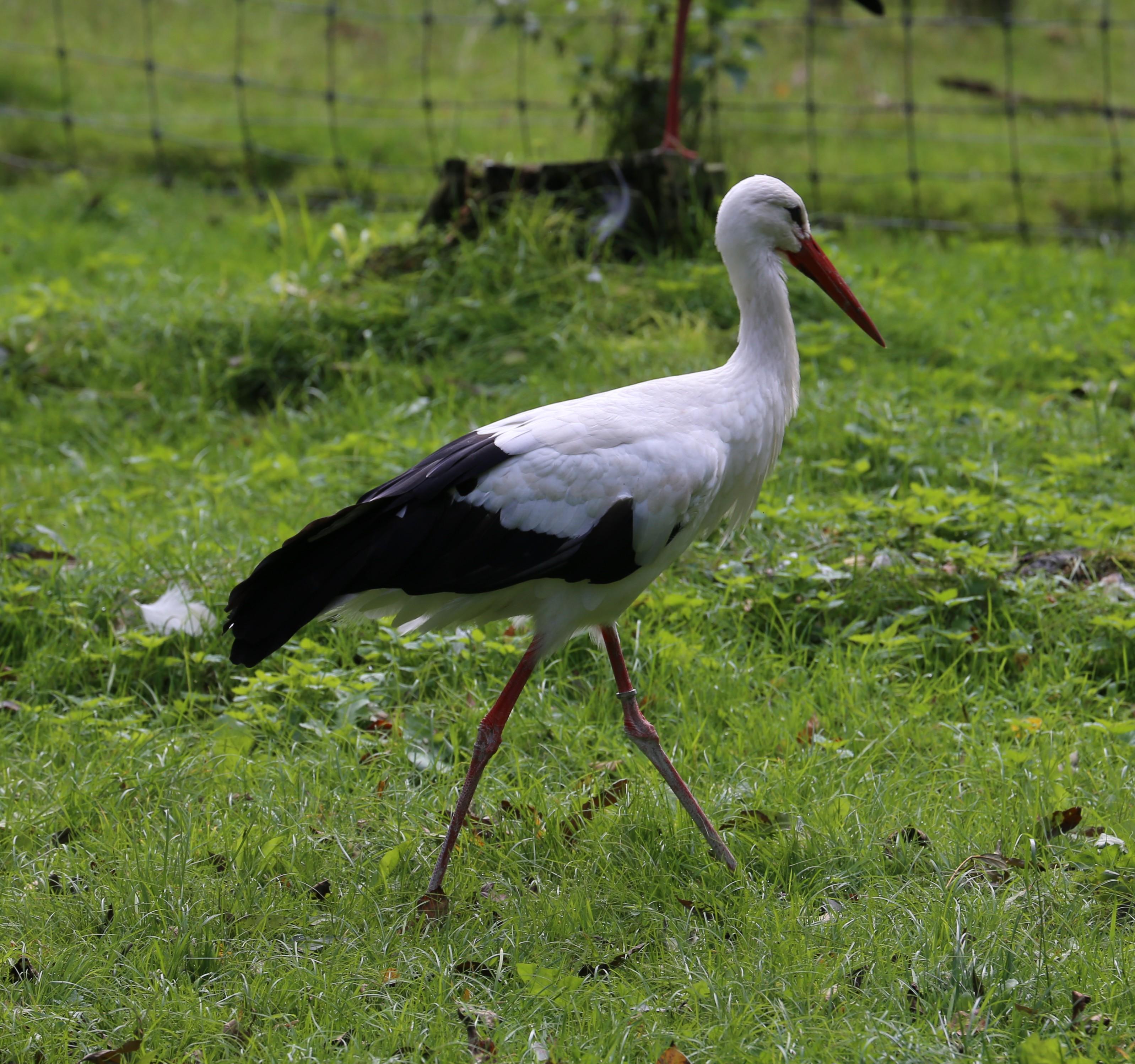
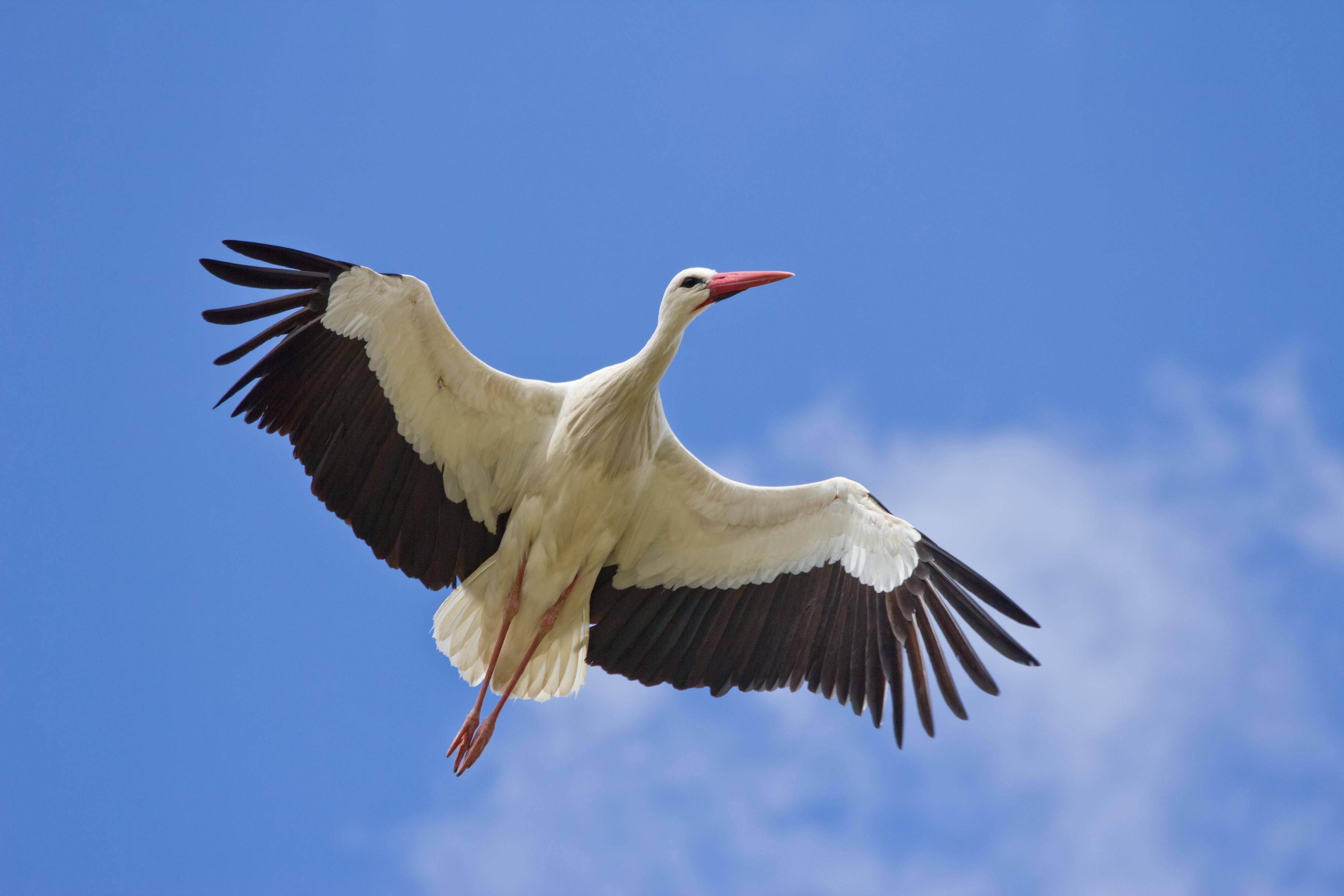
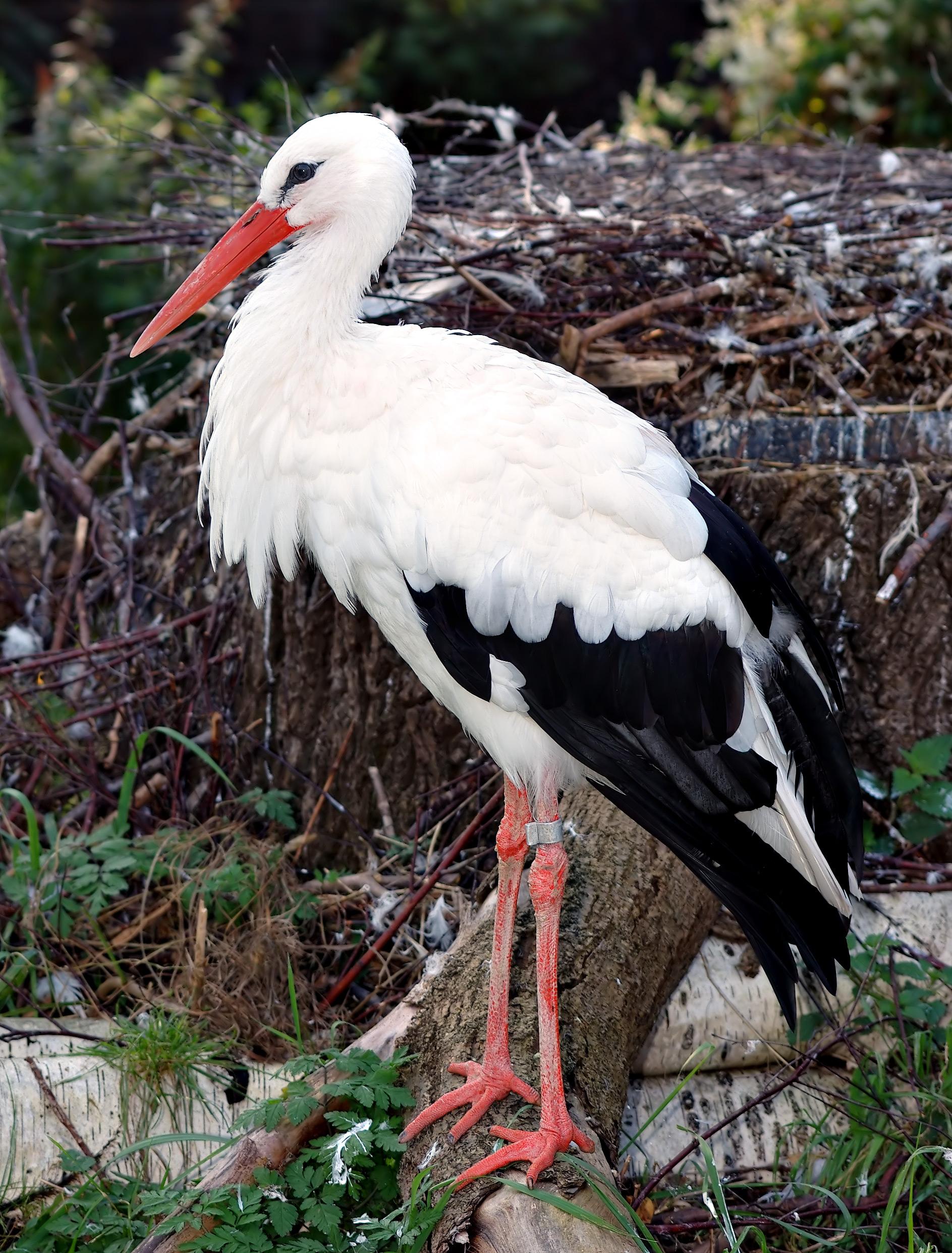
The white stork stands out for its size and its long red legs. In flight, its extended long neck is easy to recognise. The long red bill appears in contrast to its pure-white plumage and its black flight feathers.
Features
White stork
Ciconia ciconia
long red bill and legs
rapid loud bill clattering
Schnabelklappern
Tembrock, CC BY-SA 3.0

In the city
White storks often nest in small towns and villages. In an urban environment, it is generally found around the urban fringe. Storks search for their food (insects, mice, earthworms) sometimes miles away from their nest. In areas of human habitation, they seek out sports grounds to search for food.
Storks build their nests by preference on roofs and chimneys. This brings them into direct contact with humans. Hand-reared animals, though, show a different migratory behaviour and hibernate in Germany. For that reason, the natural distance between humans and animals should be maintained.
Fun Facts
In contrast with the widespread assumption, white storks do not predominantly feed on frogs. In fact, frogs are only rarely eaten.
For a long time, it was imagined that storks hibernated at the bottom of lakes or turned into mice or even sought to hide on the dark side of the moon.
The riddle of the disappearing storks was only solved in modern times. With finding storks injured by the arrows of African hunters, it became clear that they hibernated in Africa.
White storks are migratory birds; at the end of August, they fly all the way to southwestern or southern Africa, returning to Germany in the middle of March. Increasing number of storks, particularly hand-reared animals, hibernate in Germany.
Biblical dietary rules (Lev 11,3) forbid the consumption of storks; because they feed on other animals, they are classified as unclean.
- Endangerment level Germany: endangered
Sources
Habitus , Rufus46, CC BY-SA 3.0, https://commons.wikimedia.org/wiki/File:Weissstorch_Ciconia_ciconia_Wildpark_Poing-02.jpg?uselang=de

im Flug, Carlos Delgado, CC BY-SA 3.0, https://commons.wikimedia.org/wiki/File:Ciconia_ciconia_-_01.jpg

Habitus , André Karwath aka Aka, CC BY-SA 2.5, https://commons.wikimedia.org/wiki/File:Ciconia_ciconia_(aka).jpg
.jpg)
Bejcek, V. (1988) Zugvögel, Hanau/Main: Verlag Werner Dausien.
Witt, K. & Steiof, K. (2013) Rote Liste und Liste der Brutvögel von Berlin, 3. version, 15.11.2013. : Berliner Ornithologische Arbeitsgemeinschaft e.V. (eds.) Berliner Ornithologischer Bericht, volume 23, Berlin: Berliner Ornithologische Arbeitsgemeinschaft e.V., 1-23.
Page „Weißstorch“. : Wikipedia, The Free Encyclopedia. Date of last revision: 30.01.2016, 22:08 UTC. URL: https://de.wikipedia.org/w/index.php?title=Wei%C3%9Fstorch&oldid=150865796 (Accessed: 18.02.2016).
Artenfinder (2016) Ciconia ciconia (Weißstorch), URL: https://arteninfo.net/elearning/voegel/speciesportrait/2831 (Accessed: 13.04.2016).
NABU – Naturschutzbund Deutschland e.V. (n.d.) Der Weißstorch. Die wichtigsten Fakten im Überblick, URL: https://www.nabu.de/tiere-und-pflanzen/voegel/artenschutz/weissstorch/01450.html (Accessed: 13.04.2016).