
Short Description
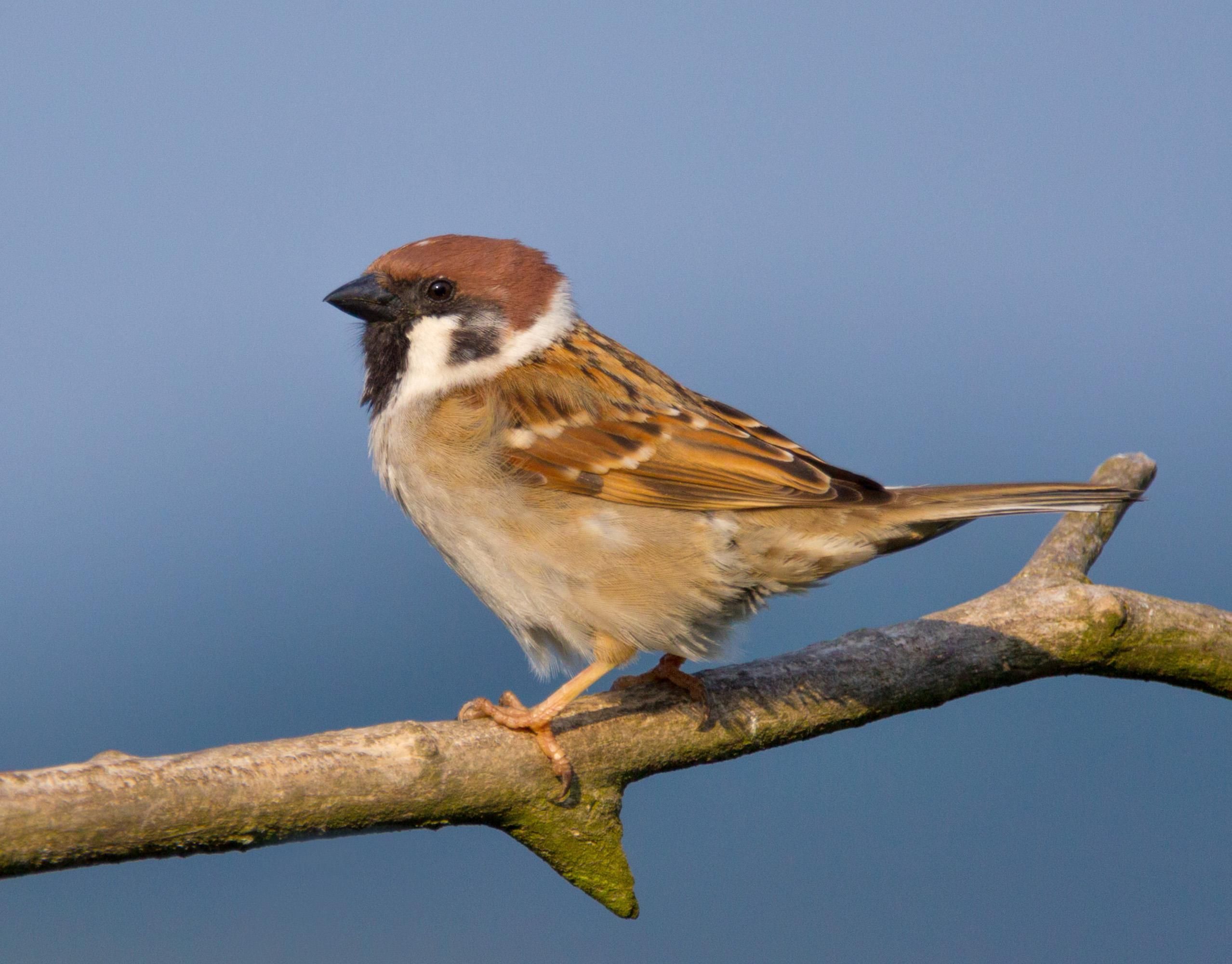
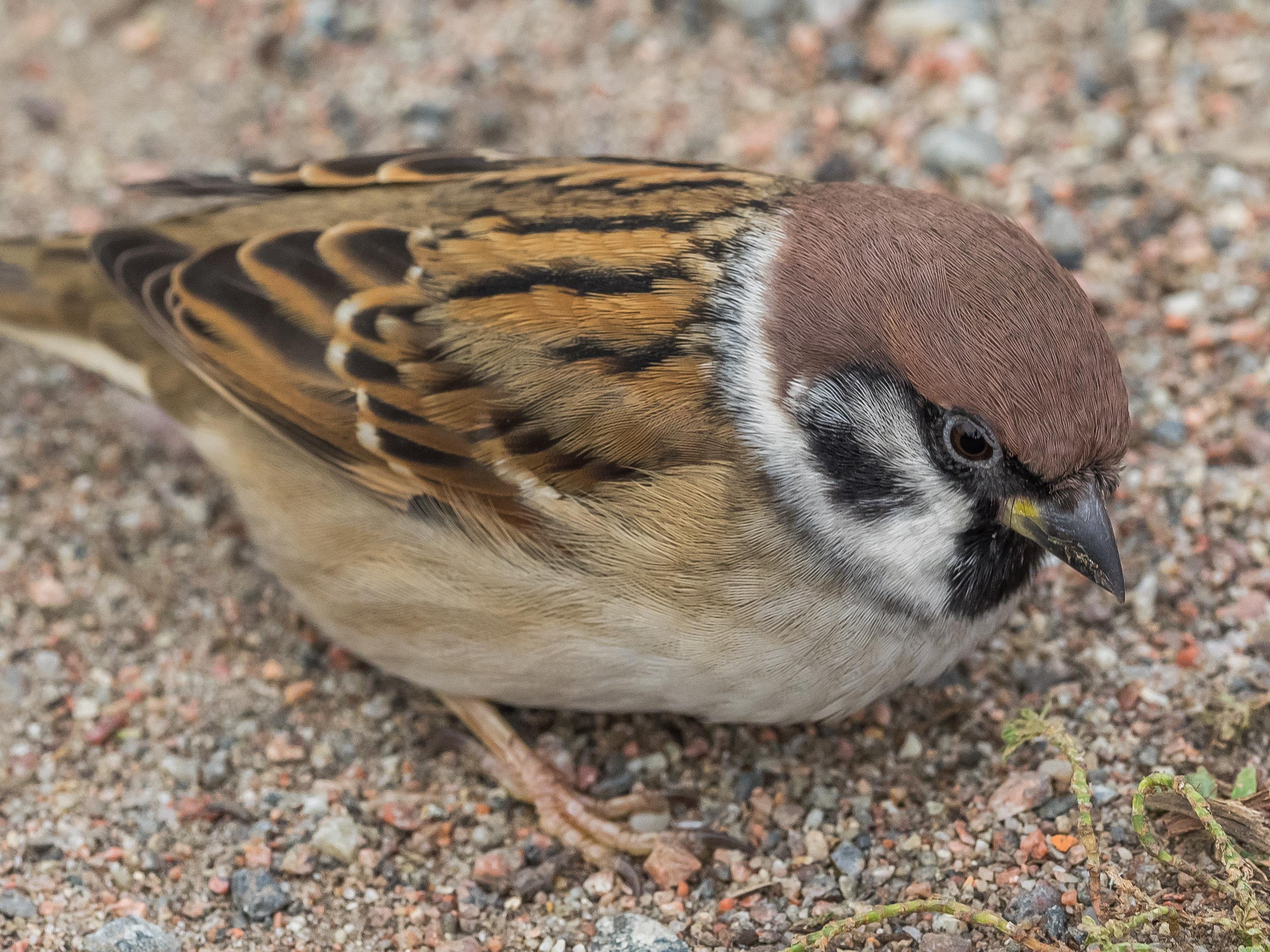
The Eurasian tree sparrow is comparatively drab, brownish-grey and of medium size. A pale ring around the neck separates the brown head and nape from the body. The white cheeks are marked with a black patch.

Features
Eurasian tree sparrow
Passer montanus
white cheek with black patch
Rufe
Tembrock, CC BY-SA 3.0


In the city
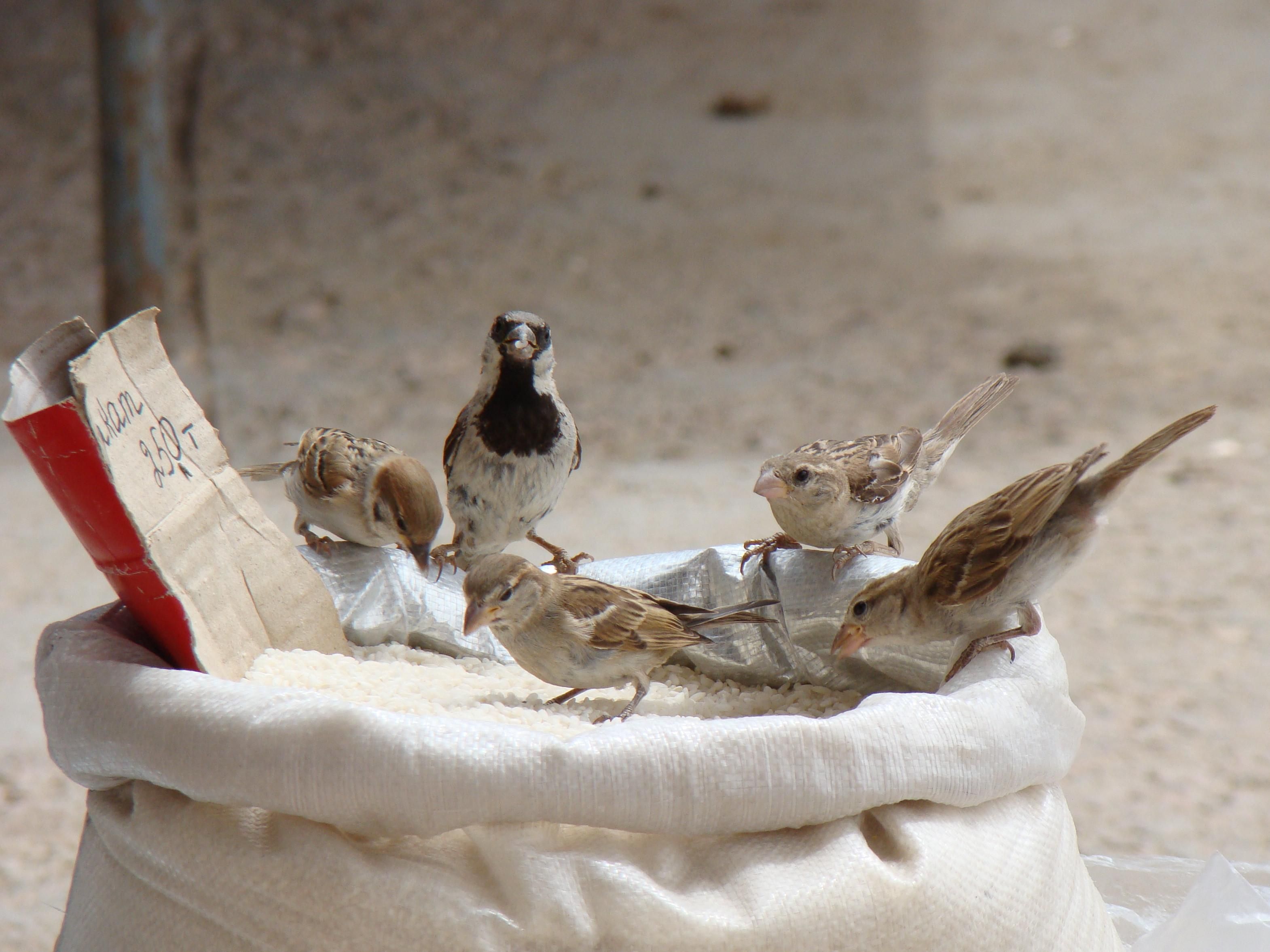
The tree sparrow breeds in towns mainly at or in buildings. However, it is rarer in urban settings than the house sparrow. Its preferred habitat are allotment gardens; with their structural richness, they come closest to its natural habitat outside of towns.
It is more timid and cautious than the house sparrow and keeps a greater distance to humans.
Fun Facts
The number of tree sparrows in Berlin has seen a sharp drop over the last 20-25 years. In Berlin, it is now classified as near-threatened.
Field sparrows generally hibernate in Germany. In particularly harsh and long winters, they may migrate south.
- Endangerment level Germany: Warning list
Sources
Männchen, Andreas Trepte, CC BY-SA 2.5, https://commons.wikimedia.org/wiki/File:Tree-Sparrow-2009-16-02.jpg

1 Männchen und 4 Weibchen, Yuriy75, CC BY-SA 3.0, https://commons.wikimedia.org/wiki/File:Passer_montanus_Baikonur_001.jpg

Männchen, Bengt Nyman, CC BY-SA 2.0, https://commons.wikimedia.org/wiki/File:Passer_montanus_9254_(30303847601).jpg
.jpg)
Page „Feldsperling“. : Wikipedia, The Free Encyclopedia. Date of last revision: 06.02.2021, 23:18 UTC. URL: https://de.wikipedia.org/w/index.php?title=Feldsperling&oldid=208527180 (Accessed: 10.02.2021).
Witt, K. & Steiof, K. (2013) Rote Liste und Liste der Brutvögel von Berlin, 3. version, 15.11.2013. : Berliner Ornithologische Arbeitsgemeinschaft e.V. (eds.) Berliner Ornithologischer Bericht, volume 23, Berlin: Berliner Ornithologische Arbeitsgemeinschaft e.V., 1-23.
NABU – Naturschutzbund Deutschland e.V. (2016) Rote Liste der Brutvögel Deutschlands. 5. version, published August 2016, URL: https://www.nabu.de/tiere-und-pflanzen/voegel/artenschutz/rote-listen/10221.html (Accessed: 07.04.2017).
Fiedler, W. (2015) Die Vögel Mitteleuropas sicher bestimmen - Schlüssel zur Art-, Alters- und Geschlechtsbestimmung, Wiebelsheim: Quelle & Meyer Verlag.
Makatsch, W. (1989) Wir bestimmen die Vögel Europas, Leipzig: Neumann Verlag.
Voigt, A. (2006) Exkursionsbuch zum Studium der Vogelstimmen, Heidelberg: Quelle & Meyer Verlag.
Svensson, L. (2011) Der Kosmos Vogelführer - Alle Arten Europas, Nordafrikas und Vorderasiens, Stuttgart: Franckh Kosmos Verlag.
Harrison, C. (1975) Jungvögel, Eier und Nester aller Vögel Europas, Nordafrikas und des Mittleren Ostens - Ein Naturführer zur Fortpflanzungsbiologie, Hamburg und Berlin: Verlag Paul Parey.
Böhner, J. & Schulz, W. (2008) Bestand und Lebensraumpräferenz des Feldsperlings (Passer montanus) in Berlin. : Berliner Ornithologische Arbeitsgemeinschaft e.V. (eds.) Berliner Ornithologischer Bericht, volume 18, Berlin: Berliner Ornithologische Arbeitsgemeinschaft e.V., 49-61.