
Short Description
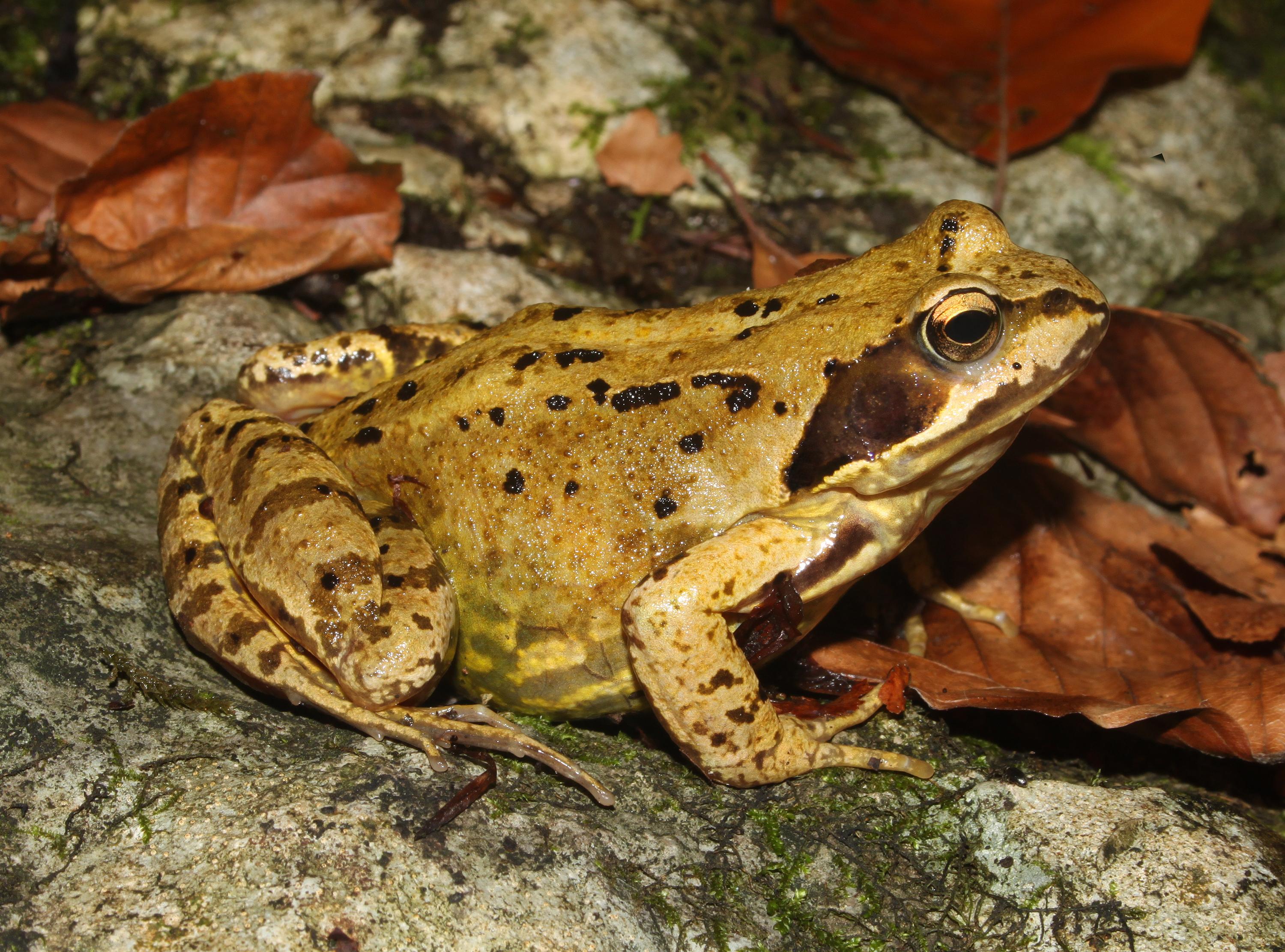
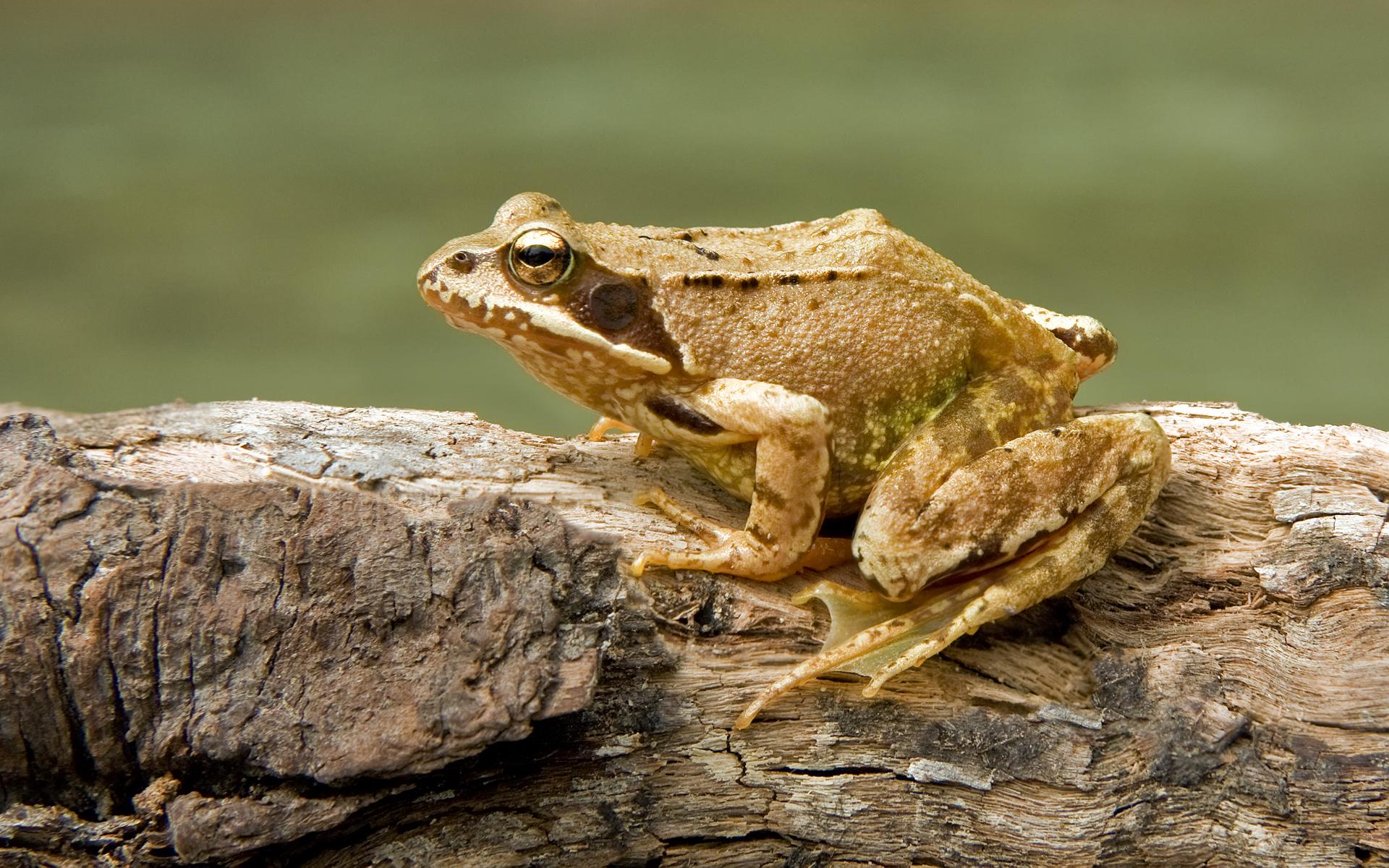
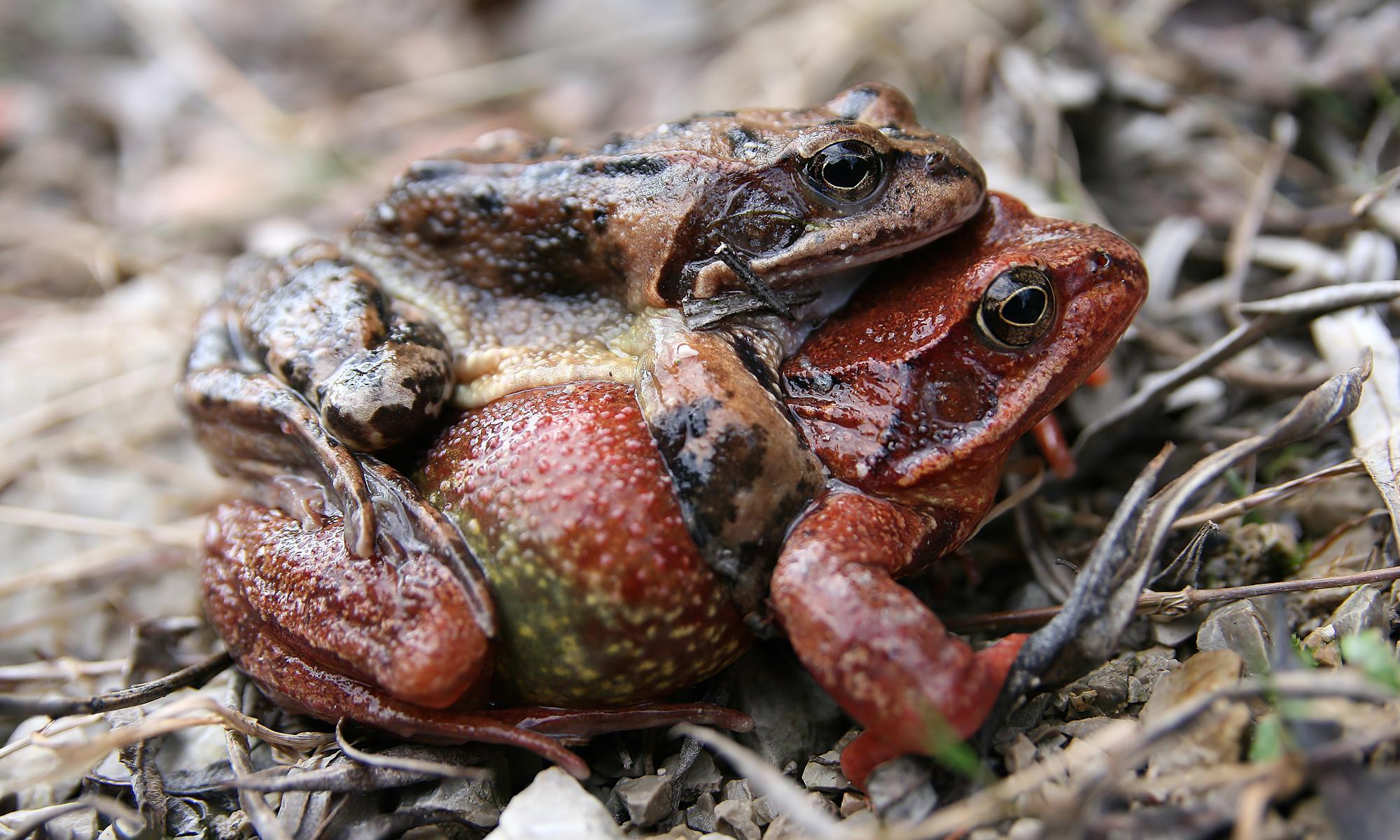
The common frog is yellow-brown, red-brown or dark-brown with dark patches. The triangular brown or black patches on its temples are characteristic. The eyes are golden-yellow with horizontal elongated pupils. The skin is smooth and soft.
Males can be identified from their more powerful front legs. In spring, they can also be distinguished by their dark, well developed nuptial pads on the first digits of the front legs.
The abdomen of the female is often yellow and reddish spotted.
The tadpoles are regularly speckled or spotted bronze.
Features
Common frog
Rana temporaria
triangular dark patches on the temples
In the city
Common frogs are mostly found near shallow sunny ponds. On land, they stay in gardens and parks with hiding places such as shrubberies. They prefer cool shaded habitats.
During the migration in the mating season, their natural habitat being cut through by roads constitutes a major hazard.
Fun Facts
Common frogs lay eggs in large clusters of up to 4000 eggs. They form spawn carpets on the surface of the water thanks to air bubbles in the gelatinous mass.
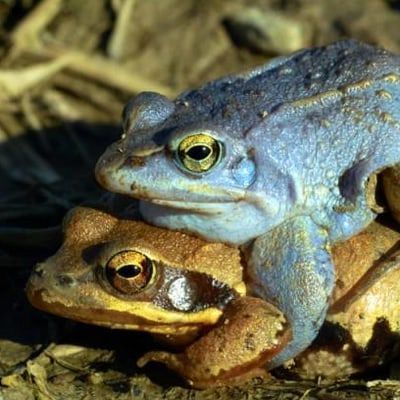
During the mating season, females develop white granules down their flanks, known as nuptial tubercles.
Grass frogs hibernate either collectively at the bottom of the water or individually in burrows on land.
Common frogs are known as explosive spawners, because entire spawning communities come together at bodies of water for only a few days in spring.
All European amphibians are specially protected and may not be captured, injured or killed.
The nuptial pads on the inner fingers provide a firmer hold of the males on the females during mating clutches.
- Endangerment level Germany: not endangered
Sources
Habitus , H. Krisp, CC BY 3.0, https://commons.wikimedia.org/wiki/File:Grasfrosch-Rana-temporaria-adult.jpg

junges Weibchen, Richard Bartz, CC BY-SA 2.5, https://commons.wikimedia.org/wiki/File:European_Common_Frog_Rana_temporaria.jpg

Paar, Richard Bartz, Munich Makro Freak, CC BY-SA 2.5, https://de.wikipedia.org/wiki/Datei:Rana_temporaria.jpg

Thiesmeier, B. (2015) Amphibien bestimmen - am Land und im Wasser, Bielefeld: Laurenti-Verlag.
Page „Grasfrosch“. : Wikipedia, The Free Encyclopedia. Date of last revision: 23.04.2016, 15:52 UTC. URL: https://de.wikipedia.org/w/index.php?title=Grasfrosch&oldid=153733378 (Accessed: 12.05.2016).
Kwet, A. (2015) Reptilien und Amphibien Europas. 250 Arten mit Verbreitungskarten, Stuttgart: Franckh Kosmos Verlag.
Blab, J. & Vogel, H. (2002) Amphibien und Reptilien erkennen und schützen, München: BLV.
Glandt, D. (2008) Heimische Amphibien: Bestimmen – Beobachten – Schützen, Wiebelsheim: AULA-Verlag.
Glandt, D. (2015) Die Amphibien und Reptilien Europas, Wiebelsheim: Quelle & Meyer Verlag.