
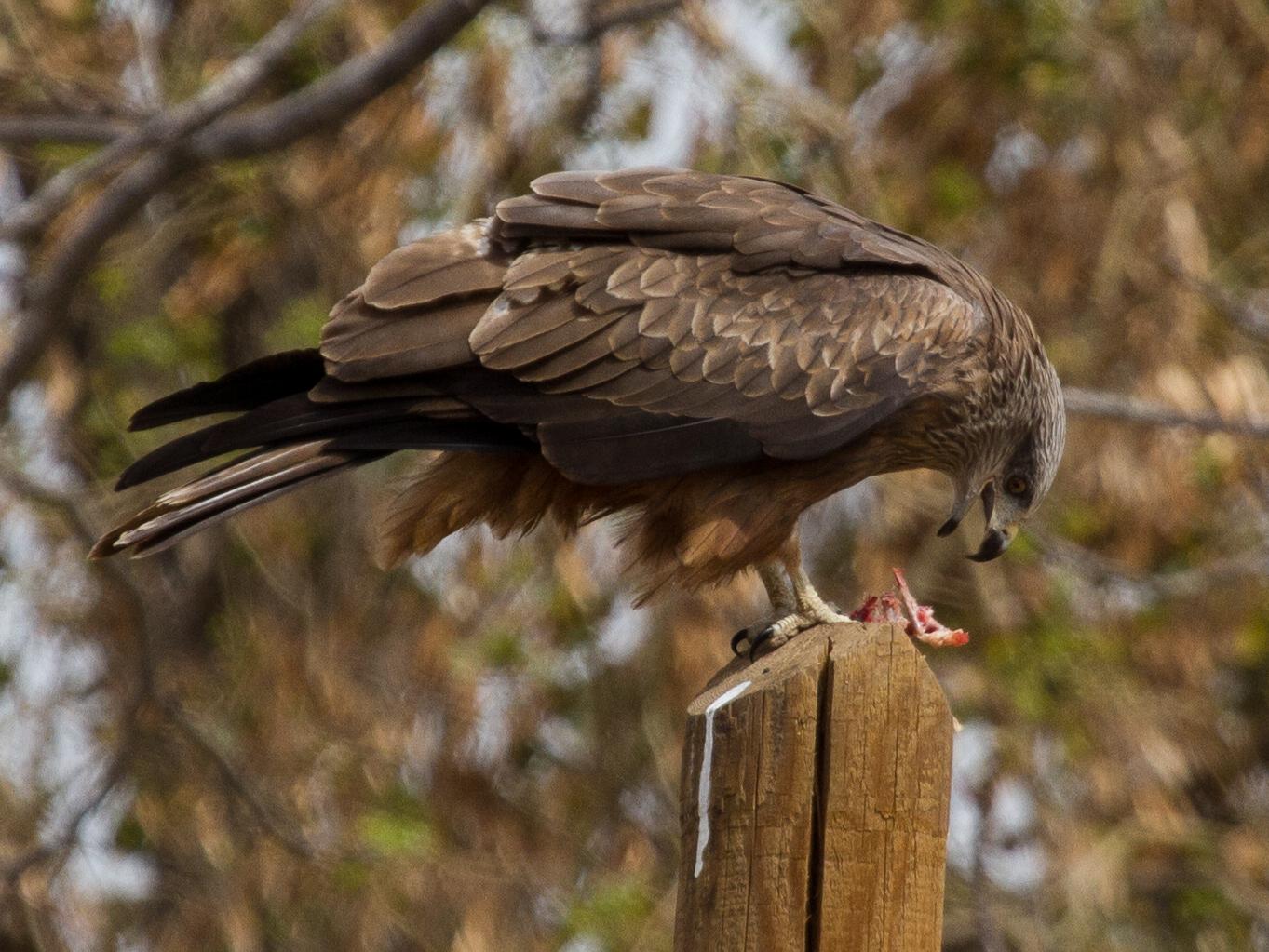
Short Description
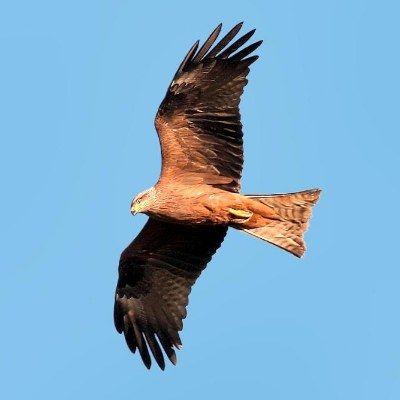
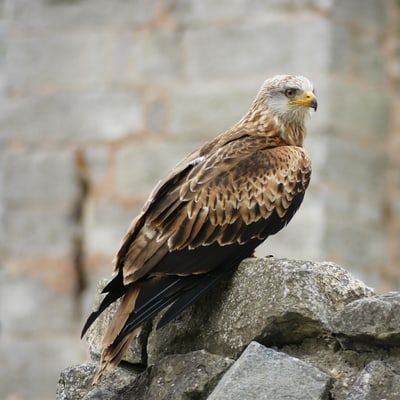
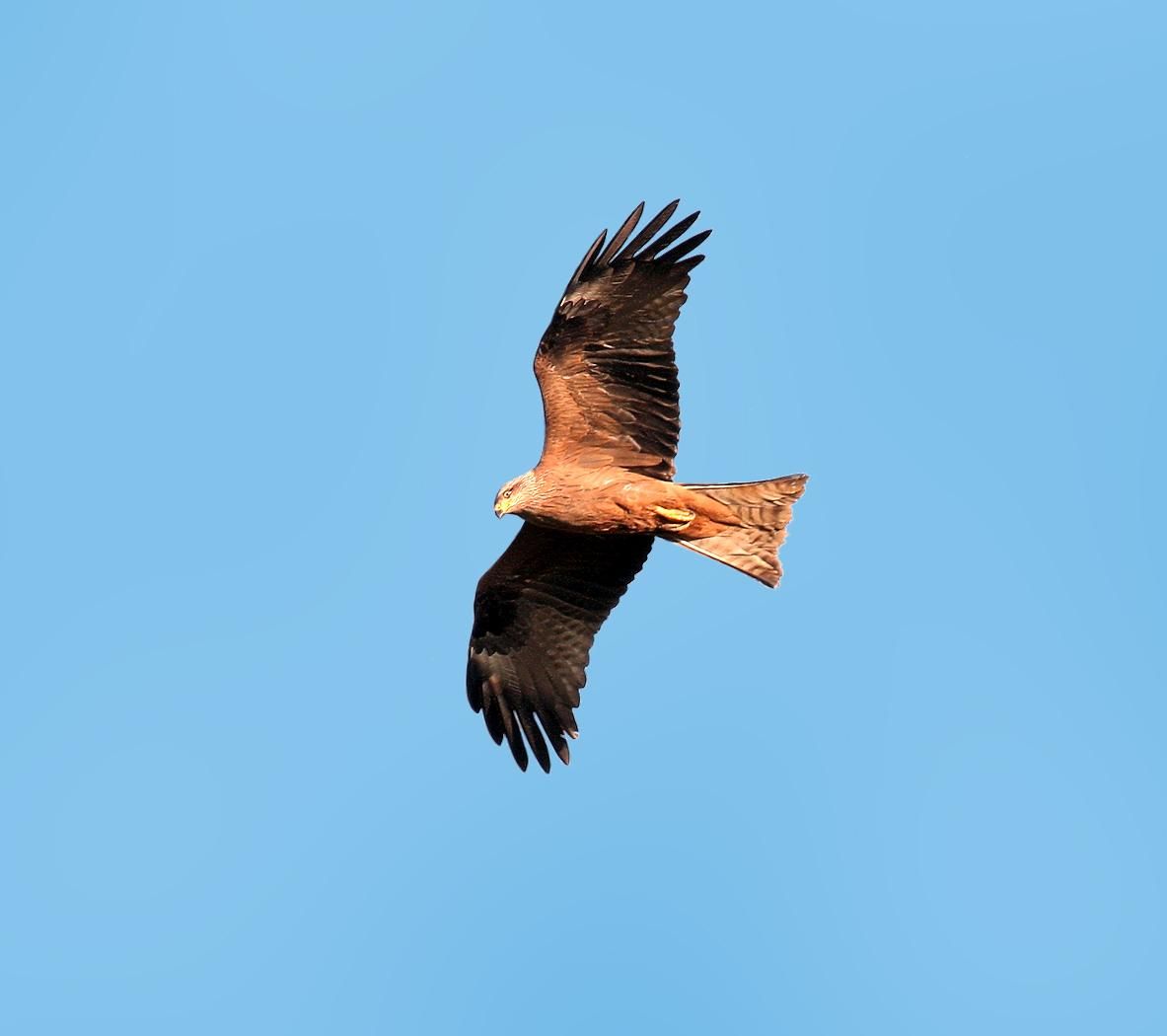
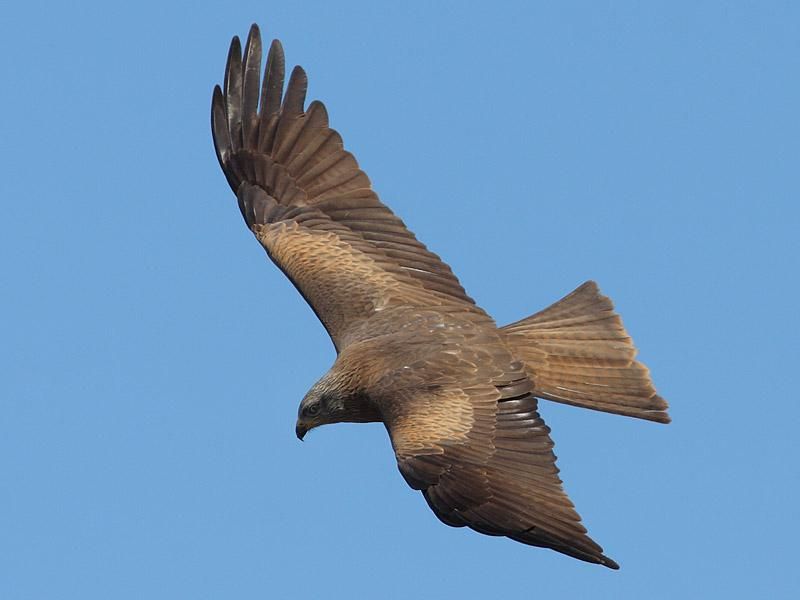
The black kite is dark brown with a slightly forked tail that appears fanned out triangular. Their plumage is only faintly banded, the head, throat and nape are slightly lighter.
Features
Black kite
Milvus migrans
slightly gabled tail
plumage without much contrast
In the city
Black kites generally live close to bodies of water surrounded by trees. They are no typical urban birds and more likely found at the urban fringe. Because black kites also feed on carrion and waste, it has happened in Africa on occasions that they develop a closer relationship with humans, settling closer to abattoirs and rubbish dumps.
It is very shy of humans and easily startled.
Fun Facts
Black kites steal prey off other birds. They are thus classified as a kleptoparasite.
Black kites often feed on animals killed on roads and motorways. This puts them at great risk of cars and lorries.
The black kite is a migratory bird. It can be observed in Germany from early April to the middle of September. It hibernates in tropical or southern Africa.
- Endangerment level Germany: not endangered
Sources
Habitus , Вых Пыхманн, CC BY-SA 3.0, https://commons.wikimedia.org/wiki/File:Black_kite_(milvus_migrans).jpg
.jpg)
im Flug, Andreas Trepte, CC BY-SA 2.5, https://commons.wikimedia.org/wiki/File:Black-Kite.jpg?uselang=de

im Flug, Thomas Kraft, CC BY-SA 2.5, https://commons.wikimedia.org/wiki/File:Milvus_migrans_back(ThKraft).jpg
.jpg)
Bejcek, V. (1988) Zugvögel, Hanau/Main: Verlag Werner Dausien.
Witt, K. & Steiof, K. (2013) Rote Liste und Liste der Brutvögel von Berlin, 3. version, 15.11.2013. : Berliner Ornithologische Arbeitsgemeinschaft e.V. (eds.) Berliner Ornithologischer Bericht, volume 23, Berlin: Berliner Ornithologische Arbeitsgemeinschaft e.V., 1-23.
Page „Schwarzmilan“. : Wikipedia, The Free Encyclopedia. Date of last revision: 20.12.2015, 23:33 UTC. URL: https://de.wikipedia.org/w/index.php?title=Schwarzmilan&oldid=149258250 (Accessed: 17.02.2016).