
Short Description
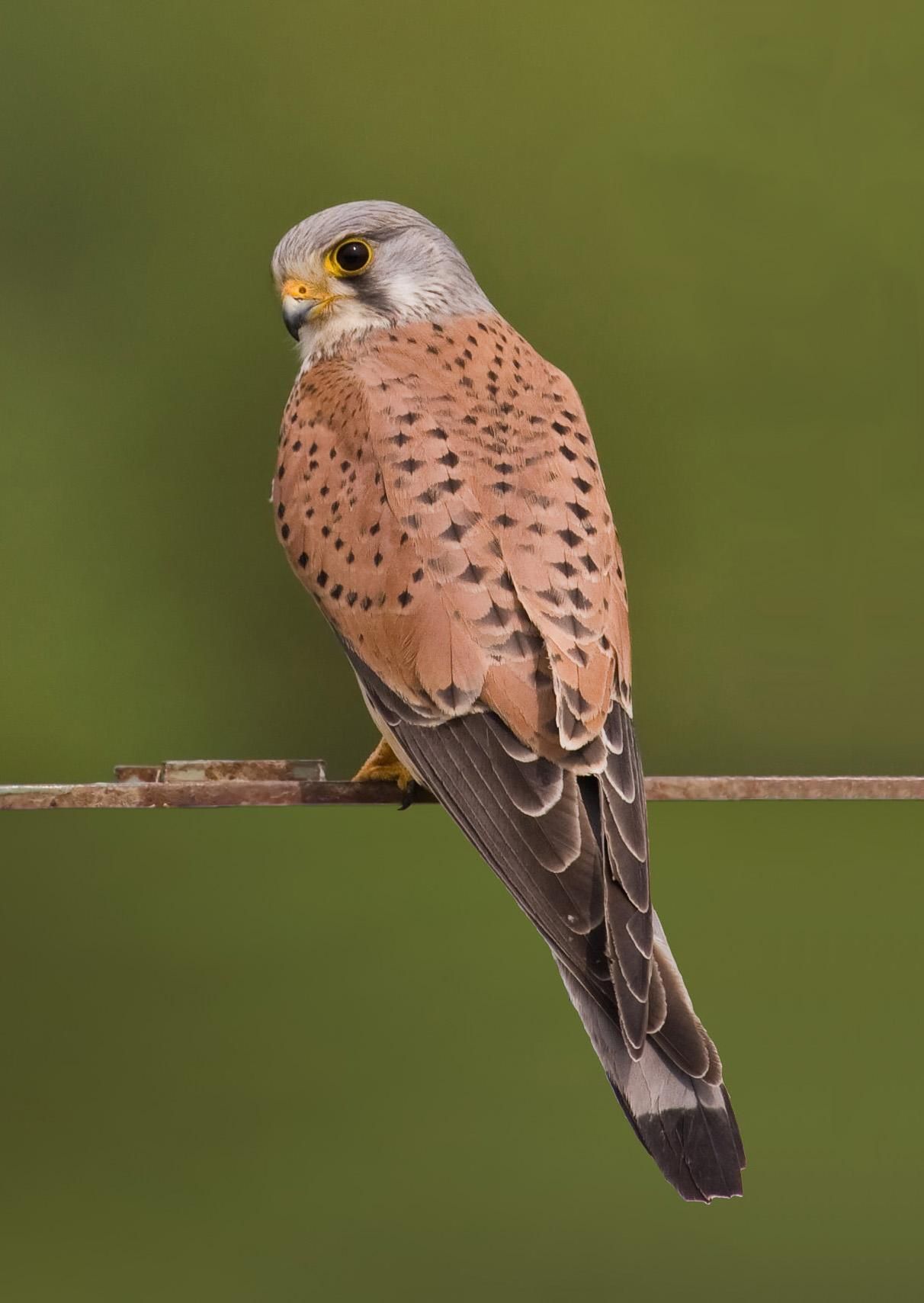
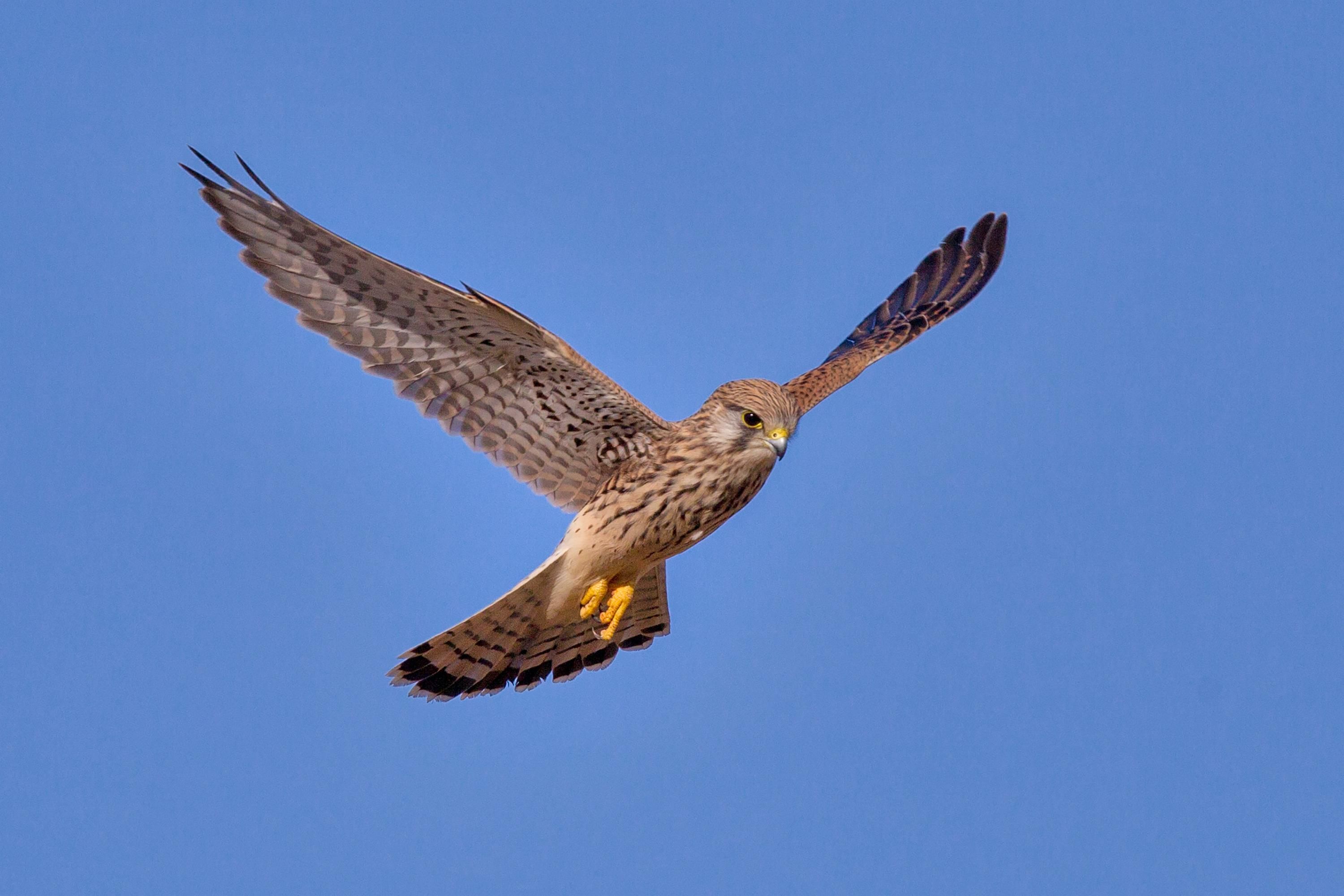
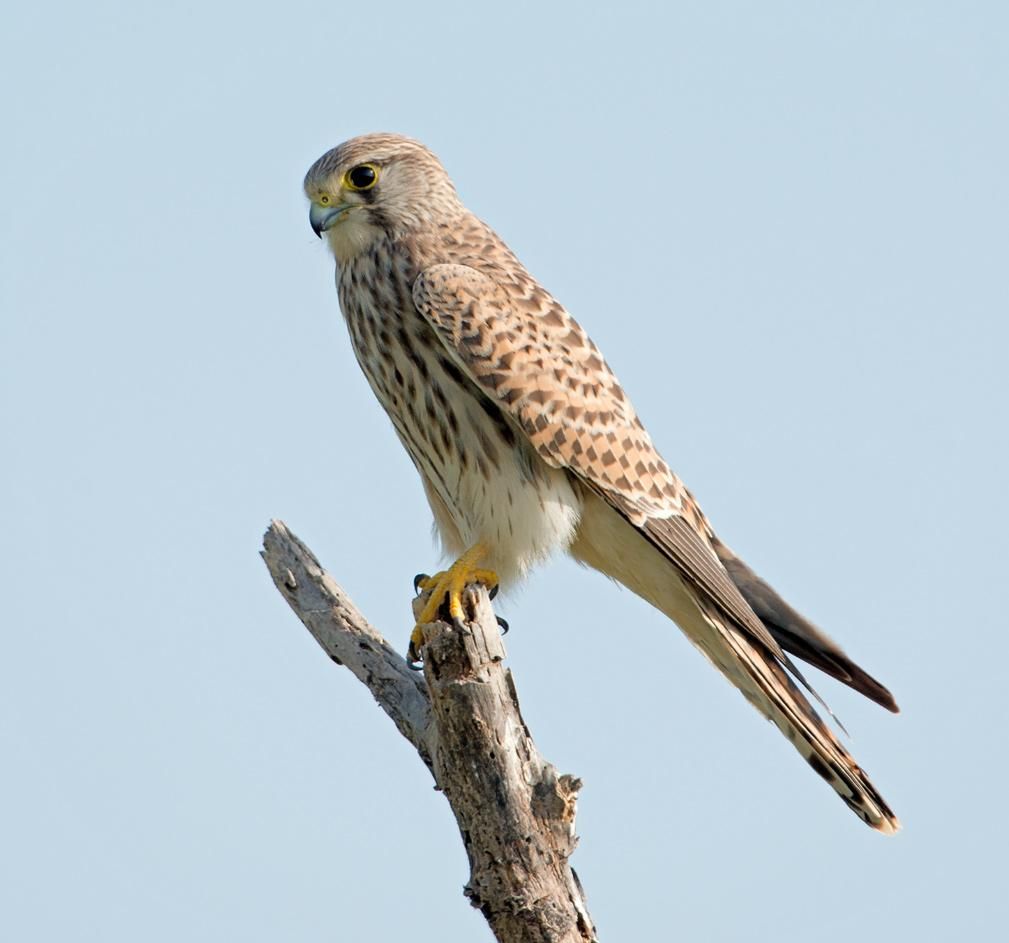
Kestrels have long wings tapered to a point; in fully grown birds, they extend to the tips of the tail feathers in the resting position. The tail is rounded. The legs are bright yellow, the talons are black.
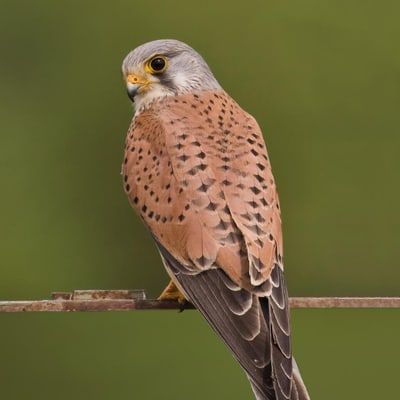
A male kestrel can be recognised by its grey head and red-brown back with black transverse stripes. The tail is grey with a black terminal rim, the underparts are light cream with only a few pale brown spots.
A female kestrel is red-brown all over with dense, dark spots or transverse stripes. The underside is light brown and more spotted than in the male.
Features
Kestrel
Falco tinnunculus
distinctive hovering flight
Rufreihen
Tembrock, CC BY-SA 3.0

Similar species
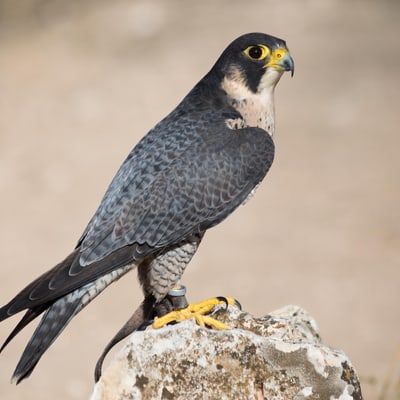
Peregrine falcon
Falco peregrinus
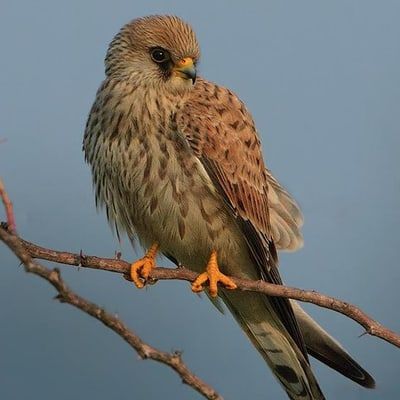
Lesser kestrel
Falco naumanni
In the city
Kestrels benefit from urbanisation, as towers and other tall buildings create new habitats. Kestrels are the most common bird of prey found in an urban environment. They like to nest in high towers right in the city centre. This forces them at times to cover great distances to suitable open spaces for hunting.
They are not very shy of humans.
Fun Facts
There are about 90,000 breeding pairs in Central Europe. More than half of them live in Germany.
They feed mainly on common voles (field mice) and other voles, but can also switch to smaller birds, lizards and insects.
For hunting, kestrels use a hovering flight: with quick, powerful wing flaps and upright body, they maintain a hovering position above a particular point on the ground. However, this requires a lot of energy.
Kestrels can be observed from early March to October. They spend the winter in western or south-western Europe. City-dwelling kestrels are less likely to move south for the winter.
- Endangerment level Germany: not endangered
Sources
Männchen, Andreas Trepte, CC BY-SA 2.5, https://commons.wikimedia.org/wiki/File:Common_kestrel_falco_tinnunculus.jpg

Weibchen, Andreas Trepte, CC BY-SA 2.5, https://commons.wikimedia.org/wiki/File:Turmfalke_Falco_tinnunculus.jpg

Weibchen, Koshy Koshy, CC BY 2.0, https://commons.wikimedia.org/wiki/File:Falco_tinnunculus_-Tal_Chapar_Sanctuary,_Rajasthan,_India-8.jpg

Witt, K. & Steiof, K. (2013) Rote Liste und Liste der Brutvögel von Berlin, 3. version, 15.11.2013. : Berliner Ornithologische Arbeitsgemeinschaft e.V. (eds.) Berliner Ornithologischer Bericht, volume 23, Berlin: Berliner Ornithologische Arbeitsgemeinschaft e.V., 1-23.
Page „Turmfalke“. : Wikipedia, The Free Encyclopedia. Date of last revision: 21.12.2015, 10:42 UTC. URL: https://de.wikipedia.org/w/index.php?title=Turmfalke&oldid=149271159 (Accessed: 18.02.2016).
Artenfinder (2016) Falco tinnunculus (Turmfalke), URL: https://arteninfo.net/elearning/voegel/speciesportrait/2918 (Accessed: 19.04.2016).
NABU – Naturschutzbund Deutschland e.V. (n.d.) Turmfalke (Falco tinnunculus), URL: https://www.nabu.de/tiere-und-pflanzen/aktionen-und-projekte/vogel-des-jahres/2007-turmfalke/wissen.html (Accessed: 30.05.2016).