
Short Description
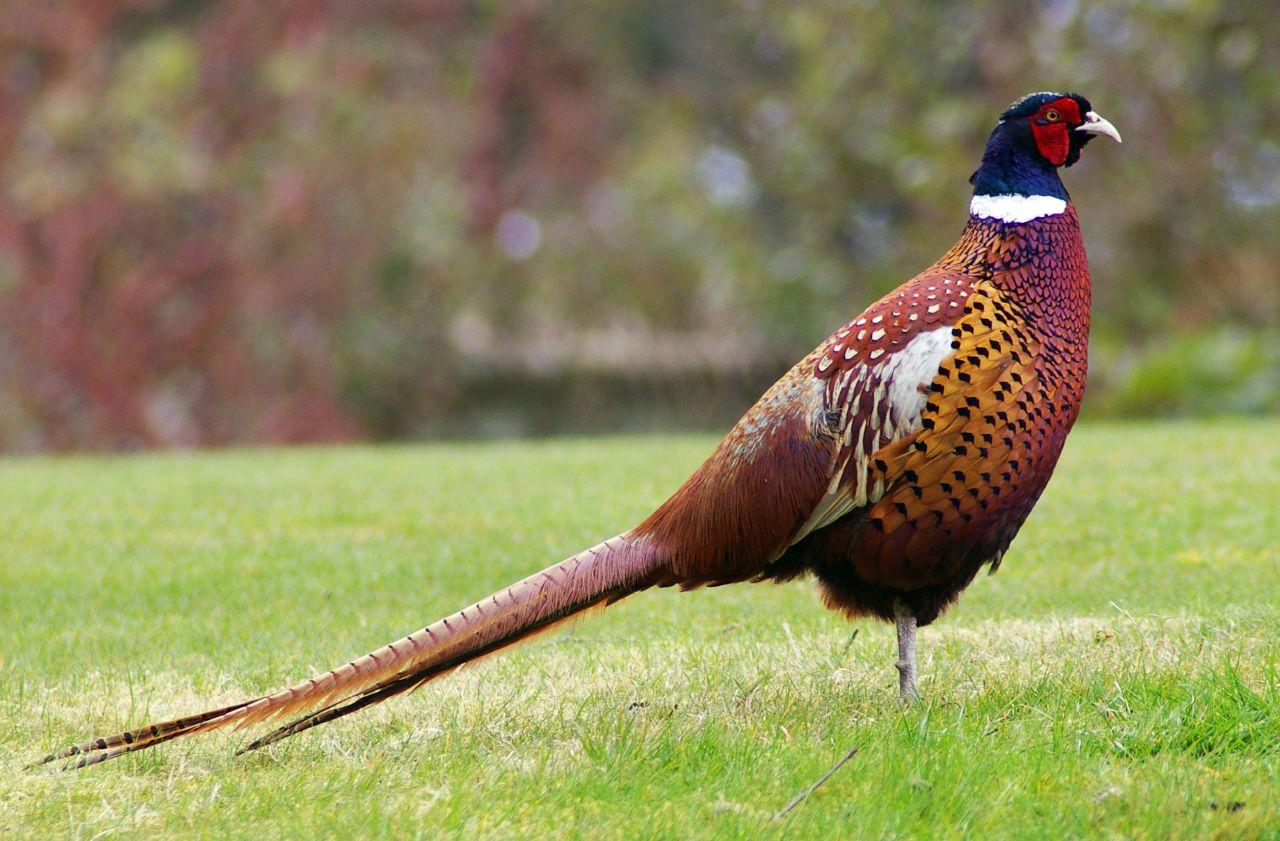
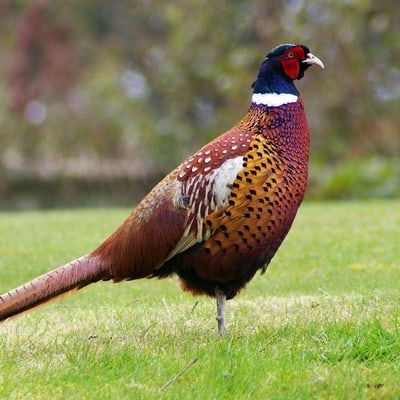
Pheasants are recognised by their large chicken-like body. Another characteristic feature is their long tail.
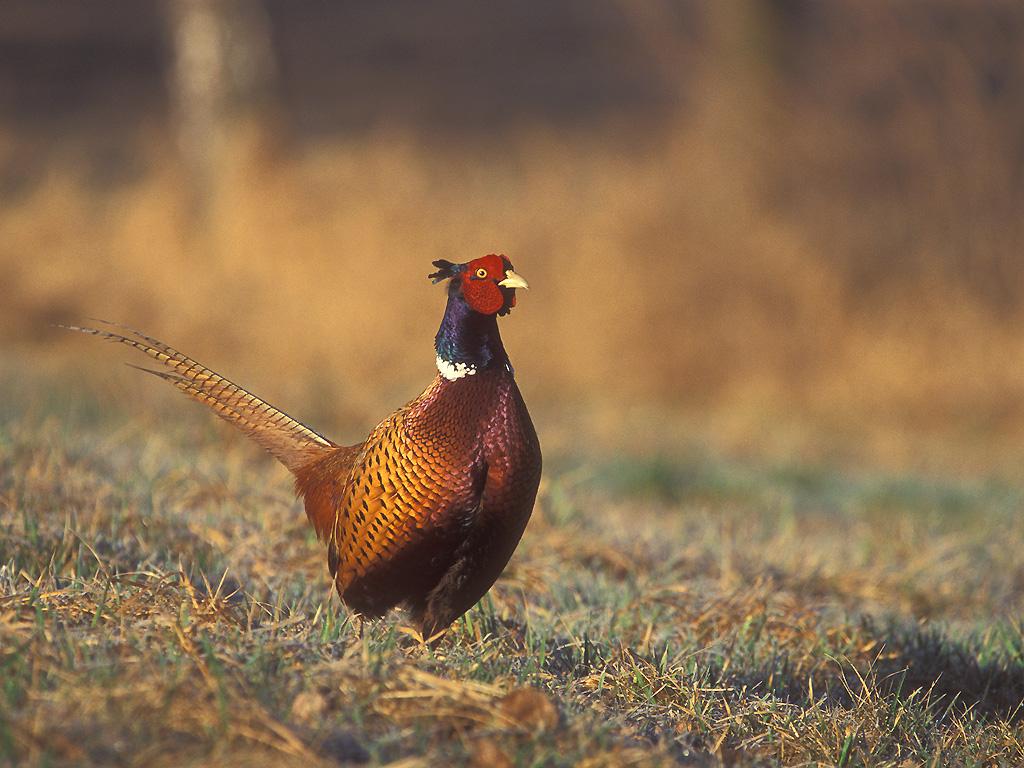
The male plumage is very colourful with a glossy dark-green and blue head and neck and red cheek patches. The rest of the body is copper-coloured. The back is a dark coppery red speckled with black.
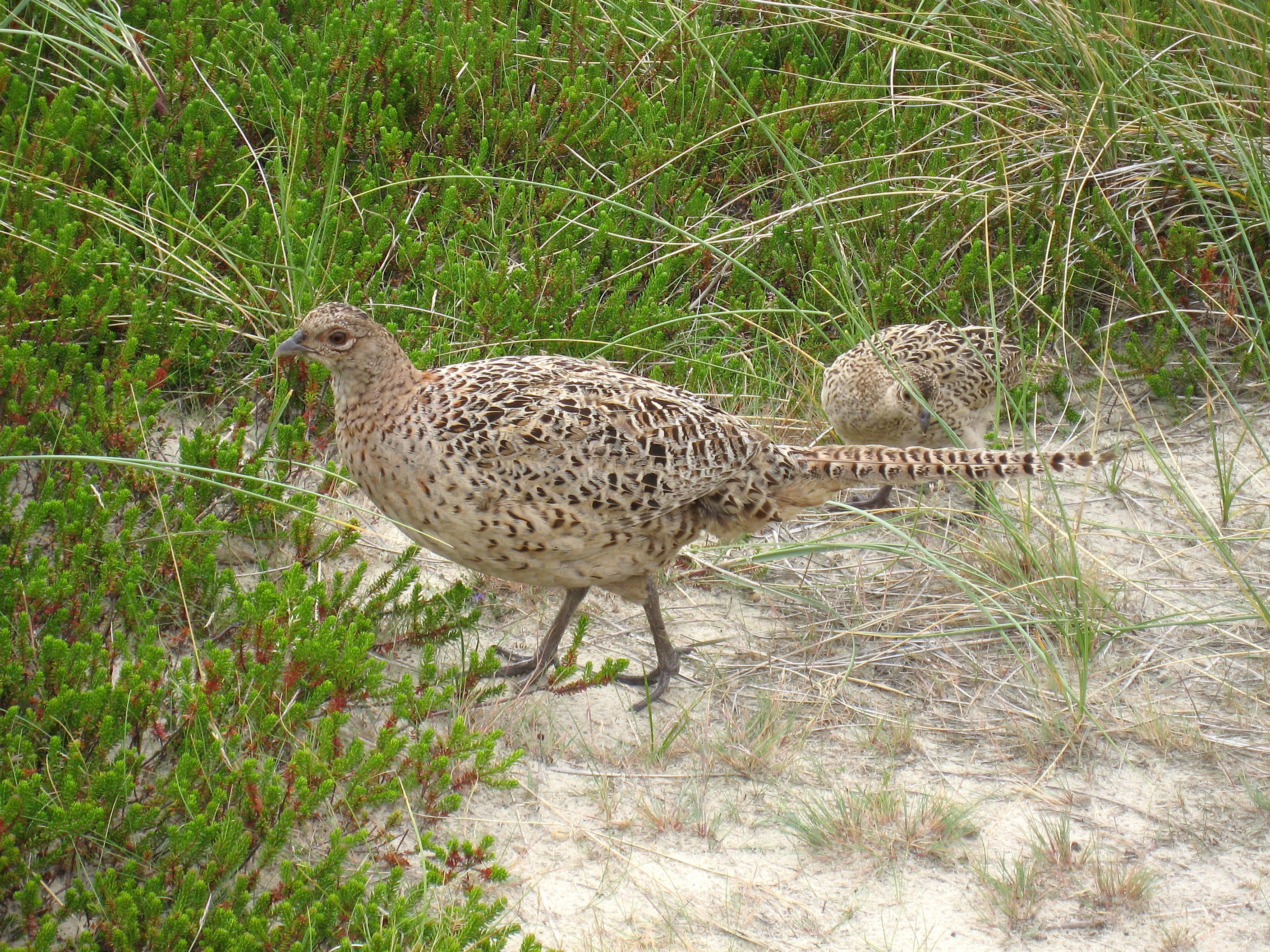
Females are a lot more inconspicuous in comparison. Their plumage is brownish with black speckles on head, back and tail.
Features
Pheasant
Phasianus colchicus
typical large chicken-like body with a long tail
Rufe
Frommolt, CC BY-SA 3.0

In the city
Pheasants are not or only very rarely found in urban settings as they require open meadows and fields.
Fun Facts
Current wild populations largely originate on the wide-scale return to the wild of free-living pheasant populations.
Pheasants are an established non-native species (Neozoa).
Pheasants hibernate in Germany.
- Endangerment level Germany: not evaluated
Pheasants originate from Southeast Asia and were introduced to Europe early on for breeding and hunting purposes.
Sources
Männchen, gary noon, CC BY-SA 2.0, https://commons.wikimedia.org/wiki/File:Pheasant.jpg

Weibchen, Mathias Bigge, CC BY-SA 3.0, https://commons.wikimedia.org/wiki/File:Fasan-IMG_4985-a.jpg

Männchen, Lukasz Lukasik, CC BY-SA 3.0, https://commons.wikimedia.org/wiki/File:Phasianus_colchicus_3_tom_(Lukasz_Lukasik).jpg
.jpg)
Witt, K. & Steiof, K. (2013) Rote Liste und Liste der Brutvögel von Berlin, 3. version, 15.11.2013. : Berliner Ornithologische Arbeitsgemeinschaft e.V. (eds.) Berliner Ornithologischer Bericht, volume 23, Berlin: Berliner Ornithologische Arbeitsgemeinschaft e.V., 1-23.
Page „Fasan“. : Wikipedia, The Free Encyclopedia. Date of last revision: 05.01.2016, 16:54 UTC. URL: https://de.wikipedia.org/w/index.php?title=Fasan&oldid=149827602 (Accessed: 11.02.2016).
Fiedler, W. (2015) Die Vögel Mitteleuropas sicher bestimmen - Schlüssel zur Art-, Alters- und Geschlechtsbestimmung, Wiebelsheim: Quelle & Meyer Verlag.
Makatsch, W. (1989) Wir bestimmen die Vögel Europas, Leipzig: Neumann Verlag.
Voigt, A. (2006) Exkursionsbuch zum Studium der Vogelstimmen, Heidelberg: Quelle & Meyer Verlag.
Svensson, L. (2011) Der Kosmos Vogelführer - Alle Arten Europas, Nordafrikas und Vorderasiens, Stuttgart: Franckh Kosmos Verlag.
Harrison, C. (1975) Jungvögel, Eier und Nester aller Vögel Europas, Nordafrikas und des Mittleren Ostens - Ein Naturführer zur Fortpflanzungsbiologie, Hamburg und Berlin: Verlag Paul Parey.