
Short Description
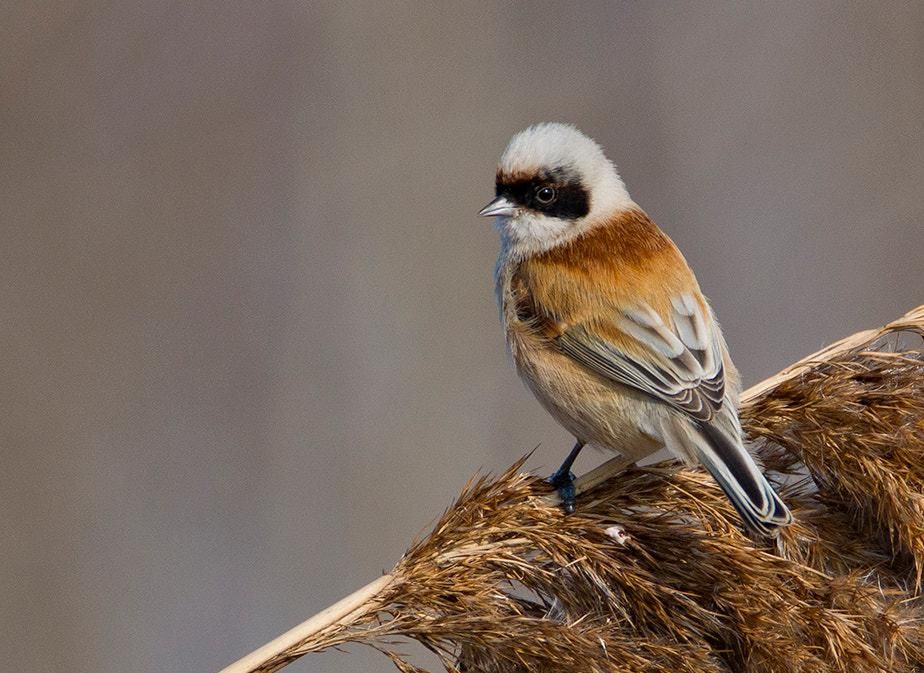
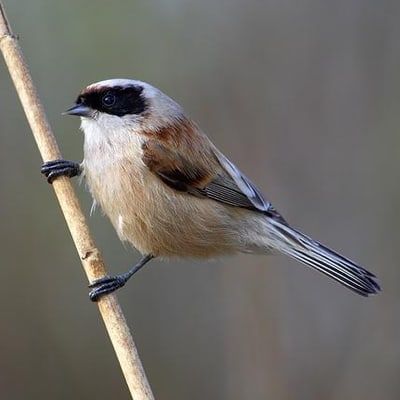
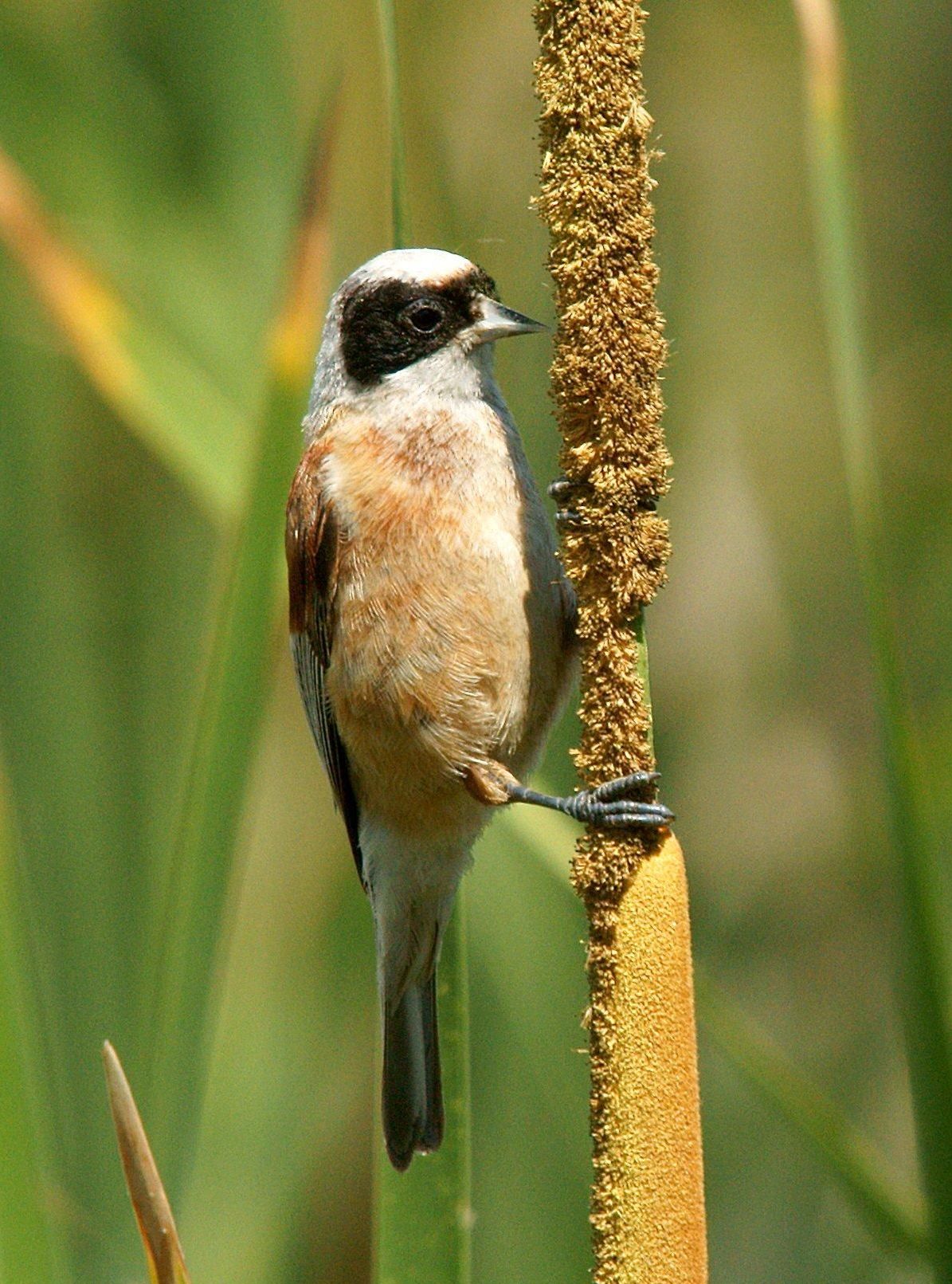
The Eurasian penduline tit has a grey head with a black mask and a rusty brown back.
The young animals do not have a black mask.
Features
Eurasian penduline tit
Remiz pendulinus
black mask
In the city
It is particularly common on rivers and banks with trees or tall bushes with drooping elastic branches. It also needs reeds and/or bulrushes in its surroundings and nettles. It also breeds on forest edges.
Fun Facts
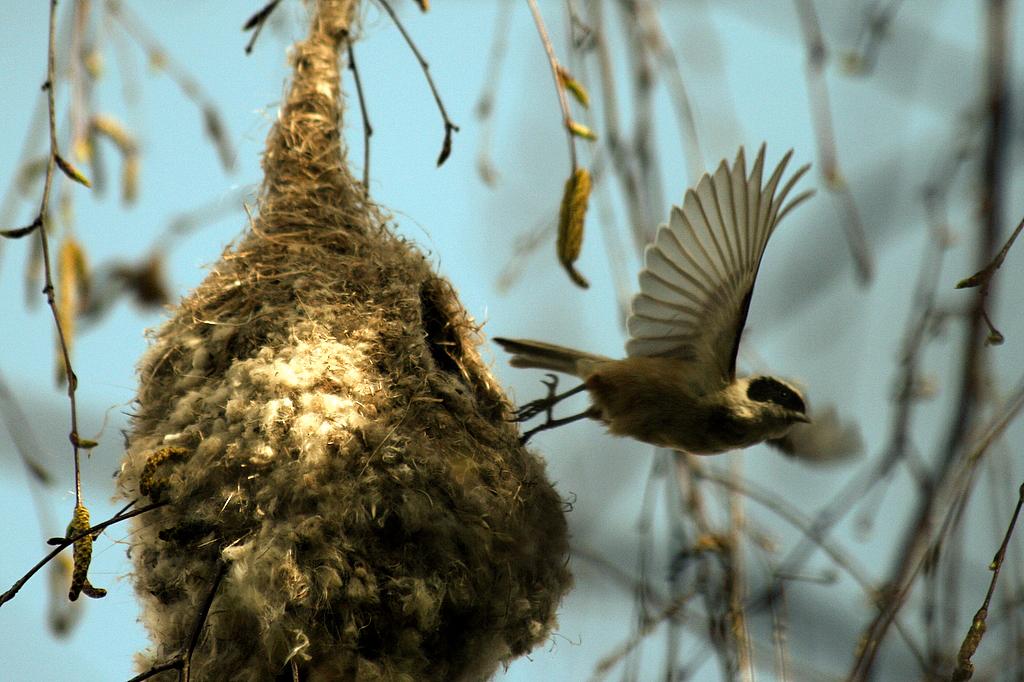
The fluffy, round nests are built by the male close to the water from cobwebs, seed wool and plant fibres on hanging branches. The female chooses the most beautiful nest, helps with the final preparations and then lays five to eight eggs.
The breeding season is from May to June.
They can have several partners.
They feed on insects, spiders and seeds.
- Endangerment level Germany: not endangered
Sources
Habitus , Konrad Kroczek, CC 0 1.0, https://commons.wikimedia.org/wiki/File:European_Penduline_Tit_Remiz_Pendulinus_(251775445).jpeg
.jpeg)
am Nest, Wojsyl, CC BY-SA 3.0, https://commons.wikimedia.org/wiki/File:Remiz_gniazdo.jpg

Habitus , Ferran Pestaña, CC BY-SA 2.0, https://commons.wikimedia.org/wiki/File:Teixidor_-_P%C3%A1jaro_mosc%C3%B3n_adulto_-_Penduline_Tit_-_Remiz_pendulinus.jpg

Witt, K. & Steiof, K. (2013) Rote Liste und Liste der Brutvögel von Berlin, 3. version, 15.11.2013. : Berliner Ornithologische Arbeitsgemeinschaft e.V. (eds.) Berliner Ornithologischer Bericht, volume 23, Berlin: Berliner Ornithologische Arbeitsgemeinschaft e.V., 1-23.
Page „Beutelmeise“. : Wikipedia, The Free Encyclopedia. Date of last revision: 09.07.2018, 14:39 UTC. URL: https://de.wikipedia.org/w/index.php?title=Beutelmeise&oldid=179001741 (Accessed: 27.11.2018).