
Short Description
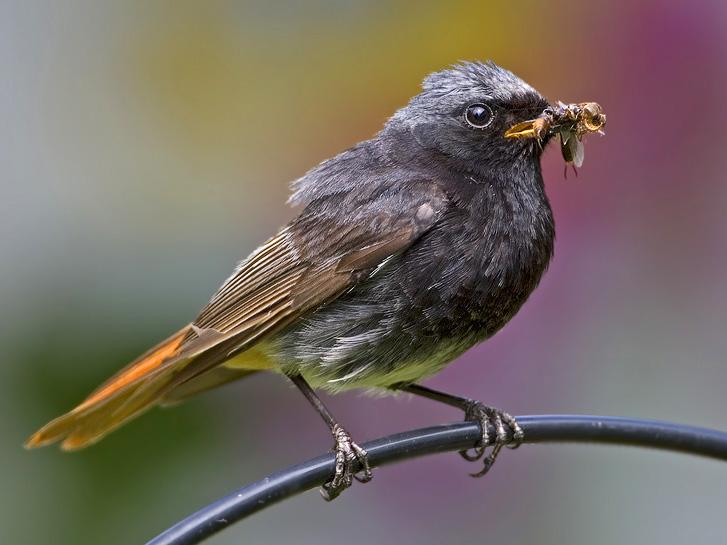
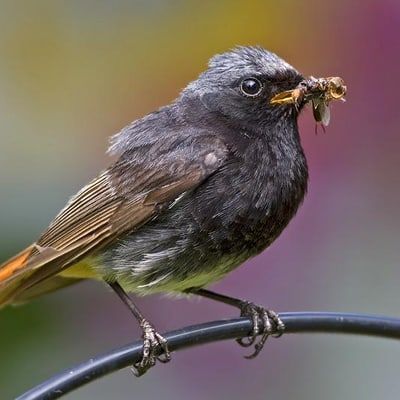
The characteristic feature of the slim little bird is its russet-red tail.
The male is black to dark-grey.
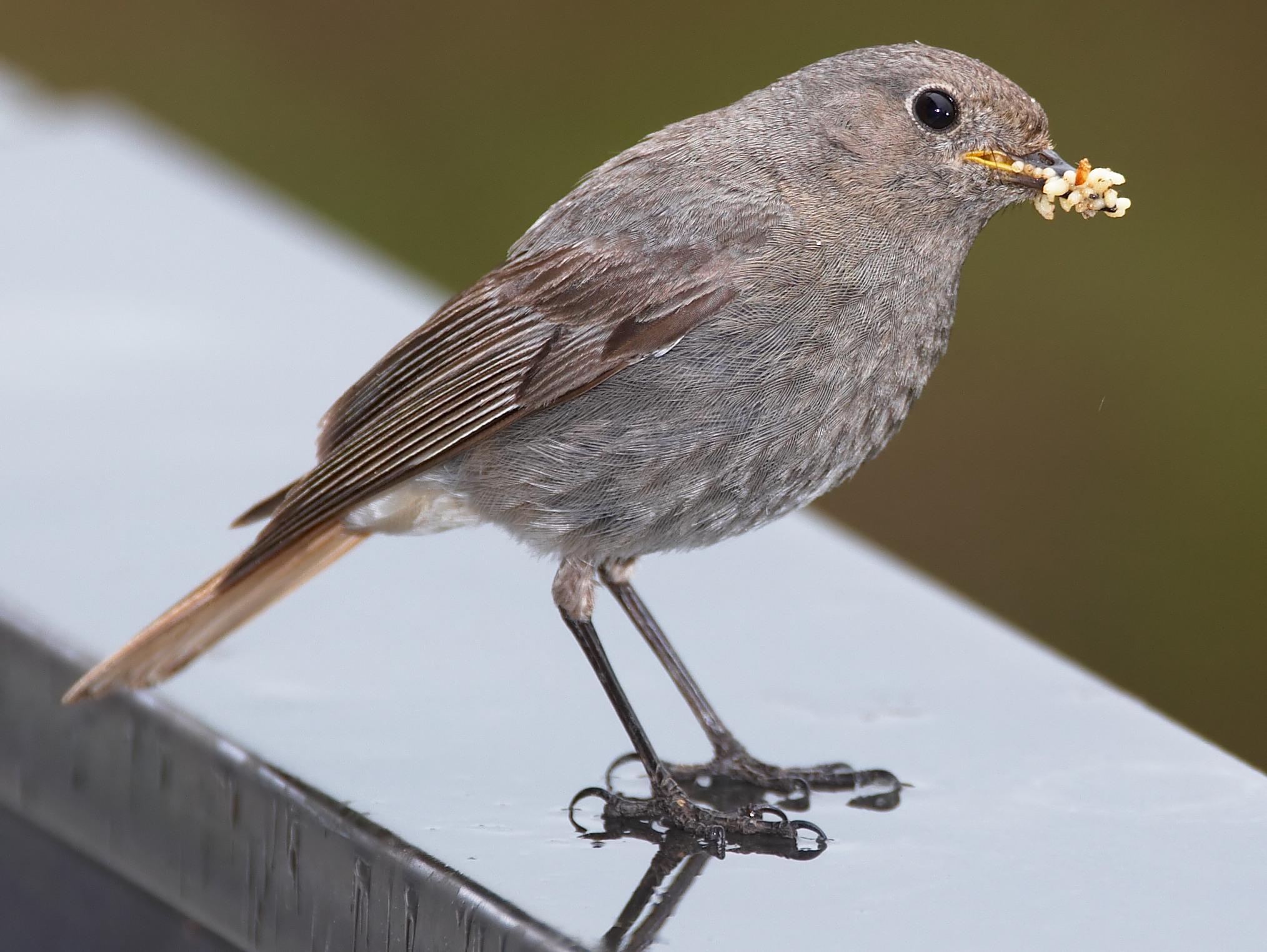
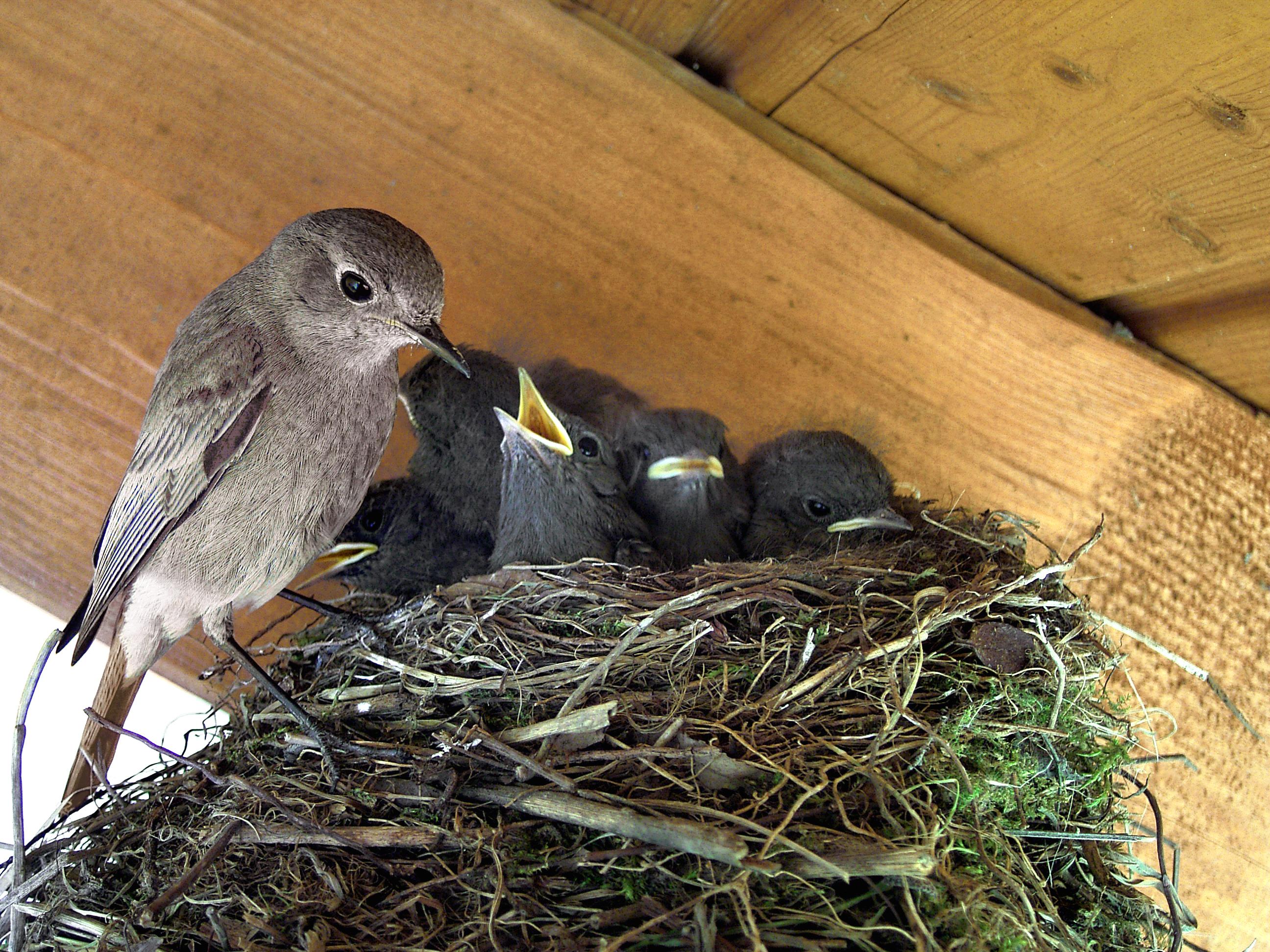
Females are paler brown-grey.
Features
Black redstart
Phoenicurus ochruros
russet-red tail
Gesang
Conrads, CC BY-SA 3.0

In the city
The black redstart is a synanthropic bird and is frequently seen near buildings. In the city, it can be mainly seen in gardens and parks. More and more black redstarts hibernate in towns and visit bird feeders.
Fun Facts
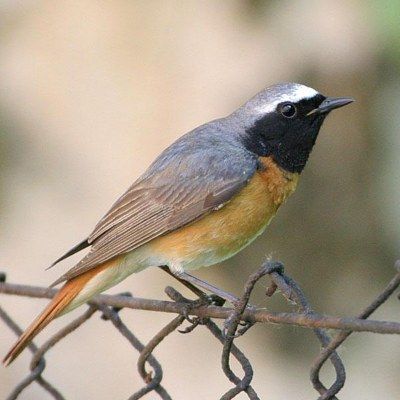
Into modern times, redstarts and red robins were thought to be the same species: the redstart the summer plumage, red robin the winter one.
In medieval times, black redstarts and other birds with red plumage were thought to be responsible for the frequent house fires. They were said to carry a fire’s glow inside their bodies, thus causing the houses to burn.
From March to July, they start to sing approx. 70 minutes before sunrise.
Black redstarts are migratory birds, hibernating in warmer southern quarters from mid-October onwards. From the middle of March, they can again be observed in Germany.
- Endangerment level Germany: not endangered
Sources
Männchen, Gunther Hasler, CC BY-SA 3.0 de, https://commons.wikimedia.org/wiki/File:PhoenicurusOchrurosGuntherHasler01.jpg

Weibchen, Michael Apel, CC BY-SA 2.0, https://commons.wikimedia.org/wiki/File:Phoenicurus_ochruros_female.jpg

Weibchen am Nest, Michael Apel, CC BY-SA 3.0, https://commons.wikimedia.org/wiki/File:Hausrotschwanz_Brutpflege_2006-05-24_211.jpg

Bejcek, V. (1988) Zugvögel, Hanau/Main: Verlag Werner Dausien.
Page „Hausrotschwanz“. : Wikipedia, The Free Encyclopedia. Date of last revision: 05.11.2015, 06:30 UTC. URL: https://de.wikipedia.org/w/index.php?title=Hausrotschwanz&oldid=147722146 (Accessed: 11.02.2016).
Artenfinder (2016) Phoenicurus ochruros (Hausrotschwanz), URL: https://arteninfo.net/elearning/voegel/speciesportrait/3101 (Accessed: 19.04.2016).
NABU – Naturschutzbund Deutschland e.V. (2016) Vogeluhr, URL: https://www.nabu.de/nabu_vogeluhr2/index.php?iframed=1 (Accessed: 10.02.2021).
NABU – Naturschutzbund Deutschland e.V. (n.d.) Stunde der Wintervögel: Der Hausrotschwanz, URL: https://www.nabu.de/tiere-und-pflanzen/aktionen-und-projekt/stunde-der-wintervoegel/vogelportraets/13041.html (Accessed: 07.04.2017).
Witt, K. & Steiof, K. (2013) Rote Liste und Liste der Brutvögel von Berlin, 3. version, 15.11.2013. : Berliner Ornithologische Arbeitsgemeinschaft e.V. (eds.) Berliner Ornithologischer Bericht, volume 23, Berlin: Berliner Ornithologische Arbeitsgemeinschaft e.V., 1-23.
NABU – Naturschutzbund Deutschland e.V. (2016) Rote Liste der Brutvögel Deutschlands. 5. version, published August 2016, URL: https://www.nabu.de/tiere-und-pflanzen/voegel/artenschutz/rote-listen/10221.html (Accessed: 07.04.2017).