
Short Description
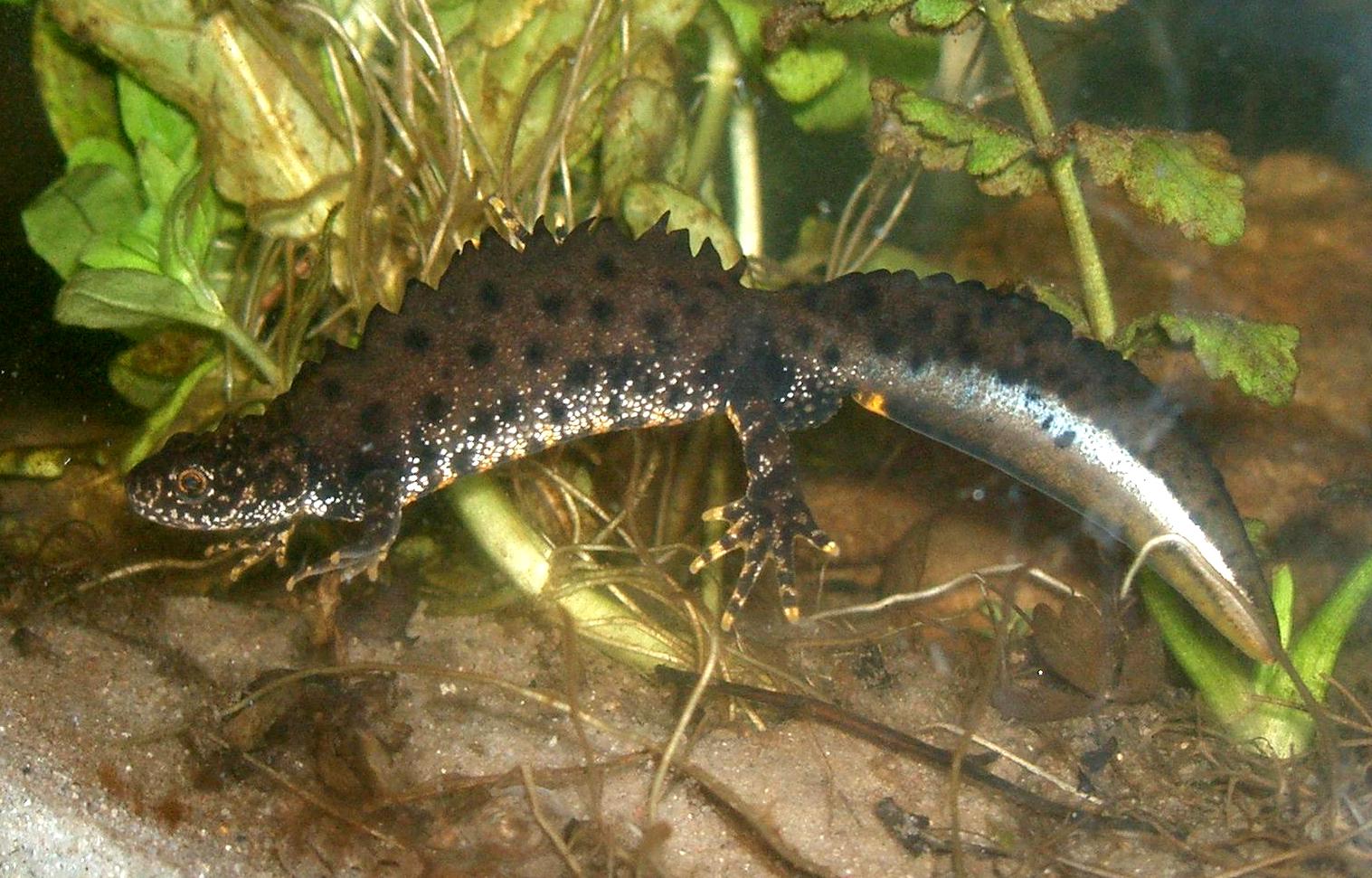
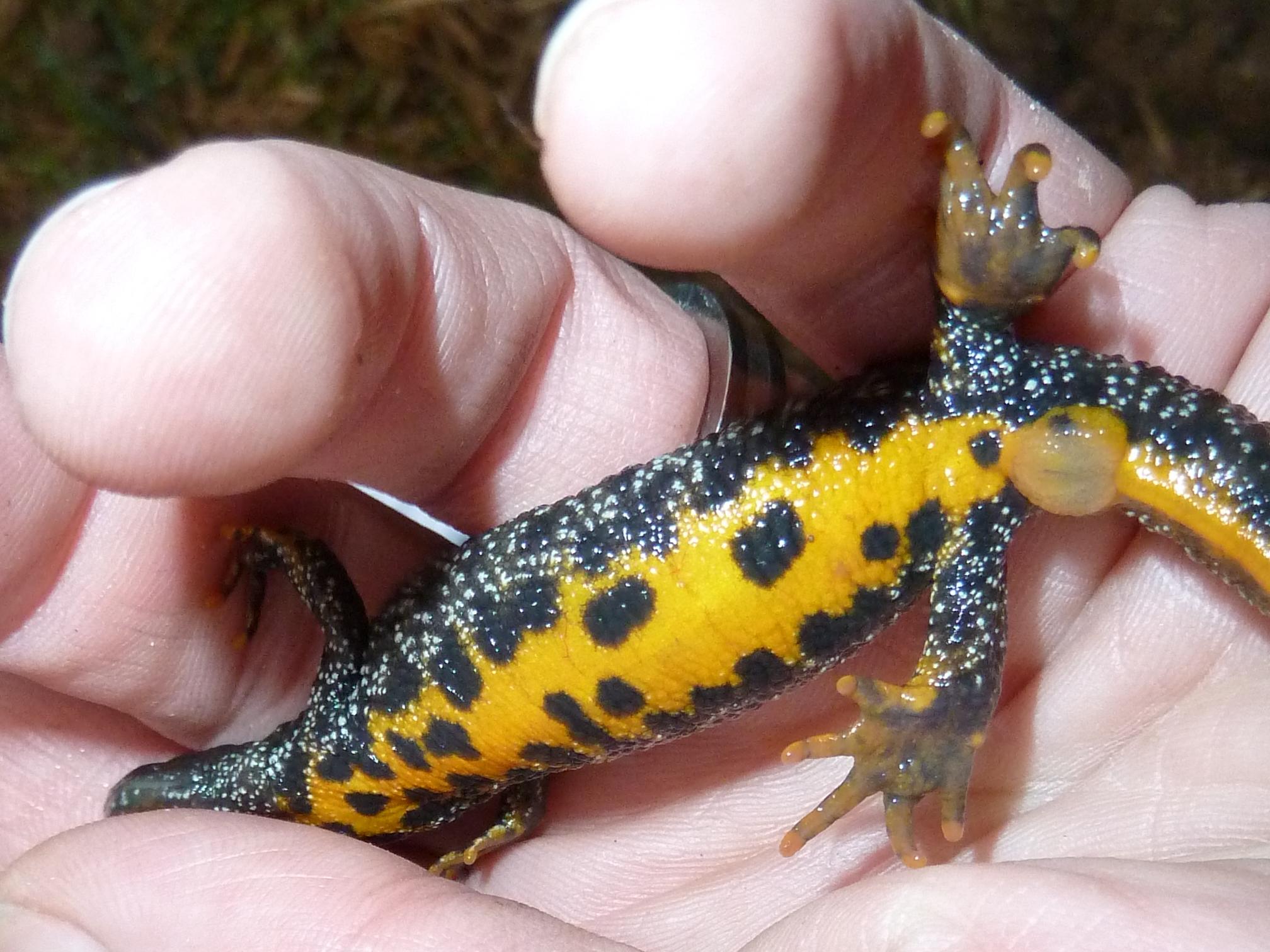
The crested newt is grey-black with dark spots and numerous small white spots on its flanks. The undersides are yellow or orange with dark blotches. Its tail is long and laterally flattened.
Males can be recognised from a silvery stripe on the sides of their tails. During the breeding season, they develop a striking jagged crest.
Features
Great crested newt
Triturus cristatus
white-spotted flanks
In the city
Great crested newts live in sunny waters with numerous plants, such as ponds or small lakes. They also require sufficient hiding places along the banks, e.g. in form of hedges.
In defence, they display their bright-orange underside and secrete an acidic fluid. This can cause irritations to mucous membranes in humans.
Fun Facts
The pattern of the underside patches are individual to each crested newt. They make it possible to recognise each individual animal.
Great crested newts do not make a sound.
Growing up to 18 cm in length, the great crested newt is the largest indigenous newt.
All European amphibians are specially protected and must not be captured, injured or killed.
- Endangerment level Germany: Warning list
The bite of the great crested newt is harmless, but its defence secretion can cause irritation to mucous membranes. To avoid exposing the animals to unnecessary stress, you are advised against disturbing or touching them.
Sources
Männchen in Wassertracht, Rainer Theuer, gemeinfrei, https://commons.wikimedia.org/wiki/File:Kammmolchmaennchen.jpg

Weibchen, Rrausch1974, CC BY-SA 3.0, https://de.wikipedia.org/wiki/Datei:Noerdl_kammmolch_unteransicht.jpg

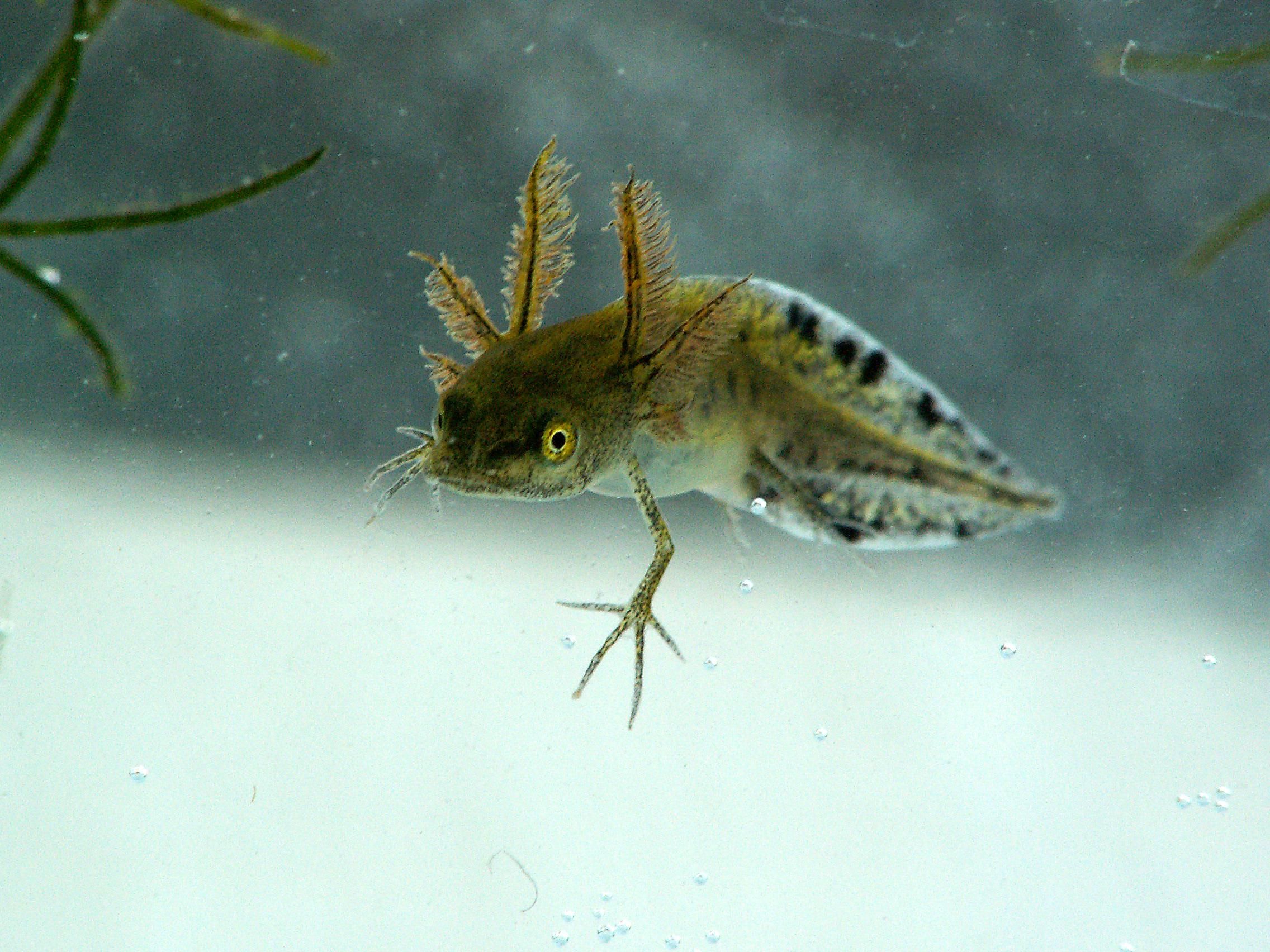
Larve, Piet Spaans, CC BY-SA 2.5, https://de.wikipedia.org/wiki/Datei:TriturusCristatusMiddleSizedLarva.JPG

Page „Nördlicher Kammmolch“. : Wikipedia, The Free Encyclopedia. Date of last revision: 25.04.2016, 06:50 UTC. URL: https://de.wikipedia.org/w/index.php?title=N%C3%B6rdlicher_Kammmolch&oldid=153786172 (Accessed: 11.05.2016).
Bundesfachausschuss Feldherpetologie/Ichthyofaunistik im NABU (n.d.) Kammolch - Triturus cristatus, LAURENTI,1768, URL: http://www.amphibienschutz.de/amphib/kammolch.htm (Accessed: 26.07.2016).
Bundesfachausschuss Feldherpetologie/Ichthyofaunistik im NABU (n.d.) Rote Listen, URL: Bundesfachausschuss Feldherpetologie/Ichthyofaunistik im NABU (n.d.) Rote Listen, URL: http://www.amphibienschutz.de/schutz/artenschutz/roteliste/deutschland.htm (Accessed: 26.07.2016).
NABU – Naturschutzbund Deutschland e.V. (n.d.) Wasserdrache mit Rückenkamm. Der Kammmolch (Triturus cristatus), URL: https://www.nabu.de/tiere-und-pflanzen/amphibien-und-reptilien/amphibien/artenportraets/10641.html (Accessed: 26.07.2016).