
Short Description
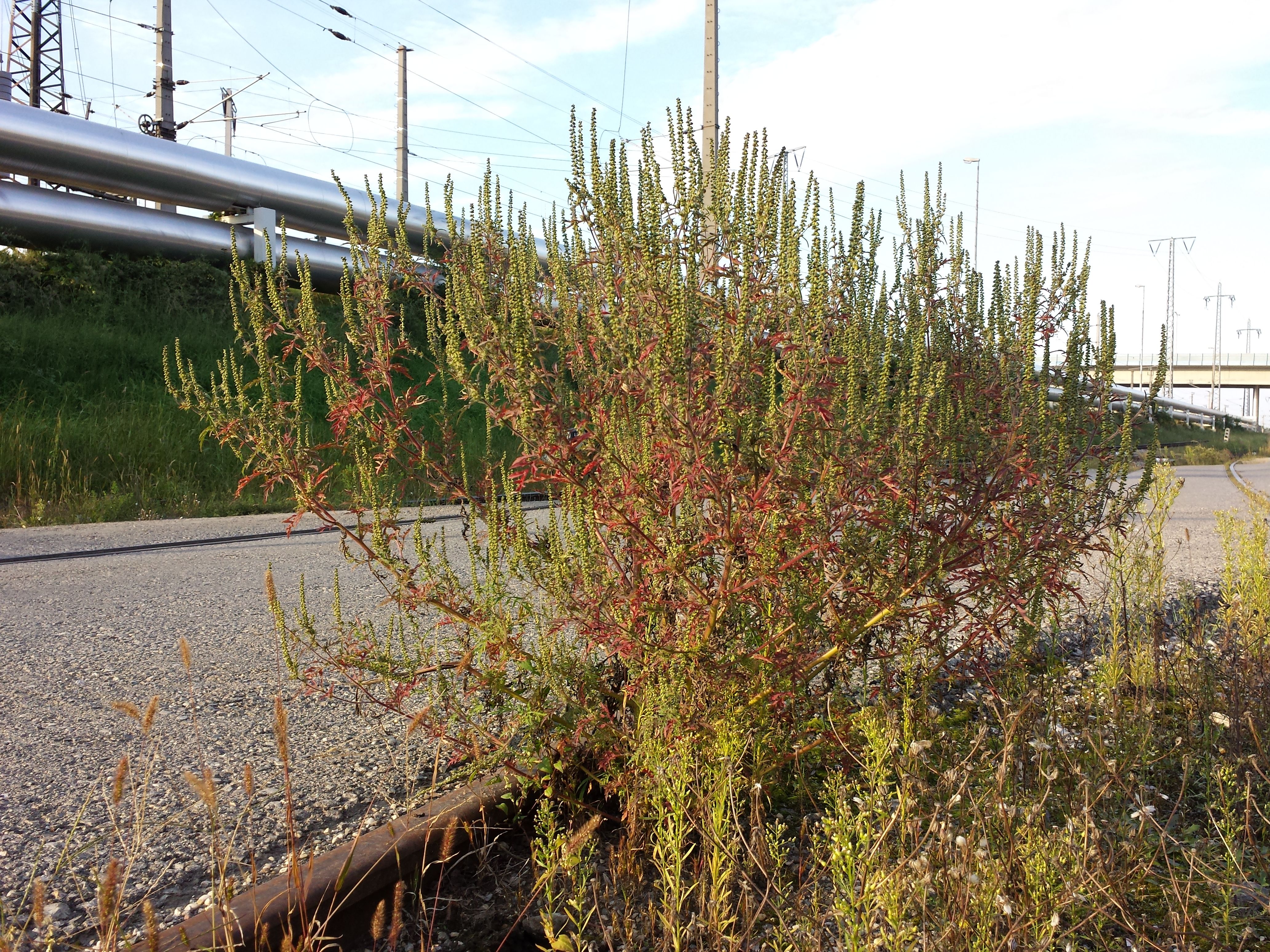
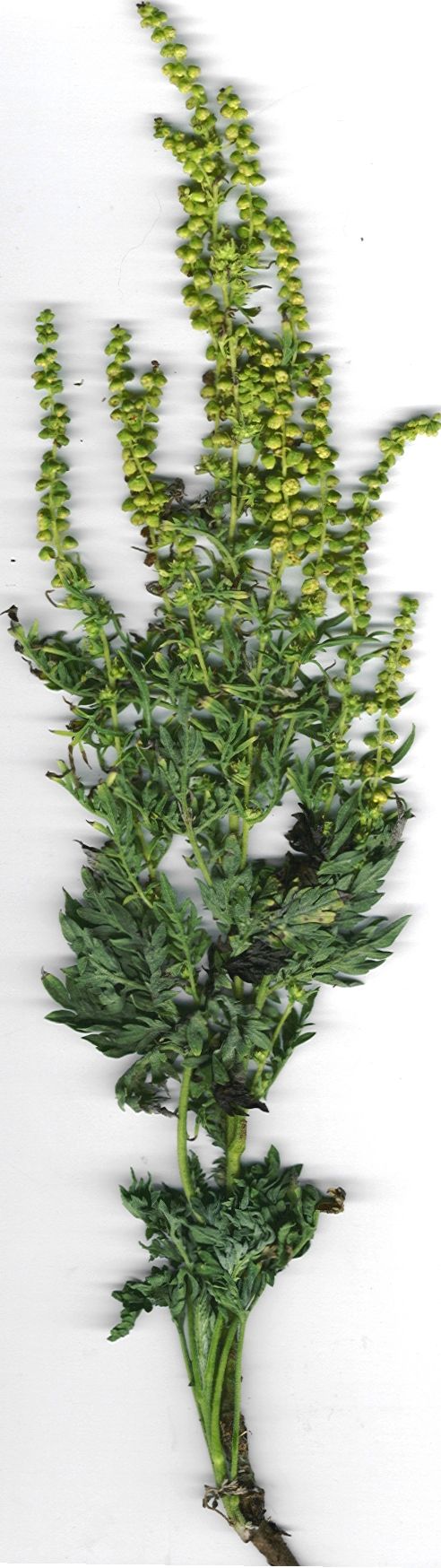
The common ragweed is an annual species of the Asteraceae family. It can reach a height of up to 2 metres, but in Germany it is usually less than 1.8 metres tall. In spring it grows very slowly, but from June it develops very quickly and produces flowers in August.
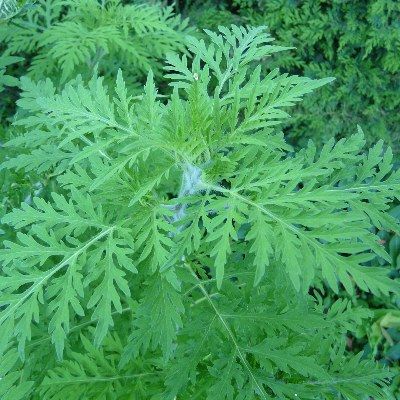
The leaves are bipinnate. In a bipinnate leaf, the leaf consists of a main petiole to which several smaller petioles are attached. There are several small leaflets on each of these smaller petioles. The leaves are grey-green underneath.
The stem is hairy and is reddish on top in older plants.
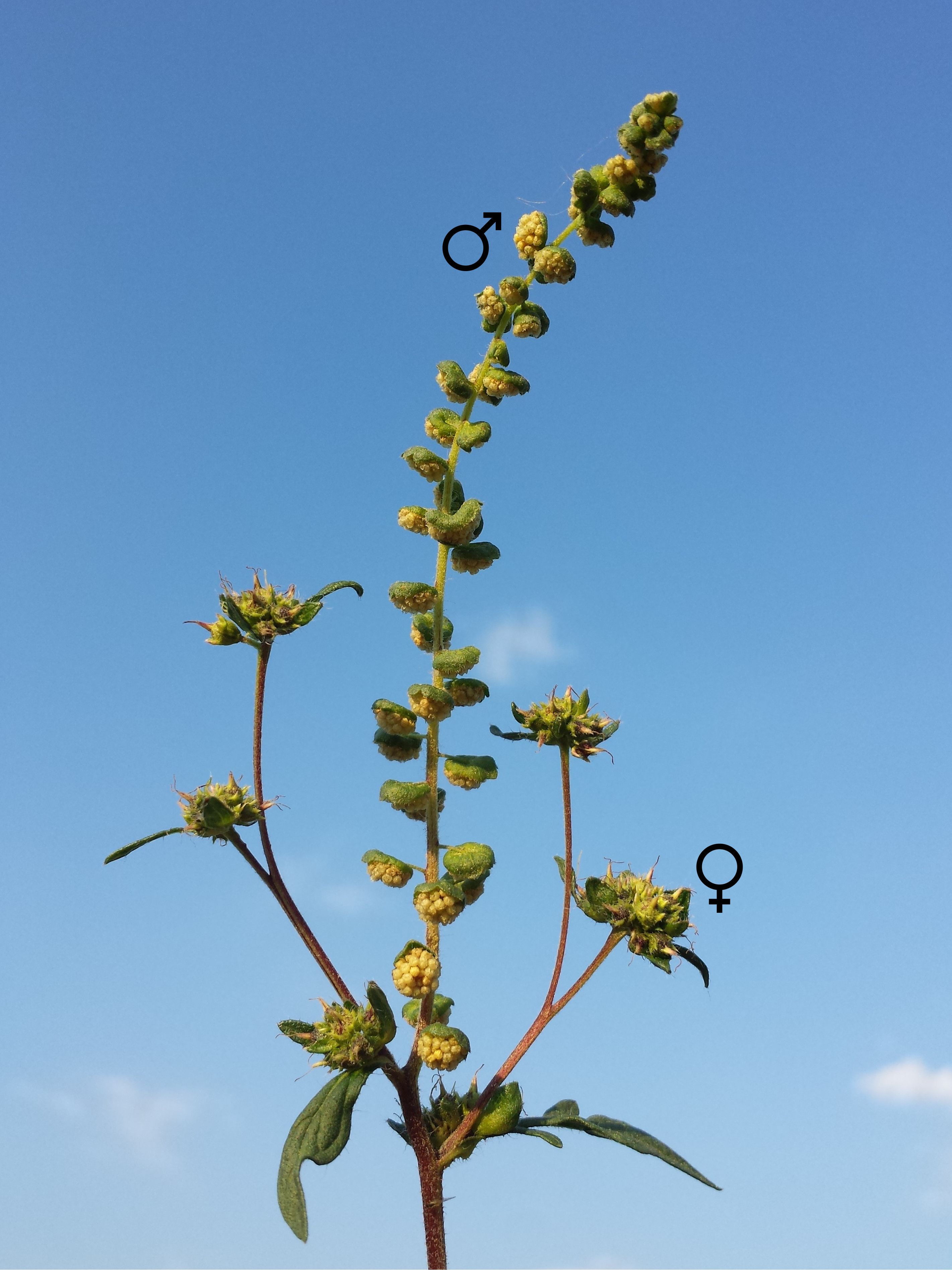
The mugwort ambrosia has both male and female flowers on the same plant. Male flowers are greenish-yellow and are found at the end of the branches. They form a racemose arrangement. The female flowers are located further below the male flowers, usually in the axils of the upper leaves.
The fruit is about 3mm in size and contains a single seed.
Features
Common ragweed
Ambrosia artemisiifolia
Leaves are bipinnate
Stem hairy
In the city
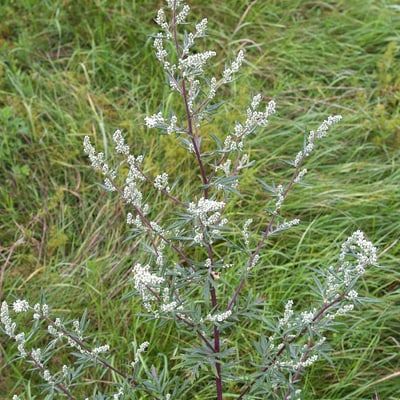
In the city, the mugwort ambrosia occurs along roadsides and paths, on industrial wasteland, in harbour areas, in and around new housing estates and along forest paths.
The Bavarian State Ministry of Food, Agriculture and Forestry writes: "The naturalisation of ragweed is undesirable, as it is particularly allergenic. Allergy sufferers suffer from hay fever and breathing difficulties during the pollen flight. On the one hand, the allergic reactions are said to occur 70 times more frequently than with grass pollen, and on the other hand, the late flowering period prolongs the "hay fever season" and thus the period of suffering for affected allergy sufferers."
Fun Facts
Flowering time is from August to September.
The seeds of the common ragweed are very robust and persistent, it has already been proven that they can still germinate after 39 years.
- Endangerment level Germany: not endangered
Sources
Habitus Taxonym: Ambrosia artemisiifolia ss Fischer et al. EfÖLS 2008 ISBN 978-3-85474-187-9 Fundort: Bahnhof Wien-Floridsdorf, Wien-Floridsdorf - ca. 160 m ü. A. Standort: Bahnschotter, Stefan.lefnaer , CC BY-SA 4.0, https://commons.wikimedia.org/wiki/Ambrosia_artemisiifolia?uselang=de#/media/File:Ambrosia_artemisiifolia_sl3.jpg

Blütenstand, oben Blütenköpfe mit nur männlichen Blüten, unten Teilblütenstände mit Blütenköpfen mit nur einer weiblichen Blüte, Stefan.lefnaer , CC BY-SA 4.0, https://commons.wikimedia.org/wiki/Ambrosia_artemisiifolia?uselang=de#/media/File:Ambrosia_artemisiifolia_sl11.jpg

Ambrosia artemisiifolia. Standort: Maui, Waihee, Forest & Kim Starr, CC BY 3.0, https://commons.wikimedia.org/wiki/Ambrosia_artemisiifolia?uselang=de#/media/File:Starr_010222-9001_Ambrosia_artemisiifolia.jpg

Seite „Beifußblättriges Traubenkraut“. In: Wikipedia – Die freie Enzyklopädie. Bearbeitungsstand: 4. Juni 2023, 20:19 UTC. URL: https://de.wikipedia.org/w/index.php?title=Beifu%C3%9Fbl%C3%A4ttriges_Traubenkraut&oldid=234318468 (Abgerufen: 12. Juli 2023, 10:35 UTC)
Landwirtschaftskammer Nordrhein-Westfalen. (2020, 25. Juni). Ambrosia - eine Gefahr für Gesundheit und Natur. Abgerufen am 12. Juli 2023, von [https://www.landwirtschaftskammer.de/landwirtschaft/pflanzenschutz/oeffentlichesgruen/ambrosia.htm]
Alberternst, B., & Klingenstein, S. N. U. (2006). Biologie, Verbreitung und Einschleppungswegevon Ambrosia artemisiifolia in Deutschland und Bewertung aus Naturschutzsicht. Ambrosiainfo.de. http://ambrosiainfo.de/downloads/alberternstnachrichtenbldeutpflanzenschutzd581.pdf