
Short Description
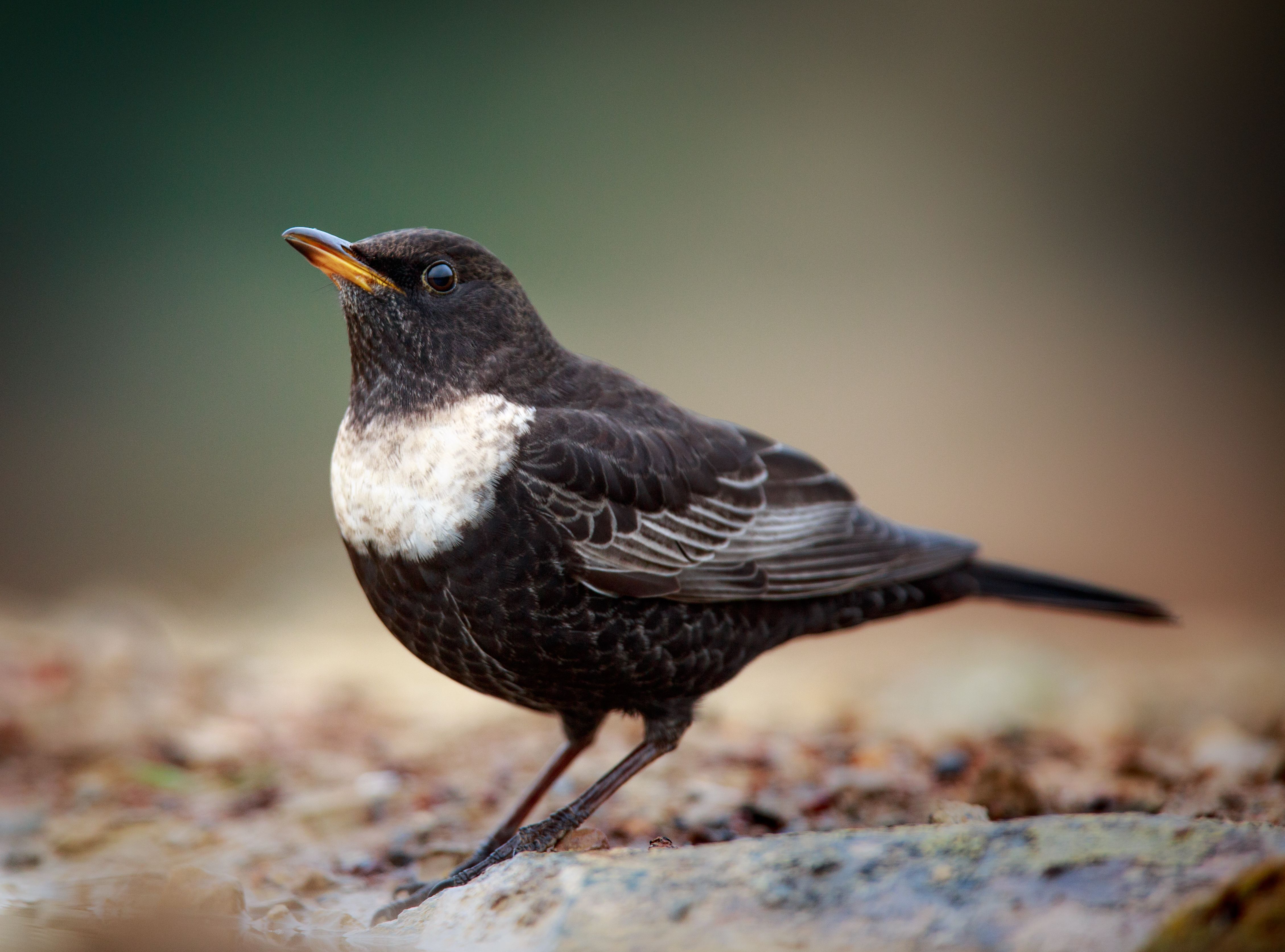
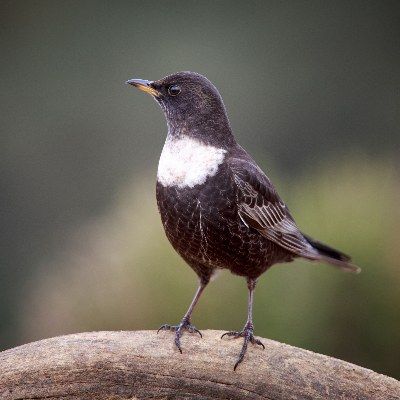
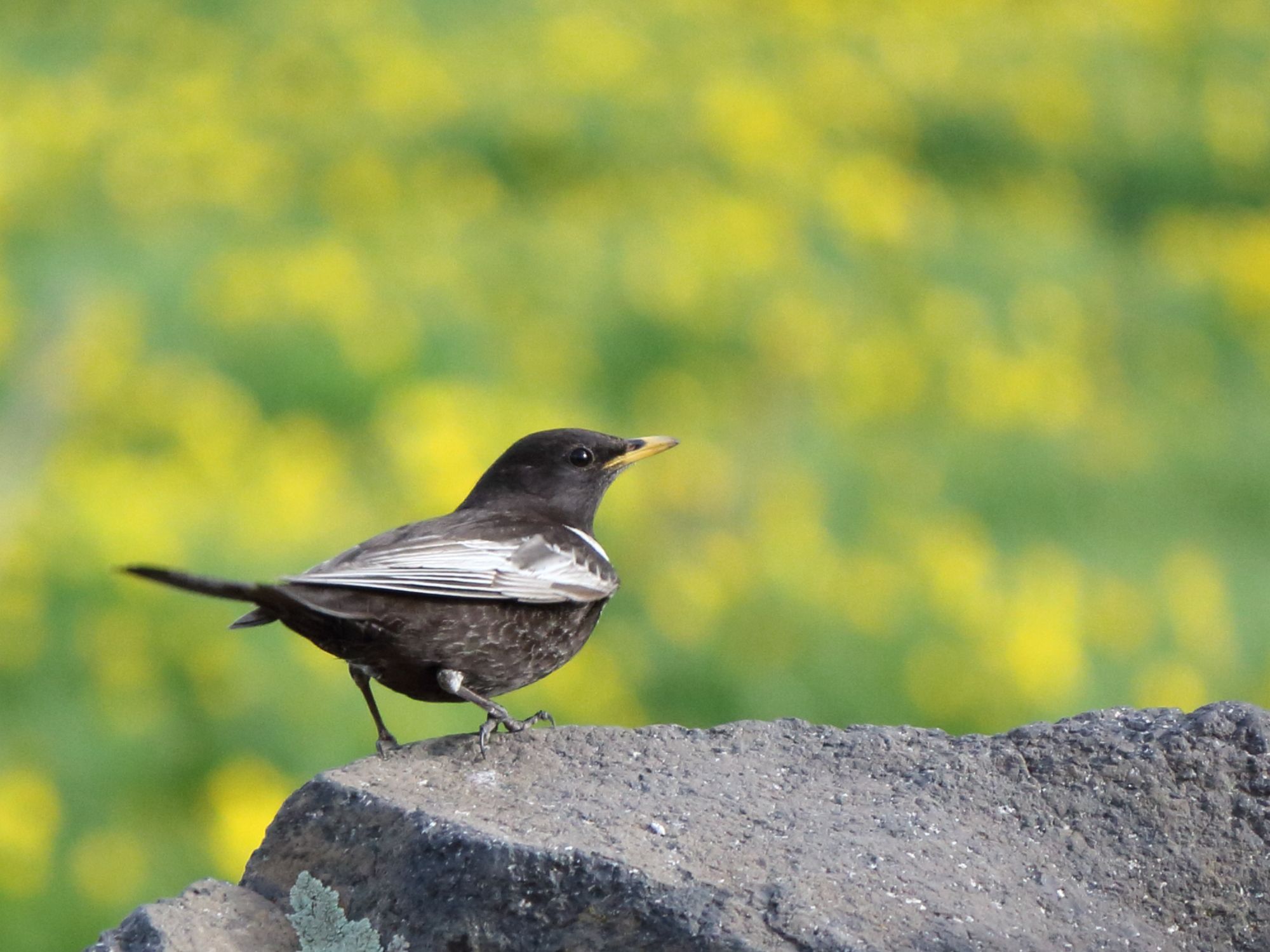
The Ring ouzel has black plumage. It has the white ring around its neck that gives it its name. It has a flaky white pattern on the underside. The lower part of the beak is orange.
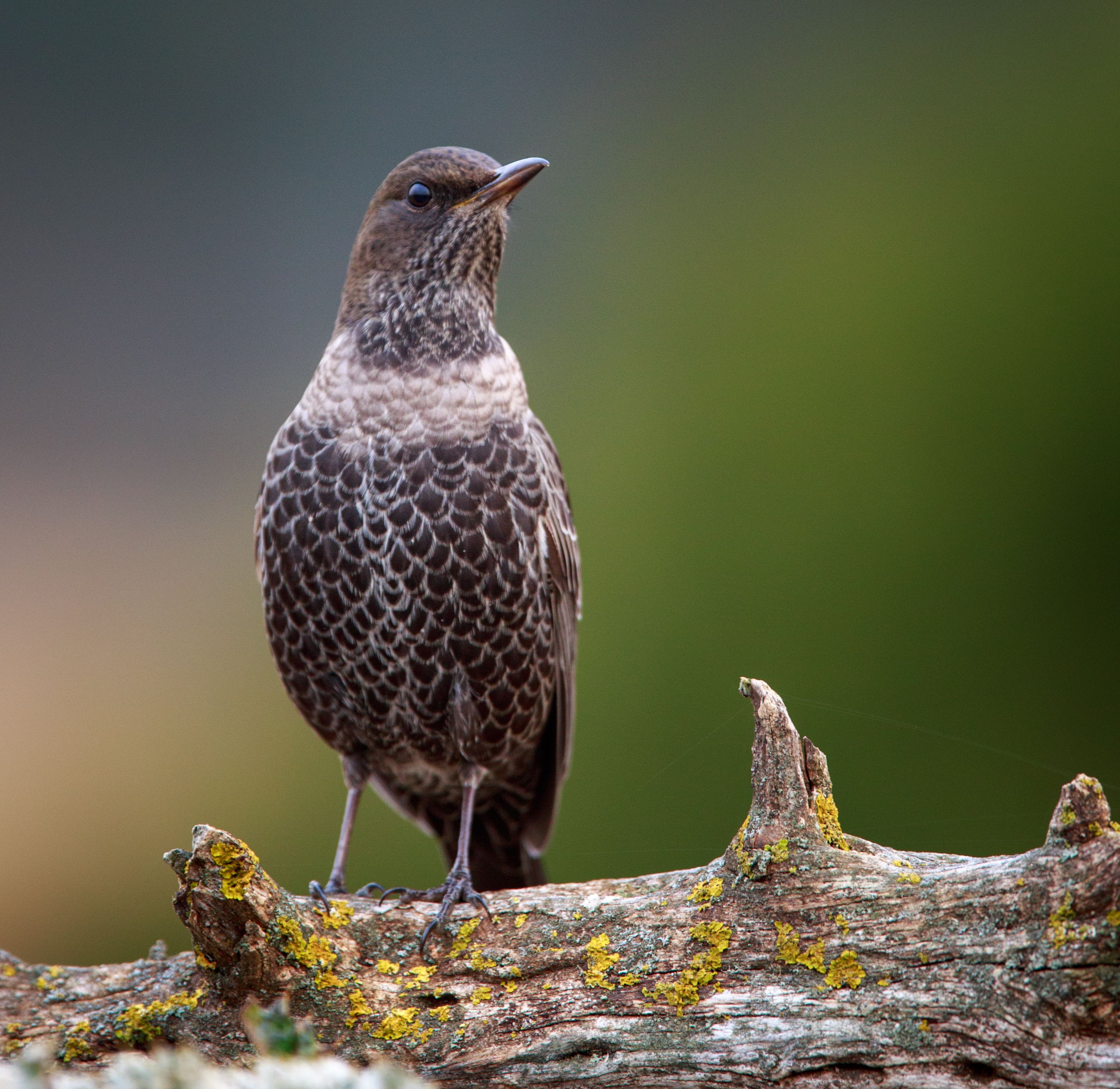
Females are brown and the ring around the neck is light grey.
Young animals do not have a ring around the neck, but are brightly spotted.
Features
Ring ouzel
Turdus torquatus
‘Tack...Tack’ or a ’Trüh...Trüh’
Black plumage
Light-coloured ring around the neck
In the city
In the city, the female builds her nests on conifers and bushes, in parks and small wooded areas.
If the Ring ouzel cannot be seen, its presence can still be heard through the sounds of its song: ‘Tack...Tack’ or a ‘Trüh...Trüh’.
Fun Facts
The breeding season is from April to August.
The eggs of the Ring ouzel are blue-green and brown-spotted.
It can also breed twice a year, but this does not always happen.
From November to February, it has its winter habitat in the Mediterranean region and Iran.
- Endangerment level Germany: not endangered
Sources
Habitus, Paco Gómez, CC BY-SA 2.0, https://commons.wikimedia.org/wiki/File:Turdus_torquatus,_Spain_1.jpg

Habitus, Paco Gómez, CC BY-SA 2.0, https://commons.wikimedia.org/wiki/File:Turdus_torquatus,_Spain_5.jpg

Habitus, Scops, CC BY 4.0, https://en.wikipedia.org/wiki/Ring_ouzel#/media/File:Turdus_torquatus_amicorum,_Artashavan,_Armenia_2.jpg

Seite „Ringdrossel“. In: Wikipedia – Die freie Enzyklopädie. Bearbeitungsstand: 23. August 2023, 18:09 UTC. URL: https://de.wikipedia.org/w/index.php?title=Ringdrossel&oldid=236683940 (Abgerufen: 24. Juli 2024, 10:59 UTC)