
Short Description
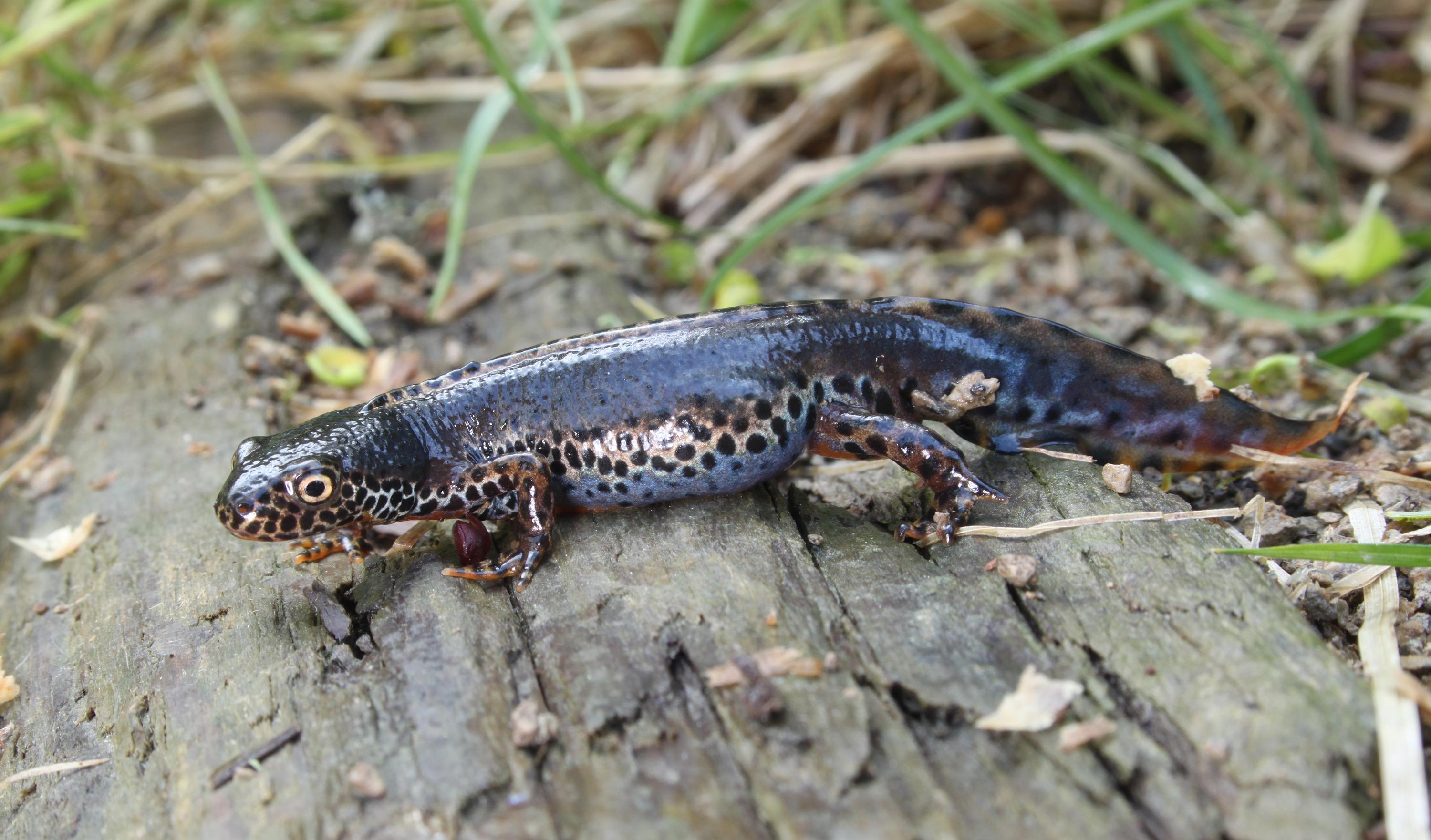
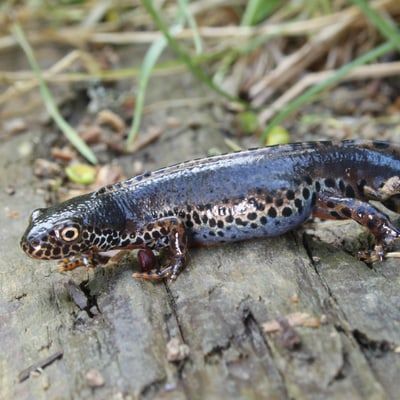
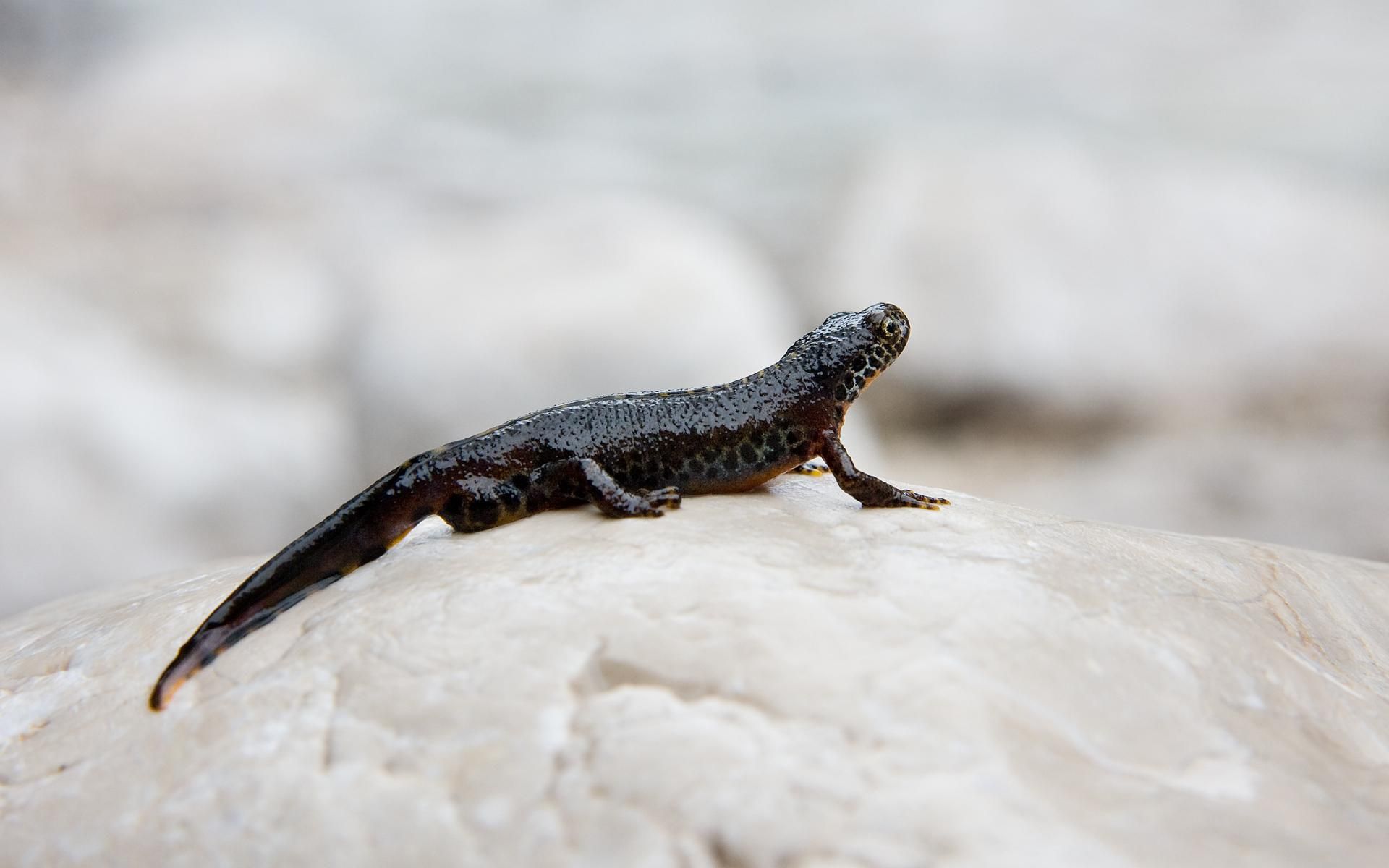
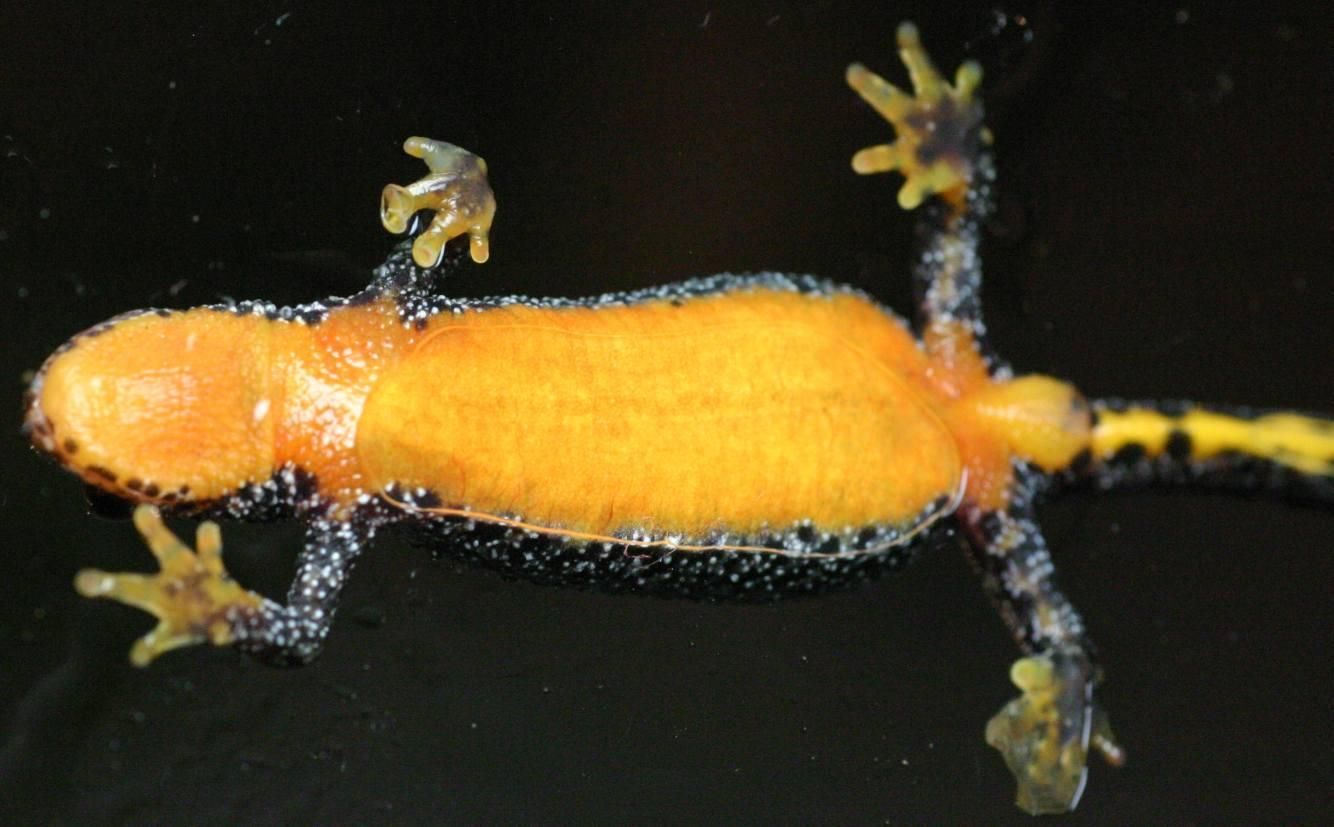
The alpine newt has a typical monochrome orange-red belly. On land, it appears comparatively inconspicuously dark, almost black.
During the mating season in the water, males exhibit dark-blue colouring on their backs and black and white spotted flanks.
Females have a mottled appearance from dark-grey to brownish-green and bear fewer spots on the sides of their bodies.
Larvae are generally darkly pigmented and their blunt-edged tail bears a spike.
Features
Alpine newt
Ichthyosaura alpestris
orange-red belly
Similar species
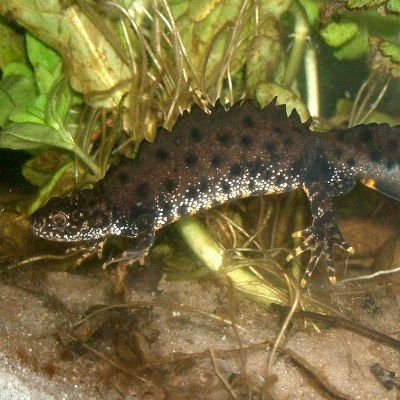
Great crested newt
Triturus cristatus
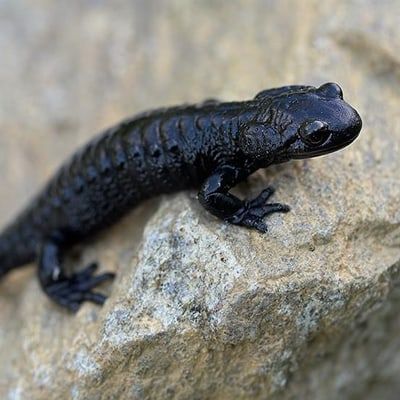
Alpine salamander
Salamandra atra
In the city
In an urban environment, alpine newts settle parklike areas and near-natural gardens. For spawning, they use small and medium-sized ponds, ponds with shallow water zones, puddles as well as slow-running streams. It is essential for their habitats to be rich in structures that provide hiding places. These include the root areas of trees, small mammal dens and burrows.
In addition to environmental pollution and habitat destruction, road traffic constitutes a great hazard during the seasonal migration from the winter quarter to the spawning waters.
Fun Facts
A female alpine newt can lay up to 250 eggs per season. They are attached individually to water plants or fallen leaves.
Outside of the spawning season, the alpine newt is a nocturnal terrestrial animal.
The appearance during the spawning time in the water is called “water phase”.
During the spawning season in the water, their colouring is generally more intense than on land.
All European amphibians are specially protected and may not be captured, injured or killed.
- Endangerment level Germany: not endangered
Sources
Habitus , H. Krisp, CC BY-SA 3.0, https://commons.wikimedia.org/wiki/File:Ichthyosaura_alpestris_Bergmolch.jpg

Habitus , Richard Bartz, CC BY-SA 2.5, https://commons.wikimedia.org/wiki/File:Alpenmolch_Alpine_Newt_Triturus_alpestris.jpg

Habitus , Christian R. Linder, CC BY-SA 3.0, https://de.wikipedia.org/wiki/Datei:Mesotriton_aplestris_ventral_view_chrischan.jpeg

Page „Bergmolch“. : Wikipedia, The Free Encyclopedia. Date of last revision: 04.04.2016, 16:51 UTC. URL: https://de.wikipedia.org/w/index.php?title=Bergmolch&oldid=153166476 (Accessed: 12.05.2016).
NABU – Naturschutzbund Deutschland e.V. (n.d.) Bunt gefärbt auf Brautschau. Der Bergmolch (Ichthyosaura alpestris), URL: https://www.nabu.de/tiere-und-pflanzen/amphibien-und-reptilien/amphibien/artenportraets/10640.html (Accessed: 26.07.2016).
Schulte, U. (2013) Artensteckbrief Bergmolch (Ichthyosaura alpestris), URL: http://www.feldherpetologie.de/heimische-amphibien-artensteckbrief/artensteckbrief-bergmolch-ichthyosaura-alpestris/ (Accessed: 26.07.2016).
International Union for Conservation of Nature and Natural Resources (2008) Ichthyosaura alpestris, URL: http://www.iucnredlist.org/details/59472/0 (Accessed: 26.07.2016).
Bundesfachausschuss Feldherpetologie/Ichthyofaunistik im NABU (n.d.) Rote Listen, URL: Bundesfachausschuss Feldherpetologie/Ichthyofaunistik im NABU (n.d.) Rote Listen, URL: http://www.amphibienschutz.de/schutz/artenschutz/roteliste/deutschland.htm (Accessed: 26.07.2016). (Accessed: 26.07.2016).
Böttcher, S. (2013) Besuch beim Bermolch, URL: http://www.wildes-berlin.de/2013/04/01/besuch-beim-bergmolch/ (Accessed: 26.07.2016).
Stadt Friedrichshafen (2014) Rendevous mit dem Bergmolch, URL: https://www.friedrichshafen.de/bildung-erziehung/potzblitz/projekte/berichte/detail/datum/2014/07/09/rendezvous-mit-dem-bergmolch/ (Accessed: 26.07.2016).