
Short Description
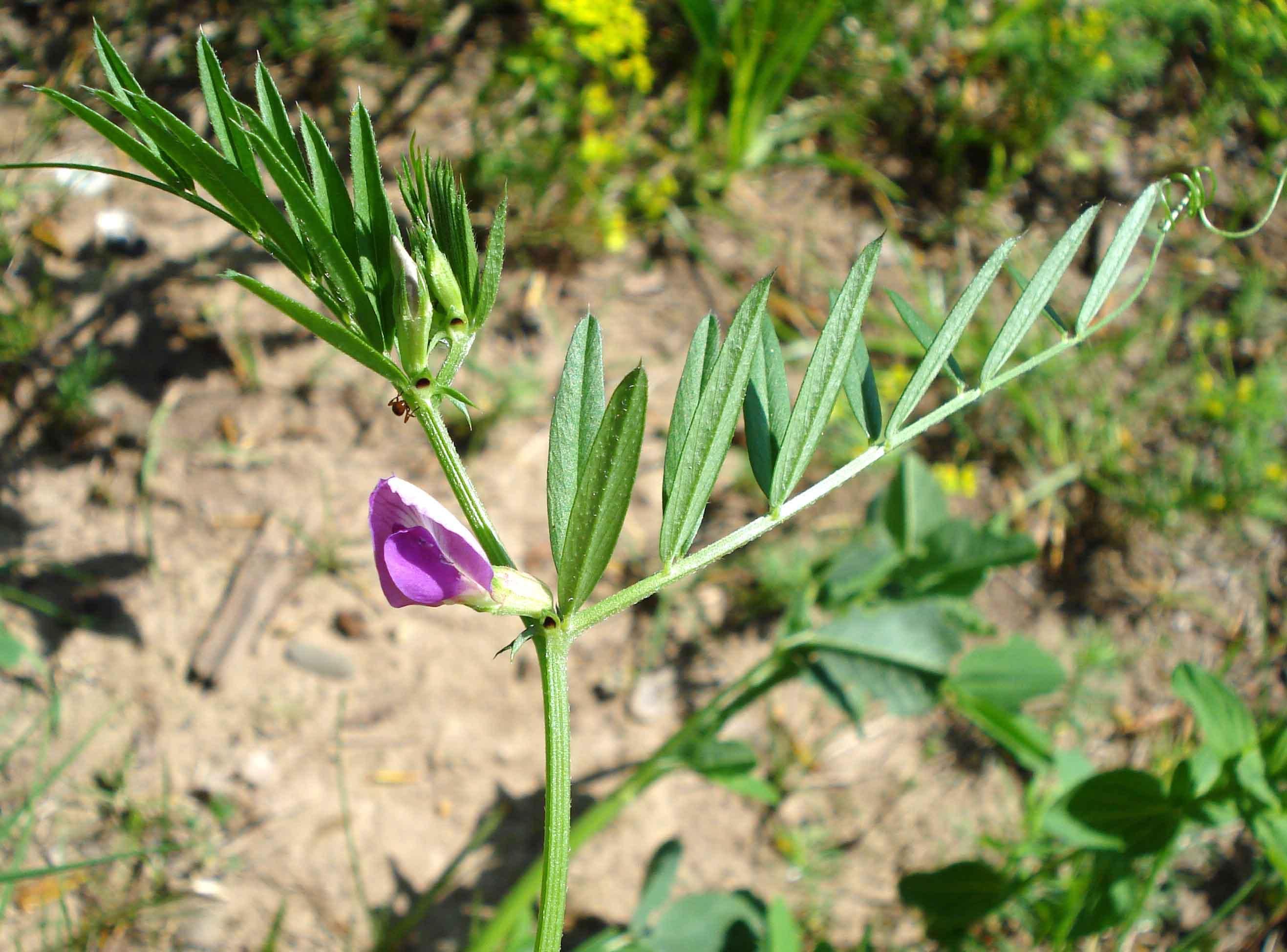
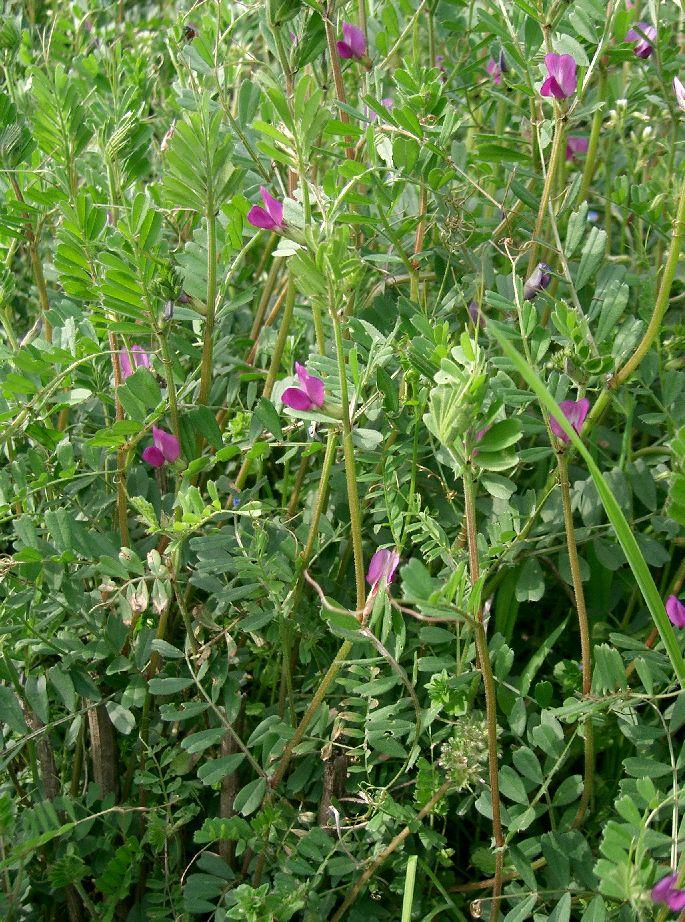
The common vetch can grow to a little over half a metre high.
The leaves consist of two to eight leaflets (pinnate). There is a branched tendril at the tip.
The stem forms branched tendrils in the upper part.
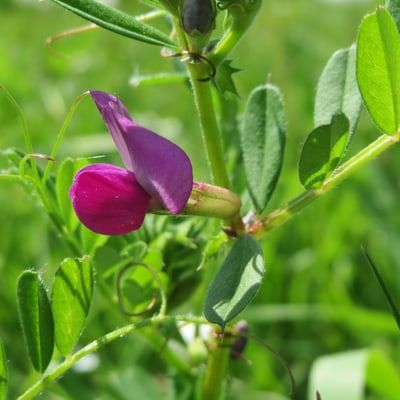
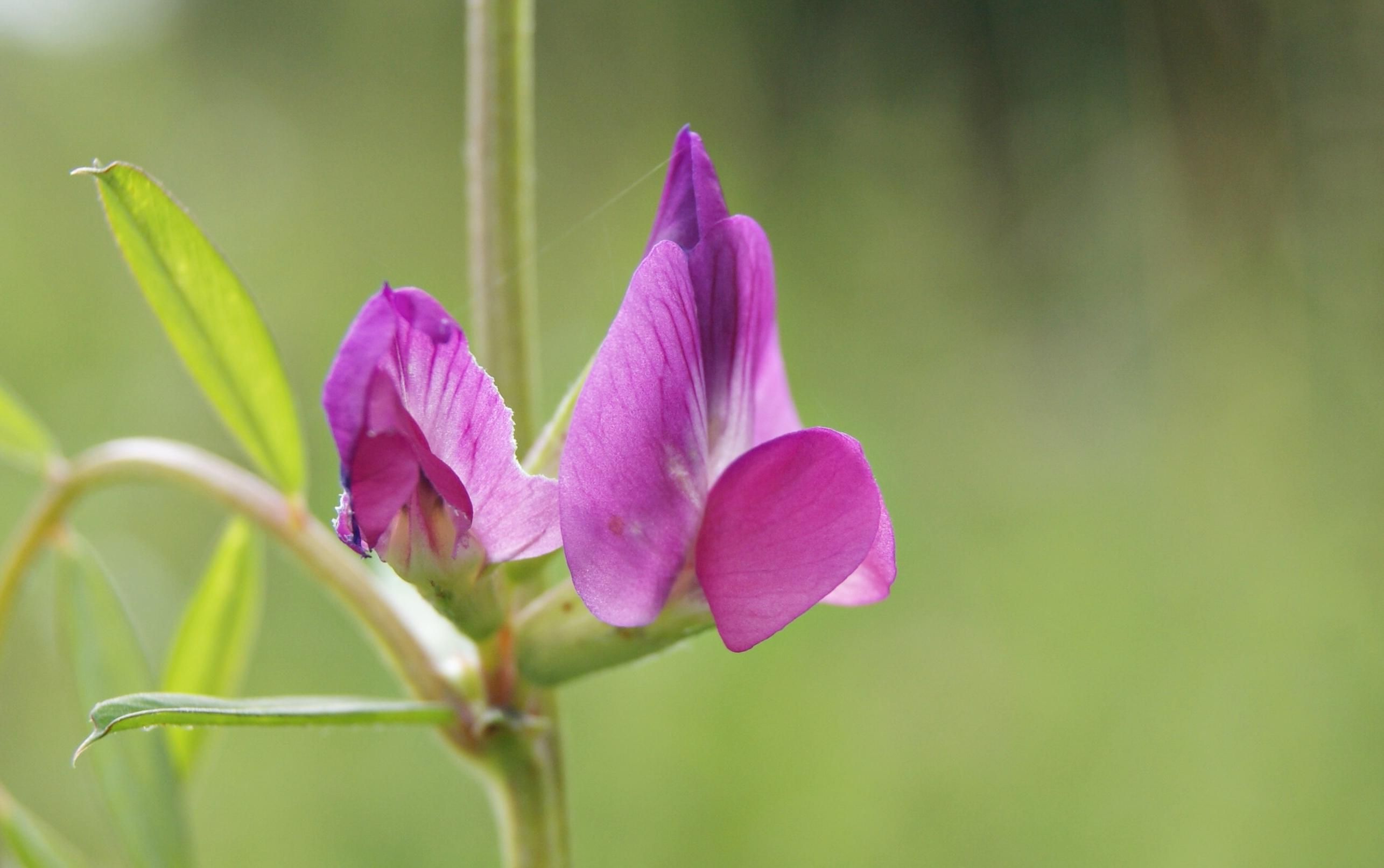
The flowers are bright reddish purple. They have only one mirror axis (mirror symmetry). The flower consists of five petals. The large upper petal protrudes upwards. The two lower petals form a hollow boat that surrounds the anthers and pistil.
It forms long legumes that are dark brown when ripe and glabrous to short-haired.
Features
Common vetch
Vicia sativa
slightly poisonous
bright red-violet petals
branched tendril at leaf tip
In the city
The common vetch grows in fields and wastelands as well as along paths and embankments. It prefers dry, nutrient-rich soils in warmer locations and is common.
Common vetch is a cultivated plant and can therefore be found wherever humans grow it.
Fun Facts
The flowering period is from May to October.
Its appearance is very variable. Sometimes it is distinguished from Vicia angunstifolia, but internationally both groups are considered together as common vetch.
The pods burst open in warm weather and the seeds they contain are ejected.
It is an annual plant. This means the plant dies in the first year after the seeds have ripened.
- Endangerment level Germany: not endangered
It is slightly poisonous.
Sources
Habitus, Fornax, CC BY-SA 3.0, https://commons.wikimedia.org/wiki/File:Vicia_angustifolia_W.jpg

Blüten, Danny Steven S., CC BY-SA 3.0, https://commons.wikimedia.org/wiki/File:Vicia_angustifolia_by_Danny_S._-_001.jpg

Habitus, KENPEI, CC BY-SA 3.0, https://commons.wikimedia.org/wiki/File:Vicia_angustifolia2.jpg

Spohn, M., Golte-Bechtle, M. & Spohn, R. (2015) Was blüht denn da? Stuttgart: Franckh Kosmos Verlag.
Seitz, B., Ristow, M., Meißner, J., Machatzi, B. & Sukopp, H. (2018) Rote Liste und Gesamtartenliste der etablierten Farn- und Blütenpflanzen von Berlin. : Der Landesbeauftragte für Naturschutz und Landschaftspflege / Senatsverwaltung für Umwelt, Klima und Verkehr (eds.) Rote Listen der gefährdeten Pflanzen, Pilze und Tiere von Berlin, URL: https://www.berlin.de/sen/uvk/natur-und-gruen/naturschutz/artenschutz/artenlisten-rote-listen/farn-und-bluetenpflanzen/ (Accessed: 26.03.2021).
Page „Schmalblättrige Wicke“. : Wikipedia, The Free Encyclopedia. Date of last revision: 11.06.2018, 15:42 UTC. URL: https://de.wikipedia.org/w/index.php?title=Schmalbl%C3%A4ttrige_Wicke&oldid=178223304 (Accessed: 18.09.2018).
Bundesamt für Naturschutz (n.d.) Artensteckbriefe, URL: http://floraweb.de/pflanzenarten/artenhome.xsql?suchnr=6329& (Accessed: 18.09.2018).
Page „Futterwicke“. : Wikipedia, The Free Encyclopedia. Date of last revision: 27. April 2025, 08:15 UTC. URL: https://de.wikipedia.org/w/index.php?title=Futterwicke&oldid=255504584 (Accessed: 25.06.2025).