
Short Description
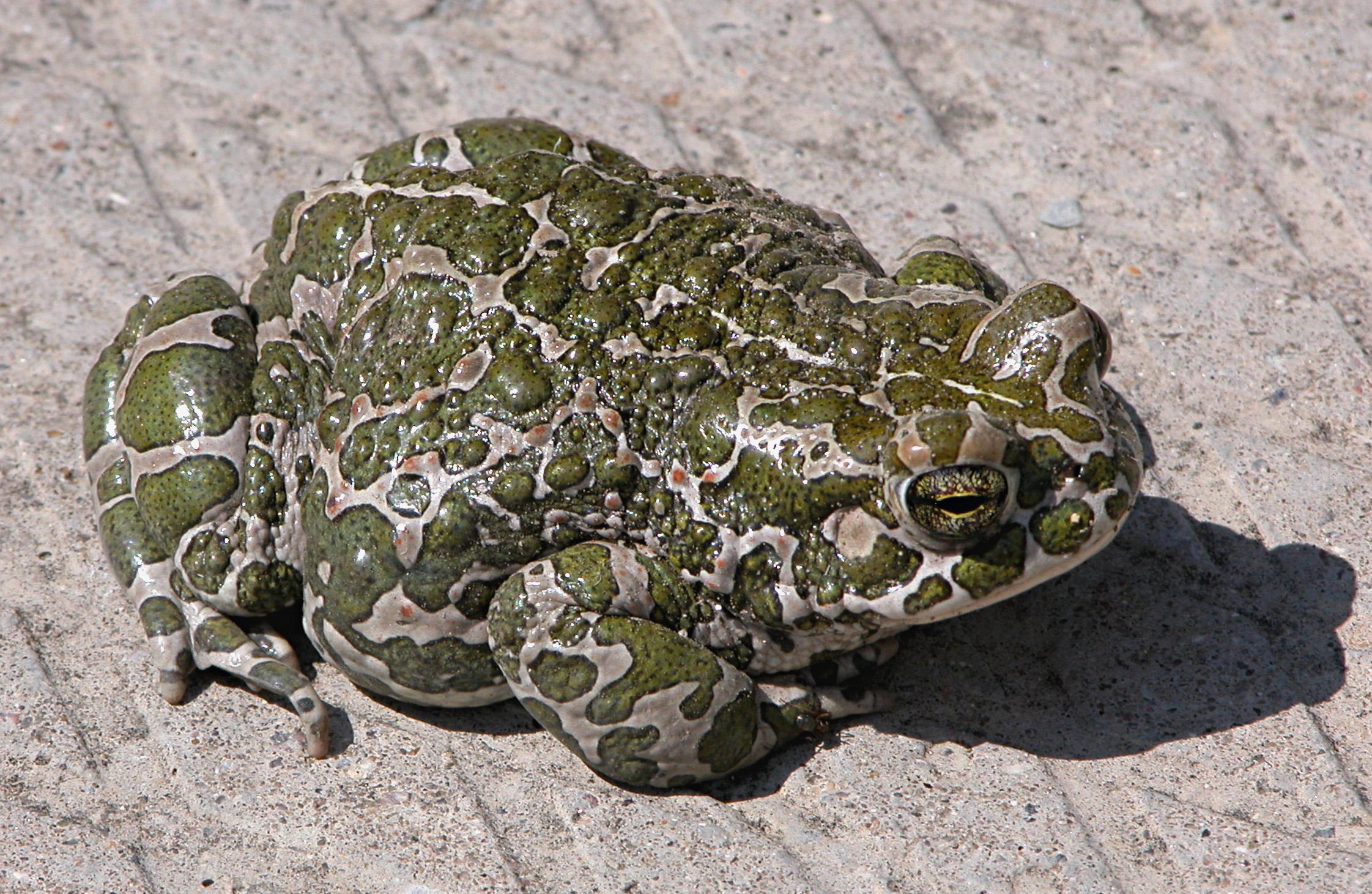
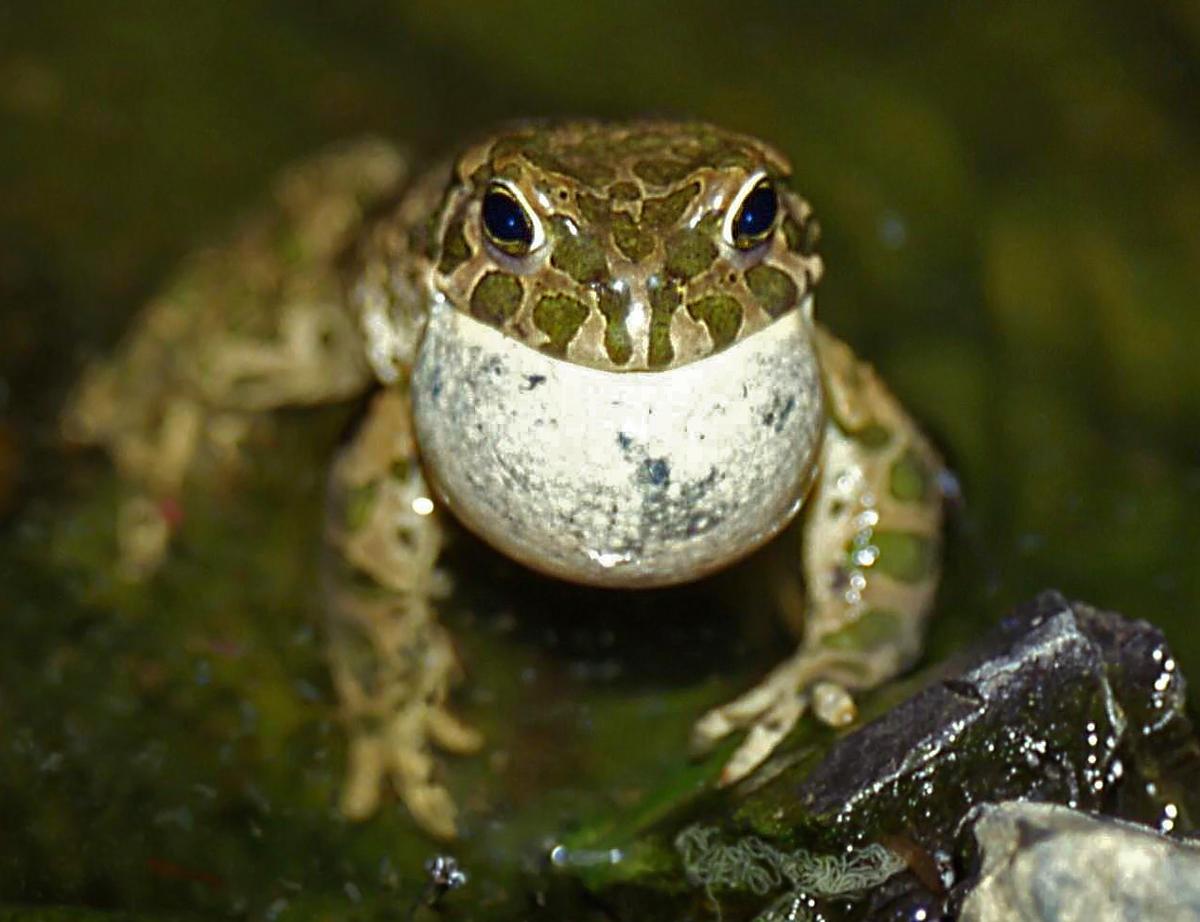
The European green toad is pale grey to whitish-green with clearly delineated green patches. Its skin is covered in warts. Its eyes are lemon-yellow to greenish with horizontal pupils.
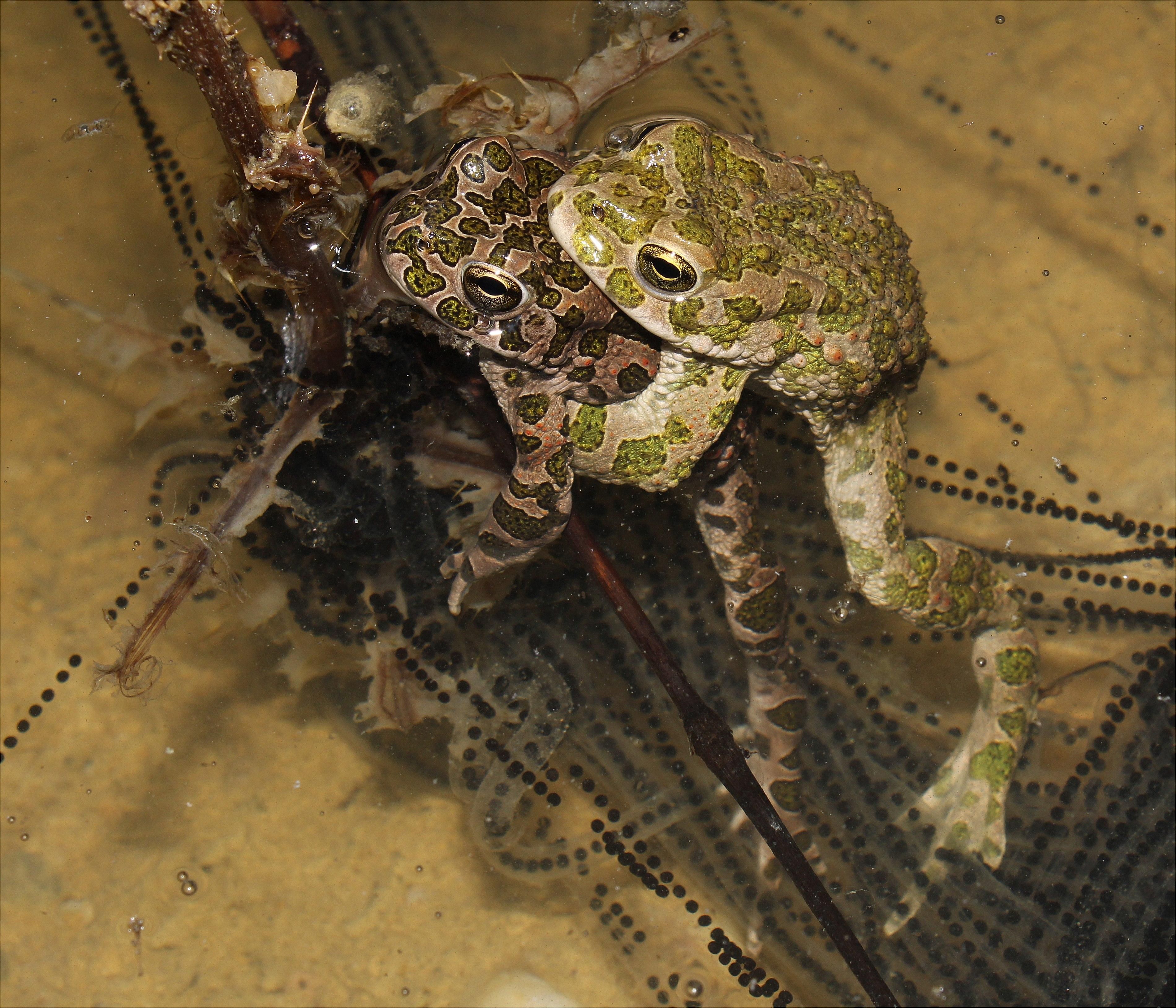
The male’s base colour tends to be more grey.
Females have an almost white base colour with reddish warts.
Features
European green toad
Bufotes viridis
reddish warts
high-pitched, warbling call
melodisch trillernder Ruf
T. Trilar, CC BY-SA 3.0

In the city
The European green toad requires dry open spaces with sandy soil, hiding places and waters that are comparatively free from vegetation. This may be found in areas of uncultivated urban land. During the day, it lives under mounds of stones, in rabbit warrens or burrows that it has dug itself.
Fun Facts
European green toads can change the contrast of the pattern of patches depending on light, temperature and “mood”.
Its tadpoles are mainly decimated by fish species introduced by humans.
The warbling mating call is reminiscent of the chirping of a mole cricket or the tweeting of a canary.
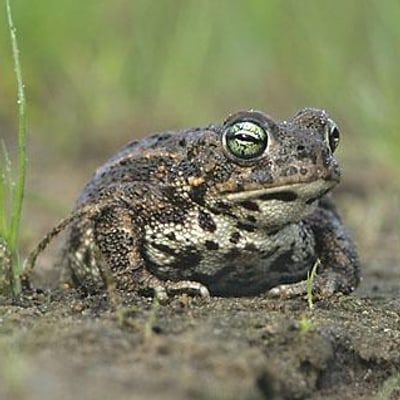
European green toads can share habitats with the natterjack toad. The two species can interbreed. However, their descendants are likely to be infertile.
The European green toad has a high tolerance to salt and can even spawn in brackish waters such as in dunes or areas of open cast lignite mines.
All European amphibians are specially protected and may not be captured, injured or killed.
- Endangerment level Germany: endangered
The European green toad has migrated to Europe from the Asian steppes and has adapted to drier, warmer habitats.
Sources
Habitus , Ivengo(RUS), PD, https://commons.wikimedia.org/wiki/File:Bufo_viridis.jpg

Männchen , Christian Fischer, CC BY-SA 3.0, https://de.wikipedia.org/wiki/Datei:BufoViridisCallingMale.jpg

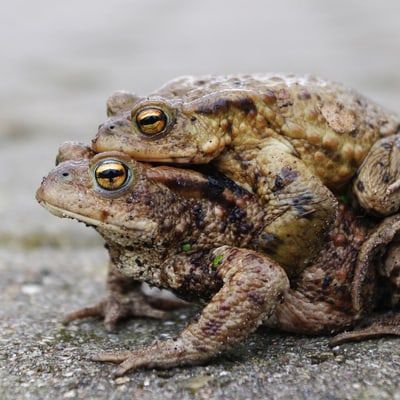
Paar, Weddi, CC BY-SA 4.0, https://de.wikipedia.org/wiki/Datei:Hersel_Autobahnabfahrt555_April_2020_Wechselkr%C3%B6te_Img_3820_Weddeling.jpg

Page „Wechselkröte“. : Wikipedia, The Free Encyclopedia. Date of last revision: 07.03.2016, 20:12 UTC. URL: https://de.wikipedia.org/w/index.php?title=Wechselkr%C3%B6te&oldid=152280196 (Accessed: 10.05.2016).
Kwet, A. (2015) Reptilien und Amphibien Europas. 250 Arten mit Verbreitungskarten, Stuttgart: Franckh Kosmos Verlag.
Blab, J. & Vogel, H. (2002) Amphibien und Reptilien erkennen und schützen, München: BLV.
Glandt, D. (2008) Heimische Amphibien: Bestimmen – Beobachten – Schützen, Wiebelsheim: AULA-Verlag.
Glandt, D. (2015) Die Amphibien und Reptilien Europas, Wiebelsheim: Quelle & Meyer Verlag.
Bundesfachausschuss Feldherpetologie/Ichthyofaunistik im NABU (n.d.) Rote Listen, URL: http://www.amphibienschutz.de/schutz/artenschutz/roteliste/deutschland.htm (Accessed: 26.07.2016).
NABU – Naturschutzbund Deutschland e.V. (n.d.) Fleckenmuster tarnt perfekt. Die Wechselkröte (Bufo viridis), URL: https://www.nabu.de/tiere-und-pflanzen/amphibien-und-reptilien/amphibien/artenportraets/10662.html (Accessed: 10.08.2016).