
Short Description
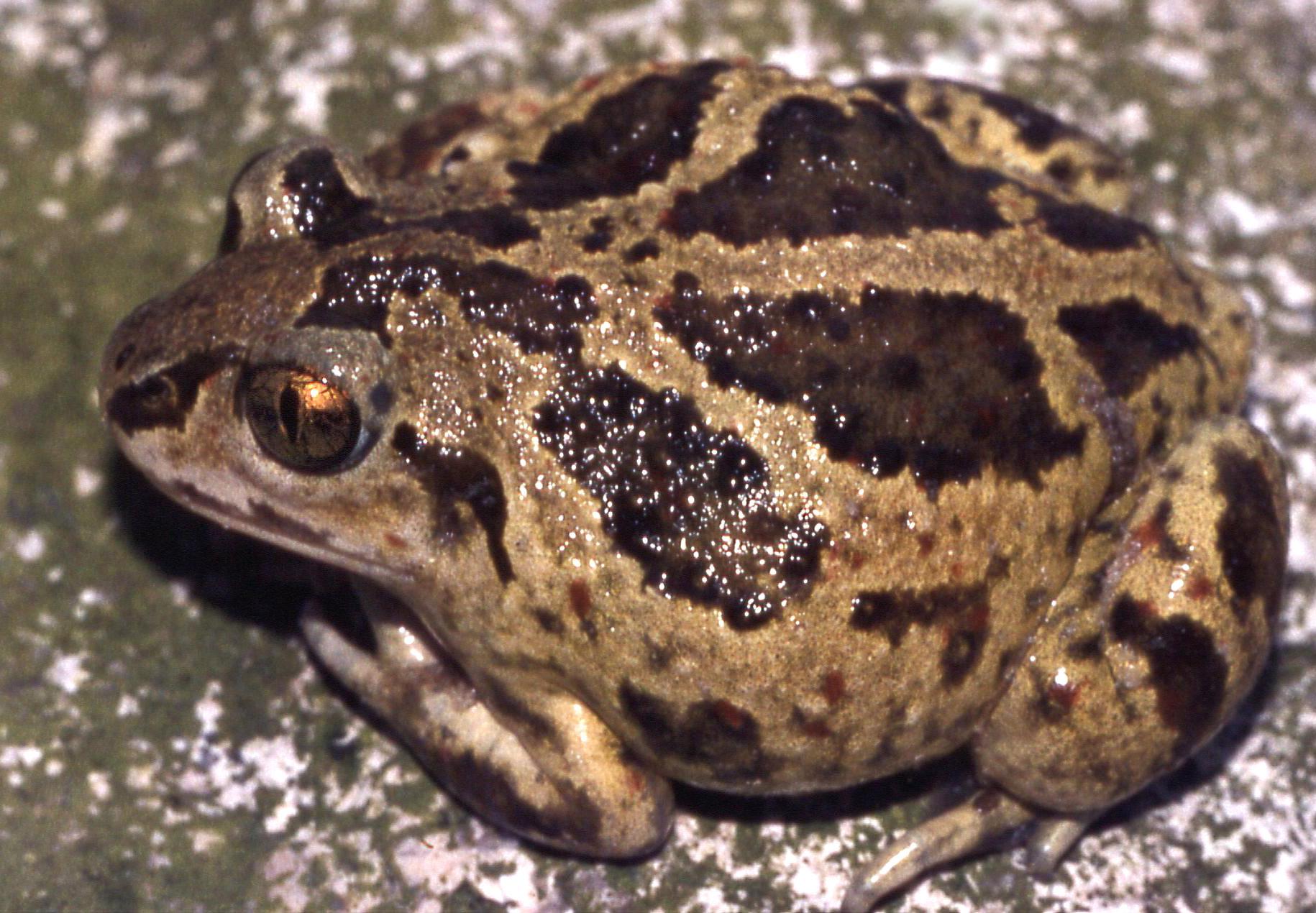
The garlic toad is light-brown with large green-brown patches. A striking feature are its significantly protruding eyes with vertical, slit-shaped pupils. The skin is thin and smooth. It has spade-like projections (calluses) on its hind legs - hence the common name spadefoot.
Males are generally yellowish-brown to light-grey and have no vocal sacs.
Females tend to be more grey-brown to light-grey and have a slimmer build.
Features
Garlic toad
Pelobates fuscus
olive-brown mottled pattern
smooth frog-like skin
Männchen: Paarungsrufe
Frommolt, CC BY-SA 3.0

In the city
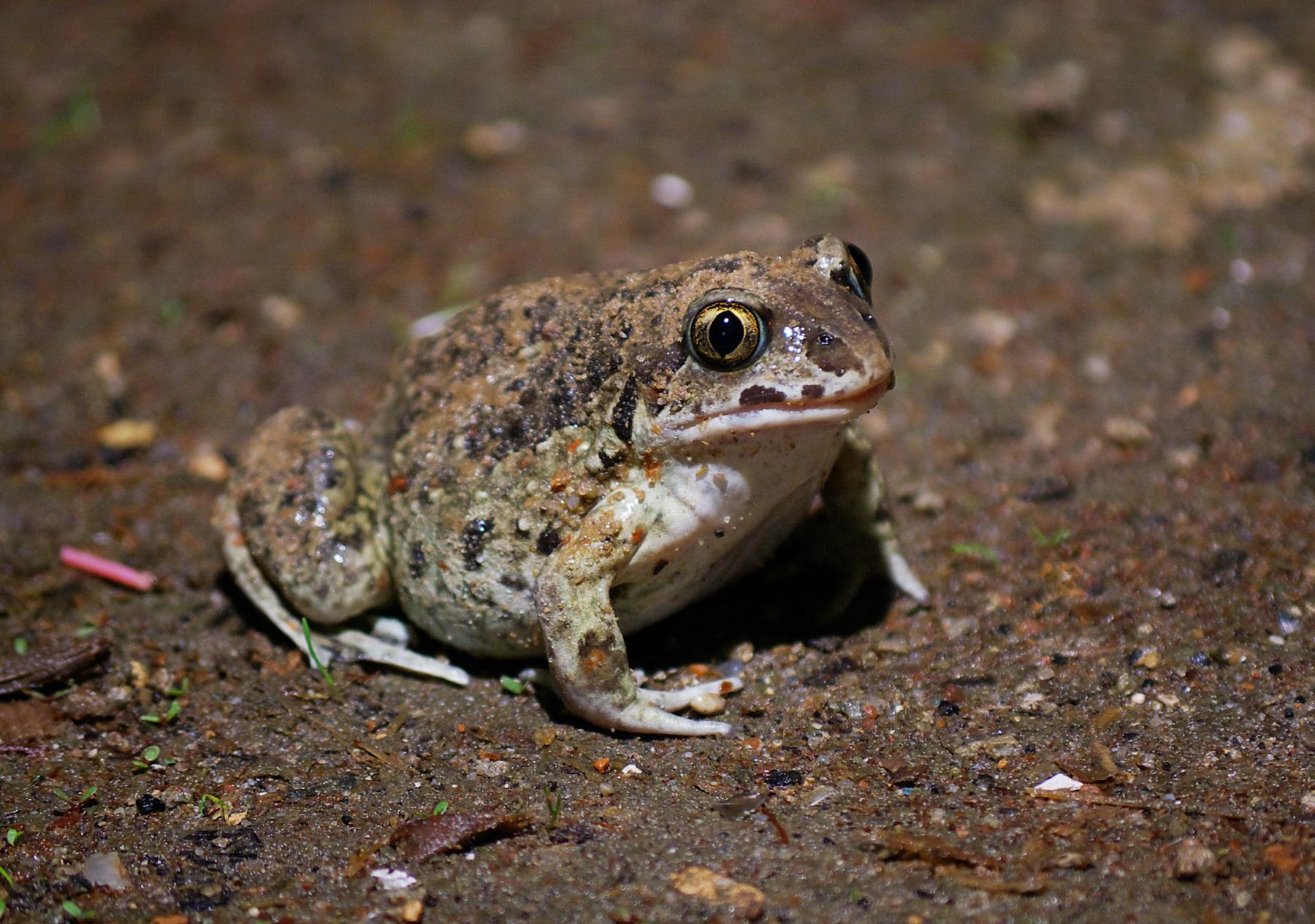
Garlic toads mainly live in open landscapes on sandy soil or near stagnant waters. For that reason, it can be found on wastelands, in gardens and near ponds. It also likes to settle on agricultural land such as fields with asparagus, potatoes or onions.
Fun Facts
In defence, the garlic toad can secrete a fluid with a smell that is reminiscent of garlic.
Thanks to the spade calluses on its hind legs, it can easily bury itself into the ground during the day.
Tadpoles are significantly longer than young toads.
Outside of the mating season, garlic toads are nocturnal.
Garlic toads combine frog and toad characteristics: their compact bodies are toad-like, but their thin, moist and smooth skin is more frog-like.
All European amphibians are specially protected and must not be captured, injured or killed.
- Endangerment level Germany: endangered
Sources
Habitus , Christian Fischer, CC BY-SA 2.5, https://commons.wikimedia.org/wiki/File:PelobatesFuscus.jpg

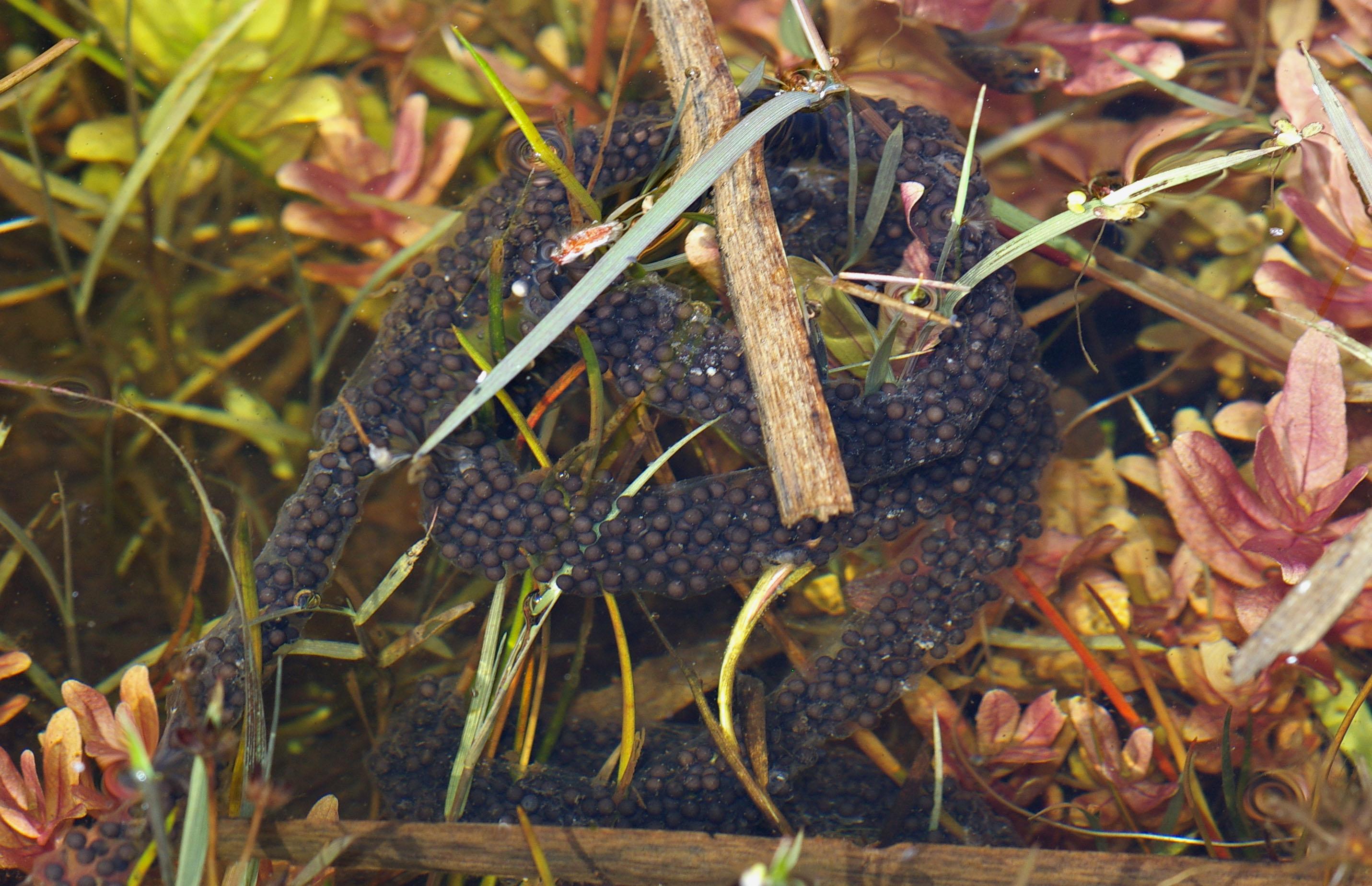
Laich, Christian Fischer, CC BY-SA 3.0, https://de.wikipedia.org/wiki/Datei:PelobatesFuscusSpawn.jpg

Männchen , -ani-, CC BY-SA 2.0, https://de.wikipedia.org/wiki/Datei:Knoblauchkroete_IMGP4749.jpg

Page „Knoblauchkröte“. : Wikipedia, The Free Encyclopedia. Date of last revision: 07.03.2016, 20:11 UTC. URL: https://de.wikipedia.org/w/index.php?title=Knoblauchkr%C3%B6te&oldid=152280167 (Accessed: 12.05.2016).
NABU – Naturschutzbund Deutschland e.V. (n.d.) Versteckt im Sandboden. Die Knoblauchkröte (Pelobates fuscus), URL: https://www.nabu.de/tiere-und-pflanzen/amphibien-und-reptilien/amphibien/artenportraets/10692.html (Accessed: 26.07.2016).
Kwet, A. (2015) Reptilien und Amphibien Europas. 250 Arten mit Verbreitungskarten, Stuttgart: Franckh Kosmos Verlag.
Blab, J. & Vogel, H. (2002) Amphibien und Reptilien erkennen und schützen, München: BLV.
Glandt, D. (2008) Heimische Amphibien: Bestimmen – Beobachten – Schützen, Wiebelsheim: AULA-Verlag.
Glandt, D. (2015) Die Amphibien und Reptilien Europas, Wiebelsheim: Quelle & Meyer Verlag.
Bundesfachausschuss Feldherpetologie/Ichthyofaunistik im NABU (n.d.) Rote Listen, URL: http://www.amphibienschutz.de/schutz/artenschutz/roteliste/deutschland.htm (Accessed: 26.07.2016).