
Short Description
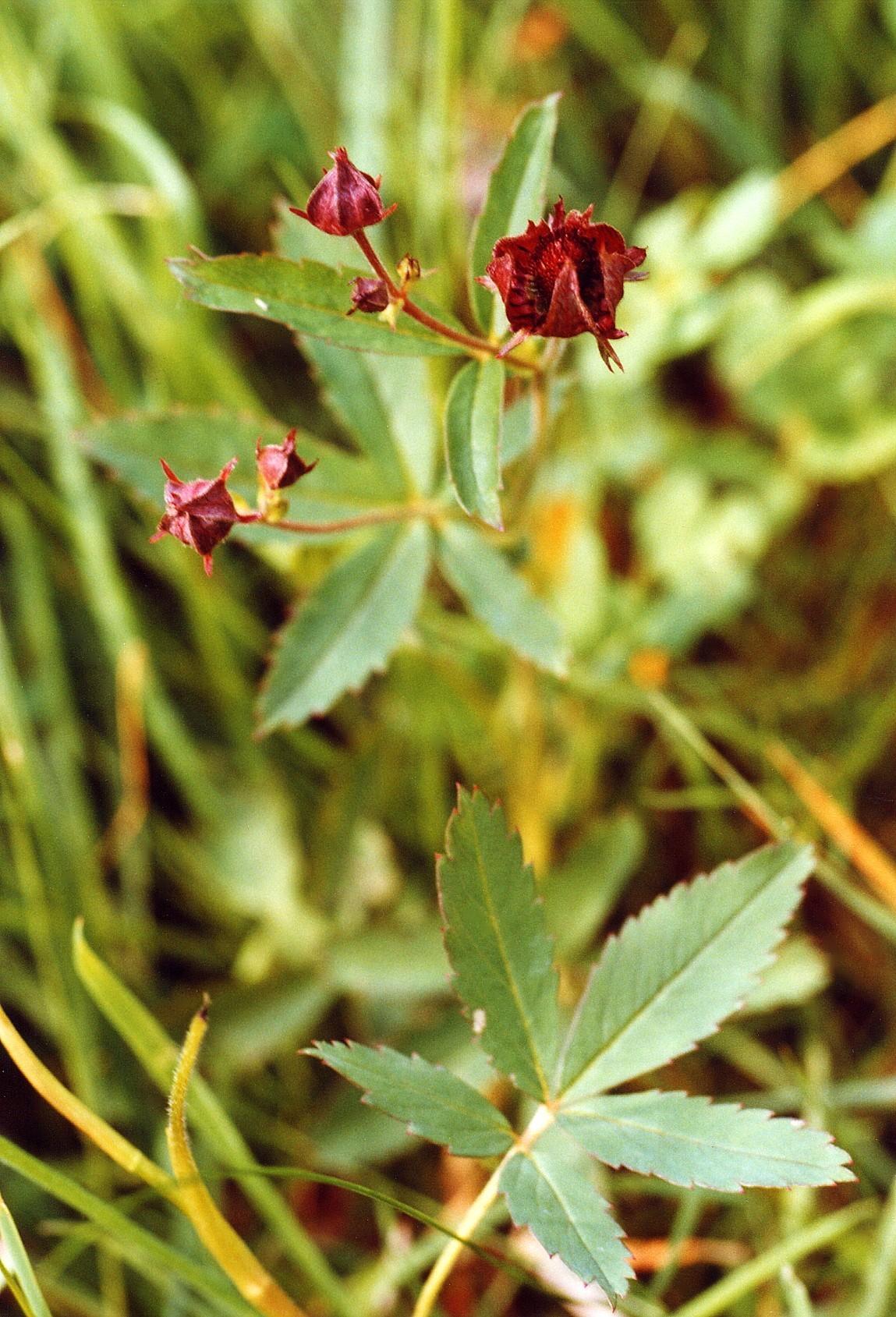
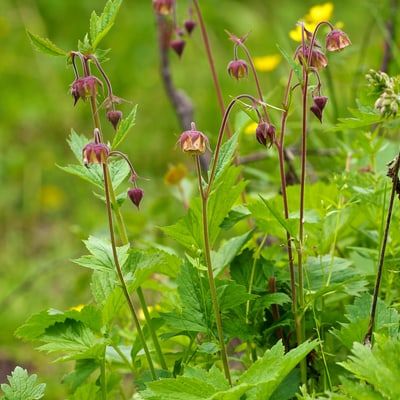
The marsh cinquefoil can grow up to one metre high.
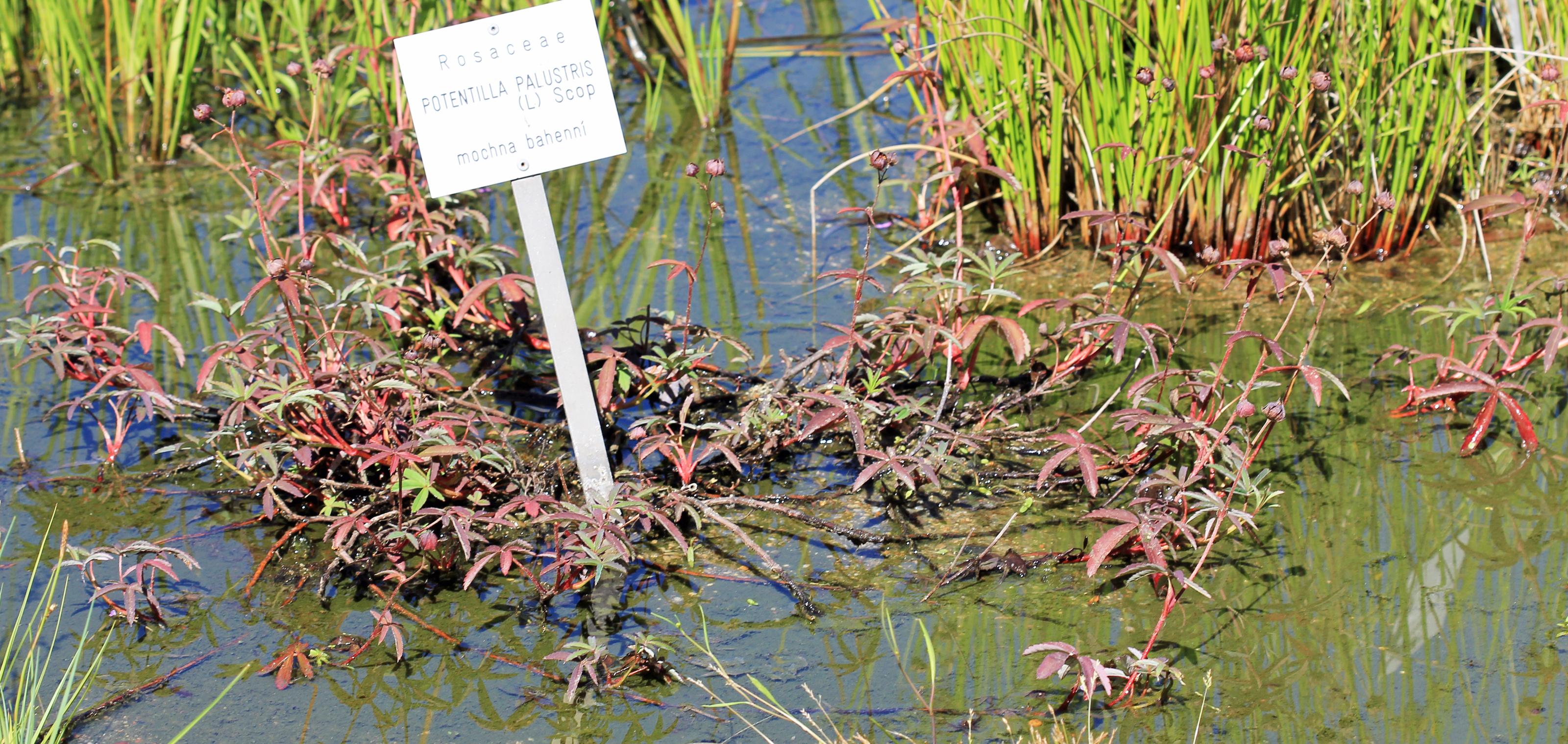
The leaves are divided into five to seven part-leaves that stick out like fingers. The partial leaves are dark green on the upper side and bluish on the underside. Their margin is serrated.
The stem grows horizontally to arching upwards. It is hairy and branched in the upper part.
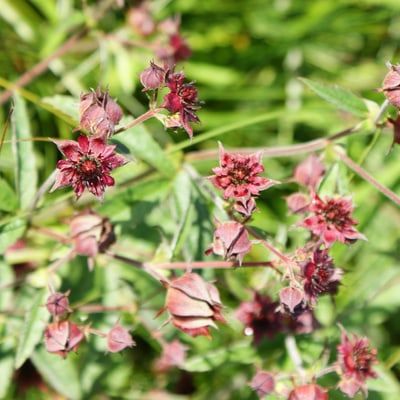
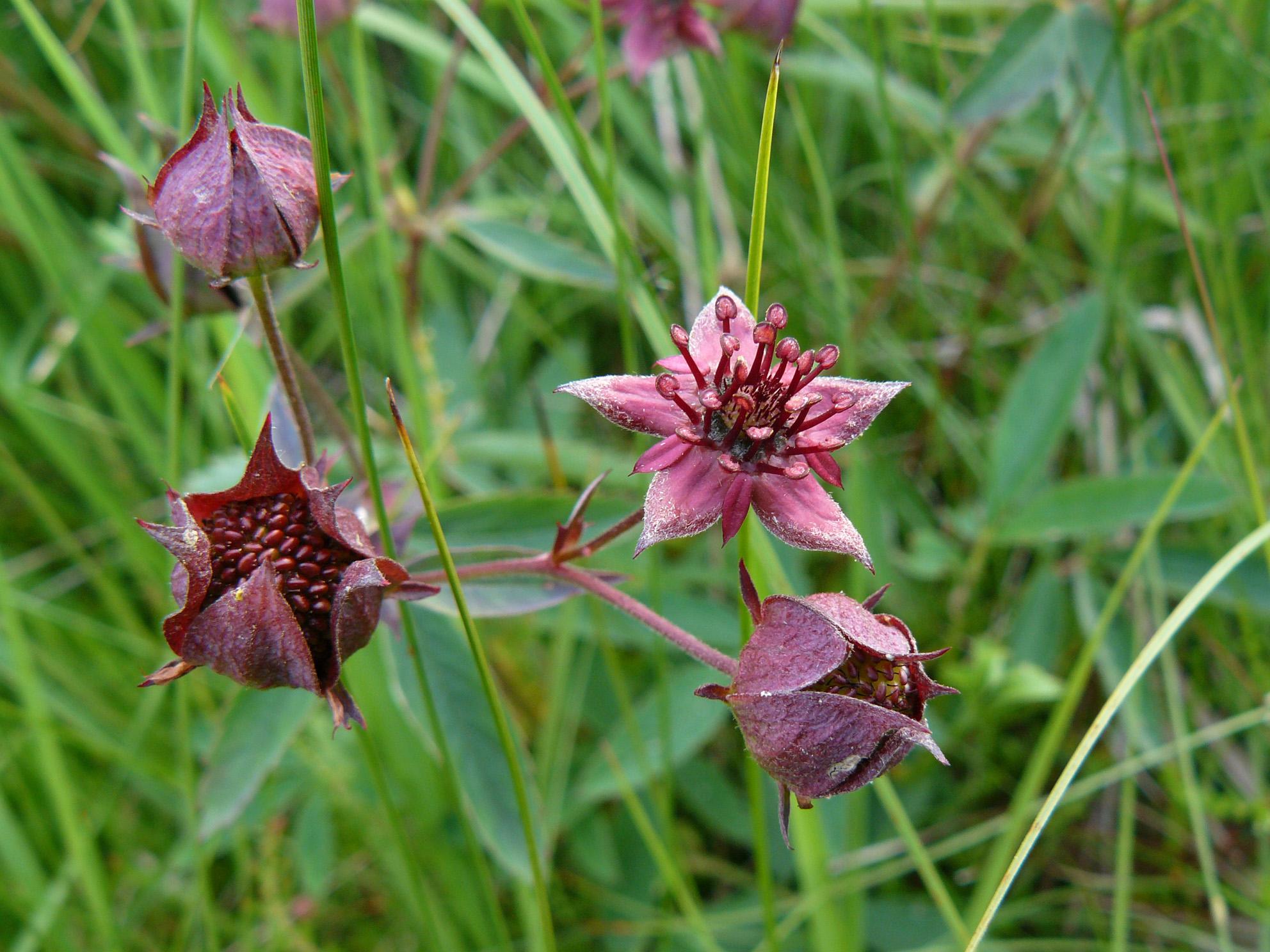
The large, star-shaped flower is composed of five petals and five large and five small sepals. They are all dark red.
The plant forms many small, shiny nutlets per flower. The fruits have a hooked tip and are somewhat reminiscent of strawberries.
Features
Marsh cinquefoil
Comarum palustre
dark red, star-shaped flowers
hairy stem
In the city
It grows preferentially on wet, temporarily flooded, low-calcareous and moderately acidic peat and mud soils. It finds these conditions in swamps, ditches and bogs. As these sites are usually rare in the city, it occurs only scattered
Fun Facts
The fruit looks like the forest strawberry. However, it does not taste good.
The fruits can float in the water for up to 12 months and thus spread.
The flowering period is from June to July.
It lives for several years and generally flowers and fruits annually (perennial plant).
- Endangerment level Germany: not endangered
It is native to Germany. It is widespread in Europe, Siberia, Iceland, Greenland and North America.
The rhizome contains a lot of tannins and a red dye. This was used in the past against diarrhoea and for tanning and red dyeing.
Sources
Blatt und Blütenstand, Christian Fischer, CC BY-SA 3.0, https://commons.wikimedia.org/wiki/File:PotentillaPalustris.jpg

Blüten, Frank Vassen, CC BY 2.0, https://commons.wikimedia.org/wiki/File:Sumpf-Blutauge_(Potentilla_palustris),_Holzwarchetal_bei_M%C3%BCrringen,_Ostbelgien_(3945419014).jpg
,_Holzwarchetal_bei_M%C3%BCrringen,_Ostbelgien_(3945419014).jpg)
Habitus, Karelj, CC BY-SA 3.0, https://commons.wikimedia.org/wiki/File:Potentilla_palustris_Prague_2013_1.jpg

Kammer, P. M. (2016) Pflanzen einfach bestimmen. Schritt für Schritt einheimische Arten kennenlernen, Bern: Haupt Verlag.
Schauer, T., Caspari, C. & Caspari, S. (2015) Der illustrierte BLV-Pflanzenführer für unterwegs. 1150 Blumen, Gräser, Bäume und Sträucher, München: BLV.
Spohn, M., Golte-Bechtle, M. & Spohn, R. (2015) Was blüht denn da? Stuttgart: Franckh Kosmos Verlag.
Page „Sumpf-Blutauge“. : Wikipedia, The Free Encyclopedia. Date of last revision: 31.10.2017, 11:12 UTC. URL: https://de.wikipedia.org/w/index.php?title=Sumpf-Blutauge&oldid=170502625 (Accessed: 24.08.2018).