
Short Description
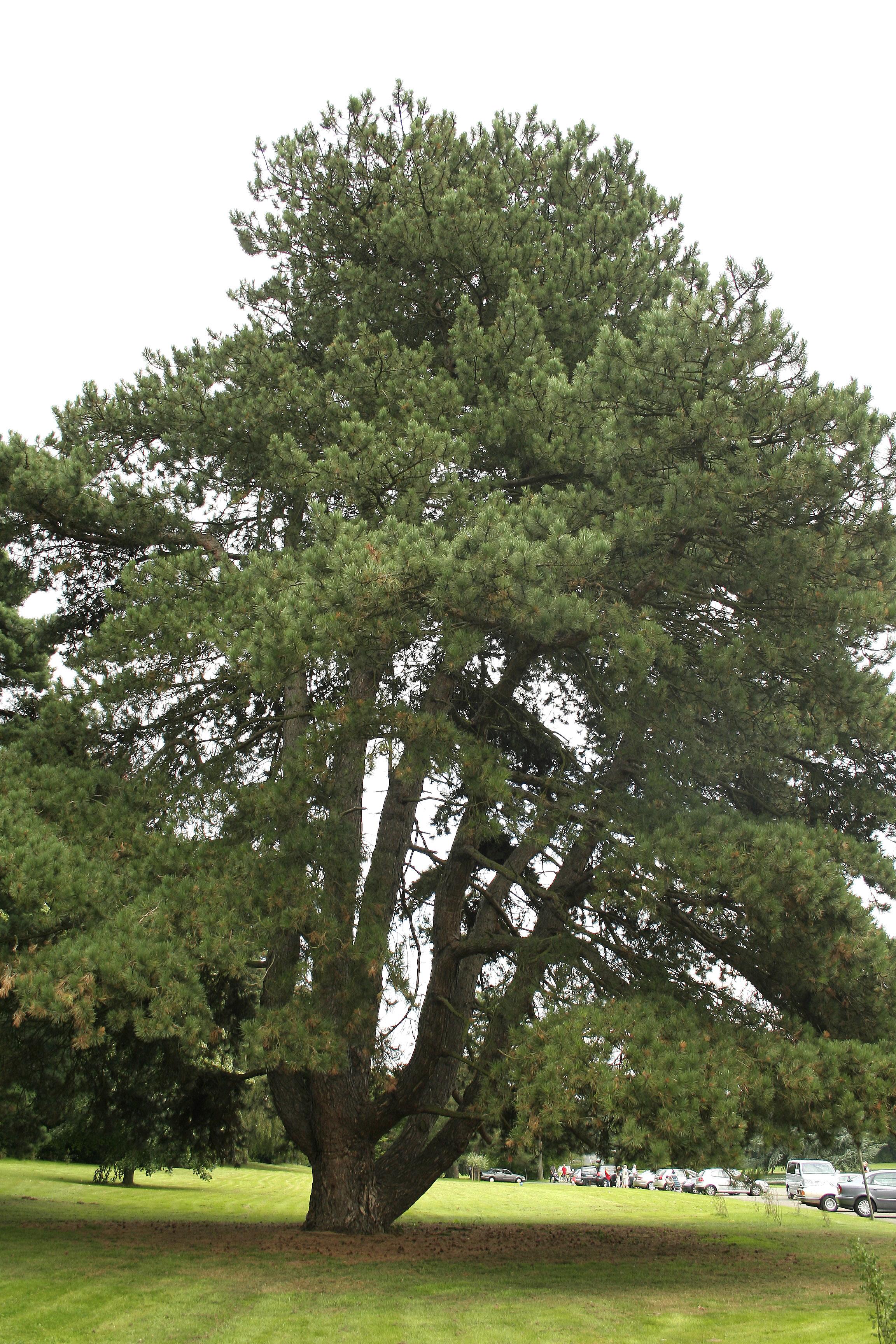
The black pine is an evergreen conifer with a height of 20 to 40 metres.
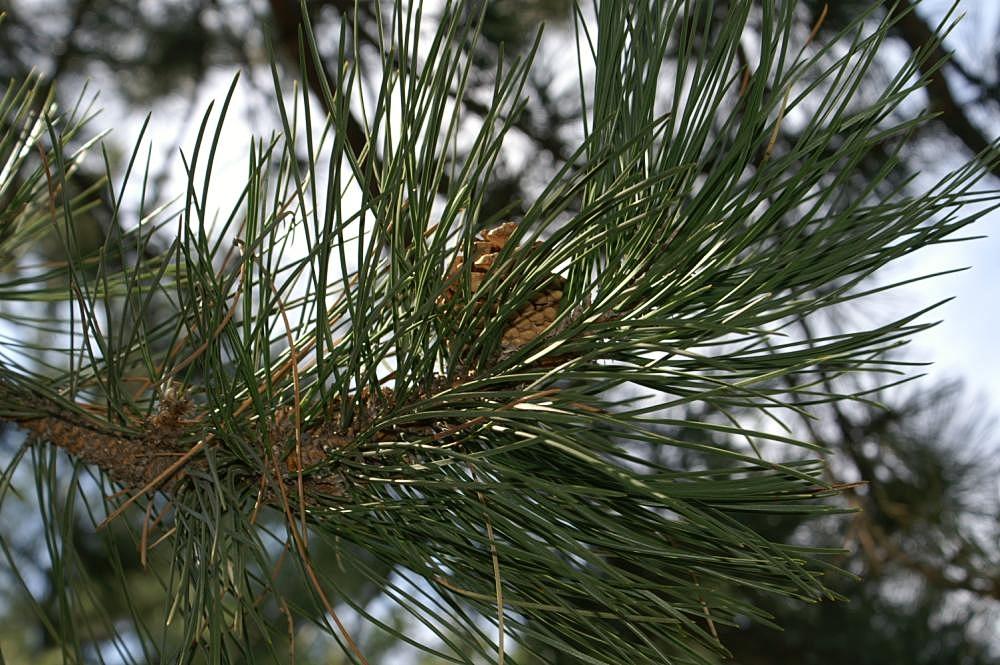
The dark green needles are long, pointed and often curved or twisted in. They grow in twos on a short shoot. Their cross-section is semicircular.
The bark is brownish to grey and has deep cracks (reticulately fissured). Younger twigs are light brown or yellowish orange.
There are male and female flower cones. The green, male flowers are clustered at the ends of the shoots. The female flower cones always grow together in groups of two to four. They are green at first and turn red for pollination. The seed-bearing cones then develop from them.
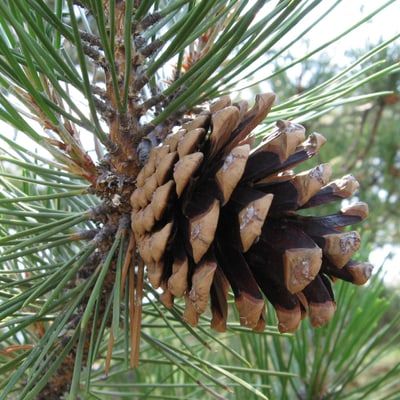
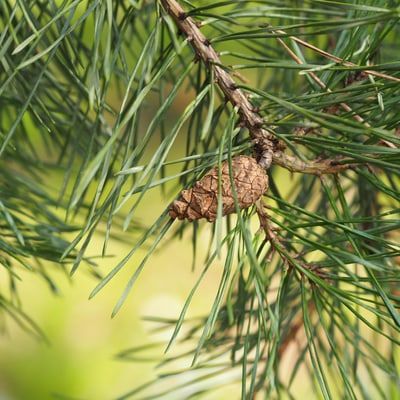
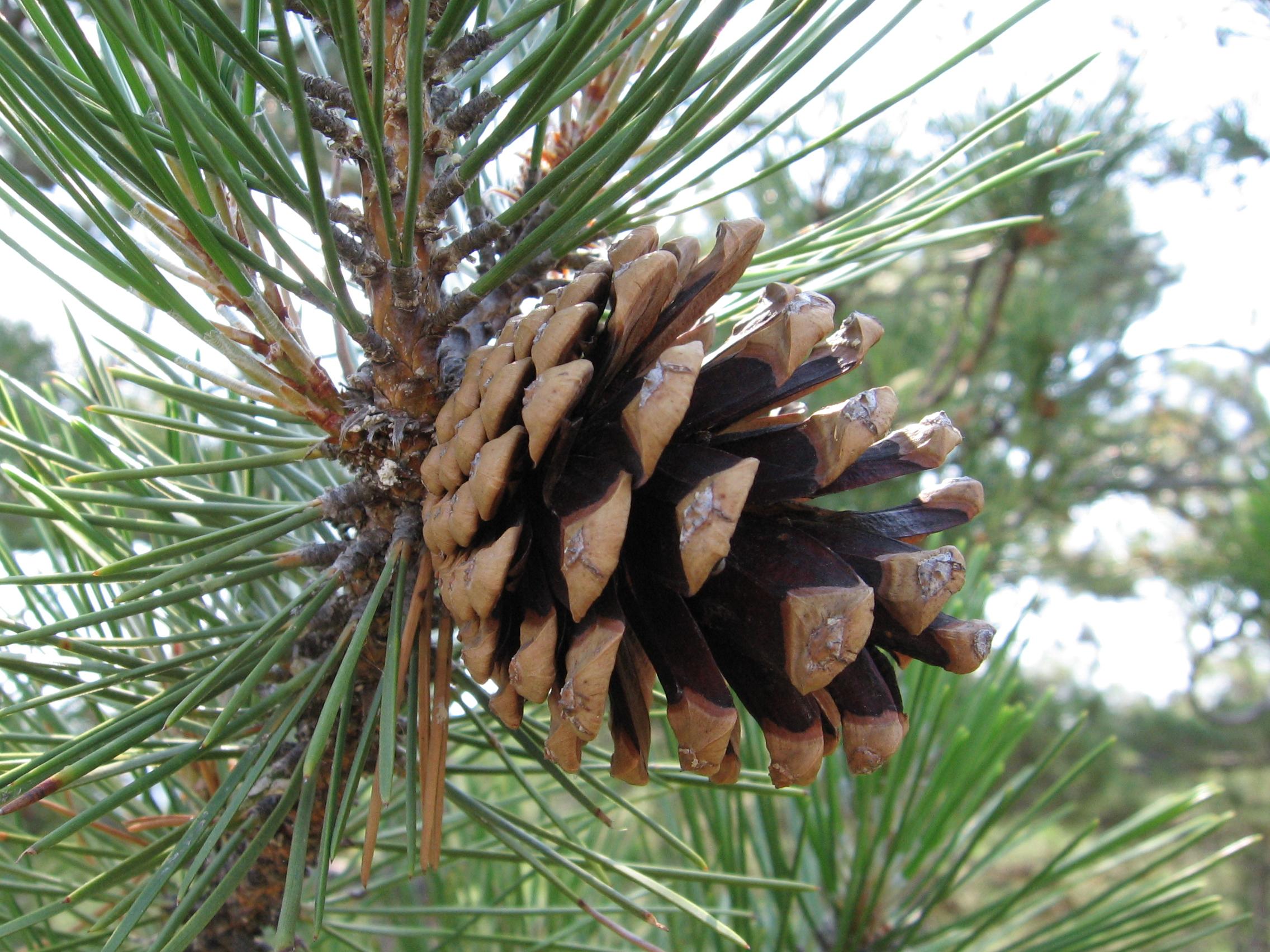
The ovoid cones are three to twelve centimetres long. They are light brown. The inner parts of the cone scales, visible only when the cones are open, are black. The cones sit at right angles or at an angle at the ends of the twigs.
Features
Black pine
Pinus nigra
paired, long needles
black cone scales
In the city
The black pine is a common park and forest tree. In the city, it is also planted as an evergreen solitary tree in squares and along smaller streets, as it is very immission-, drought- and salt-tolerant.
It is also popular as a garden tree because its resin spreads a pleasant fragrance and the sound of the wind through the crown is perceived as calming. In spring, the high pollen production can lead to yellow coatings on cars or garden furniture.
Fun Facts
Boards made of black pine wood do not creak and are therefore often used for stage floors.
The essential oils in the needles help against sore throats and colds.
The black pine is a pioneer tree and can therefore quickly colonise new areas in cities.
The flowering period is from April to the beginning of June.
- Endangerment level Germany: not evaluated
The resin is slightly poisonous and irritating to the skin. Turpentine is extracted from it.
The black pine originates from southern Europe to North Africa. Its natural northernmost distribution area is Austria. From there it came to Germany as a forest and park tree. It belongs to the non-native plants (neophytes).
Sources
Habitus, ol GRANDMONT, CC BY-SA 3.0, https://commons.wikimedia.org/wiki/File:Pinus_nigra_JPG3Ac.jpg

Nadeln, David J. Stang, CC BY-SA 4.0 , https://commons.wikimedia.org/wiki/File:Pinus_nigra_nigra_2zz.jpg

Zapfen, Лобачев Владимир, CC BY-SA 3.0, https://commons.wikimedia.org/wiki/File:%D0%A8%D0%B8%D1%88%D0%BA%D0%B0_%D0%A1%D0%BE%D1%81%D0%BD%D1%8B_%D0%BF%D0%B8%D1%86%D1%83%D0%BD%D0%B4%D1%81%D0%BA%D0%BE%D0%B9.jpg

Roth, L., Daunderer, M. & Kormann, K. (2008) Giftpflanzen - Pflanzengifte. Vorkommen, Wirkung, Therapie. Allergische und phototoxische Reaktionen, Hamburg: Nikol Verlag.
Spohn, M. & Spohn, R. (2011) Kosmos - Baumführer Europa. 680 Bäume, 2600 Zeichnungen, Stuttgart: Franckh Kosmos Verlag.
Godet, J.-D. (2007) Bäume und Sträucher. Bestimmen und nachschlagen, Stuttgart: Verlag Eugen Ulmer.
Roloff, A. (2013) Bäume in der Stadt. Besonderheiten - Funktion - Nutzen - Arten - Risiken, Stuttgart: Verlag Eugen Ulmer.
Page „Schwarzkiefer“. : Wikipedia, The Free Encyclopedia. Date of last revision: 11.06.2017, 10:16 UTC. URL: https://de.wikipedia.org/w/index.php?title=Schwarzkiefer&oldid=166285558 (Accessed: 28.11.2017).