
Short Description
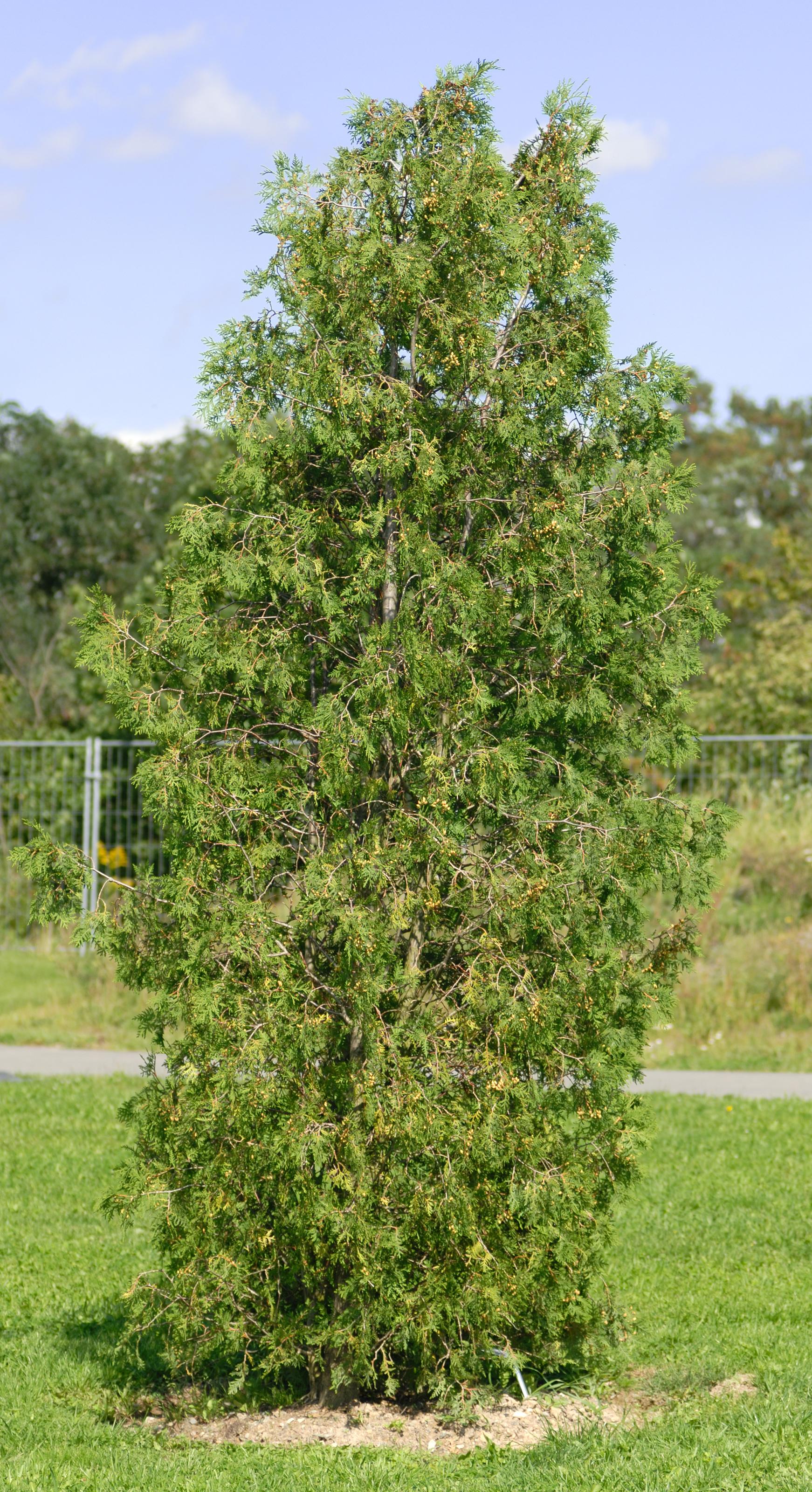
The northern white cedar is an evergreen conifer that can grow up to 20 metres high.
The scale-like leaves are about three millimetres long and triangular. They are dark green on top and pale green underneath.
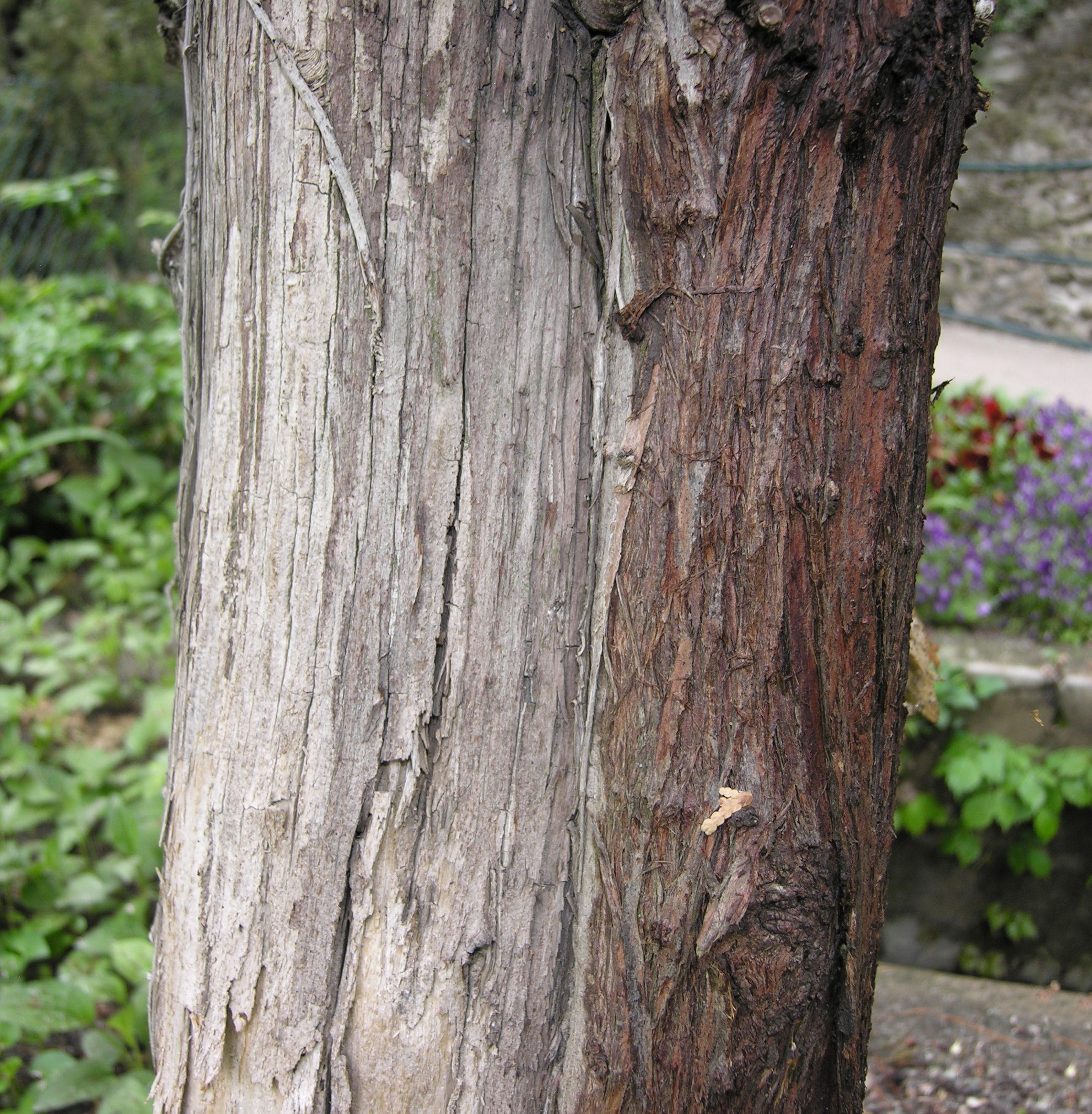
The trunk is upright with a conical crown. The orange-brown to grey-brown bark is longitudinally cracked and peels off in narrow strips.
The female and male flowers are yellowish, inconspicuous and are located at the shoot tips.
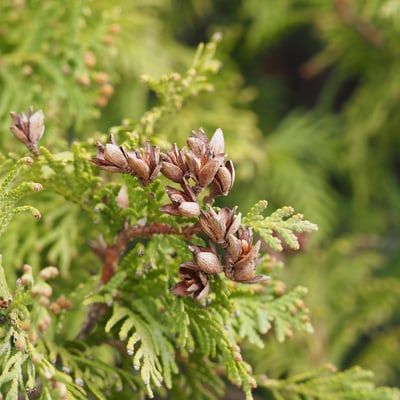
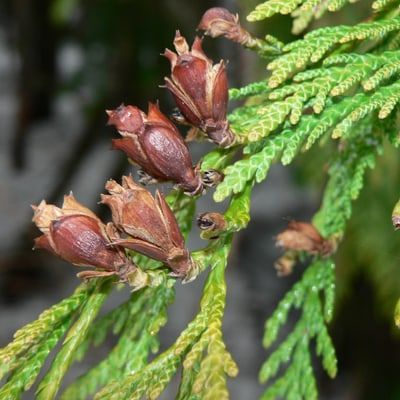
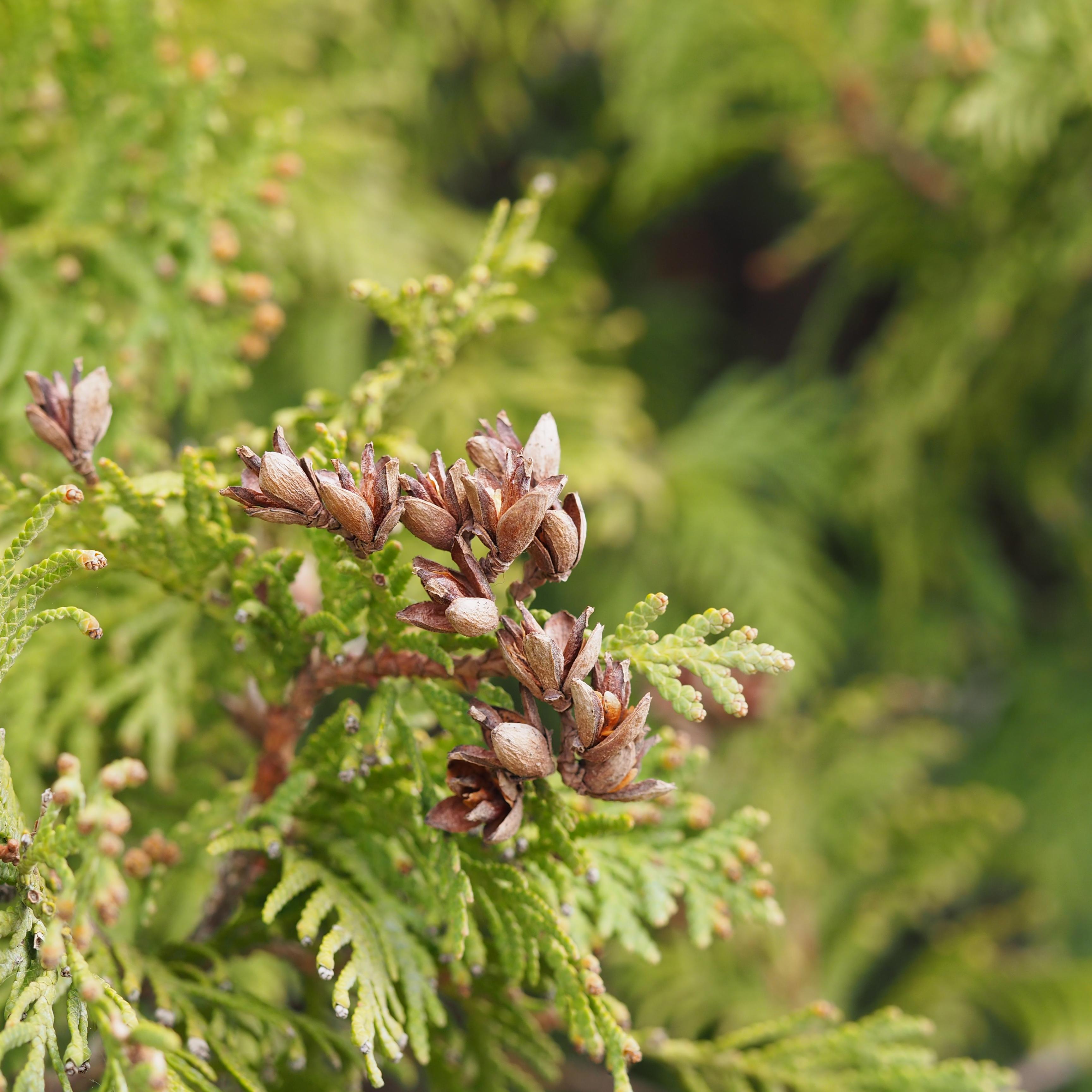
The seeds are winged. They are in upright, small cones.
Features
Northern whitecedar
Thuja occidentalis
highly poisonous
small cones
scale-like leaves
In the city
It is often found in parks, gardens and cemeteries. It is a popular hedge because it remains green and opaque even in winter. It prefers rather moist, moderately light locations.
Fun Facts
Caution. The plant is highly poisonous. The branch tips and the seeds are particularly poisonous. The wood can be irritating to the skin.
The oil is used externally against rheumatism and warts.
It flowers from March to April.
- Endangerment level Germany: not evaluated
It was introduced to Europe from North America in the middle of the 16th century. It belongs to the non-native plants (neophytes).
Sources
Habitus, André Karwath, CC BY-SA 2.5, https://commons.wikimedia.org/wiki/File:Thuja_occidentalis_-_tree_(aka).jpg
.jpg)
Nadeln und Zapfen, Alice Kracht, CC BY-SA 4.0, https://species-id.net/openmedia/File:Thuja_occidentalis_(5).JPG
.JPG)
Rinde, Andrea Moro, CC BY-SA 3.0, https://commons.wikimedia.org/wiki/File:Dryades_TSB74676.jpg

Roth, L., Daunderer, M. & Kormann, K. (2008) Giftpflanzen - Pflanzengifte. Vorkommen, Wirkung, Therapie. Allergische und phototoxische Reaktionen, Hamburg: Nikol Verlag.
Page „Abendländischer Lebensbaum“. : Wikipedia, The Free Encyclopedia. Date of last revision: 13.09.2016, 20:19 UTC. URL: https://de.wikipedia.org/w/index.php?title=Abendl%C3%A4ndischer_Lebensbaum&oldid=157905067 (Accessed: 03.04.2017).