
Short Description
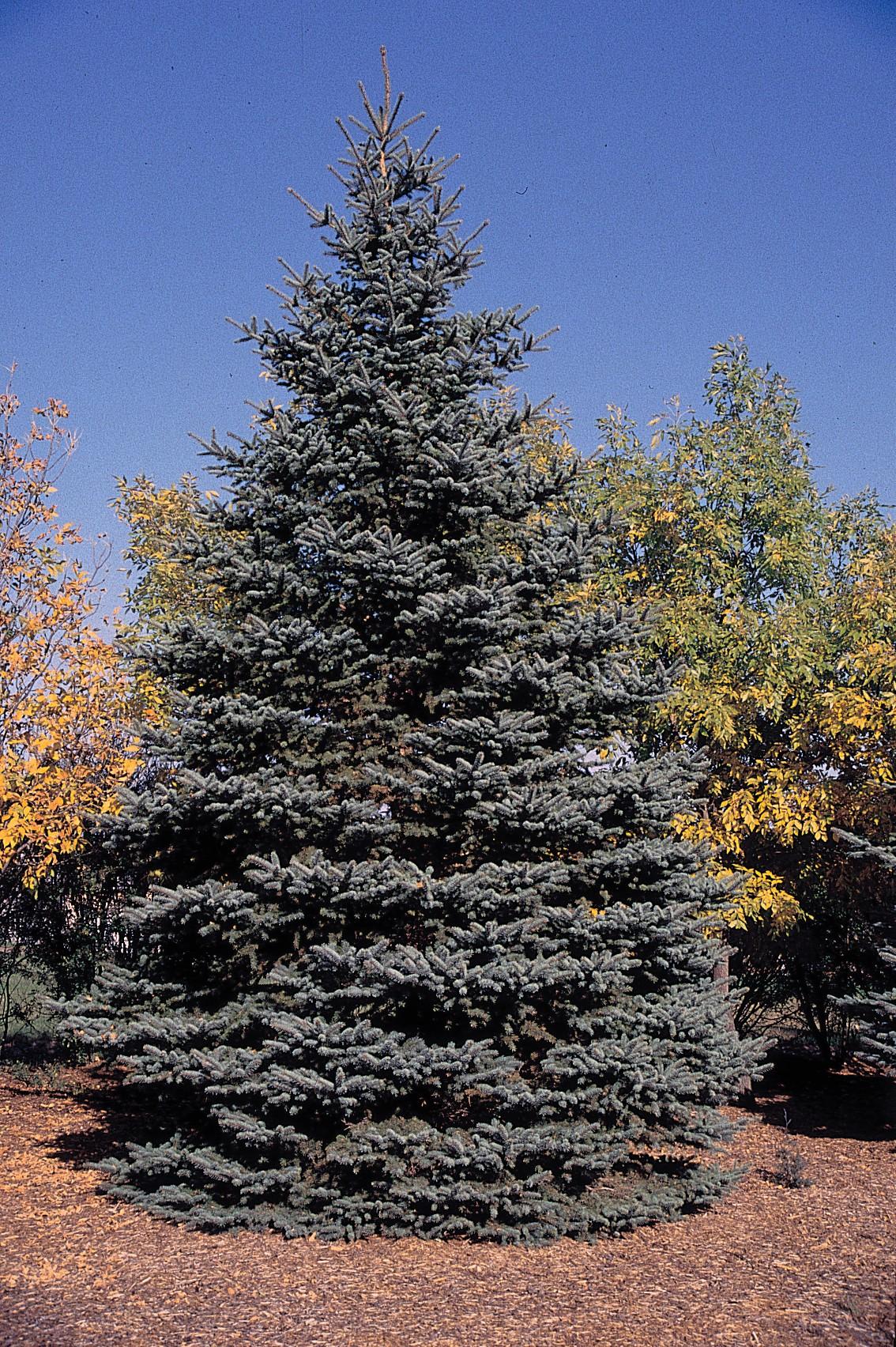
The blue spruce is an evergreen conifer with a height of 15 to 30 metres. It has a conical crown.
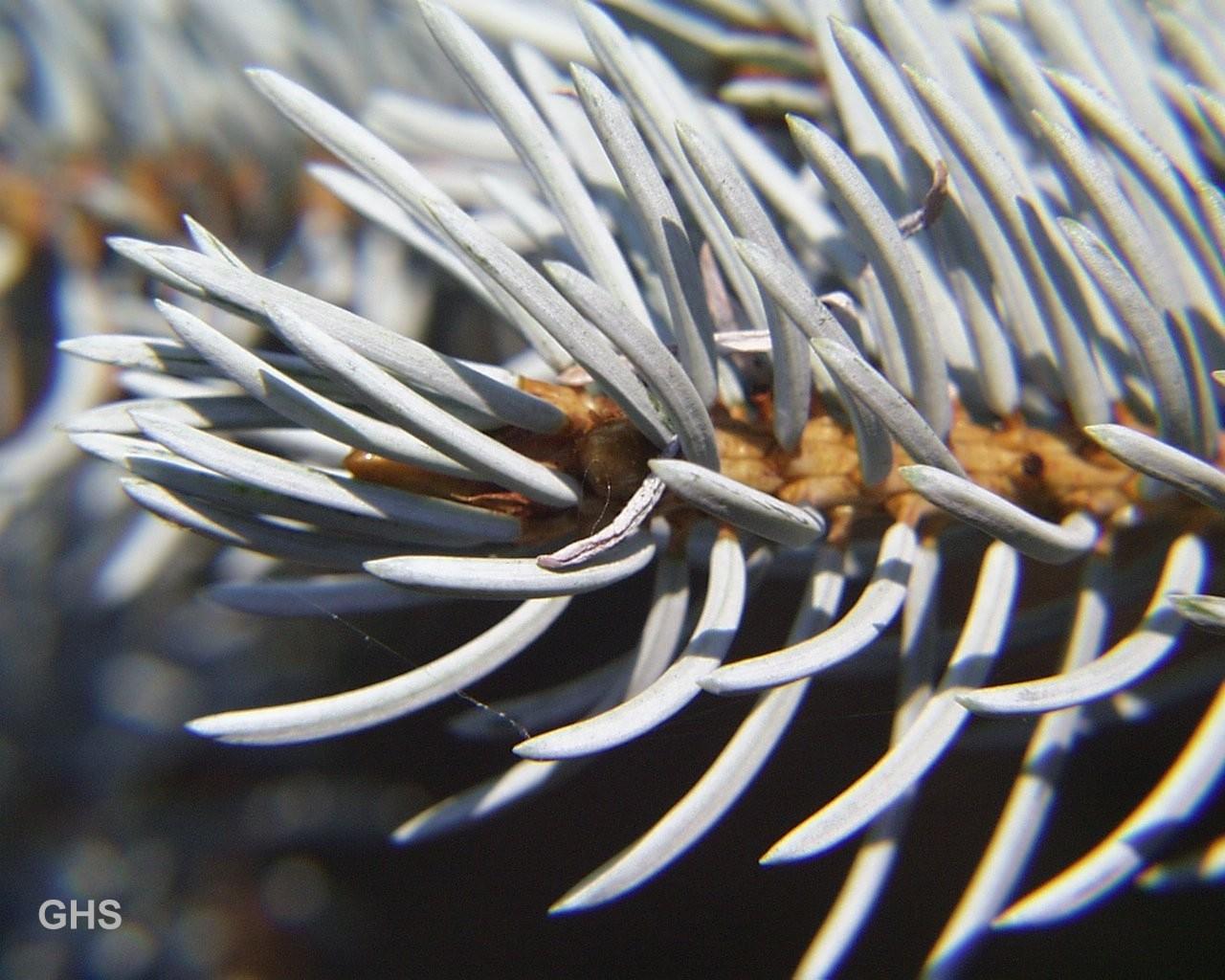
The needles are rigid, strongly pointed and square. They are blue-green to silvery in colour with a wipeable blue-green coating. They are often slightly sickle-shaped (falcate).
The bark on the trunk is purplish grey or brown and coarsely scaly. The twigs are light to orange-brown.
There are male and female flowers. The male flower cones are yellow and often slightly tinged with red. They are located along the entire crown. The female cones are light pink to light red in colour and tend to grow in the upper part of the crown.
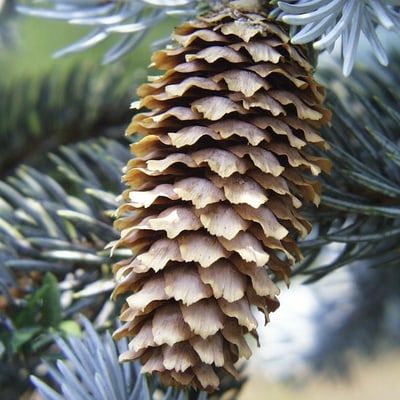
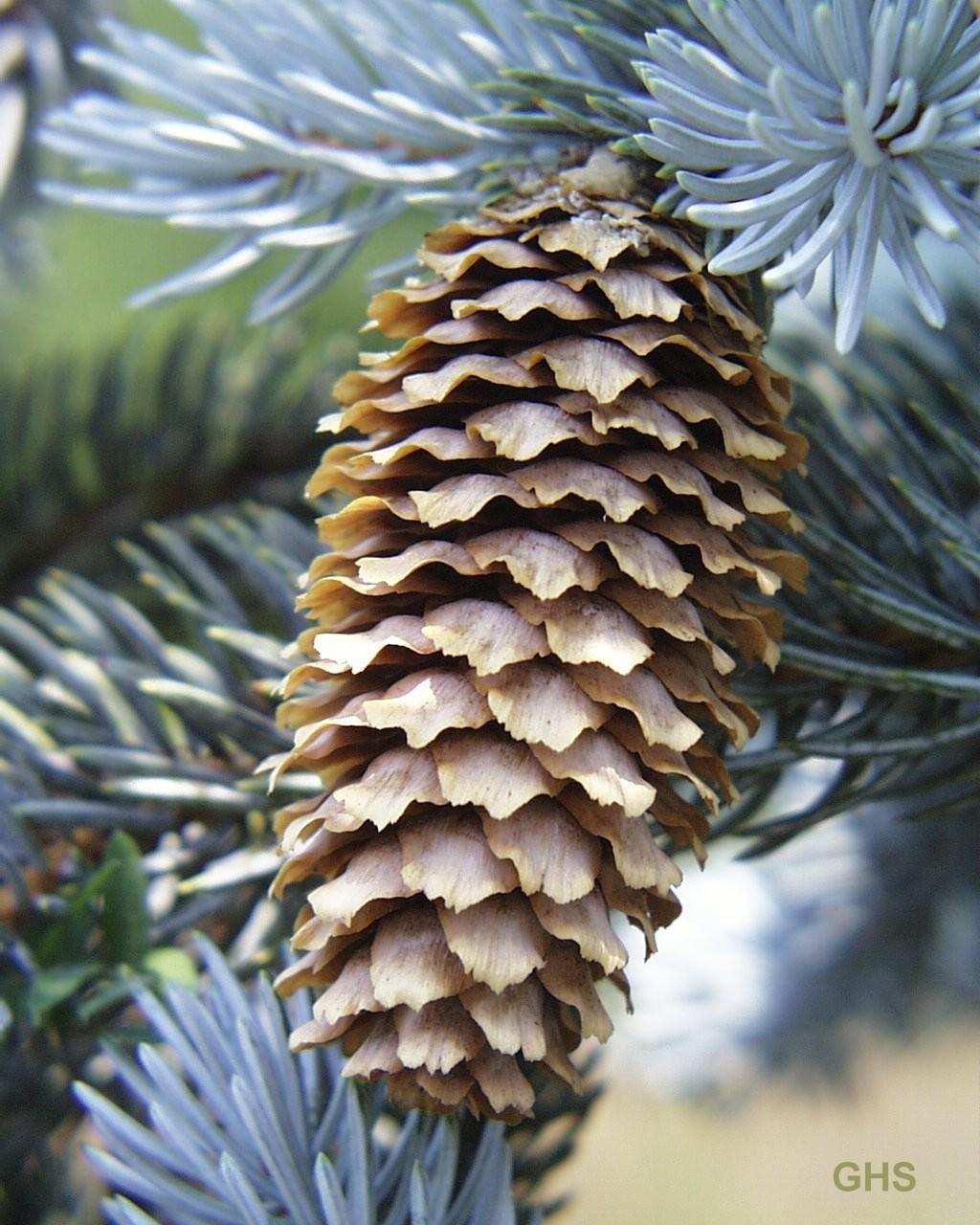
The elongated, conical cone grows up to eleven centimetres long. It is light brown. The cone scales are very thin and their edge is often wavy and finely toothed.
Features
Blue spruce
Picea pungens
square needles
rigid, very pointed needles
In the city
With its numerous cultivated forms, the blue spruce is very popular and one of the most frequently planted ornamental conifers. Especially the blue-grey variety is found as a solitary tree in many gardens and parks in the city. Occasionally it is also planted as a hedge. It is particularly suitable as an urban tree because it is insensitive to frost, drought and air pollution.
Viele Menschen schätzen sie wegen ihrer guten Eigenschaften als Sichtschutz und zur ganzjährigen Lärmminderung.
Fun Facts
The blue spruce is the second most popular Christmas tree in Germany after the Nordmann fir.
Utah and Colorado have named it their state tree.
The flowering time is in May.
- Endangerment level Germany: not evaluated
The blue spruce originates from the Rocky Mountains in the west of the USA. It belongs to the non-native plants (neophytes).
The needles taste spicy and bitter.
Sources
Habitus, –, PD, https://commons.wikimedia.org/wiki/File:Picea_pungens_tree.jpg

Nadeln, ichte –, PD, https://commons.wikimedia.org/wiki/File:Picea_pungens4.jpg

Zapfen, USDP, Public Domain, https://commons.wikimedia.org/wiki/File:Picea_pungens2.jpg

Mitchell, A. (1979) Die Wald- und Parkbäume Europas. Ein Bestimmungsbuch für Dendrologen und Naturfreunde, Hamburg und Berlin: Verlag Paul Parey.
Spohn, M. & Spohn, R. (2011) Kosmos - Baumführer Europa. 680 Bäume, 2600 Zeichnungen, Stuttgart: Franckh Kosmos Verlag.
Jacobi, F. (2006) Das Pflanzenbestimmungsbuch. Gehölze, Hamburg: Dr. Felix Büchner, Handwerk und Technik.
Page „Stech-Fichte“. : Wikipedia, The Free Encyclopedia. Date of last revision: 05.02.2017, 21:39 UTC. URL: https://de.wikipedia.org/w/index.php?title=Stech-Fichte&oldid=162357275 (Accessed: 16.11.2017).