
Short Description
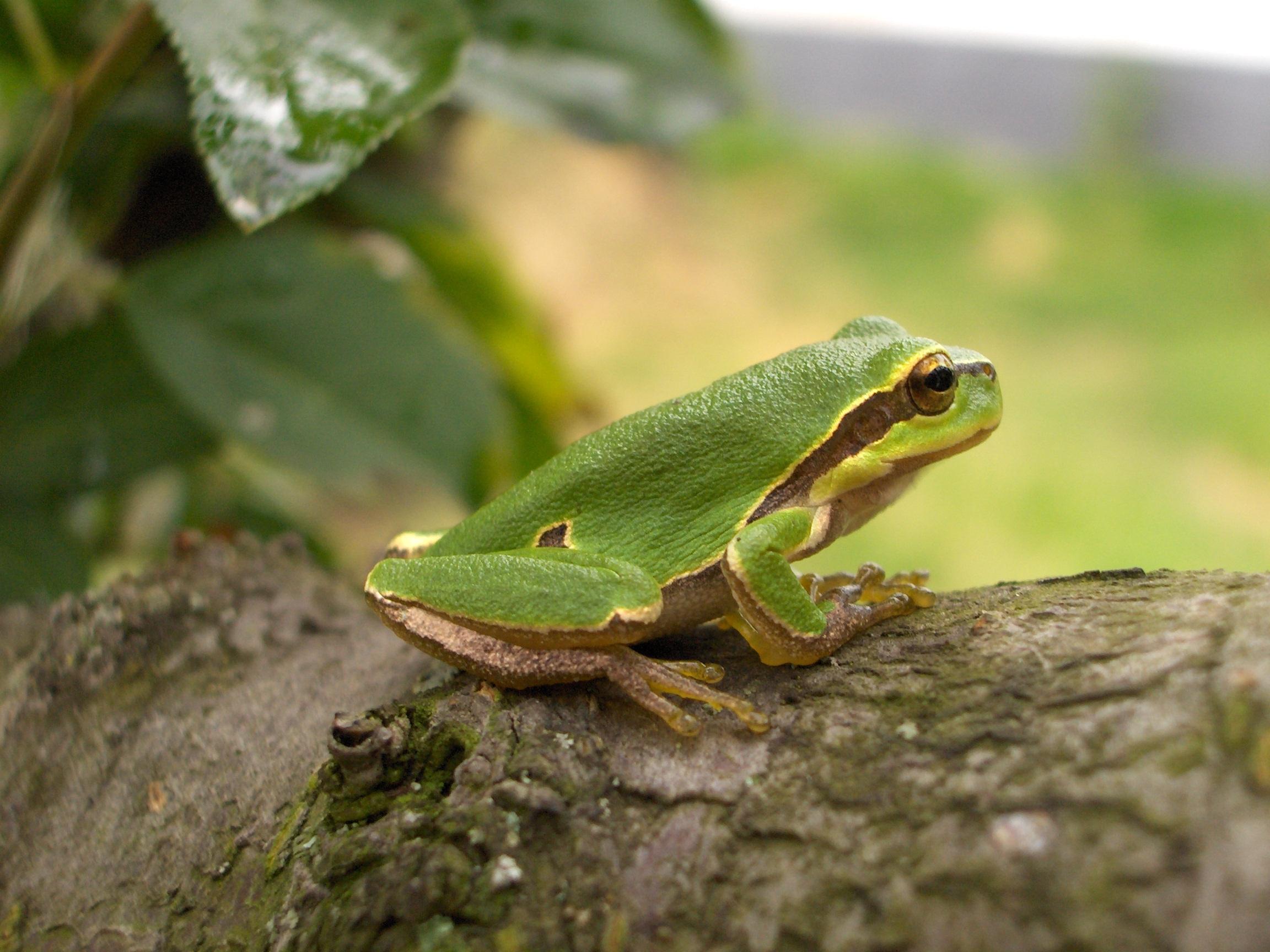
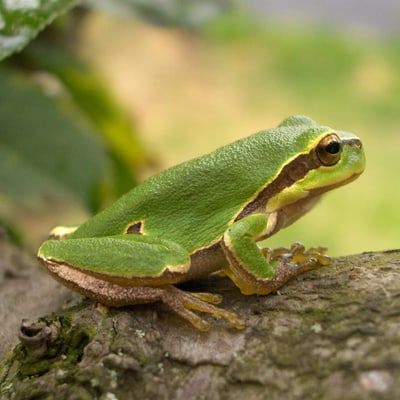
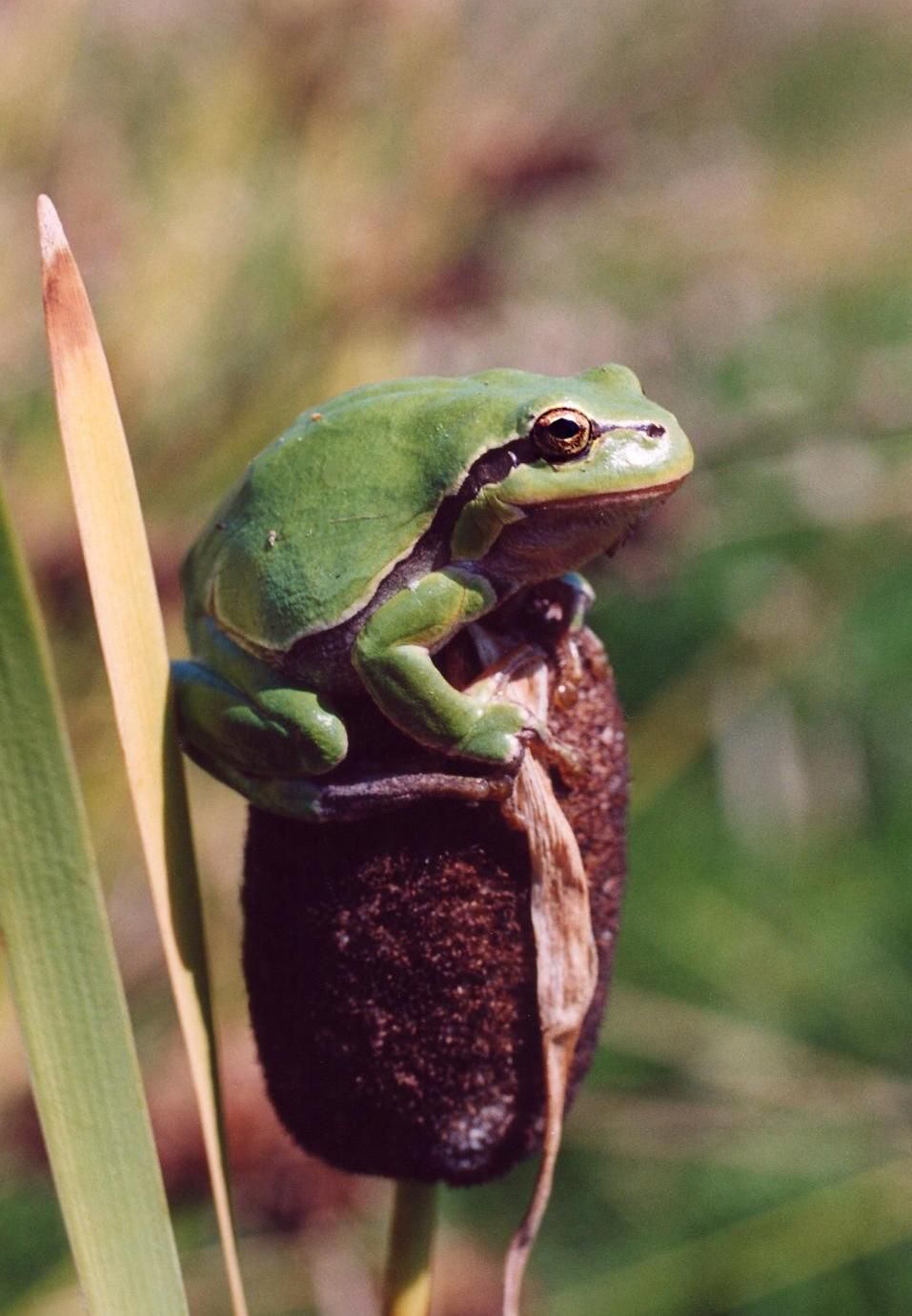
The European tree frog is a small, smooth-skinned tree frog with a uniform light or dark shade of green on the upper side. It reaches a length of 4-5 cm. The white underside is separated by a black line on the side. It is a skilled climber with relatively long legs. It is the only tree-dwelling Central European amphibian species to have adhesive discs on the tips of its fingers and toes.
Features
European tree frog
Hyla arborea
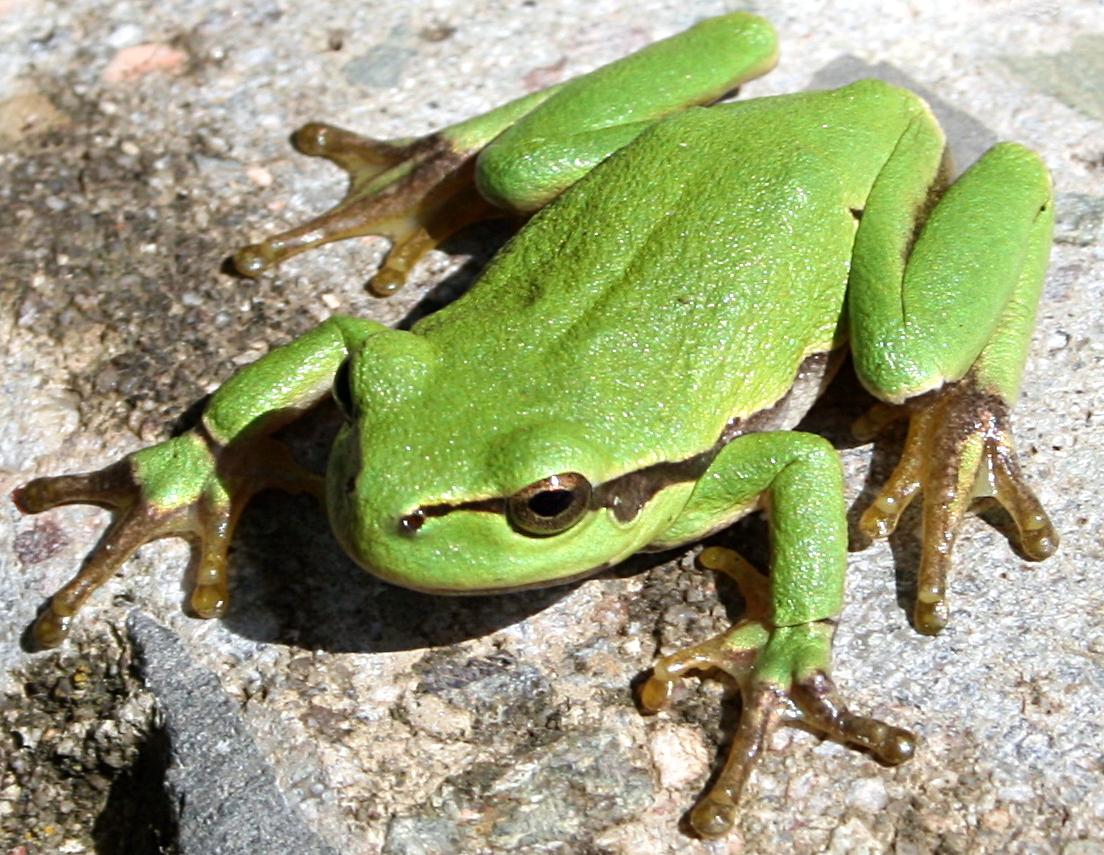
Adhesive discs at the ends of the fingers and toes
Similar species
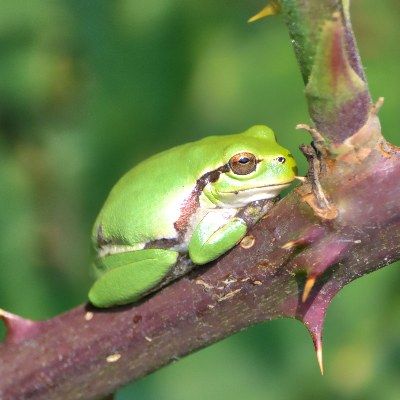
Italian tree frog
Hyla intermedia
In the city
The European tree frog requires three different partial habitats. During the spawning season, it is found in stagnant, sunny waters, such as ponds, pools, ditches or flood plains, but also in larger lakes. In summer, trees and shrubs or pond reeds are colonised and it spends its winter rest in rock crevices, tree hollows or holes in the ground.
The use of pesticides, but also habitat loss due to drainage and draining of wetlands, is leading to a severe threat to the once widespread and common European tree frog in many German states. Especially in intensively used cultivated landscapes, it lacks species-rich habitat structures.
Fun Facts
It has adhesive discs on its movable finger and toe tips, which help it to climb extremely skilfully. Among native amphibians, tree frogs are the only successful climbers.
Tree frogs like to sit on leaves and often sunbathe there for hours. By adopting a hemispherical posture with legs and arms tucked under, they reduce water loss. It is not yet clear what purpose these sunbaths serve for the frog.
The calls of the male tree frog are among the loudest of all native amphibians. Thanks to their inflatable sound bladder, which serves as an amplifier, they can call up to several hundred metres away. As the calls are very energy-consuming for the males, they can lose more than 10% of their body weight.
Tree frogs are able to change their colour to grey, brown, yellowish or develop dark spots and marbling. Rarely, blue tree frogs also occur. However, they do not change colour. The colour is formed in the absence of yellow urea, which originally results in a mixture of the blue and yellow components in a green shade.
All European amphibians are specially protected and must not be captured, injured or killed.
- Endangerment level Germany: endangered
Sources
Habitus , hu:User:Ineptus, PD, https://commons.wikimedia.org/wiki/File:Hyla_arborea_hun.jpg

Habitus , FelixReimann, CC BY-SA 3.0, https://de.wikipedia.org/wiki/Datei:Laubfrosch_Macro.jpg

Habitus , Christian Fischer, CC BY-SA 3.0, https://de.wikipedia.org/wiki/Datei:Hyla_arborea_on_Typha.jpg

Kwet, A. (2015) Reptilien und Amphibien Europas. 250 Arten mit Verbreitungskarten, Stuttgart: Franckh Kosmos Verlag.
Blab, J. & Vogel, H. (2002) Amphibien und Reptilien erkennen und schützen, München: BLV.
Glandt, D. (2008) Heimische Amphibien: Bestimmen – Beobachten – Schützen, Wiebelsheim: AULA-Verlag.
Glandt, D. (2015) Die Amphibien und Reptilien Europas, Wiebelsheim: Quelle & Meyer Verlag.
Matz, G. & Weber, D. (1983) Amphibien und Reptielien – Die 169 Arten Europas farbig abgebildet, München: BLV.
Page „Europäischer Laubfrosch“. : Wikipedia, The Free Encyclopedia. Date of last revision: 04.02.2018, 12:36 UTC. URL: https://de.wikipedia.org/w/index.php?title=Europ%C3%A4ischer_Laubfrosch&oldid=173652280 (Accessed: 08.03.2018).
Gebel, M. (2014) Europäischer Laubfrosch (Hyla arborea), URL: http://www.amphibien-reptilien.com/info-europaeischer-laubfrosch.html (Accessed: 08.03.2018).
Schulte, U. (2013) Artensteckbrief Europäischer Laubfrosch (Hyla arborea), URL: https://feldherpetologie.de/heimische-amphibien-artensteckbrief/artensteckbrief-europaischer-laubfrosch-hyla-arborea/ (Accessed: 08.03.2018).
NABU – Naturschutzbund Deutschland e.V. (n.d.) Kletterkünstler in grün. Der Laubfrosch (Hyla arborea), URL: https://www.nabu.de/tiere-und-pflanzen/amphibien-und-reptilien/amphibien/artenportraets/10664.html (Accessed: 08.03.2018).
Riegler, C. (n.d.) Europäische Laubfrosch - Hyla arborea (LINNAEUS, 1758), URL: https://www.herpetofauna.at/index.php/slider-amphibien/20-europaeische-laubfrosch-hyla-arborea-linnaeus-1758 (Accessed: 08.03.2018).