
Short Description
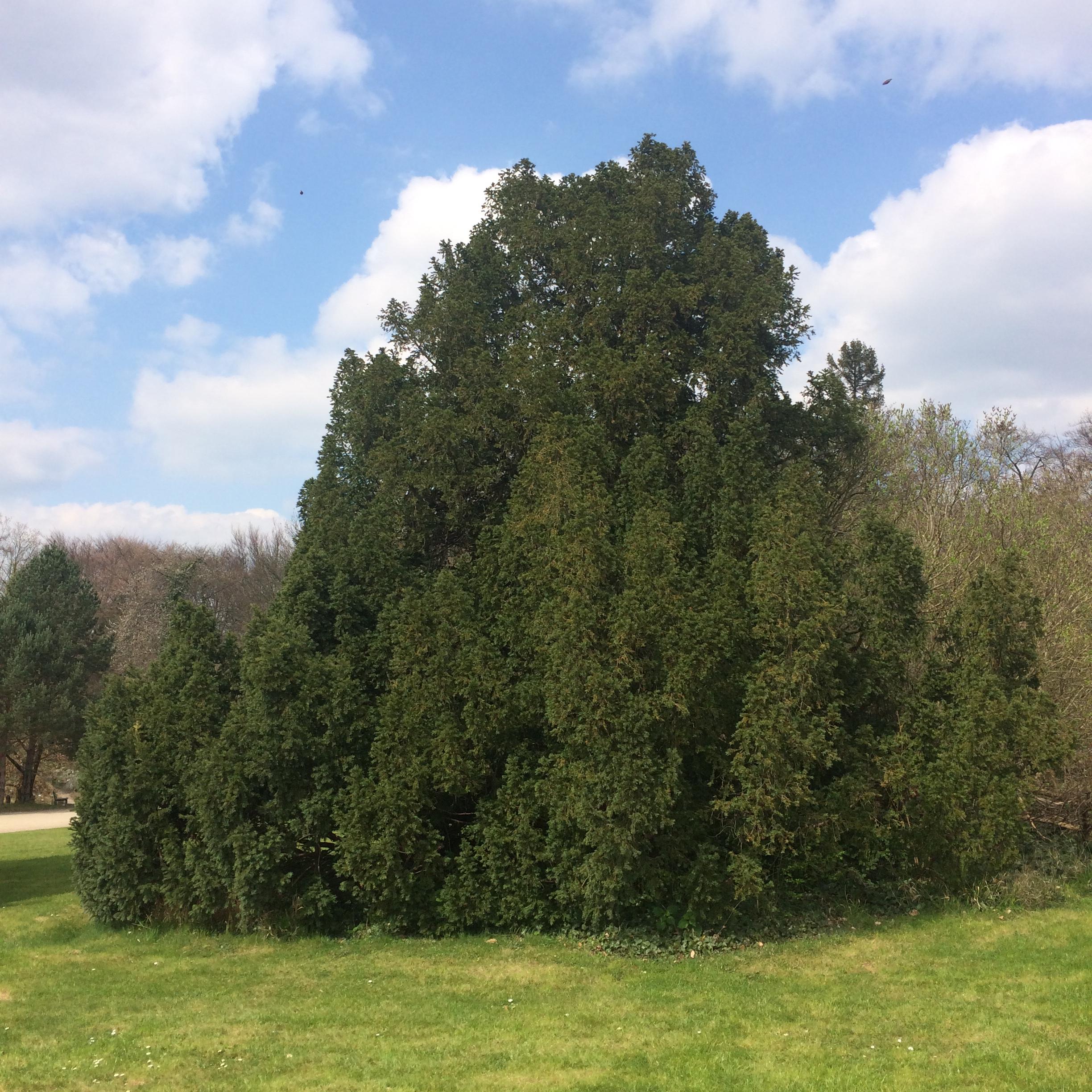
The common yew is an evergreen tree or shrub that can reach heights of up to 15 metres.
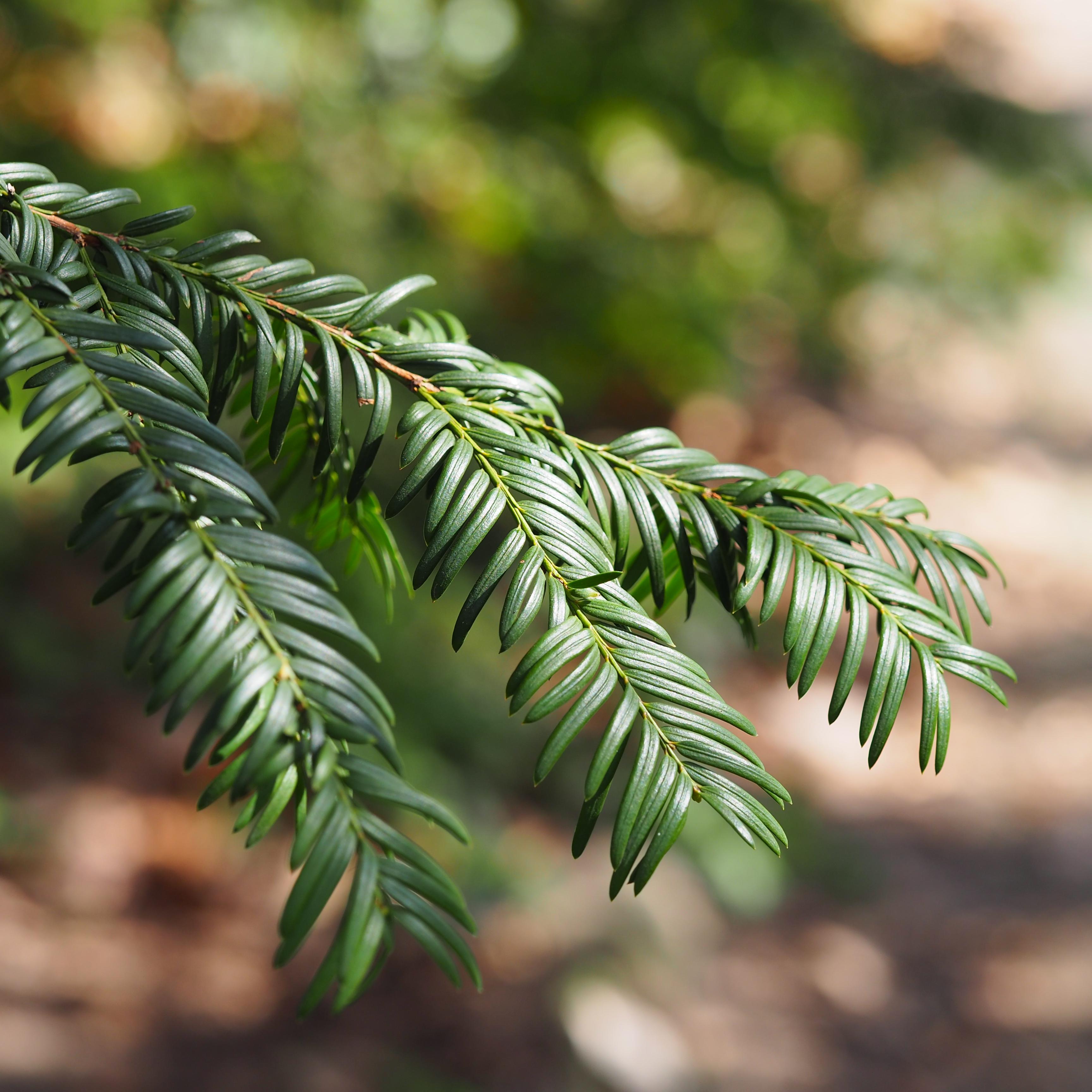
The needles are soft and flexible. They have a glossy dark green upper side and a distinctly lighter underside.
The trunk is usually richly branched. The crown is usually irregularly spherical. The bark is grey to reddish brown and flakes off in longitudinal scales.
It is usually dioecious, i.e. the male and female flowers are on different trees. The male flowers are numerous in yellowish, spherical clusters. The female flowers are greenish and inconspicuous.
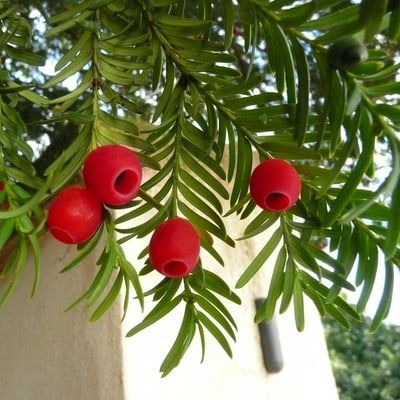
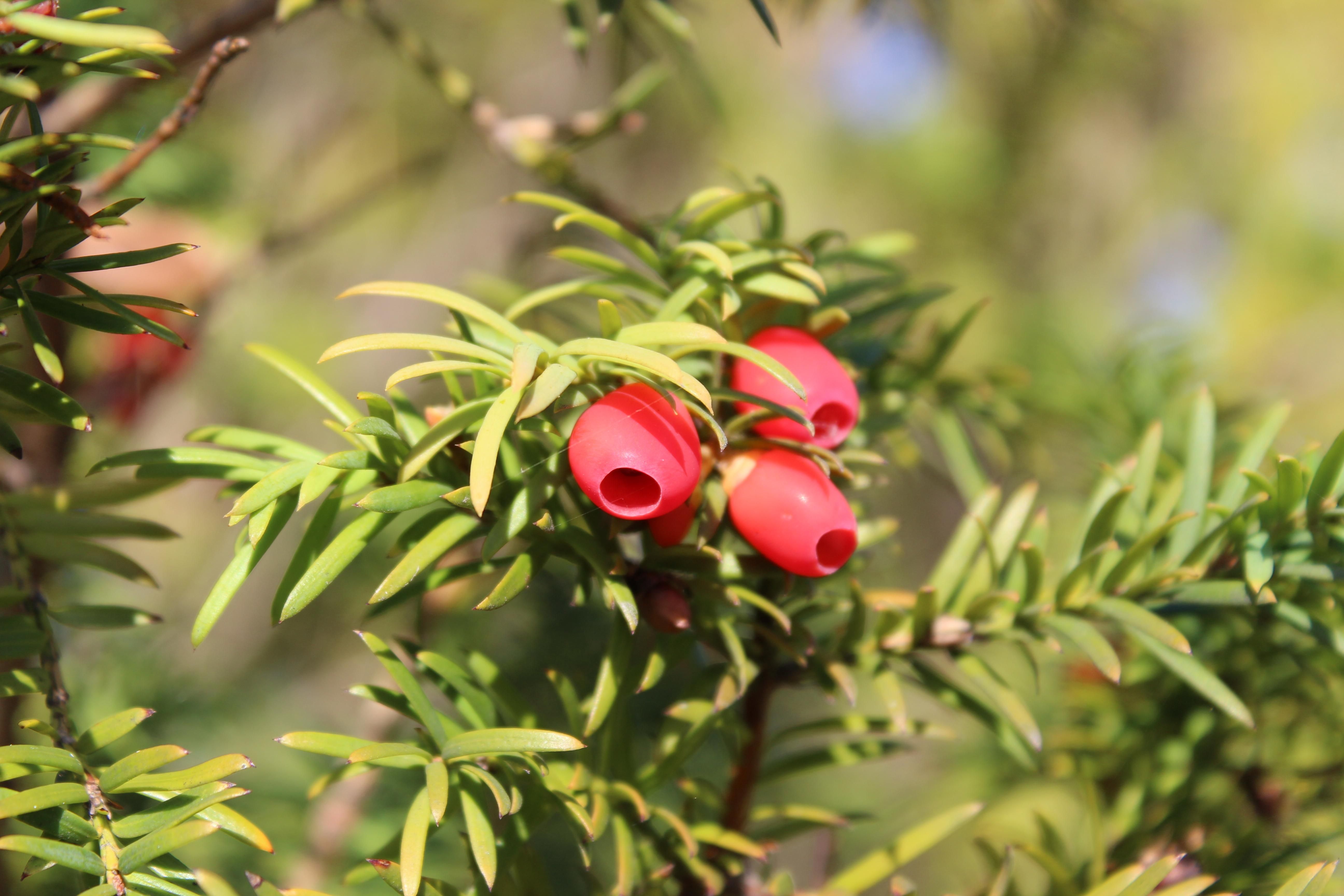
The fruit is bright red. The seeds are brown and ovoid.
Features
Common yew
Taxus baccata
highly poisonous
red fruit
soft needles in two rows
In the city
In the city, the yew is often planted as a tree or as a hedge in gardens and parks. It tolerates many different site conditions from moist to very dry and acidic to alkaline soils. Only the young plant is dependent on a shady growing site.
Fun Facts
It flowers from February to April.
The bow of "Ötzi", the mummy from the Ötztal Alps, was made of yew wood.
The Germanic tribes are said to have fought Caesar with arrows soaked in yew sap.
The yew is a common tree in western mythology and legends and often symbolises death and eternity.
- Endangerment level Germany: Warning list
Caution. All parts of the plant, except the red seed coat, are highly poisonous. The pollen is allergenic.
Sources
Habitus, Alice Kracht, CC BY-SY 4.0, https://offene-naturfuehrer.de/web/Datei:Taxus_baccata.JPG

Früchte, Philipp Guttmann, CC BY-SY 4.0, https://commons.wikimedia.org/wiki/File:Europaeische_Eibe_European_Yew_rot_red_arillus_fruit_frucht_Taxus_Baccata_2.jpg

Nadeln, Alice Kracht, CC BY-SY 4.0, https://offene-naturfuehrer.de/web/Datei:Taxus_baccata_(4.1).JPG
.JPG)
Roth, L., Daunderer, M. & Kormann, K. (2008) Giftpflanzen - Pflanzengifte. Vorkommen, Wirkung, Therapie. Allergische und phototoxische Reaktionen, Hamburg: Nikol Verlag.
Page „Europäische Eibe“. : Wikipedia, The Free Encyclopedia. Date of last revision: 19.03.2017, 10:43 UTC. URL: https://de.wikipedia.org/w/index.php?title=Europ%C3%A4ische_Eibe&oldid=163728466 (Accessed: 03.04.2017).