
Short Description
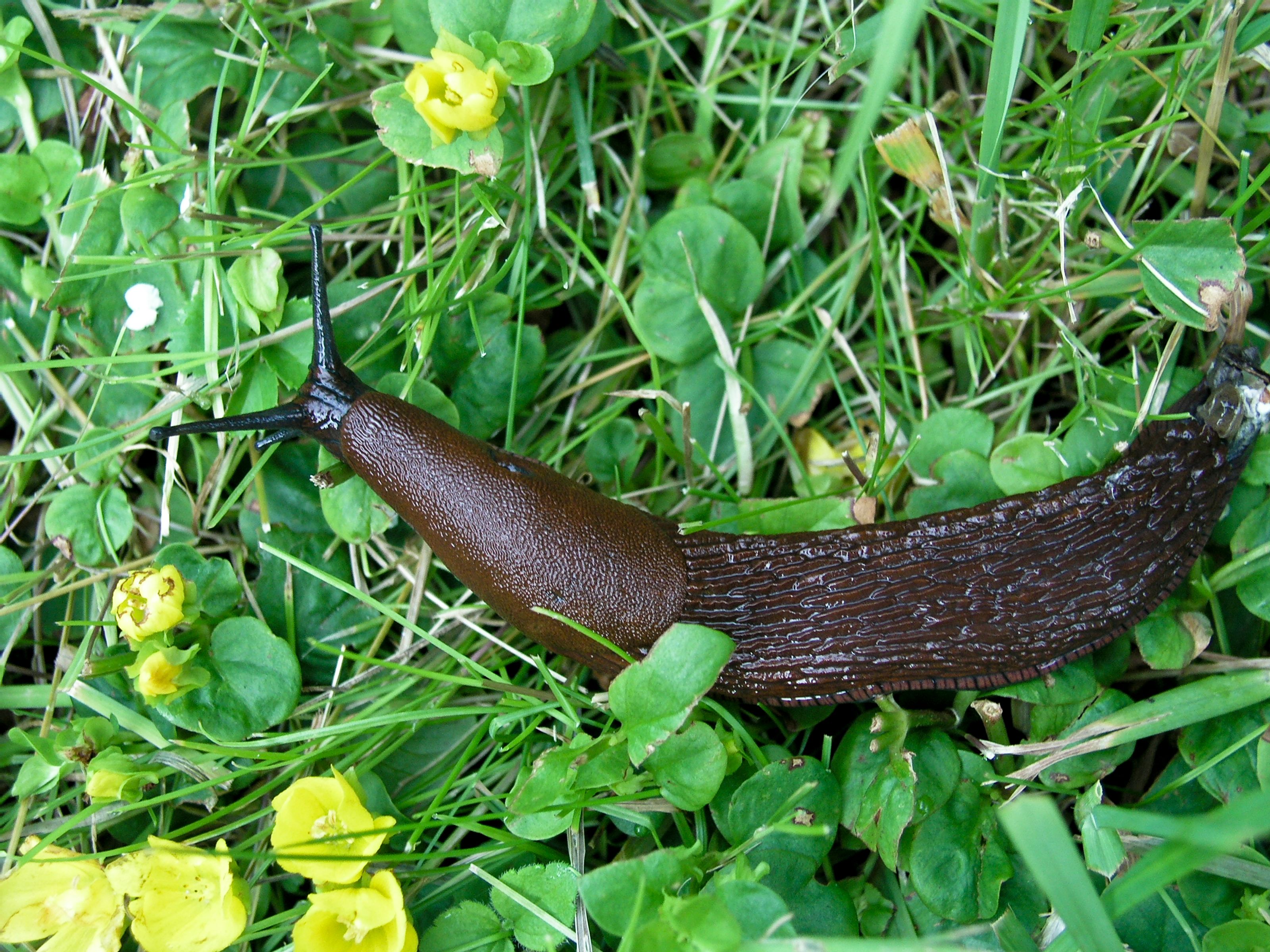
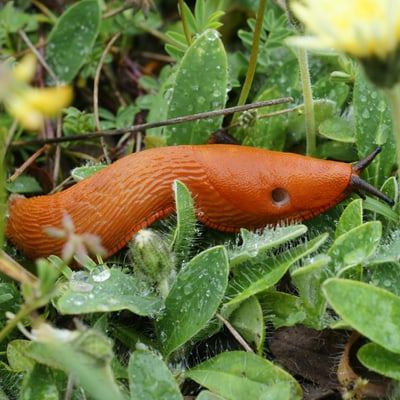
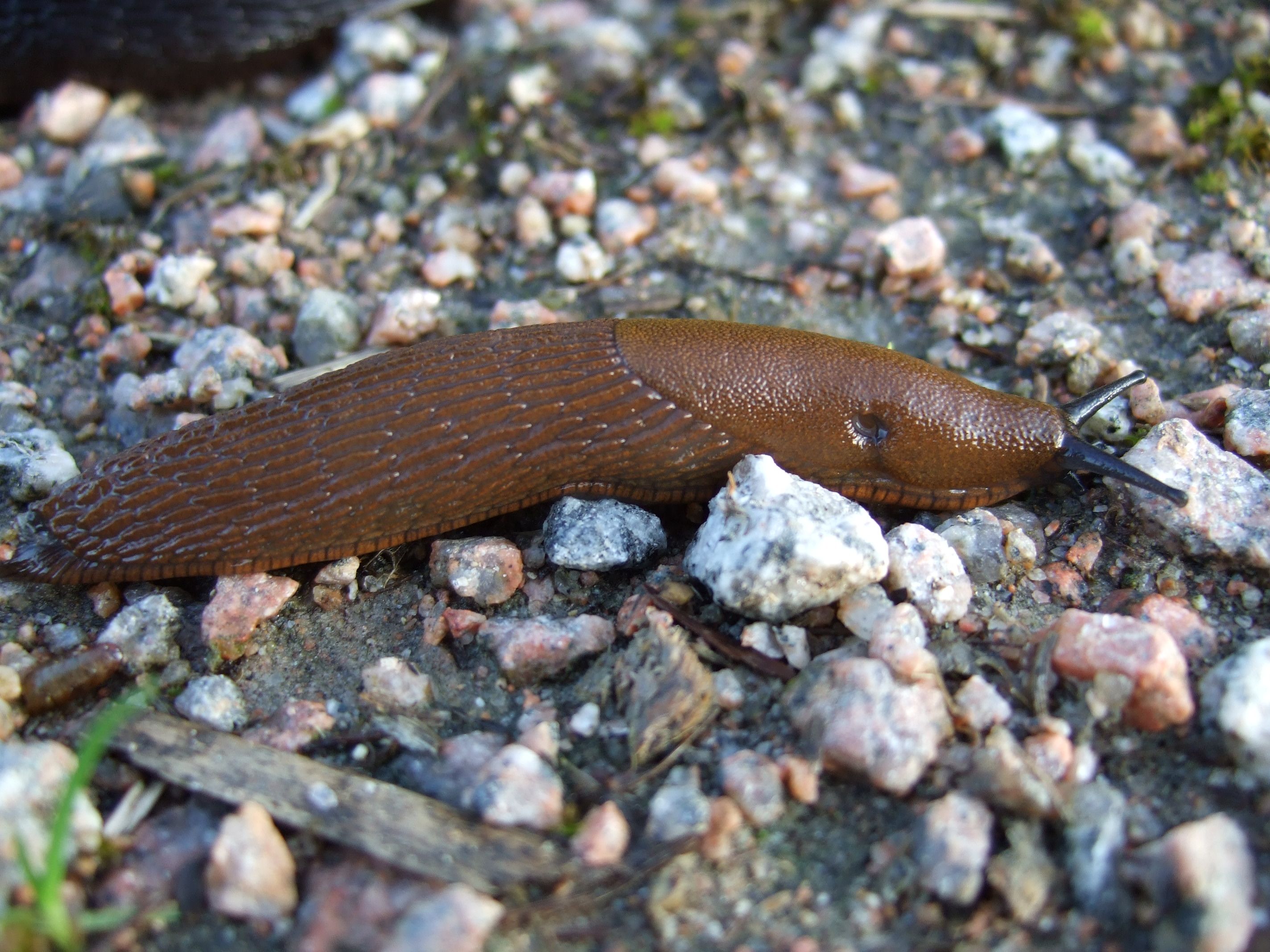
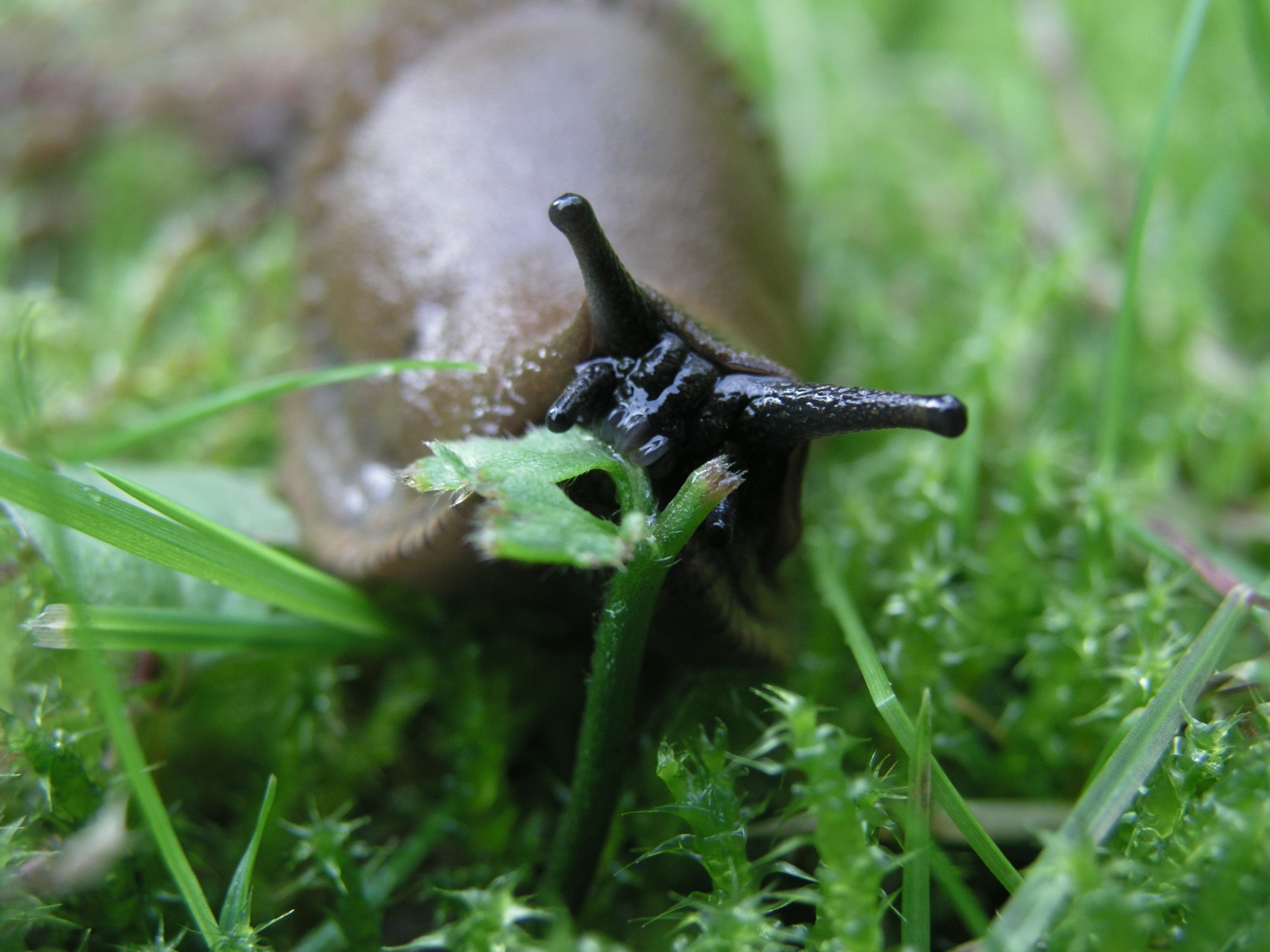
The Spanish slug is relatively large and up to twelve centimetres long when stretched out. Light brown, orange, dark brown to almost black, reddish and light yellow animals occur. However, the head is always darker. There are elongated coarse wrinkles on the abdomen.
The young are grey to brown and have very conspicuous yellow-orange lateral stripes.
Features
Spanish slug
Arion vulgaris
wrinkled abdomen
head darker than the rest of the body
In the city
The Spanish slug can be found in cultivated areas, such as gardens, cemeteries and parks, as well as in natural areas.
Fun Facts
The Spanish slug probably originated in France. It was first found in Germany in 1969 and thus belongs to the non-native species (neozoa).
It is now one of the most common snails in Germany. It has largely displaced the native red slug.
It causes major damage to fields and gardens and is considered an economically important pest.
Like all air-breathing land snails, it is a hermaphrodite, i.e. it has male and female sexual characteristics.
Besides fresh plant parts, it feeds mainly cannibalistically.
As its slime tastes bitter, it has hardly any natural predators. Only some species of domestic ducks and the leopard slug eat them.
- Endangerment level Germany: not evaluated
Sources
Habitus, Xauxa, Håkan Svensson, CC-BY-SA-3.0, https://commons.wikimedia.org/wiki/File:Arion_vulgaris_3.jpg

Habitus, Aiwok, CC BY-SA 3.0, https://commons.wikimedia.org/wiki/File:Arion_vulgaris_1.jpg

Habitus, Xauxa, Håkan Svensson, CC BY-SA 3.0, https://commons.wikimedia.org/wiki/File:Arion_vulgaris_eating.jpg

Nordsiek, R. (n.d.) Die lebende Welt der Weichtiere. Wegschnecken (Arionidae) Teil 1, URL: http://www.weichtiere.at/Schnecken/land.html?/Schnecken/land/arionidae.html (Accessed: 15.09.2017).
Wiese, V. (2014) Die Landschnecken Deutschlands. Finden – Erkennen – Bestimmen, Wiebelsheim: Quelle & Meyer Verlag.
Page „Spanische Wegschnecke“. : Wikipedia, The Free Encyclopedia. Date of last revision: 26.08.2017, 15:39 UTC. URL: https://de.wikipedia.org/w/index.php?title=Spanische_Wegschnecke&oldid=168500475 (Accessed: 14.09.2017).
Hackenberg, E. & Müller, R. (2017) Rote Liste und Gesamtartenliste der Weichtiere (Mollusca: Gastropoda und Bivalvia) von Berlin. : Der Landesbeauftragte für Naturschutz und Landschaftspflege/Senatsverwaltung für Umwelt, Verkehr und Klimaschutz (eds.) Rote Listen der gefährdeten Pflanzen, Pilze und Tiere von Berlin, URL: http://dx.doi.org/10.14279/depositonce-5845 (Accessed: 09.10.2017).
Landesamt für Natur, Umwelt und Verbraucherschutz Nordrhein-Westfalen (n.d.): http://neobiota.naturschutzinformationen-nrw.de/site/nav3/Artfo.aspx?Art=Tiere&ID=57537815-e2fc-462c-bf90-d66f761a0c7e (Accessed: 29.11.2017).