
Short Description
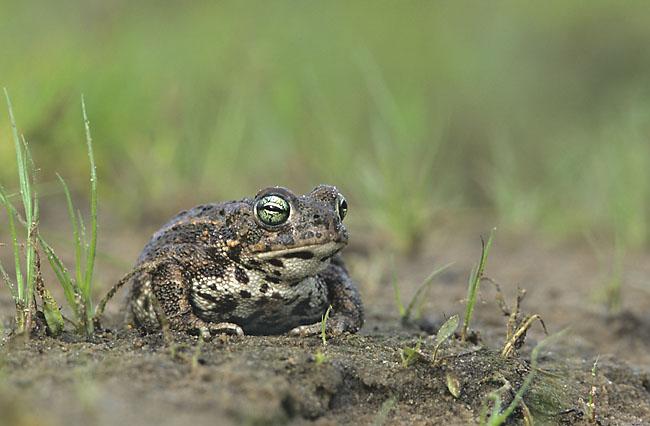
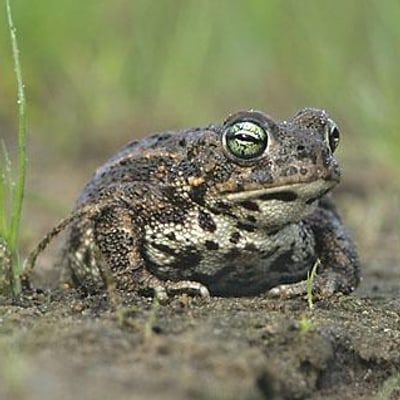
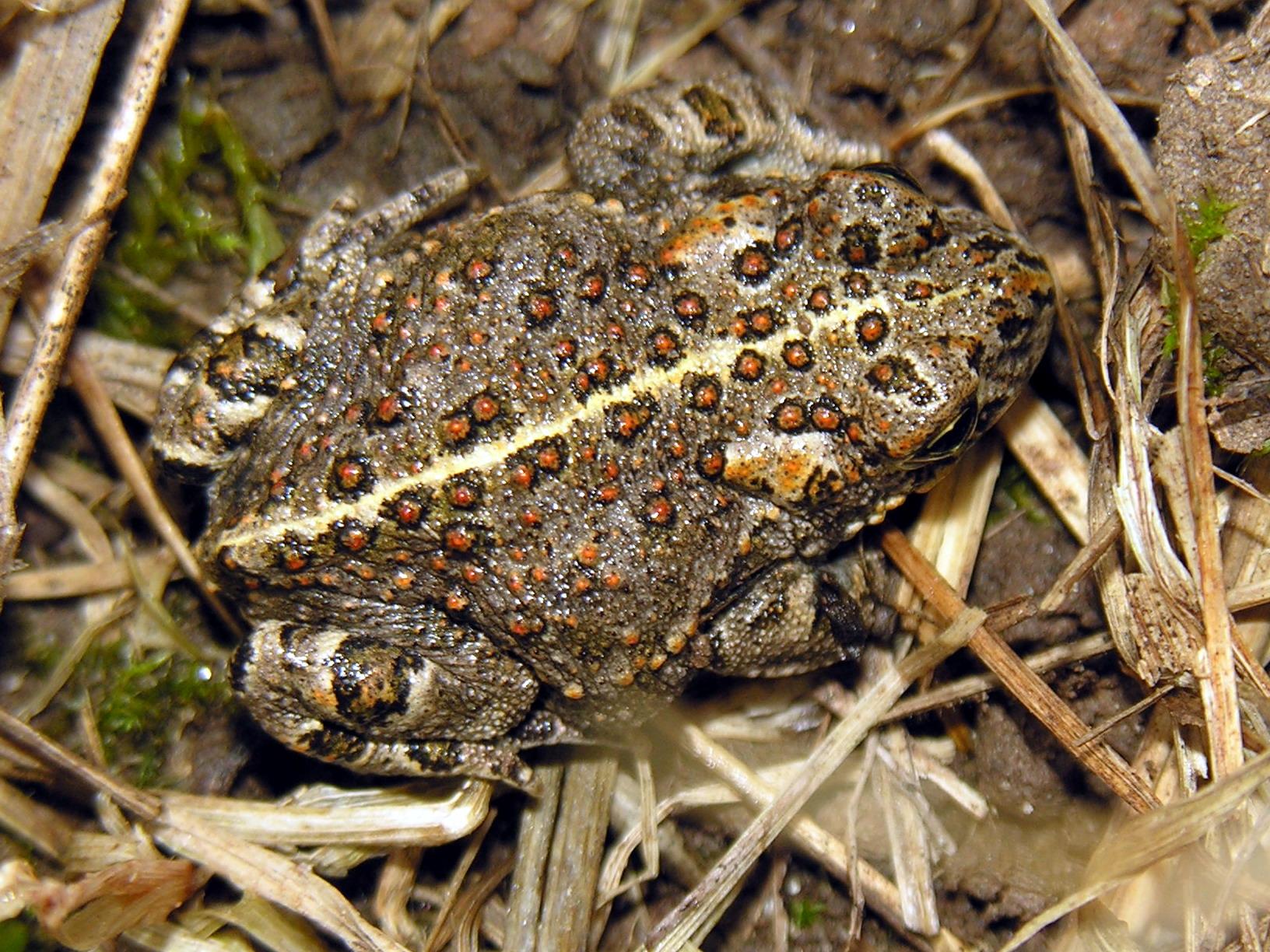
The natterjack toad has a pale base colour with brown and olive patches. Its back is marked with a narrow yellow stripe. Its skin is warty, its eyes yellow with horizontal pupils. A striking feature are its short hind legs, resulting in a more crawling gait.
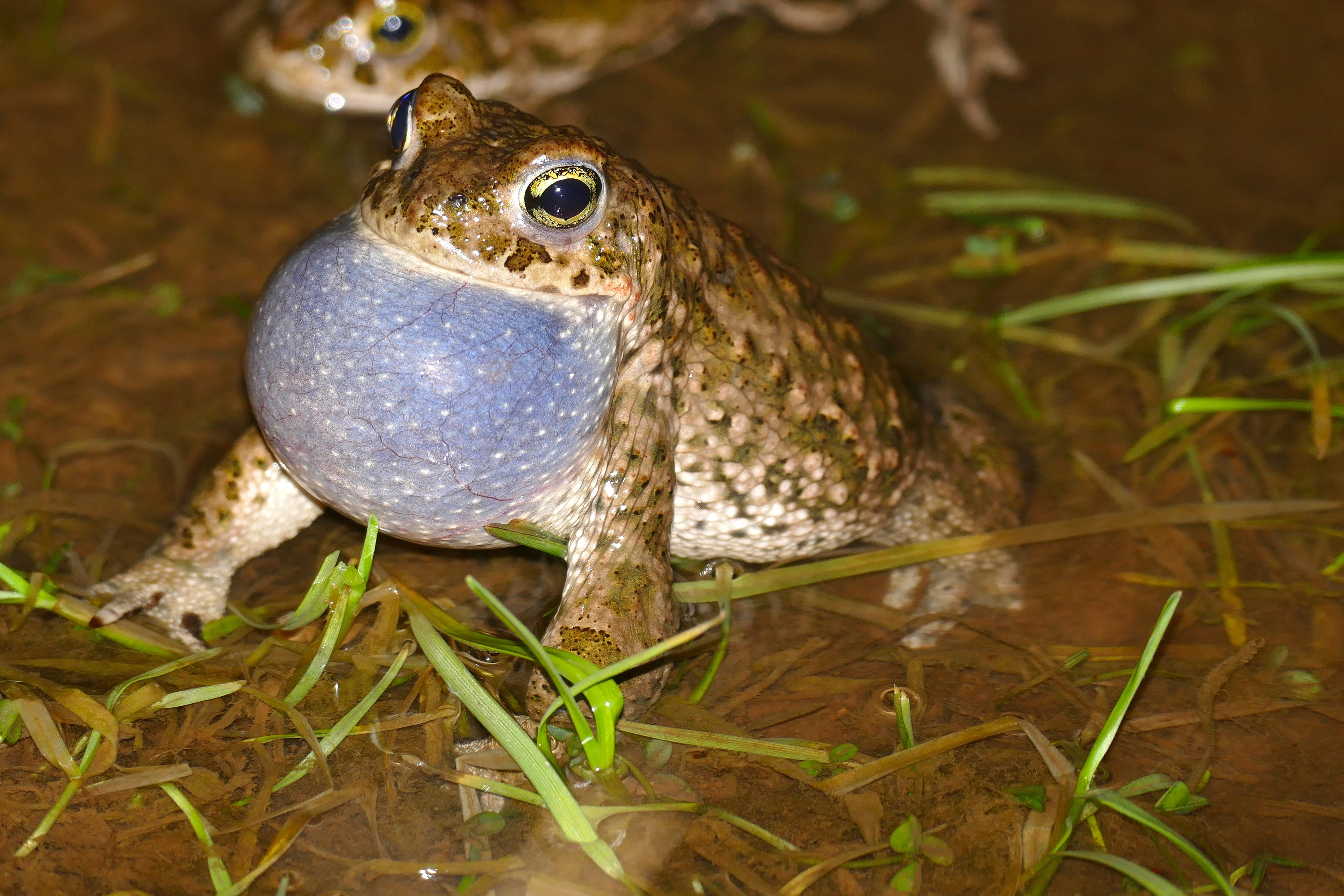
Males have an obvious vocal sac at the throat.
Features
Natterjack toad
Epidalea calamita
mouse-like crawling gait
yellow line down their back
Rufe mehrerer Tiere
Conrads, CC BY-SA 3.0

In the city
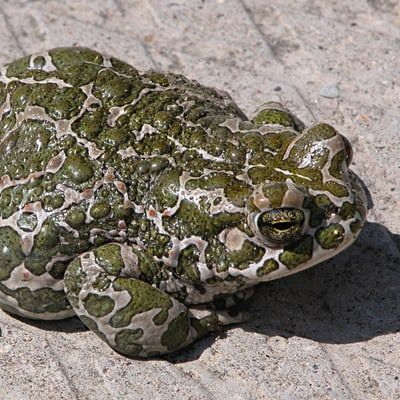
Natterjack toads can be found in open and dry areas, e.g. on uncultivated land or in sand or gravel pits. For spawning, they use sunny puddles, vehicle tracks or other temporary bodies of water. Man-made habitats often provide shelter for these toads. This is where they find living conditions that elsewhere have been destroyed.
Fun Facts
When threatened, natterjack toads emit a strong leek-like smell.
Because of their short hind legs, natterjack toads move with a characteristic crawling gait.
The mating calls of male natterjack toads are amongst the loudest of all European amphibians.
The reproductive season lasts over several months (long-term spawners). Males remain near the spawning waters up to 100 days after the eggs have been laid.
Natterjack toads lay their eggs in shallow waters and puddles that may dry out quickly. For that reason, larvae development is complete within a few weeks, thus reducing the risk of drying out.
All European amphibians are specially protected and must not be captured, injured or killed.
- Endangerment level Germany: Warning list
Sources
Habitus , Marek Szczepanek, CC BY-SA 3.0, https://commons.wikimedia.org/wiki/File:Bufo_calamita_%28Marek_Szczepanek%29.jpg
.jpg)
Männchen , Bernard DUPONT, CC BY-SA 2.0, https://de.wikipedia.org/wiki/Datei:Natterjack_Toad_(Epidalea_calamita)_male_calling_(16184496963).jpg
_male_calling_(16184496963).jpg)
Jungtier, Algirdas, CC BY-SA 3.0, https://de.wikipedia.org/wiki/Datei:Bufo_calamita_2006-08-15.jpg

Kwet, A. (2015) Reptilien und Amphibien Europas. 250 Arten mit Verbreitungskarten, Stuttgart: Franckh Kosmos Verlag.
Blab, J. & Vogel, H. (2002) Amphibien und Reptilien erkennen und schützen, München: BLV.
Glandt, D. (2008) Heimische Amphibien: Bestimmen – Beobachten – Schützen, Wiebelsheim: AULA-Verlag.
Glandt, D. (2015) Die Amphibien und Reptilien Europas, Wiebelsheim: Quelle & Meyer Verlag.
Bundesfachausschuss Feldherpetologie/Ichthyofaunistik im NABU (n.d.) Rote Listen, URL: http://www.amphibienschutz.de/schutz/artenschutz/roteliste/deutschland.htm (Accessed: 26.07.2016).
Page „Kreuzkröte“. : Wikipedia, The Free Encyclopedia. Date of last revision: 07.03.2016, 20:12 UTC. URL: https://de.wikipedia.org/w/index.php?title=Kreuzkr%C3%B6te&oldid=152280194 (Accessed: 11.05.2016).
Bundesamt für Naturschutz (n.d.) Kreuzkröte (Bufo calamita), URL: http://ffh-anhang4.bfn.de/arten-anhang-iv-ffh-richtlinie/amphibien/kreuzkroete-bufo-calamita.html (Accessed: 05.08.2016).