
Short Description
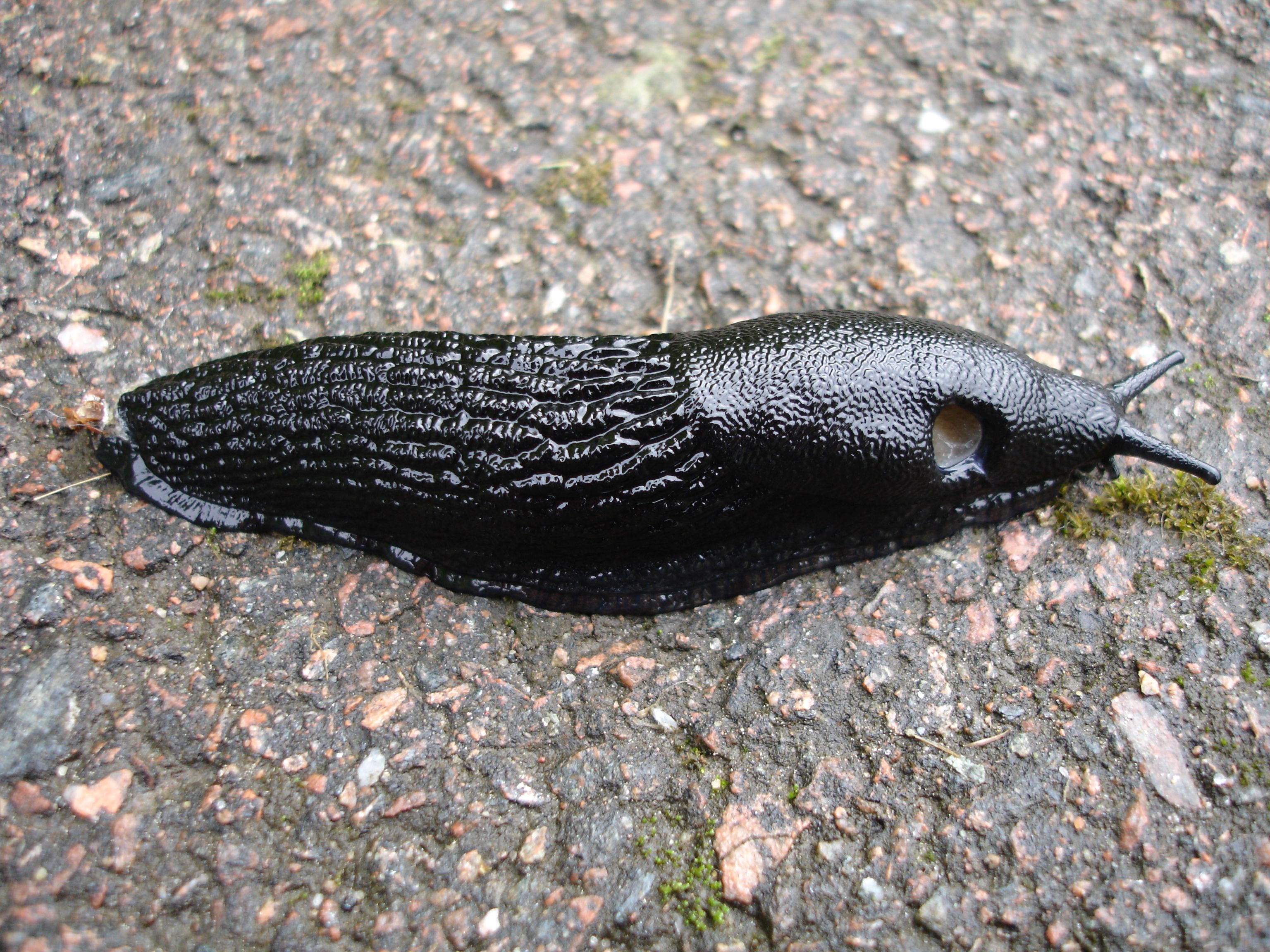
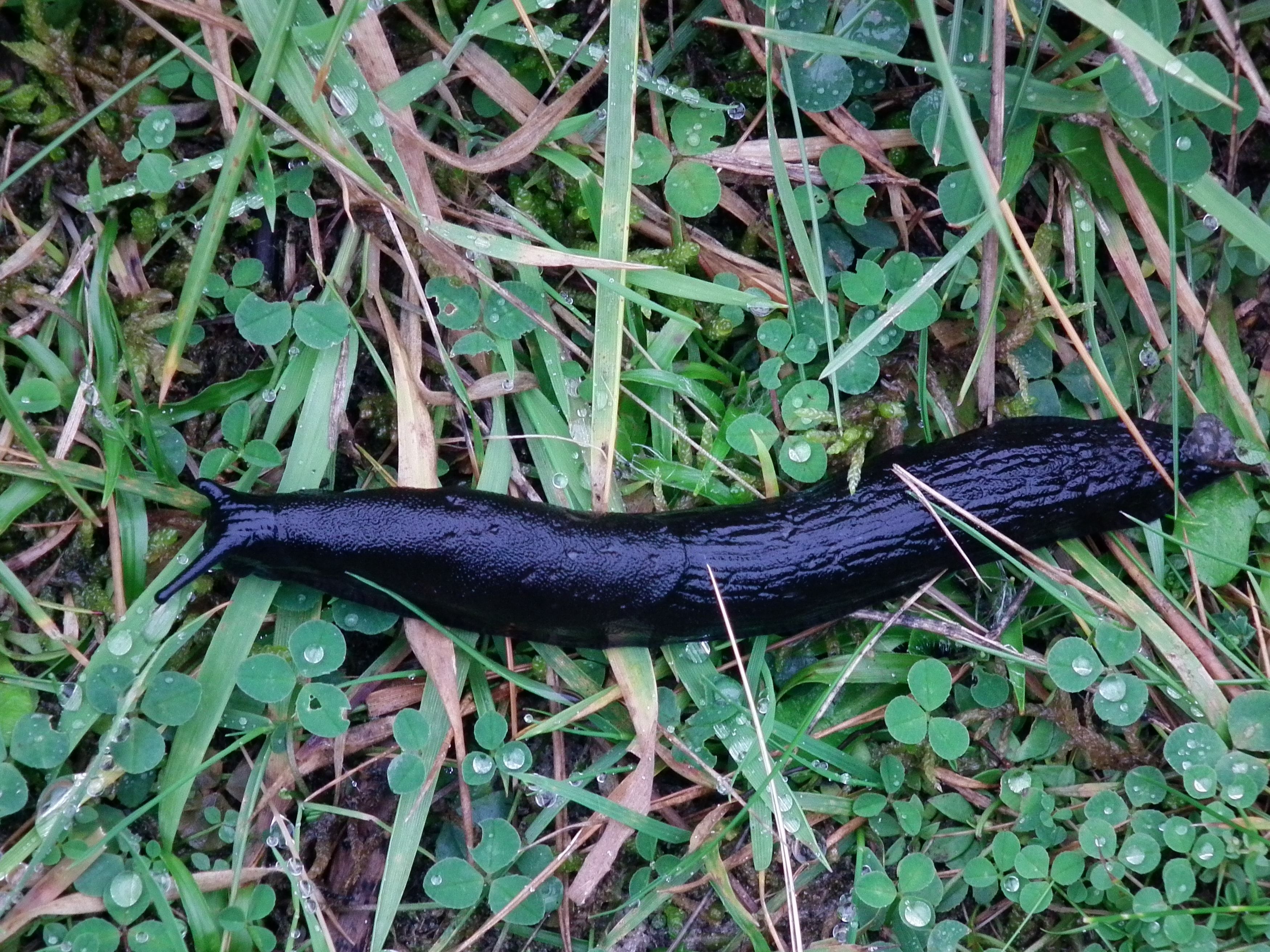
With 13 centimetres long, the black slug is one of the larger land slugs. It usually has a completely black body. The underside (sole) is also black-grey. Rarely, there are also white specimens with a yellowish sole.
The young are whitish and have a black head.
Features
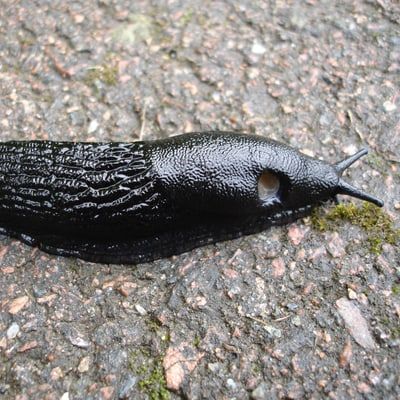
Black slug
Arion ater
mostly all black
very large
Similar species
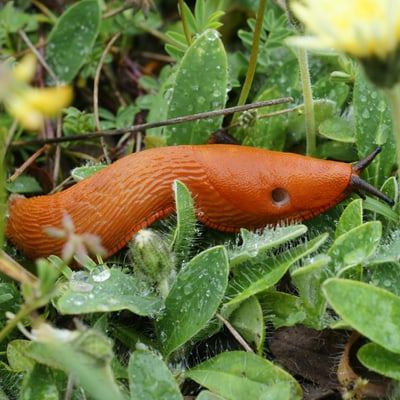
Red slug
Arion rufus
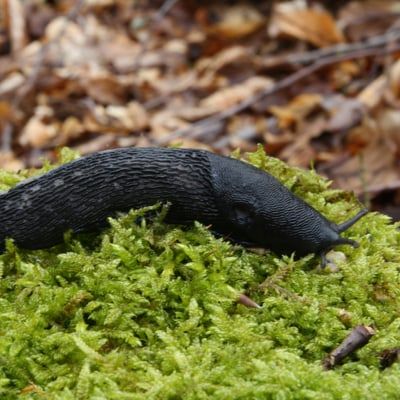
Ash-black slug
Limax cinereoniger
In the city
The black slug prefers to live in wooded habitats on alkaline soil. They can be found in damp forests, on meadows, in bogs and also in gardens.
Fun Facts
The black slug is mainly nocturnal. In humid weather, however, it can also be seen during the day.
It eats green and rotten parts of plants.
She will be about one year old.
Like all land snails, it is a hermaphrodite, i.e. it has male and female sexual characteristics.
- Endangerment level Germany: insufficient data available
Sources
Habitus, Rasbak, CC BY-SA 3.0, https://species-id.net/openmedia/File:Black_slug.jpg

Habitus, 4028mdk09, CC BY-SA 3.0, https://commons.wikimedia.org/wiki/File:Schwarzgl%C3%A4nzende_Nacktschnecke.JPG

Page „Schwarze Wegschnecke“. : Wikipedia, The Free Encyclopedia. Date of last revision: 02.09.2019, 13:38 UTC. URL: https://de.wikipedia.org/w/index.php?title=Schwarze_Wegschnecke&oldid=191905763 (Accessed: 29.09.2020).
Wiese, V. (2014) Die Landschnecken Deutschlands. Finden – Erkennen – Bestimmen, Wiebelsheim: Quelle & Meyer Verlag.
Nordsiek, R. (n.d.) Schwarzer Schnegel - Die faszinierende Welt der Weichtiere. Wegschnecken (Arionidae) Teil 1, URL: http://www.weichtiere.at/Schnecken/land.html?/Schnecken/land/arionidae.html (Accessed: 29.09.2020).