
Short Description
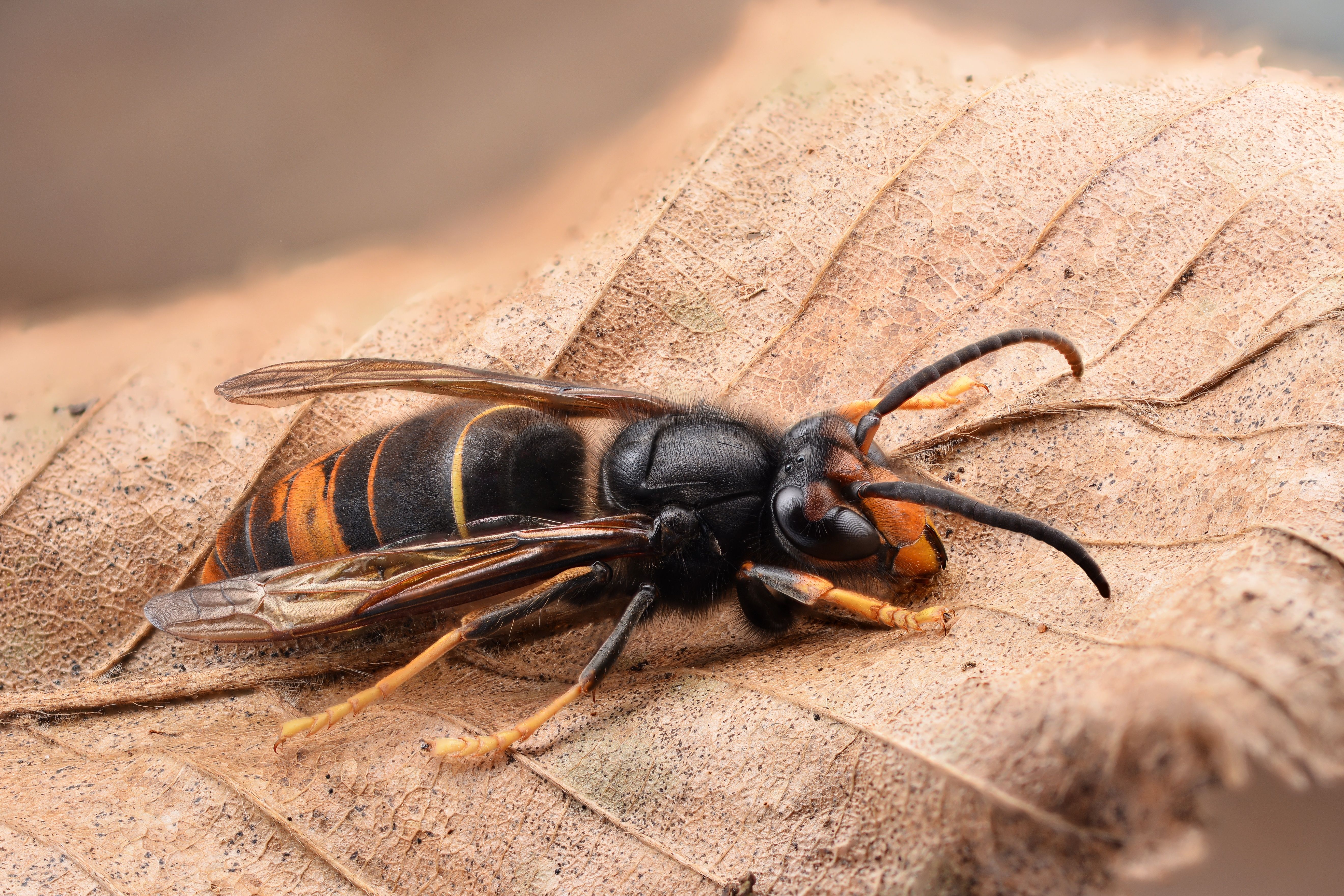
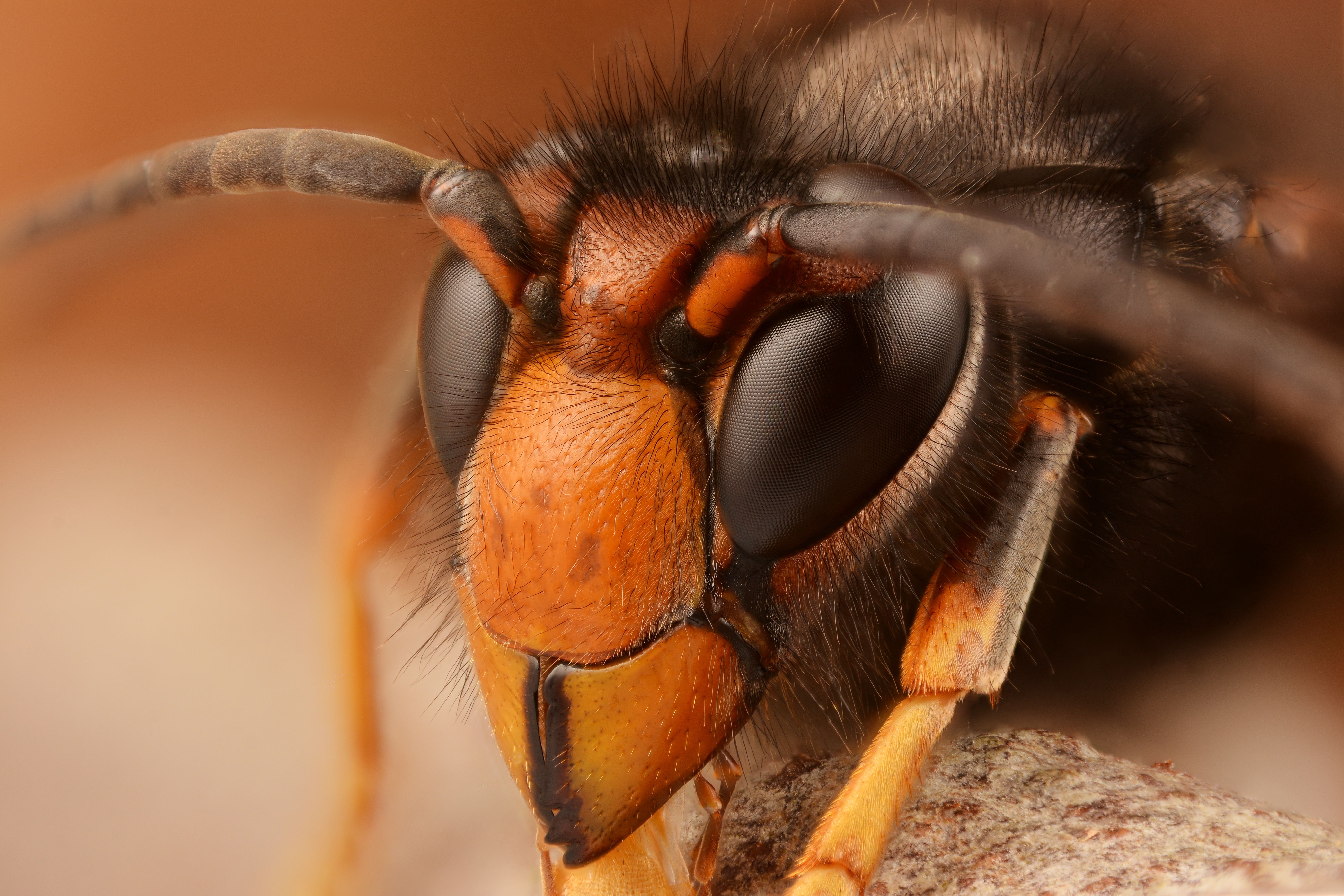
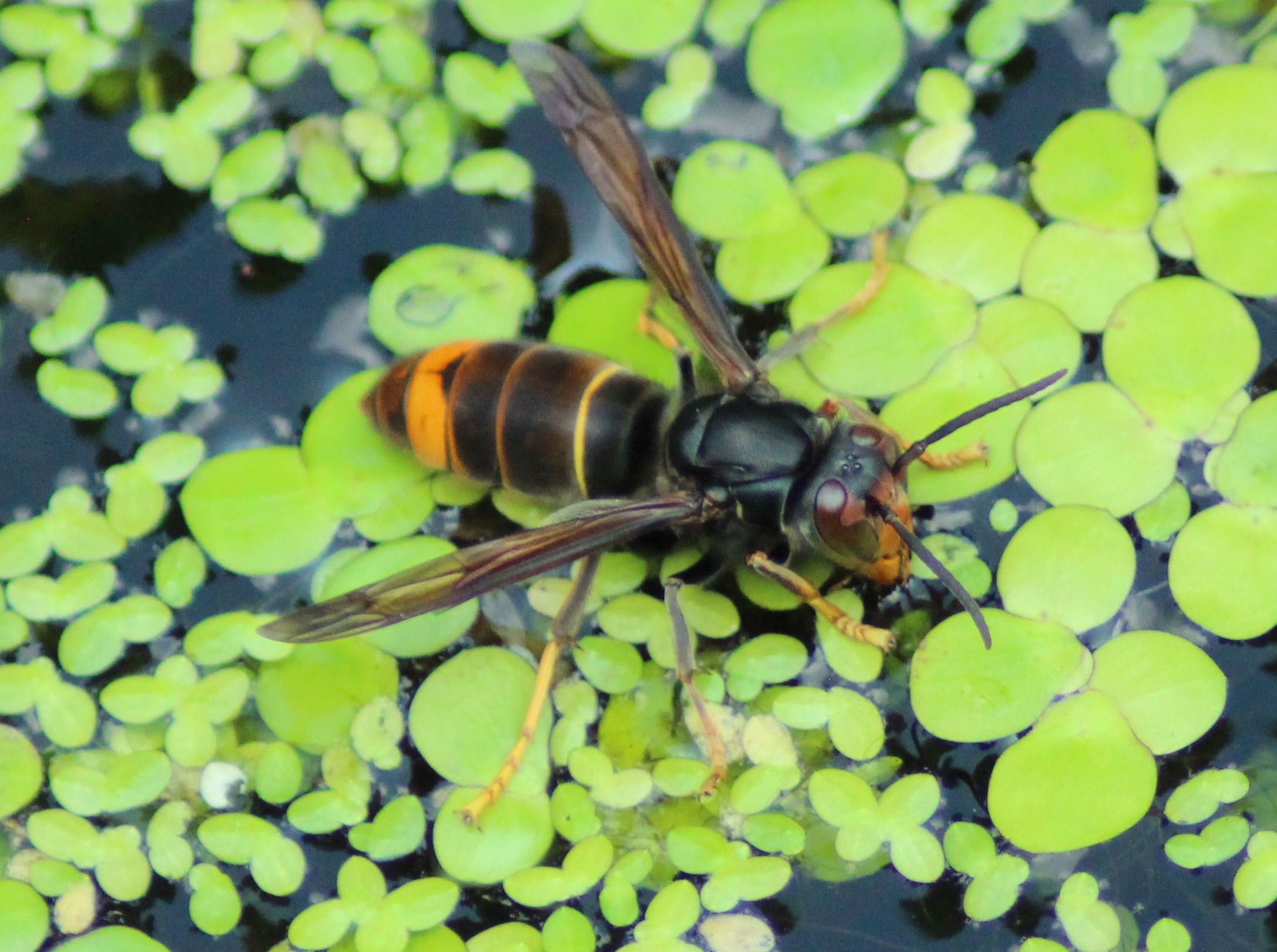
The Yellow-legged Hornet is slightly smaller than the more widespread European Hornet. Its main colour is black, with a yellow head. The abdomen is also black and is only interrupted by a fine yellow band at the top and a thicker yellow band at the lower end. The legs are mostly yellow, which has given it the English name "Yellow-legged Hornet".
Males are similarly coloured to queens and workers and are therefore very difficult to distinguish.
Features
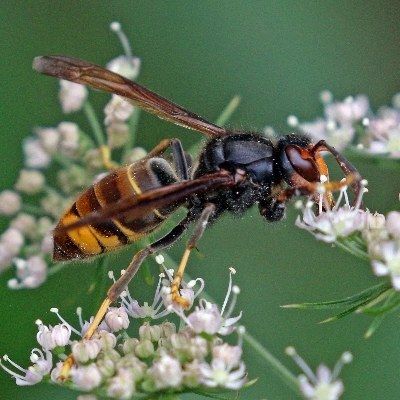
Yellow-legged hornet
Vespa velutina
Main colour is black
Yellow coloured legs
In the city
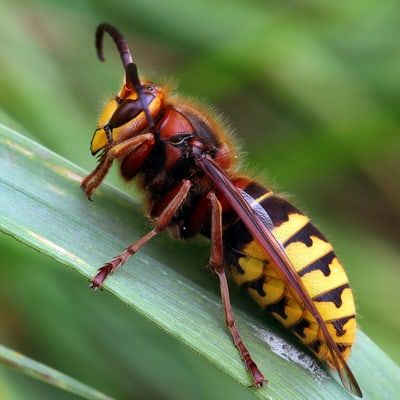
The Yellow-legged Hornet prefers to build its nest in treetops. Their nests are usually 60 to 100cm in size and elyptically shaped.
This description does not refer to the Asian giant hornet, which is not native to Europe, but is much more dangerous to humans. The Yellow-legged Hornet is considered harmless, but it defends its nest and so a large distance should always be kept from the nests. In the event of a sighting, this should be reported as soon as possible and the nests must be removed by a qualified person.
Fun Facts
Flying season is from March to November
The Asian deer originally comes from East Asia (e.g. China, Indonesia). It was first recorded in Europe in 2004 in Bordeaux (France). Since then, this species has spread rapidly. It probably arrived in Europe through the transport of goods.
This species has exceptionally good flying ability. It is very manoeuvrable, can hover on the spot (hovering flight) and even fly backwards.
Their main food is honey bees. Thanks to their exceptional flying skills, they can hover in front of a beehive and wait for their prey. In addition, their ability to fly enables them to hunt dragonflies.
Even if their main food is honey bees, colonies of honey bees can usually cope with the losses caused by hunting Yellow-legged Hornets. Hunting has a really negative effect on colonies that have already been affected.
A large increase in populations was observed in the French area of origin until 2007. After that, the population size fell sharply.
- Endangerment level Germany: not evaluated
Sources
Yellow-legged Hornet, Gilles San Martin , CC BY-SA 2.0, https://commons.wikimedia.org/wiki/File:Asian_hornet_(33965402201)_(2).jpg?uselang=de
_(2).jpg?uselang=de)
Yellow-legged Hornet, Gilles San Martin, CC BY-SA 2.0, https://commons.wikimedia.org/wiki/Category:Vespa_velutina?uselang=de#/media/File:Asian_hornet_(33283876513)_(2).jpg
_(2).jpg)
Yellow-legged Hornet, nature.catcher , CC BY-SA 4.0, https://commons.wikimedia.org/wiki/Category:Vespa_velutina?uselang=de#/media/File:Asian_predatory_wasp_(Vespa_velutina_var._nigrithorax).jpg
.jpg)
Seite „Vespa velutina“. In: Wikipedia – Die freie Enzyklopädie. Bearbeitungsstand: 23. Juni 2024, 16:28 UTC. URL: https://de.wikipedia.org/w/index.php?title=Vespa_velutina&oldid=246155018 (Abgerufen: 9. Juli 2024, 12:35 UTC)
Europäische und Asiatische Hornisse - NABU Baden-Württemberg. (o. J.). NABU - Naturschutzbund Deutschland e.V. Abgerufen 9. Juli 2024, von https://baden-wuerttemberg.nabu.de/tiere-und-pflanzen/insekten-und-spinnen/hautfluegler/artenportr%C3%A4ts/17059.html
Die Asiatische Hornisse in Deutschland - NABU. (o. J.). NABU - Naturschutzbund Deutschland e.V. Abgerufen 9. Juli 2024, von https://www.nabu.de/tiere-und-pflanzen/insekten-und-spinnen/hautfluegler/wespen-und-hornissen/06323.html
Bellmann, H. (2017). Bienen, Wespen, Ameisen: Staatenbildende Insekten Mitteleuropas (3. Aufl.). Kosmos.