
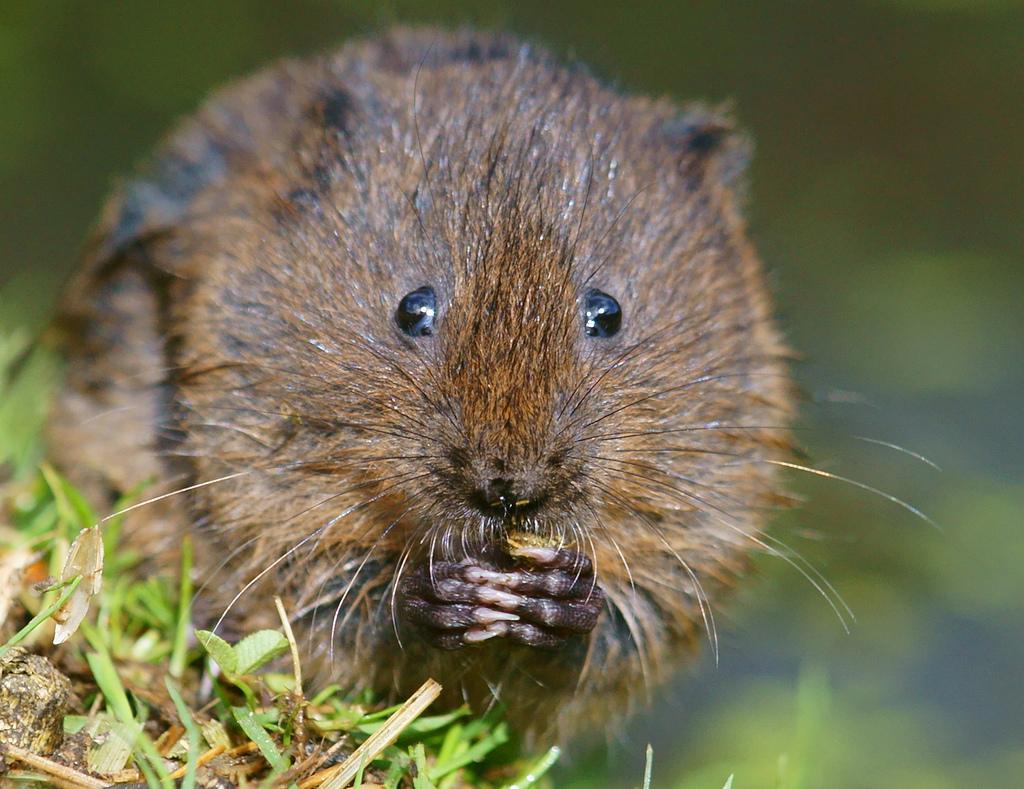
Short Description
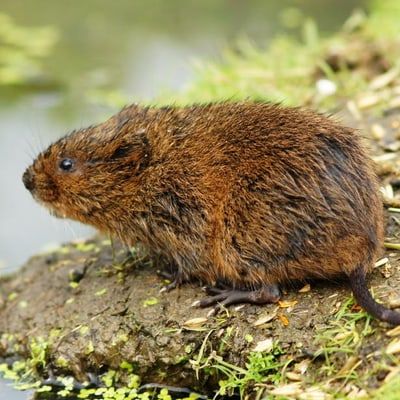
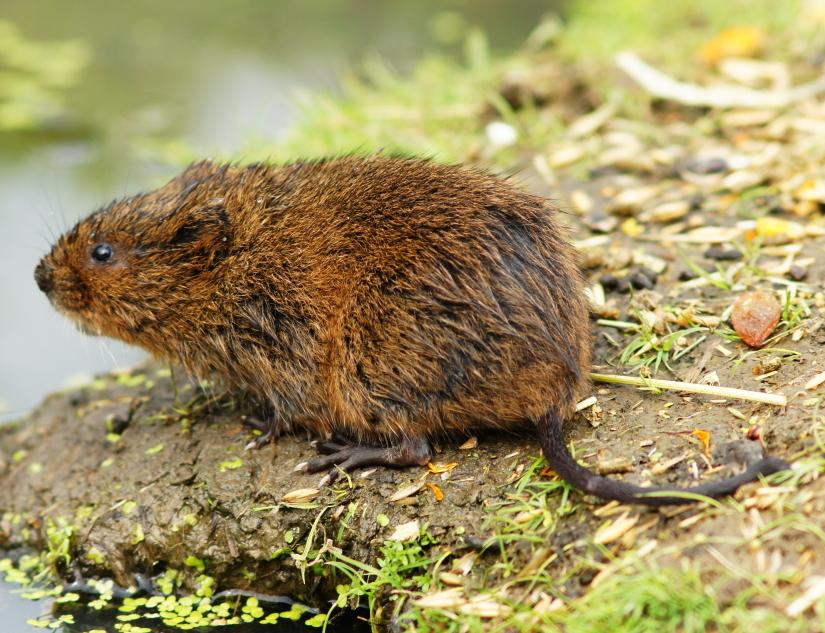
The European water vole is large, stocky and has a long, lighter tail. Its fur is long, dense and shiny. The upper side is mostly dark brown, rarely light brown. In water-dwelling animals it is often black. The underside is whitish to yellowish grey. Its mounds are about the size of a fist, elongated and flat.
Features
European water vole
Arvicola amphibius
light tail
mounds
In the city
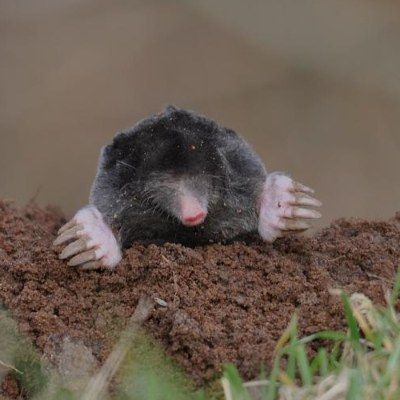
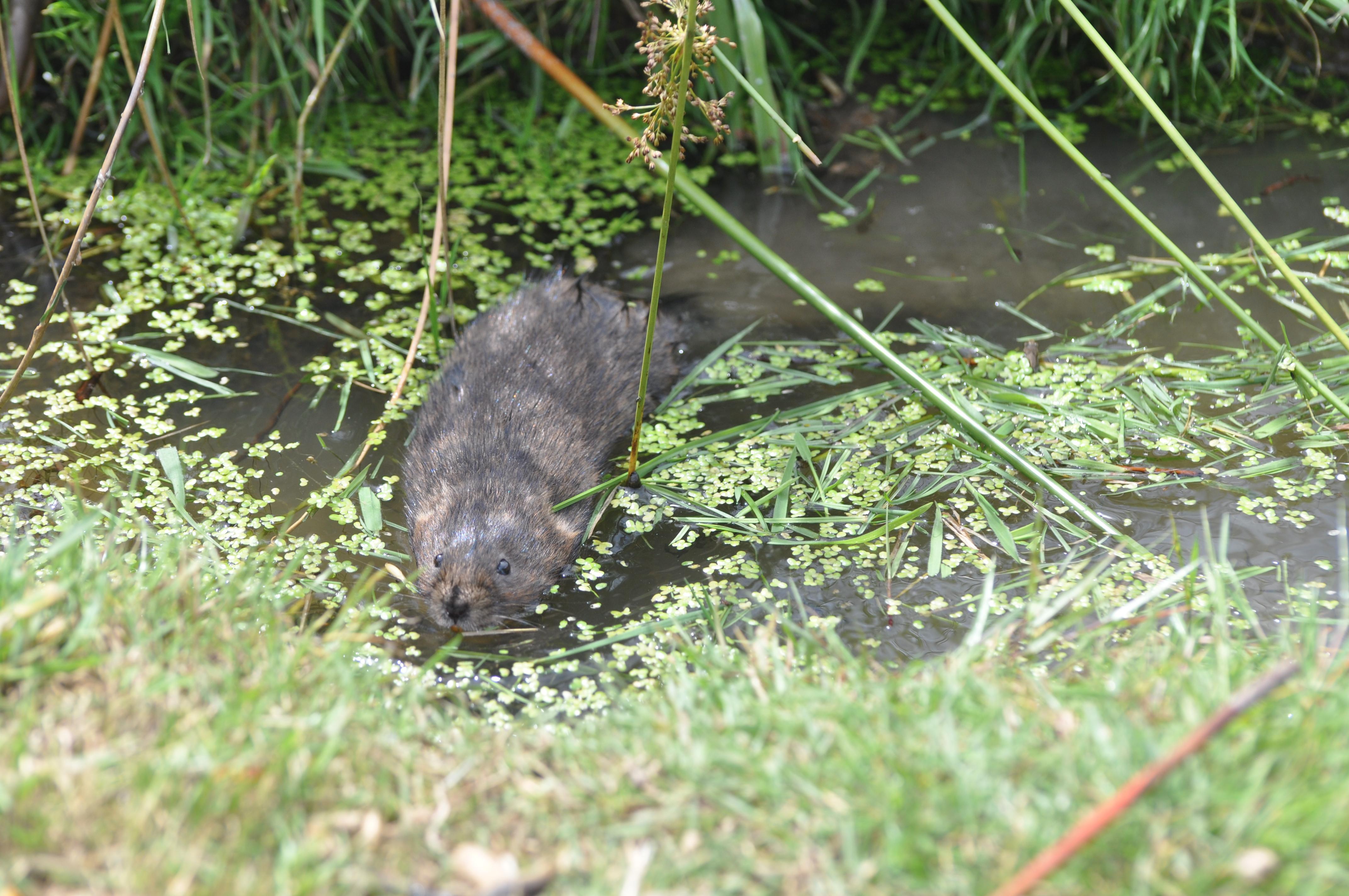
The European water vole lives mainly along rivers, streams and swamps or in meadows, orchards and gardens. Rarely it is also found in forests. The ground above their burrow systems is soft and yielding.
Fun Facts
There are both predominantly aquatic and terrestrial animals, as well as transitional forms. The aquatic animals are significantly larger and heavier than the terrestrial ones.
They build their widely ramified burrows with nest and larder in densely overgrown embankments. The entrances are both below and above the water surface.
It is the second largest vole species in Europe.
They feed predominantly on plants. Animals living in the water prefer aquatic plants, animals living on land mainly roots, bulbs and tubers. Now and then they also eat molluscs, insects and small fish.
Breeding takes place from March to October. Three to five litters are possible per year.
They are mainly crepuscular and nocturnal.
- None
Sources
Habitus, Peter Trimming, CC BY-SA 2.0, https://commons.wikimedia.org/wiki/File:Arvicola-terrestris.jpg

Habitus, The Land, CC BY-SA 4.0, https://commons.wikimedia.org/wiki/File:Water_vole_approaching_2.jpg

Habitus, Peter Trimming, CC BY-SA 2.0, https://commons.wikimedia.org/wiki/File:Arvicola_amphibius.jpg

Klawitter, J., Altenkamp, R., Kallasch, C., Köhler, D., Krauß, M., Rosenau, S. & Teige, T. (2005) Rote Liste und Gesamtartenliste der Säugetiere (Mammalia) von Berlin. : Der Landesbeauftragte für Naturschutz und Landschaftspflege / Senatsverwaltung für Stadtentwicklung (eds.) Rote Listen der gefährdeten Pflanzen und Tiere von Berlin, URL: https://www.berlin.de/sen/uvk/natur-und-gruen/naturschutz/artenschutz/artenlisten-rote-listen/saeugetiere/ (Accessed: 30.03.2021).
Page „Ostschermaus“. : Wikipedia, The Free Encyclopedia. Date of last revision: 19.02.2017, 21:52 UTC. URL: https://de.wikipedia.org/w/index.php?title=Ostschermaus&oldid=162817656 (Accessed: 13.11.2017).
Ineichen, S., Klausnitzer, B. & Ruckstuhl, M. (2012) Stadtfauna. 600 Tierarten unserer Städte, Bern, Stuttgart und Wien: Haupt Verlag.