
Short Description
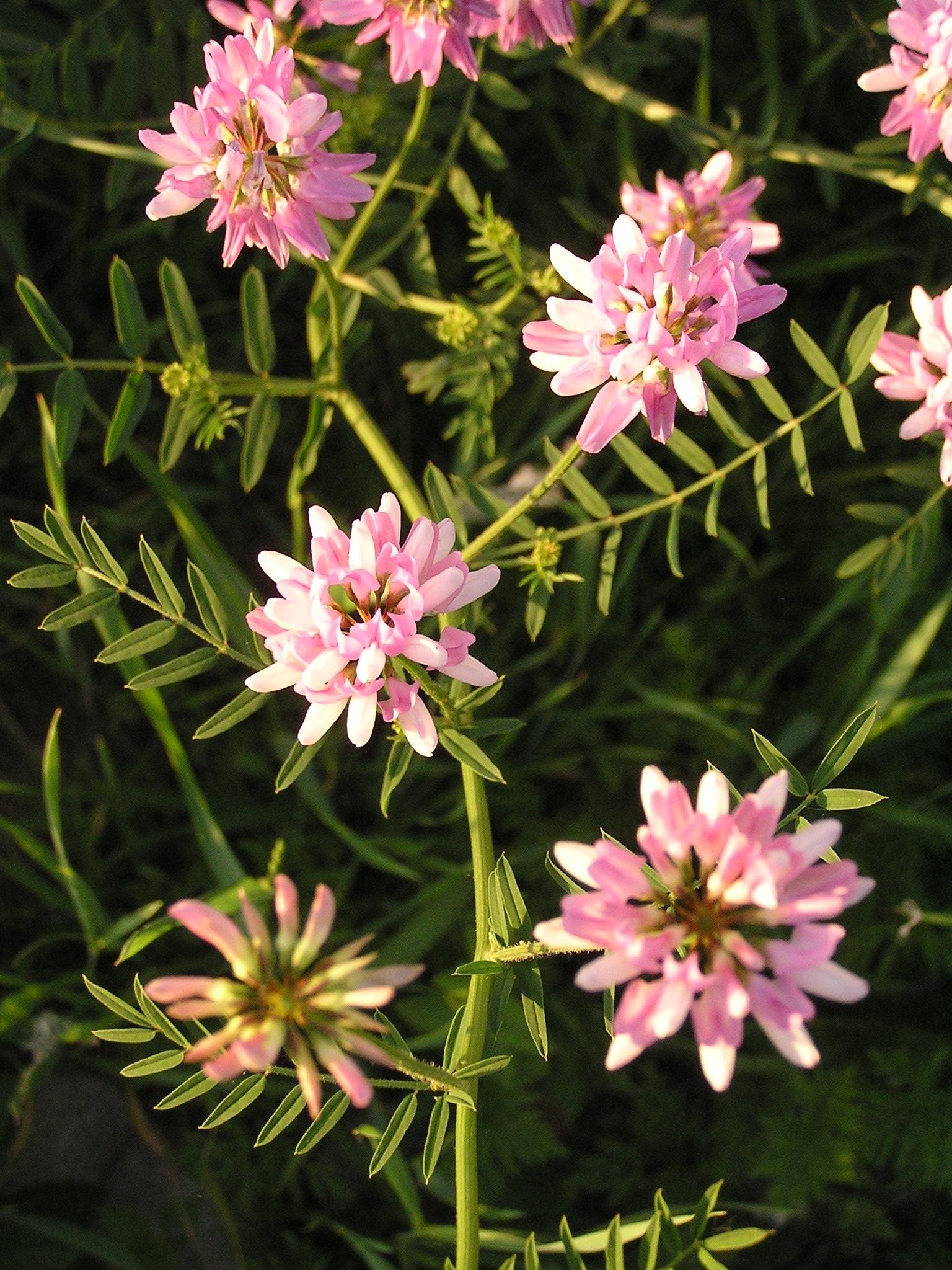
The purple crownvetch can grow up to 80 centimetres high.
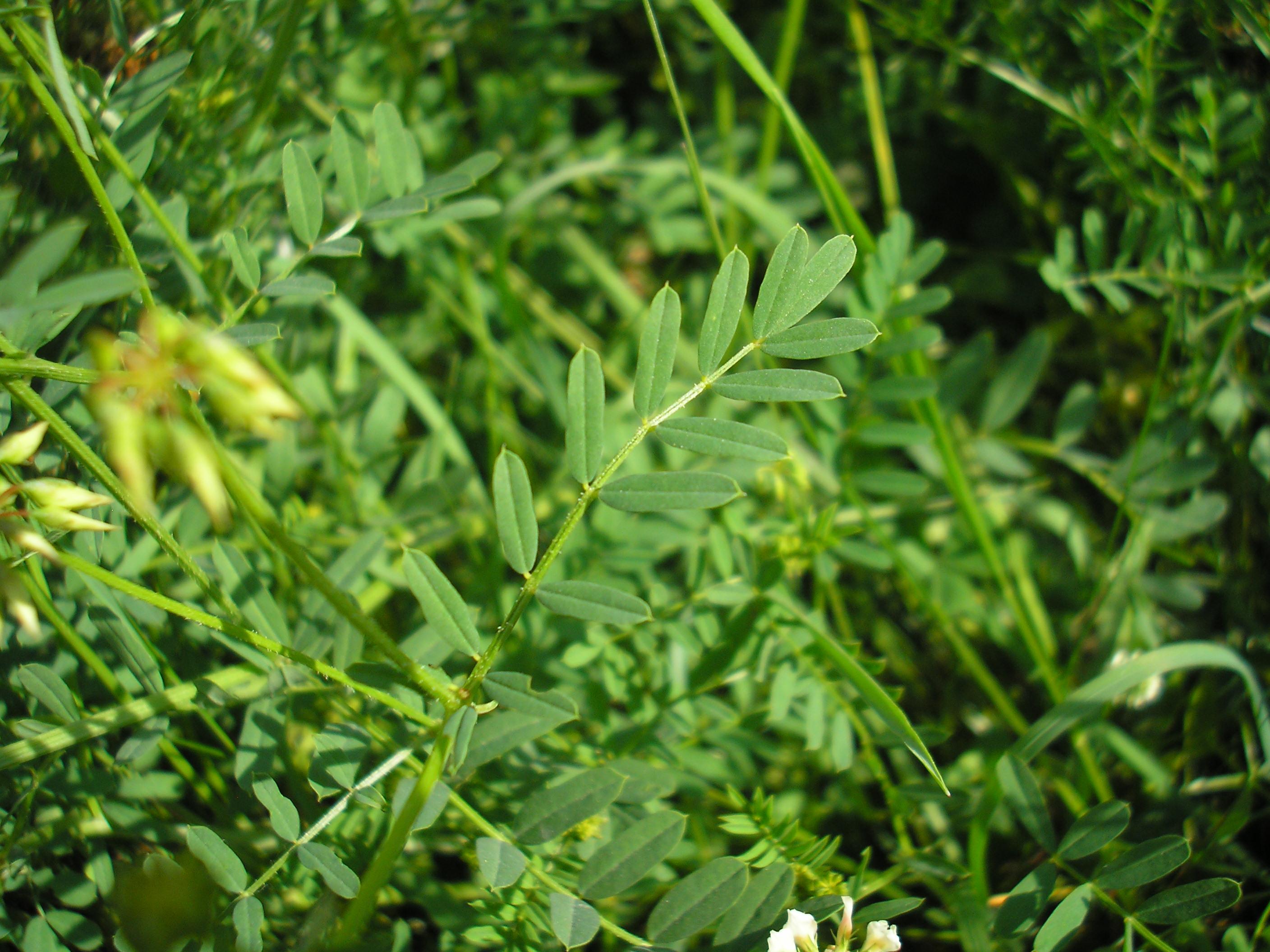
A leaf consists of up to eleven oval leaflets and ends with a single terminal leaflet (odd-pinnate). The individual leaflets are rounded at the tip and glabrous.
The stem is angular and glabrous.
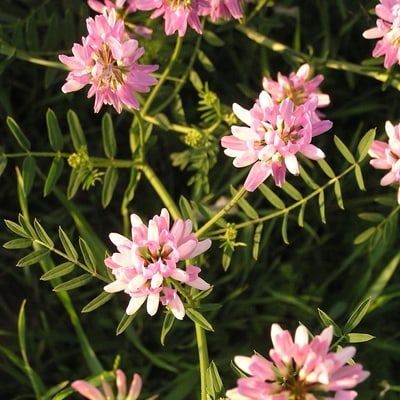
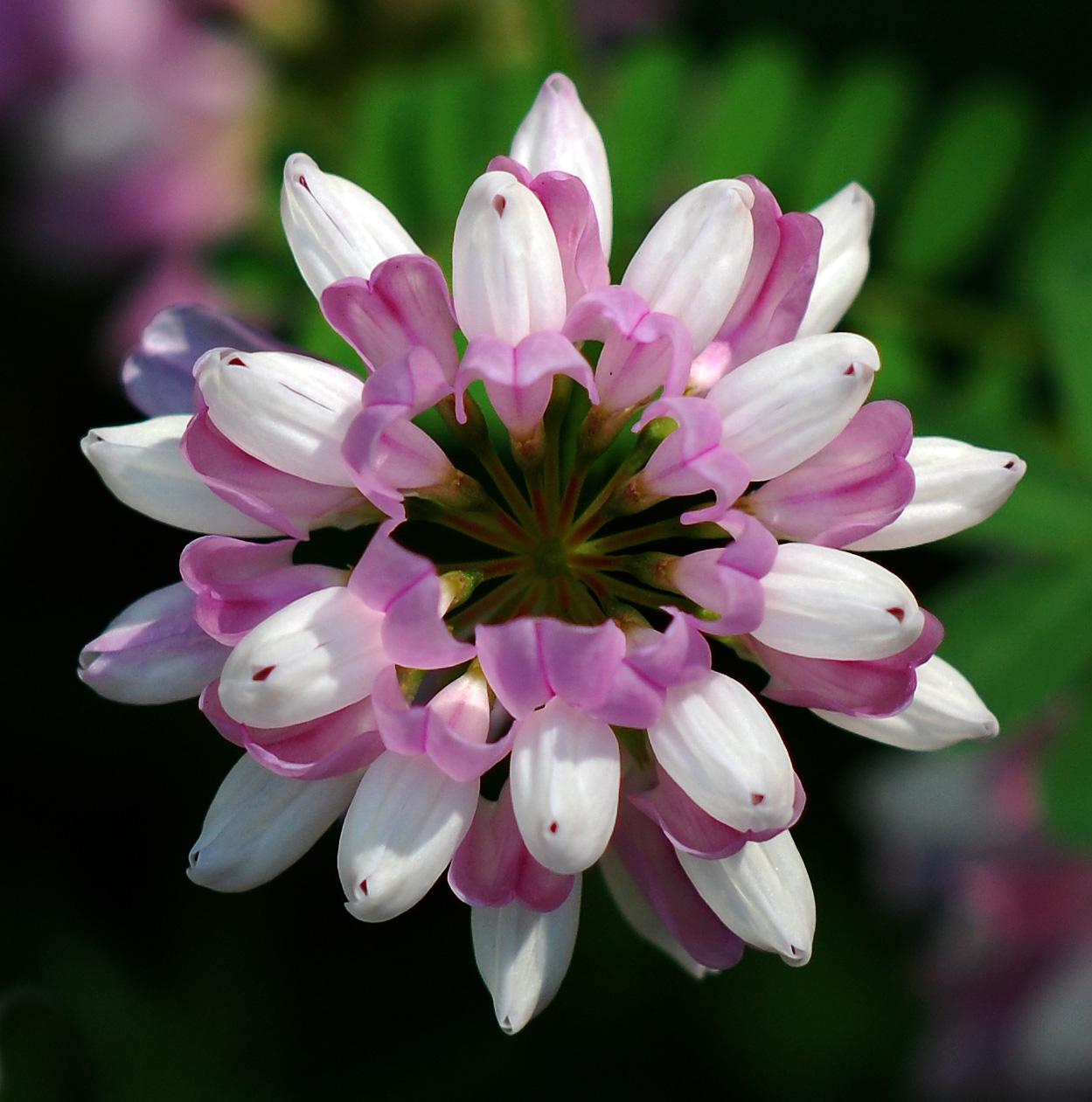
The individual flowers arise at one point and stand on one level (umbel). The single flower varies from reddish to white and has only one mirror axis (mirror symmetry). It consists of five petals. The large, upper petal usually protrudes upwards. The two lower leaves form a hollow boat that surrounds the anthers and pistils.
The fruit is an erect, jointed pod with a hooked tip.
Features
Purple crownvetch
Coronilla varia
poisonous
leaves odd-pinnate
reddish to white flowers
In the city
In the city, the purple crownvetch can be found on railway embankments and in quarries. It prefers moderately dry to fresh sites with nutrient-poor soils.
Fun Facts
The flowering period is from June to August.
The papilionaceous flower is the typical flower shape for most members of the legume family.
Living together with root nodule bacteria is typical for the legume family. The bacteria supply the plant with nitrogen. Since the bacteria need a plant for nitrogen fixation, this coexistence has a positive effect on both species (symbiosis).
The purple crownvetch is partly cultivated as a forage plant.
- Endangerment level Germany: not endangered
The whole plant is poisonous.
Sources
Habitus, Andrew Butko, CC BY-SA 3.0, https://commons.wikimedia.org/wiki/File:Ab_plant_2078.jpg

Blätter, Julia Kruse, CC BY-SA 3.0, https://species-id.net/openmedia/File:Securigera_varia_JuliaKruse_3.JPG

Blütenstand, dw_ross, CC BY 2.0, https://commons.wikimedia.org/wiki/File:20100603e2.jpg

Eggenberg, S. & Möhl, A. (2007) Flora Vegetativa: Ein Bestimmungsbuch für Pflanzen der Schweiz im blütenlosen Zustand, Bern, Stuttgart, Wien: Haupt Verlag.
Spohn, M., Golte-Bechtle, M. & Spohn, R. (2015) Was blüht denn da? Stuttgart: Franckh Kosmos Verlag.
Jäger, E. J. (2011) Rothmaler - Exkursionsflora von Deutschland. Gefäßpflanzen: Grundband, Heidelberg: Spektrum Akademischer Verlag.
Kammer, P. M. (2016) Pflanzen einfach bestimmen. Schritt für Schritt einheimische Arten kennenlernen, Bern: Haupt Verlag.
Schauer, T., Caspari, C. & Caspari, S. (2015) Der illustrierte BLV-Pflanzenführer für unterwegs. 1150 Blumen, Gräser, Bäume und Sträucher, München: BLV.
Page „Bunte Kronwicke“. : Wikipedia, The Free Encyclopedia. Date of last revision: 13.03.2017, 21:54 UTC. URL: https://de.wikipedia.org/w/index.php?title=Bunte_Kronwicke&oldid=163559029 (Accessed: 11.04.2017).