
Short Description
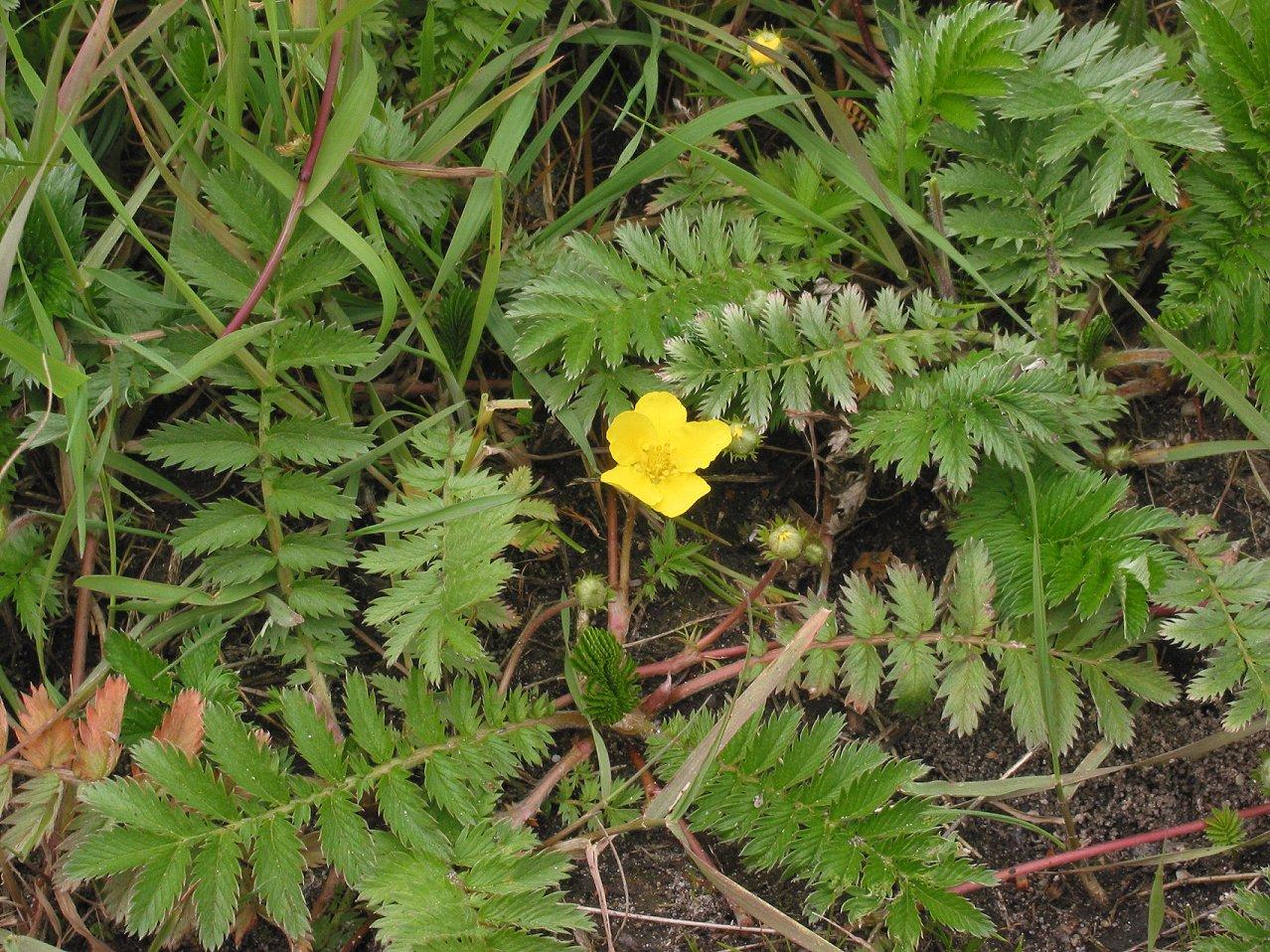
The common silverweed can grow up to 80 centimetres tall.
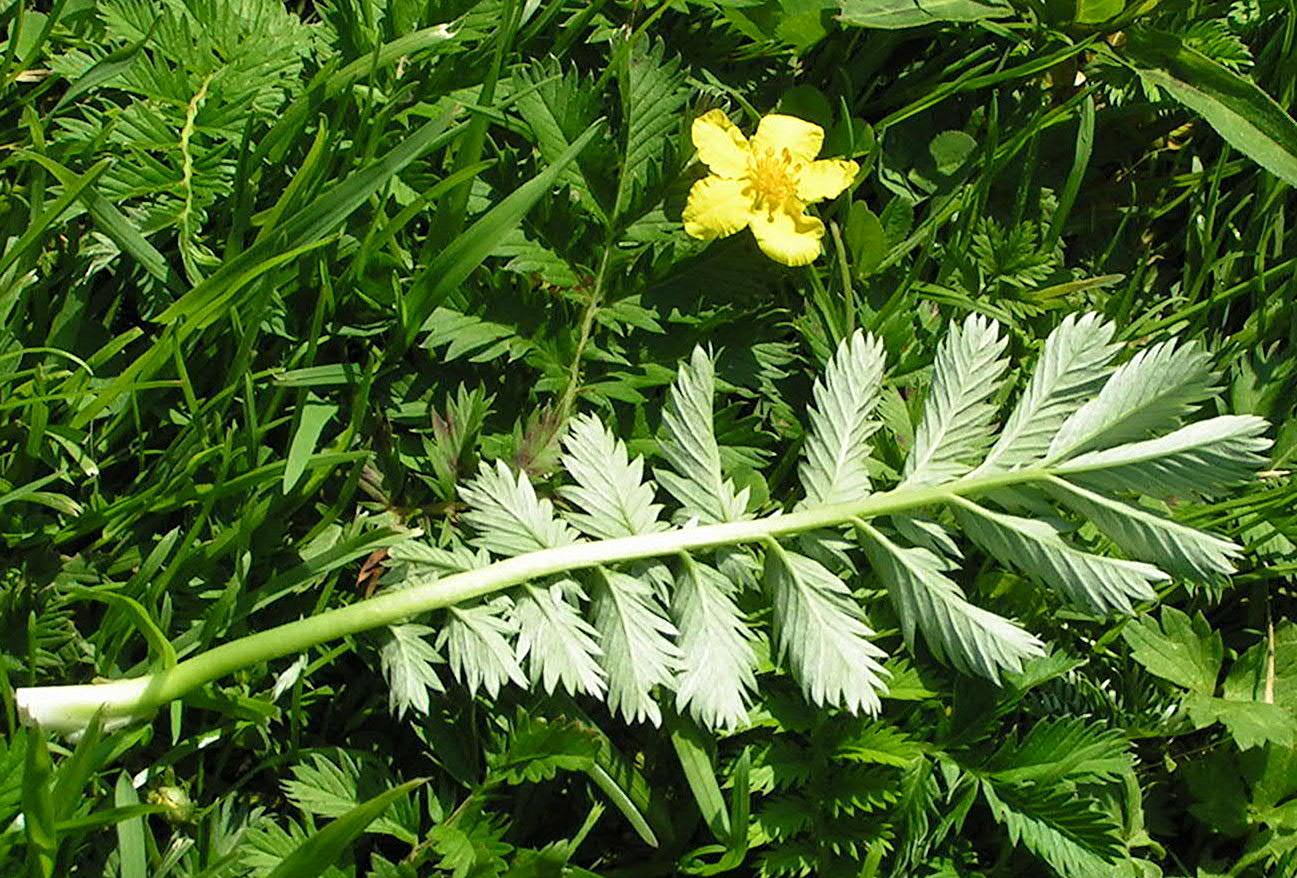
The leaves grow in rosettes directly on the ground (basal). They are divided into 13 to 21 leaflets (pinnate). The leaflets have a serrated edge and shiny silvery hairs on the underside.
The stem grows creeping over the ground. It can form several leaf rosettes.
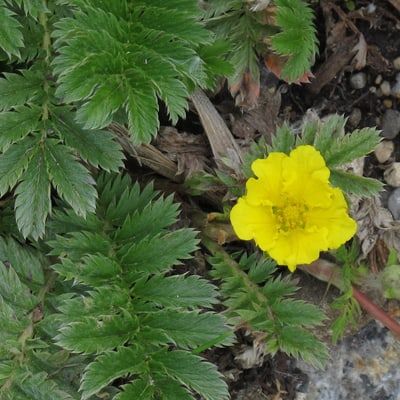
The flowers have five yellow, round petals. They sit singly on long stems.
The fruits are little nuts.
Features
Common silverweed
Argentina anserina
single flowers on long stems
silvery shiny, hairy leaf underside
In the city
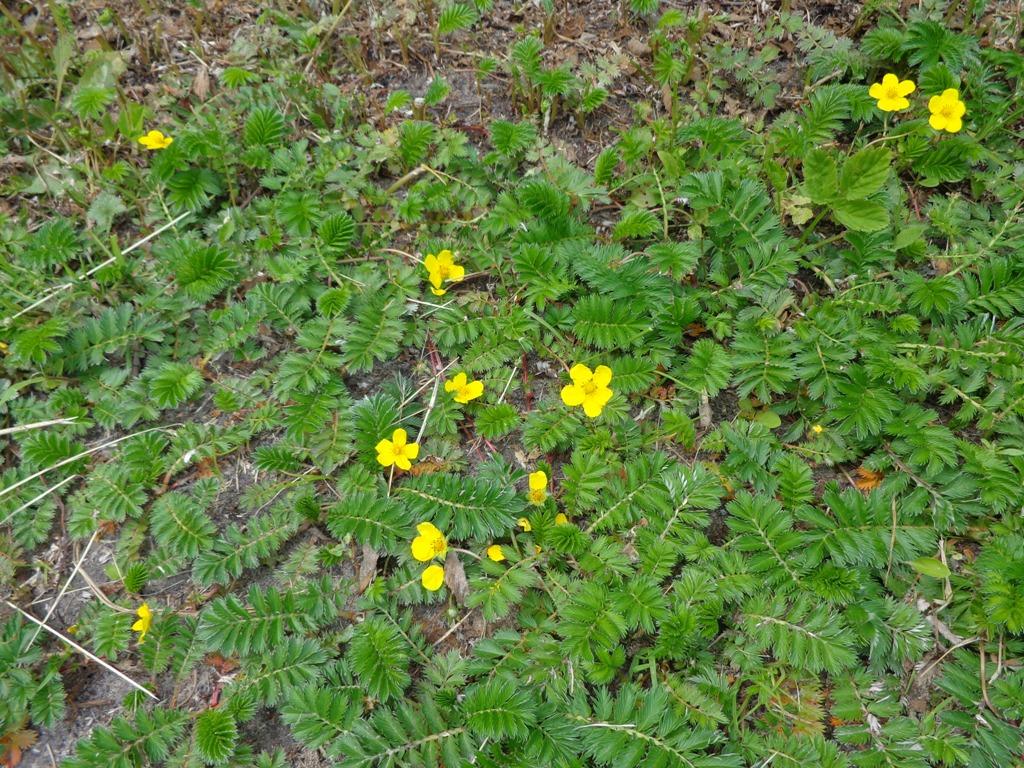
Common silverweed is a very tread-resistant ruderal plant. In the city, it is often found in fields, pastures and fallow land. However, it also grows along roadsides. It prefers compacted, nutrient-rich soils and indicates soil compaction.
It also tolerates salt. It therefore often grows along salt-strewn roads and motorways.
Fun Facts
In former times, the herb was typical for goose pastures. It profited there from the abundance of nitrates.
The petals have markings inside in the UV range that are not visible to the human eye. They are intended to attract pollinators.
The flowering period is from May to August.
It lives for several years and generally flowers and fruits annually (perennial plant).
Pollination is carried out by various insects. Self-pollination also occurs before flowering.
- Endangerment level Germany: not endangered
- Usage:
The soft leaves used to be used as insoles for wooden shoes.
The common silverweed is native to Europe.
A tea made from dried flowering common silverweed is drunk for cramping diarrhoea or painful menstruation. A bath made from it is said to be effective for poorly healing wounds.
Sources
Habitus, Rasbak, CC BY-SA 3.0, https://commons.wikimedia.org/wiki/File:Zilverschoon_plant_Potentilla_anserina.jpg

Blattunterseite, Pethan, CC BY-SA 3.0, https://commons.wikimedia.org/wiki/File:Potentilla_anserina_leaf.jpg

Habitus, AfroBrazilian, CC BY-SA 3.0, https://commons.wikimedia.org/wiki/File:Potentilla_anserina_01.JPG

Kammer, P. M. (2016) Pflanzen einfach bestimmen. Schritt für Schritt einheimische Arten kennenlernen, Bern: Haupt Verlag.
Spohn, M., Golte-Bechtle, M. & Spohn, R. (2015) Was blüht denn da? Stuttgart: Franckh Kosmos Verlag.
Page „Gänsefingerkraut“. : Wikipedia, The Free Encyclopedia. Date of last revision: 29.11.2017, 19:00 UTC. URL: https://de.wikipedia.org/w/index.php?title=G%C3%A4nsefingerkraut&oldid=171514419 (Accessed: 26.03.2018).
Bundesamt für Naturschutz (n.d.) Artensteckbriefe, URL: http://floraweb.de/pflanzenarten/artenhome.xsql?suchnr=4489& (Accessed: 26.03.2018).