
Short Description
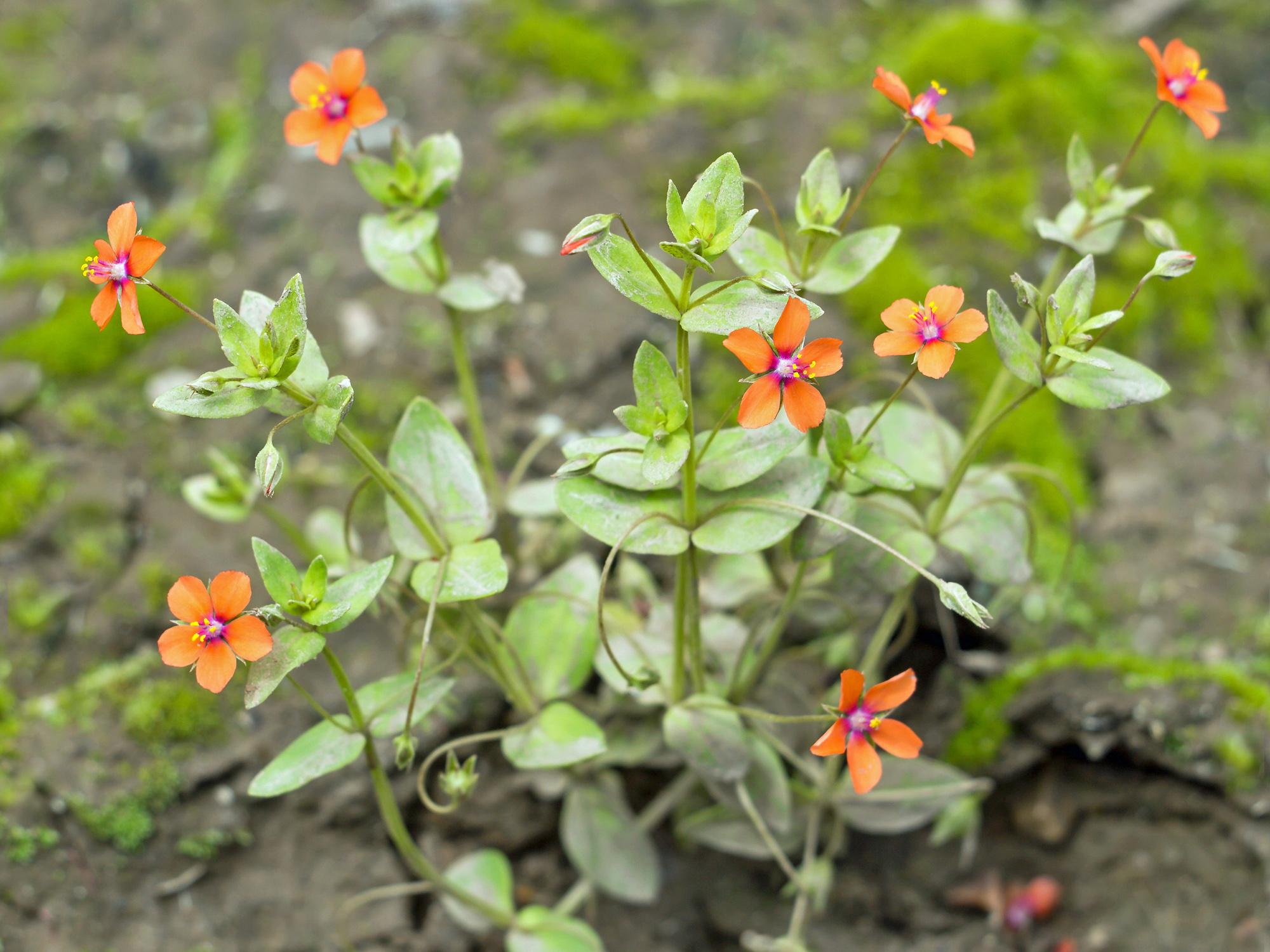
The scarlet pimpernel grows up to 30 centimetres tall and often lies on the ground.
The leaves are always in pairs and opposite each other on the stem. They are ovate to elongated and have a smooth edge.
The stem is sharply square and glabrous.
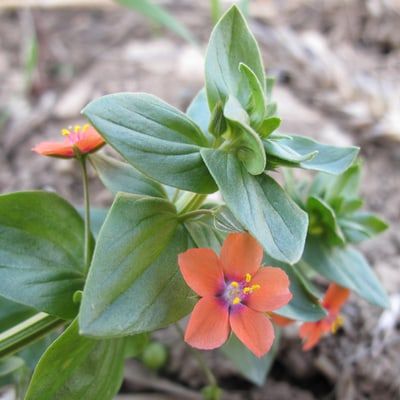
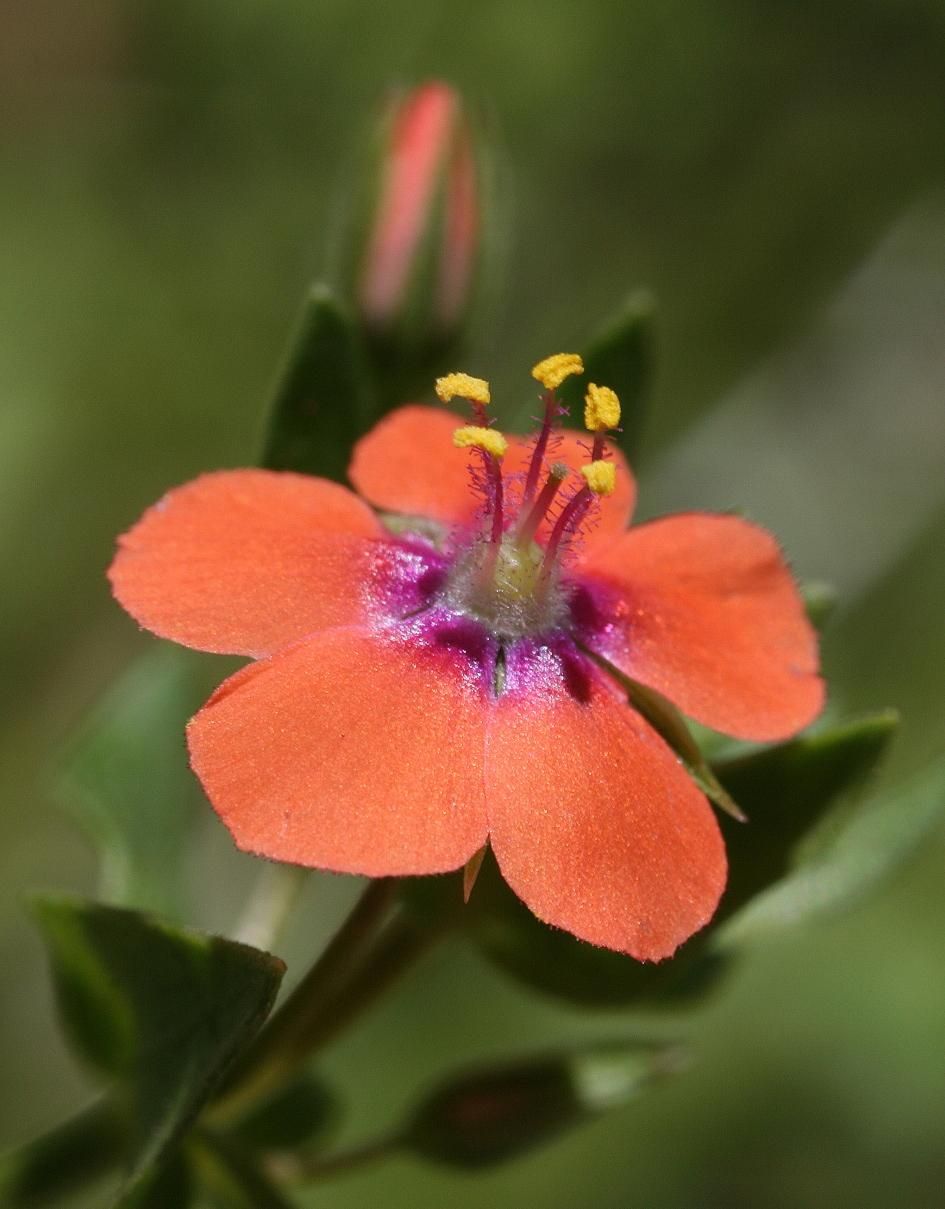
The flowers are striking brick red. In rare cases they can also be blue. They sit on long stalks that spring from the leaf axils. A flower consists of five, roundly arranged petals that touch each other or can even reach over each other.
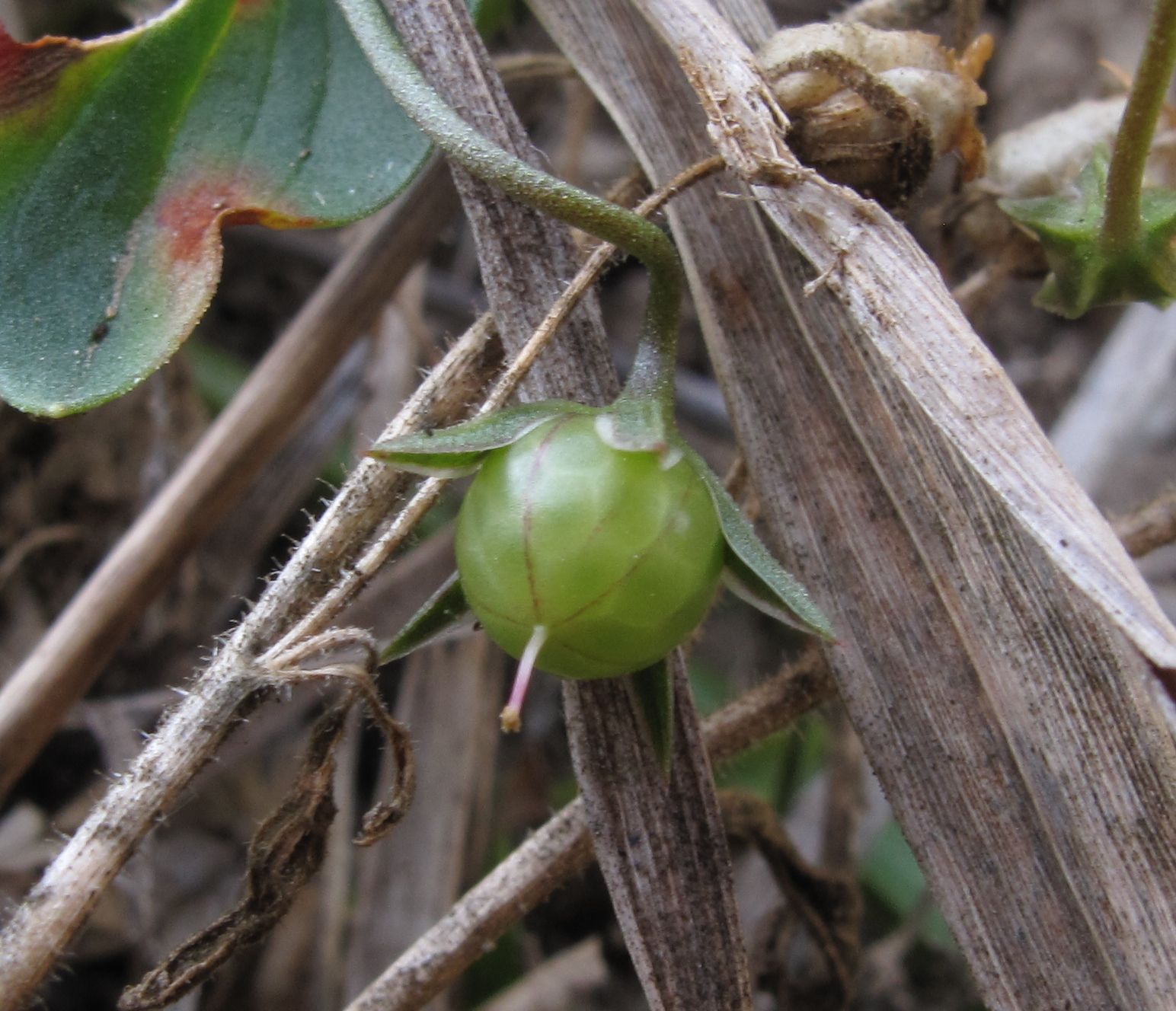
The fruit is a spherical capsule.
Features
Scarlet pimpernel
Lysimachia arvensis
poisonous (all parts)
square stem
brick red petals touch each other
Similar species
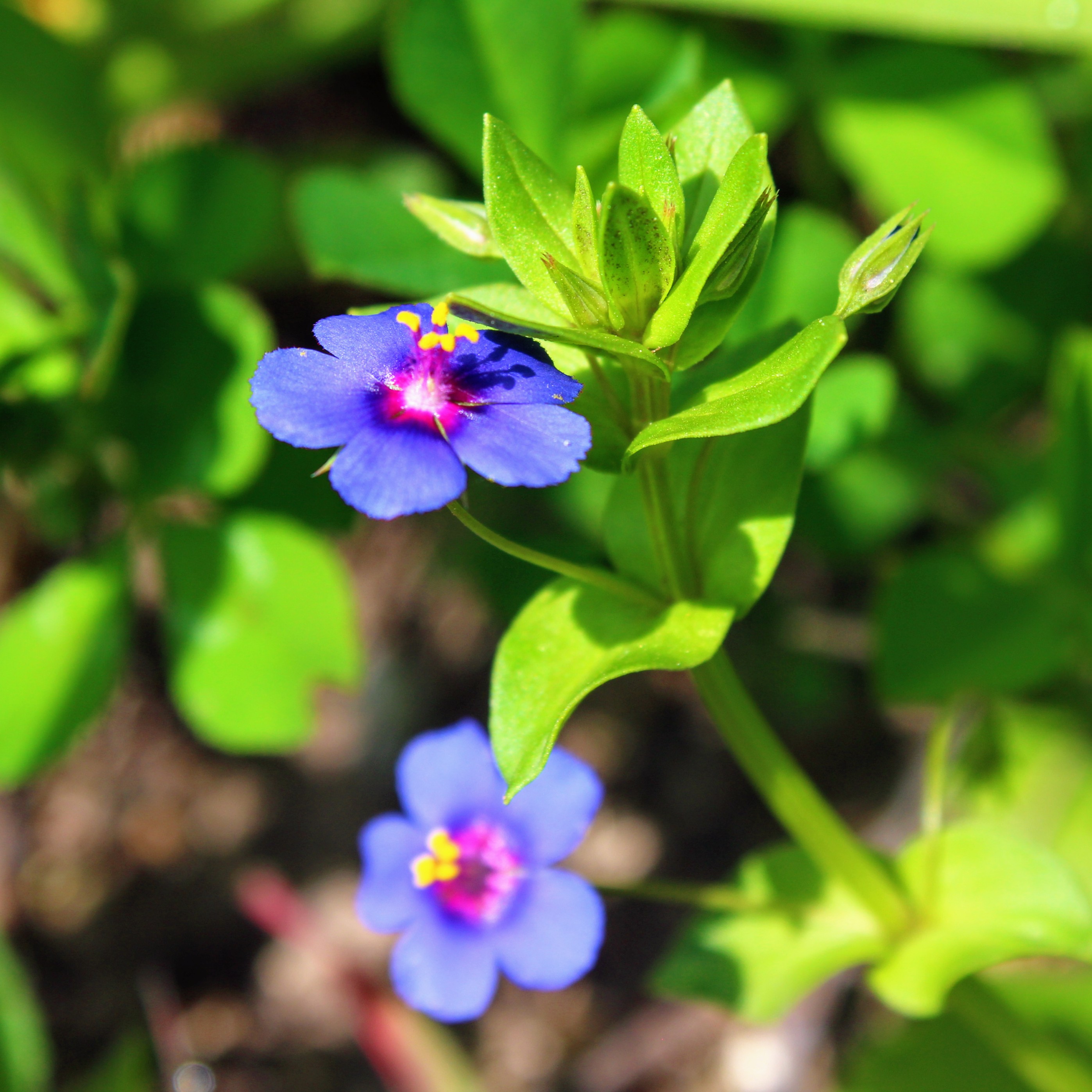
Blue pimpernel
Lysimachia foemina
In the city
The scarlet pimpernel prefers loose and nutrient-rich soils. It finds these conditions in the city on ruderal areas such as rubble tips or fallow land as well as along roadsides. Along roads or motorways, it often forms a long "red band".
Fun Facts
The flowers only open from 9 am to 3 pm. They close again when rain approaches. This is why the field pimpernel is also colloquially called poor man's weatherglass.
In former times it was considered a cure for mental illness.
The flowering period is from June to October.
It is an annual, i.e. the plant flowers for only one summer and dies after the seeds have ripened.
The hairs on the stamens are so-called feeding hairs. They serve to attract pollinators, especially flies.
Self-pollination also occurs. The ripe fruits incline downwards with gravity and open by drying out. The seeds are blown out by the wind or washed out with the water.
- Endangerment level Germany: not endangered
The scarlet pimpernel originates from the Mediterranean region. However, it was already spread throughout Europe in the Middle Ages. Today it is found almost all over the world.
All parts are poisonous, especially the root. Consumption causes trembling, diarrhoea and headache. The leaves can cause an allergic reaction on contact with the skin.
Sources
Habitus, Christian Fischer, CC BY-SA 4.0, https://commons.wikimedia.org/wiki/File:AnagallisArvensis.jpg

Frucht, Juandev, CC BY-SA 3.0, https://commons.wikimedia.org/wiki/File:Fruit_of_Anagallis_arvensis_near_Čičovický_kamýk.jpg

Blüte, Calibas, CC BY-SA 4.0, https://commons.wikimedia.org/wiki/File:Scarlet_pimpernel2.jpg

Kammer, P. M. (2016) Pflanzen einfach bestimmen. Schritt für Schritt einheimische Arten kennenlernen, Bern: Haupt Verlag.
Roth, L., Daunderer, M. & Kormann, K. (2008) Giftpflanzen - Pflanzengifte. Vorkommen, Wirkung, Therapie. Allergische und phototoxische Reaktionen, Hamburg: Nikol Verlag.
Spohn, M., Golte-Bechtle, M. & Spohn, R. (2015) Was blüht denn da? Stuttgart: Franckh Kosmos Verlag.
Page „Acker-Gauchheil“. : Wikipedia, The Free Encyclopedia. Date of last revision: 03.10.2017, 00:36 UTC. URL: https://de.wikipedia.org/w/index.php?title=Acker-Gauchheil&oldid=169632381 (Accessed: 07.12.2017).