
Short Description
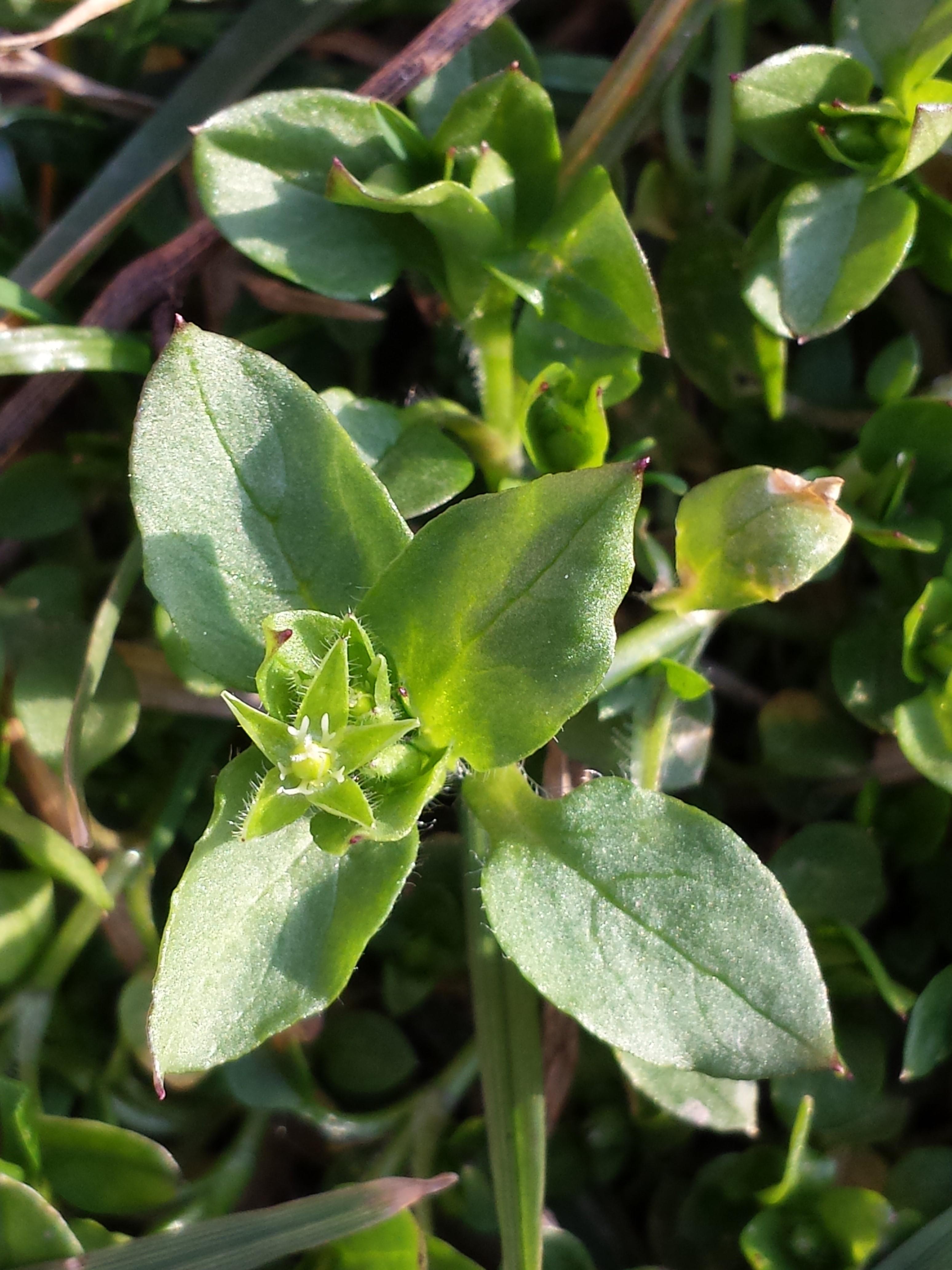
The lesser chickweed can grow up to 20 centimetres high.
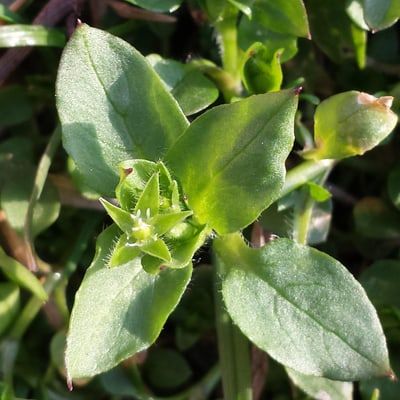
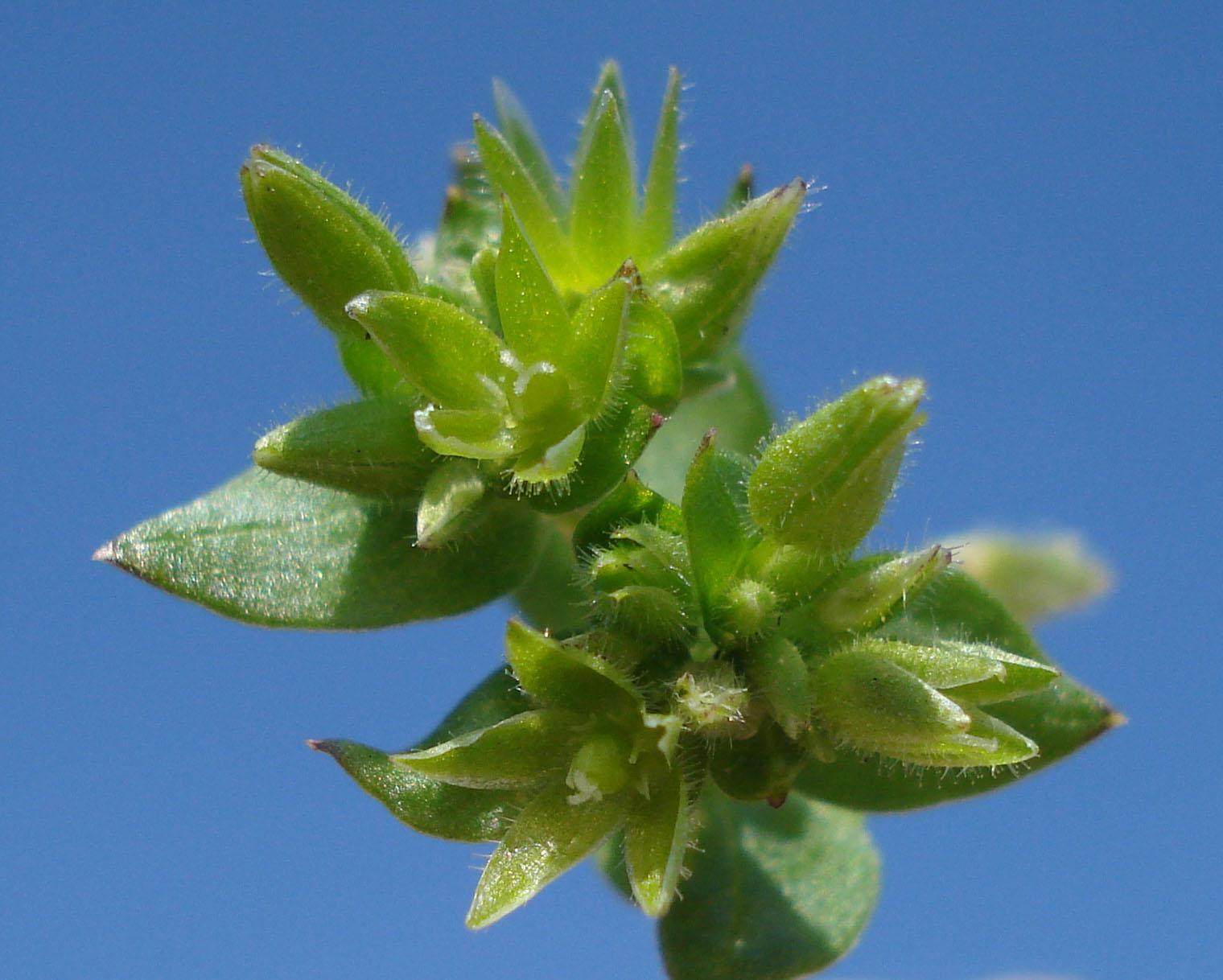
The relatively small leaves are ovate and shortly pointed. They are light green to yellowish green.
The stem and pedicels have a single row of hairs. The plant grows creeping.
The flowers are very small. The tiny, white petals fall off early, so that usually only the yellow-green calyx remains, which at first glance does not look like a typical flower.
The lesser chickweed forms spherical to cylindrical capsule fruits. When ripe, they burst open to the middle and release the seeds.
Features
Lesser chickweed
Stellaria apetala
Stems and pedicels hairy on one side
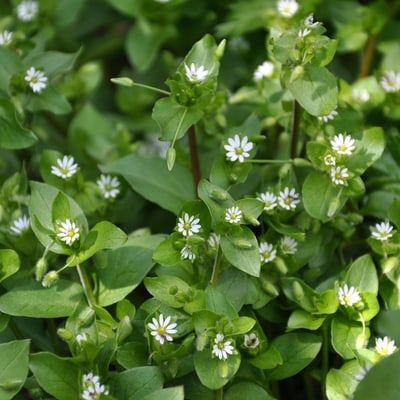
Similar species
In the city
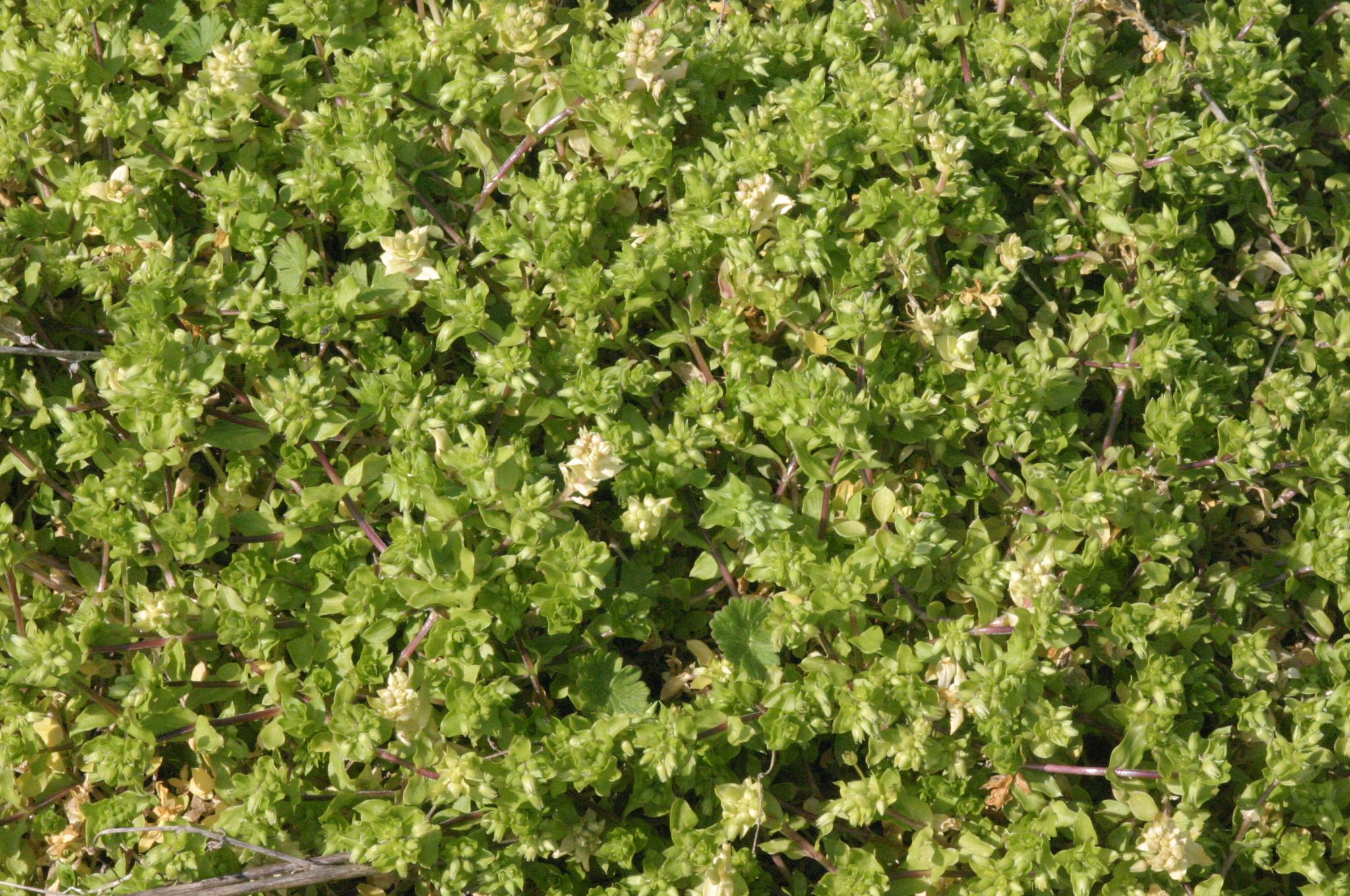
Lesser Chickweed often grows along paths and house walls in the city. It prefers moderately dry, nutrient-rich, often sandy soils and is thermophilic.
Fun Facts
The flowering period is from March to May.
Lesser Chickweed is self-pollinating.
It is an annual plant, i.e. it flowers for only one summer and dies after the seeds have ripened.
- Endangerment level Germany: not evaluated
Lesser Chickweed is native to Germany. Its occurrences range from the Mediterranean area to southern Sweden.
Sources
Habitus, Stefan.lefnaer, CC BY-SA 4.0, https://commons.wikimedia.org/wiki/File:Stellaria_pallida_sl6.jpg

Habitus, HermannSchachner, CC0, https://commons.wikimedia.org/wiki/File:Stellaria_pallida_(Bleiche_Vogel-Sternmiere)_IMG_36838.JPG
_IMG_36838.JPG)
Blütenstand, Fornax, CC BY-SA 3.0, https://commons.wikimedia.org/wiki/File:Stellaria_pallida_W.jpg

Bundesamt für Naturschutz (n.d.) Artensteckbriefe, URL: http://floraweb.de/pflanzenarten/artenhome.xsql?suchnr=5777& (Accessed: 17.09.2018).
Page „Bleiche Vogel-Sternmiere“. : Wikipedia, The Free Encyclopedia. Date of last revision: 03.04.2018, 18:54 UTC. URL: https://de.wikipedia.org/w/index.php?title=Bleiche_Vogel-Sternmiere&oldid=175733024 (Accessed: 17.09.2018).
Page „Sternmieren“. : Wikipedia, The Free Encyclopedia. Date of last revision: 30.08.2017, 21:58 UTC. URL: https://de.wikipedia.org/w/index.php?title=Sternmieren&oldid=168632051 (Accessed: 17.09.2018).
Seitz, B., Ristow, M., Meißner, J., Machatzi, B. & Sukopp, H. (2018) Rote Liste und Gesamtartenliste der etablierten Farn- und Blütenpflanzen von Berlin. : Der Landesbeauftragte für Naturschutz und Landschaftspflege / Senatsverwaltung für Umwelt, Klima und Verkehr (eds.) Rote Listen der gefährdeten Pflanzen, Pilze und Tiere von Berlin, URL: https://www.berlin.de/sen/uvk/natur-und-gruen/naturschutz/artenschutz/artenlisten-rote-listen/farn-und-bluetenpflanzen/ (Accessed: 26.03.2021).