
Short Description
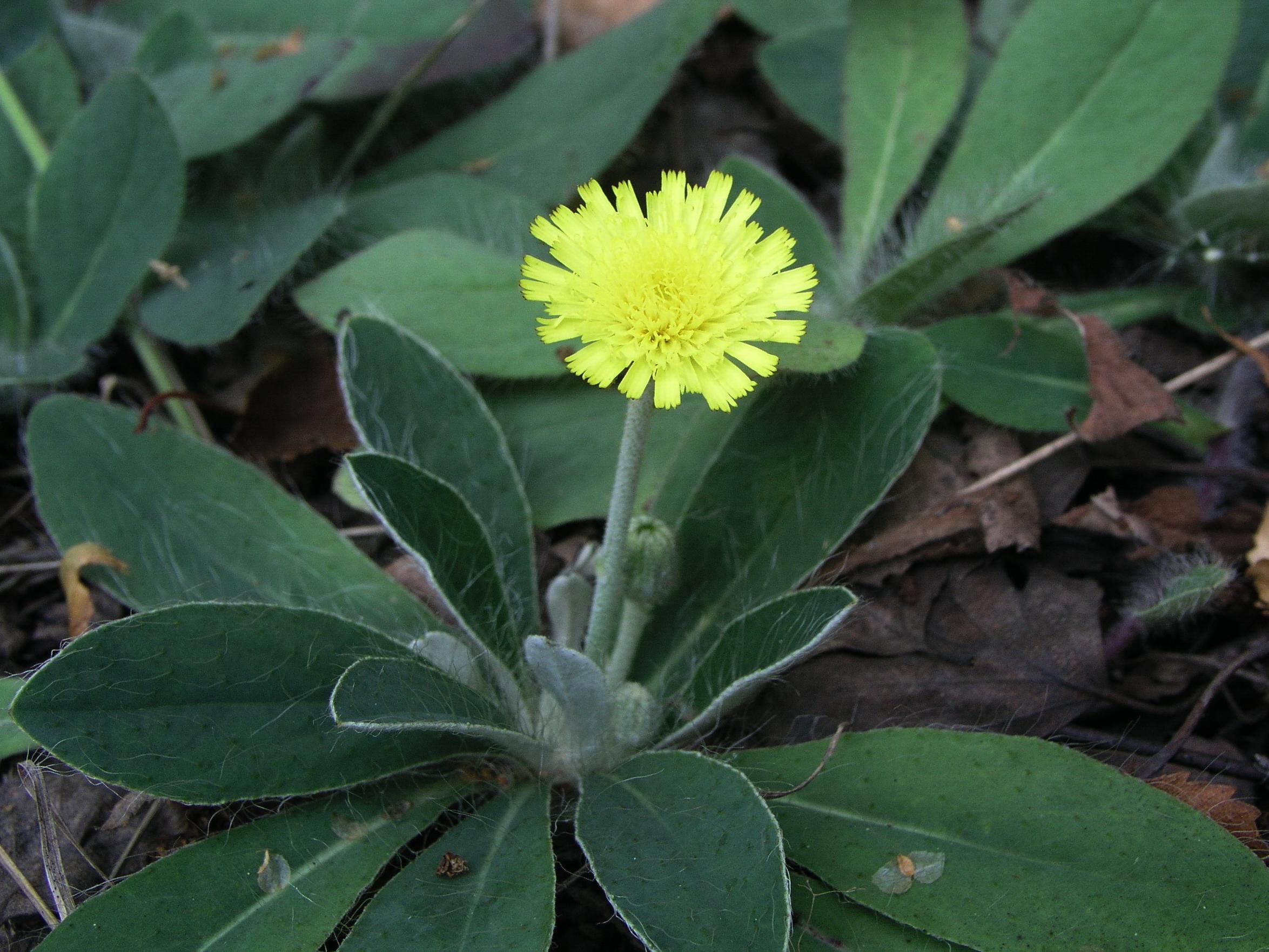
The mouse-ear hawkweed lives for several years and generally flowers and fruits annually (perennial plant).
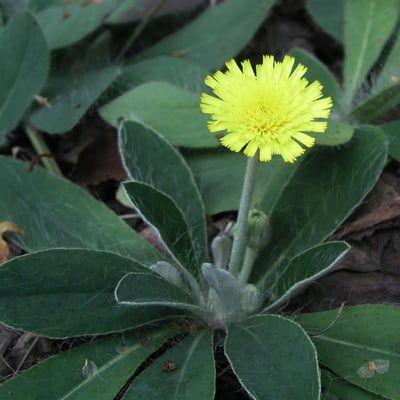
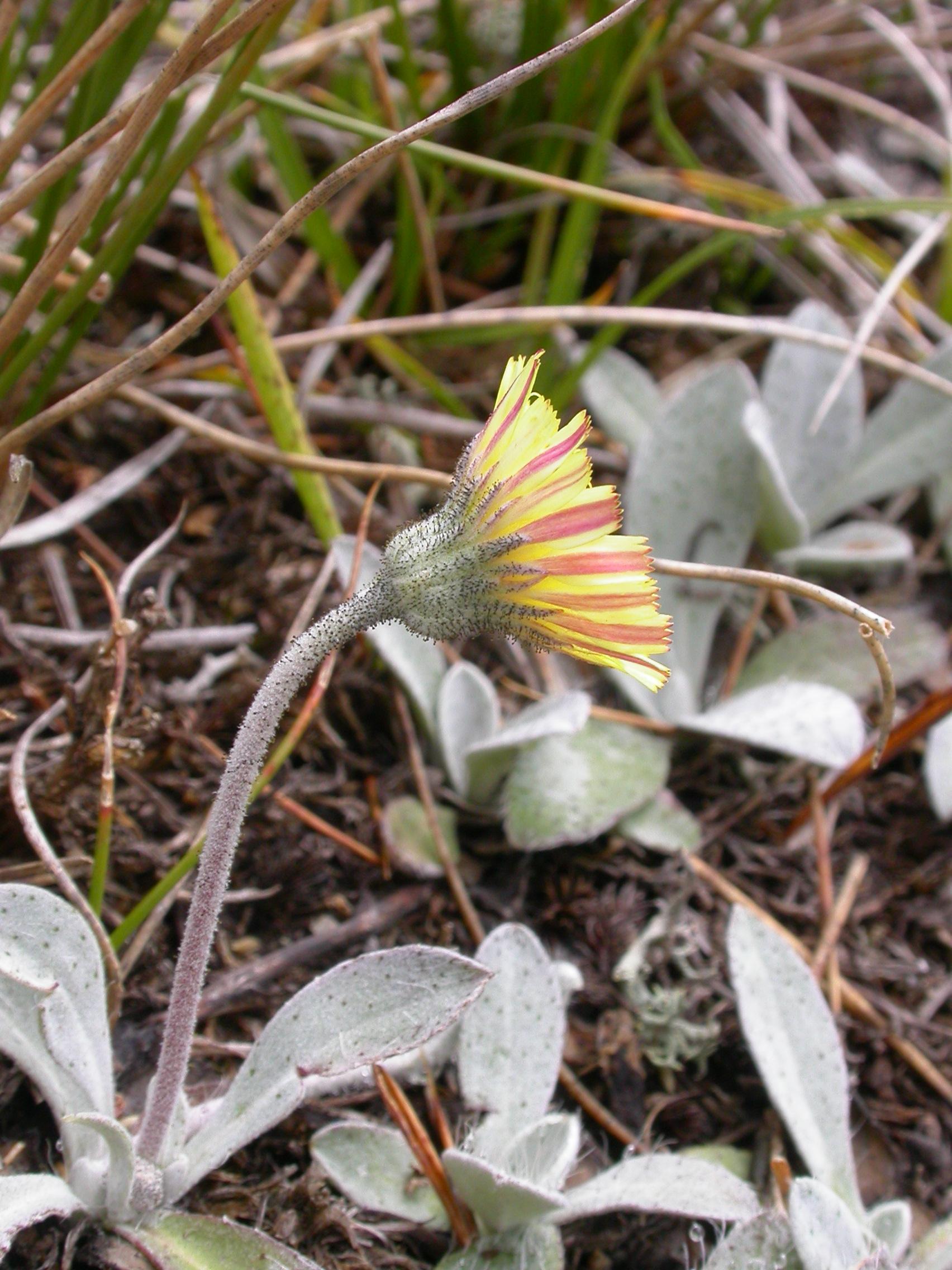
The leaves are in a rosette at the base of the plant. They are narrow-ovate. On the upper side they are covered with long hairs. On the underside they have grey felt.
The stem is grey-felted haired and leafless.
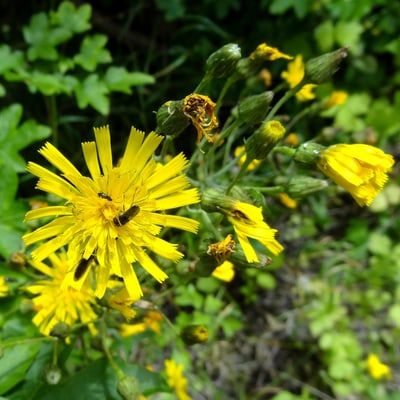
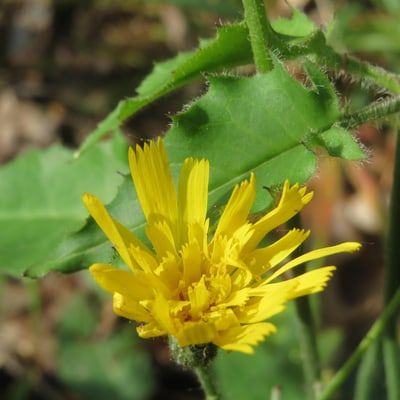
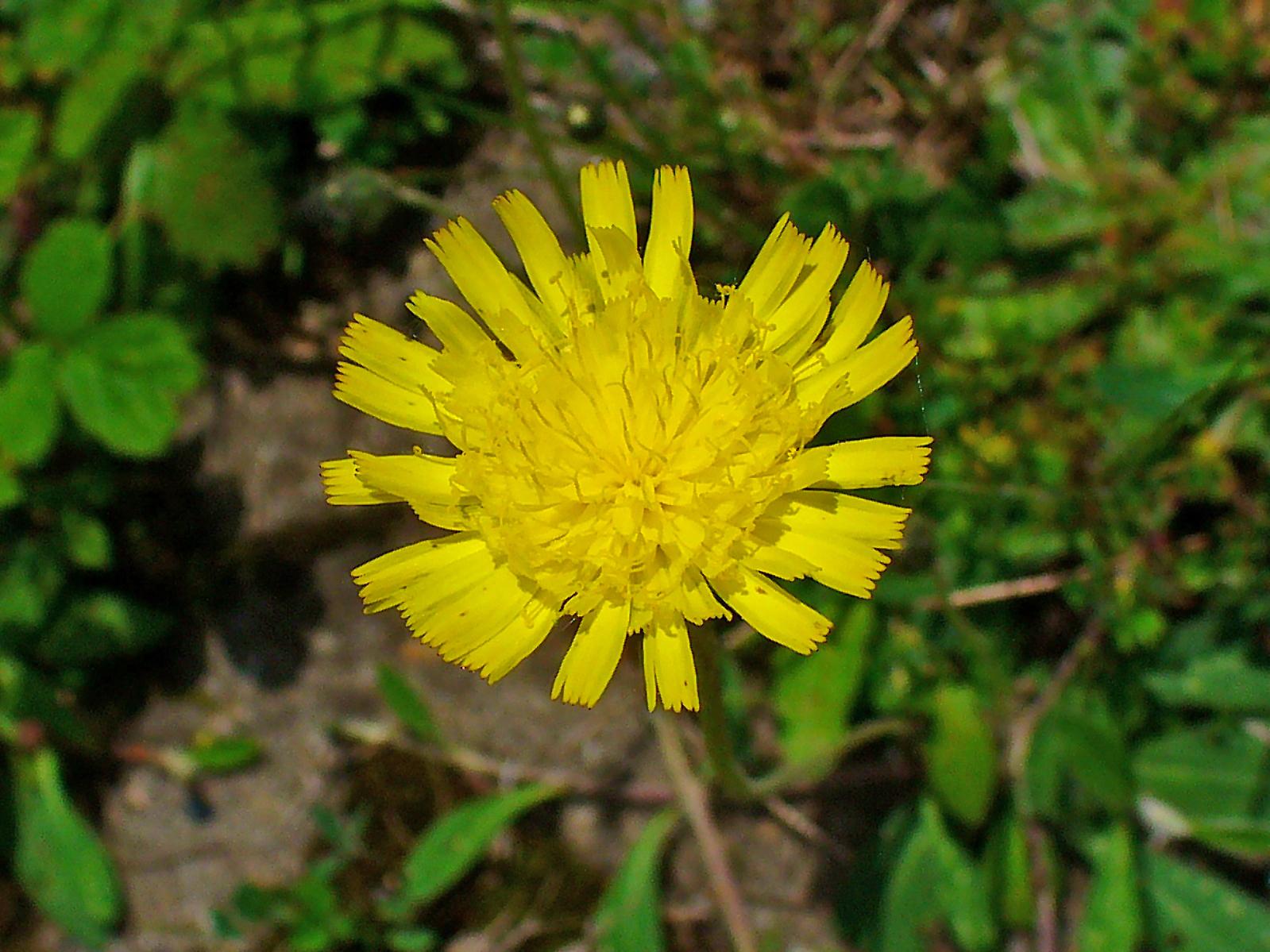
The flower heads sit solitary at the end of the stem. The individual flowers are yellow and the outer ones often have red stripes on the outside. The bracts are also grey-felted.
The plant forms small, nut-like fruits with hairs.
Features
Mouse-ear hawkweed
Pilosella officinarum
leaf rosette at the base
leafless stem
In the city
The mouse-ear hawkweed grows in sunny places. It occurs on dry lawns, in heaths, along paths and field margins, in sparse woods and in rock crevices.
Fun Facts
The flowering period is from July to September.
It reproduces by forming stolons.
In dry conditions it rolls up its leaves. This makes the light-coloured, light-reflecting underside outside and reduces evaporation.
It is mainly pollinated by bees of the Panurgus genus.
The fruits can be carried by the wind for more than 10 km. The main dispersal, however, occurs by fruits sticking to wet surfaces , for example on the wet fur of animals.
If the sun is shining, the flowers are open from 8 am to 3 pm.
- Endangerment level Germany: not endangered
Sources
Habitus, Игнатьев Сергей, CC BY-SA 3.0, https://commons.wikimedia.org/wiki/File:Hieracium_pilosella_(Mouse-ear).jpg
.jpg)
Blütenstand, H. Zell, CC BY-SA 3.0, https://commons.wikimedia.org/wiki/File:Hieracium_pilosella_002.JPG

Habitus, Thommybe, CC BY-SA 3.0, https://commons.wikimedia.org/wiki/File:Hieracium_pilosella2.JPG

Page „Kleines Habichtskraut“. : Wikipedia, The Free Encyclopedia. Date of last revision: 27.07.2018, 12:51 UTC. URL: https://de.wikipedia.org/w/index.php?title=Kleines_Habichtskraut&oldid=179492034 (Accessed: 06.08.2018).
Seitz, B., Ristow, M., Meißner, J., Machatzi, B. & Sukopp, H. (2018) Rote Liste und Gesamtartenliste der etablierten Farn- und Blütenpflanzen von Berlin. : Der Landesbeauftragte für Naturschutz und Landschaftspflege / Senatsverwaltung für Umwelt, Klima und Verkehr (eds.) Rote Listen der gefährdeten Pflanzen, Pilze und Tiere von Berlin, URL: https://www.berlin.de/sen/uvk/natur-und-gruen/naturschutz/artenschutz/artenlisten-rote-listen/farn-und-bluetenpflanzen/ (Accessed: 26.03.2021).
Bundesamt für Naturschutz (n.d.) Artensteckbriefe, URL: http://floraweb.de/pflanzenarten/artenhome.xsql?suchnr=2923& (Accessed: 06.08.2018).