
Short Description
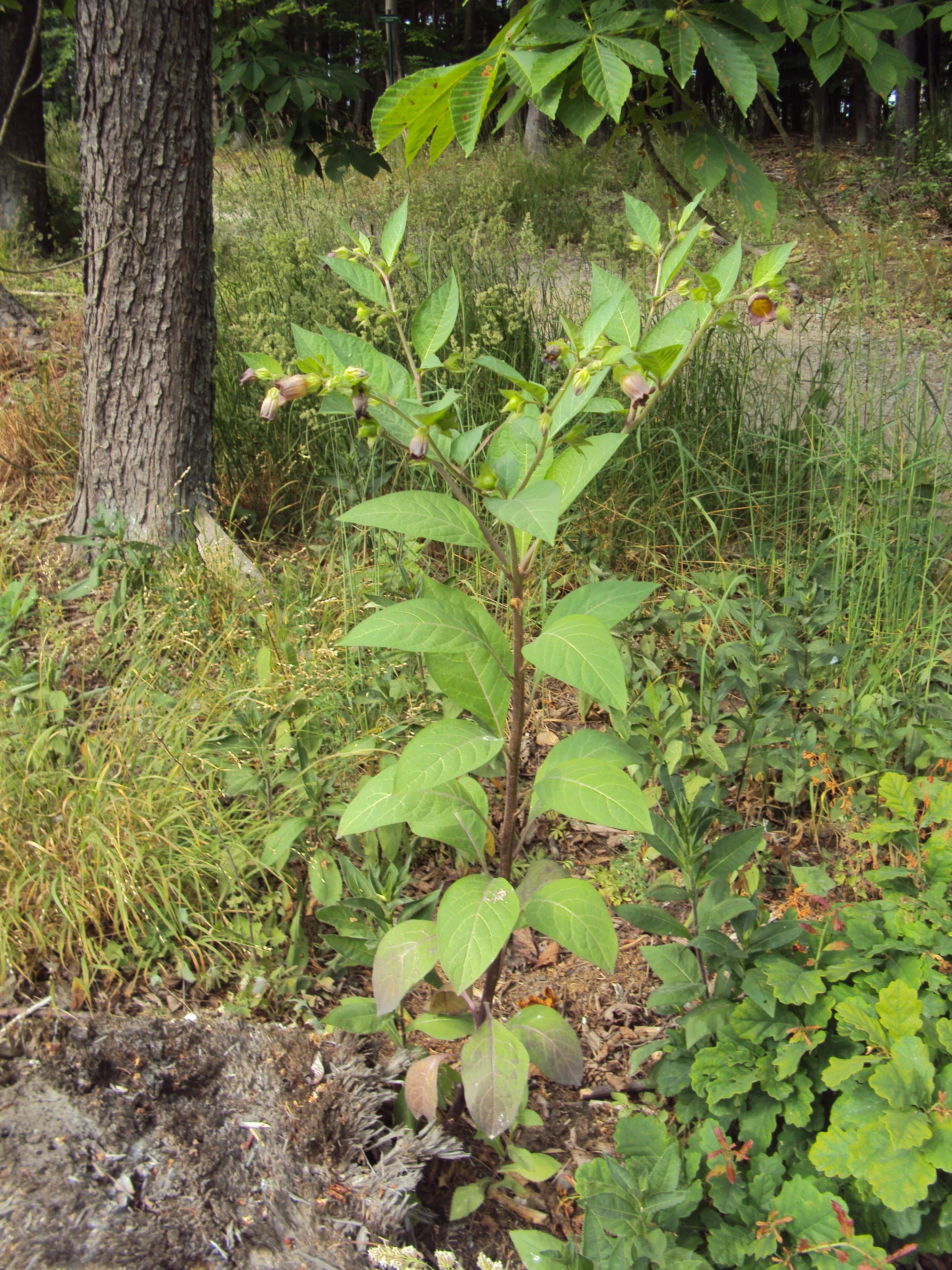
Deadly nightshade can grow to a height of 1.6 m.
The leaves grow alternately on the stem. They are oval to elliptical and pointed at the end.
The stem is upright and strongly branched. It is finely haired and often tinged red.
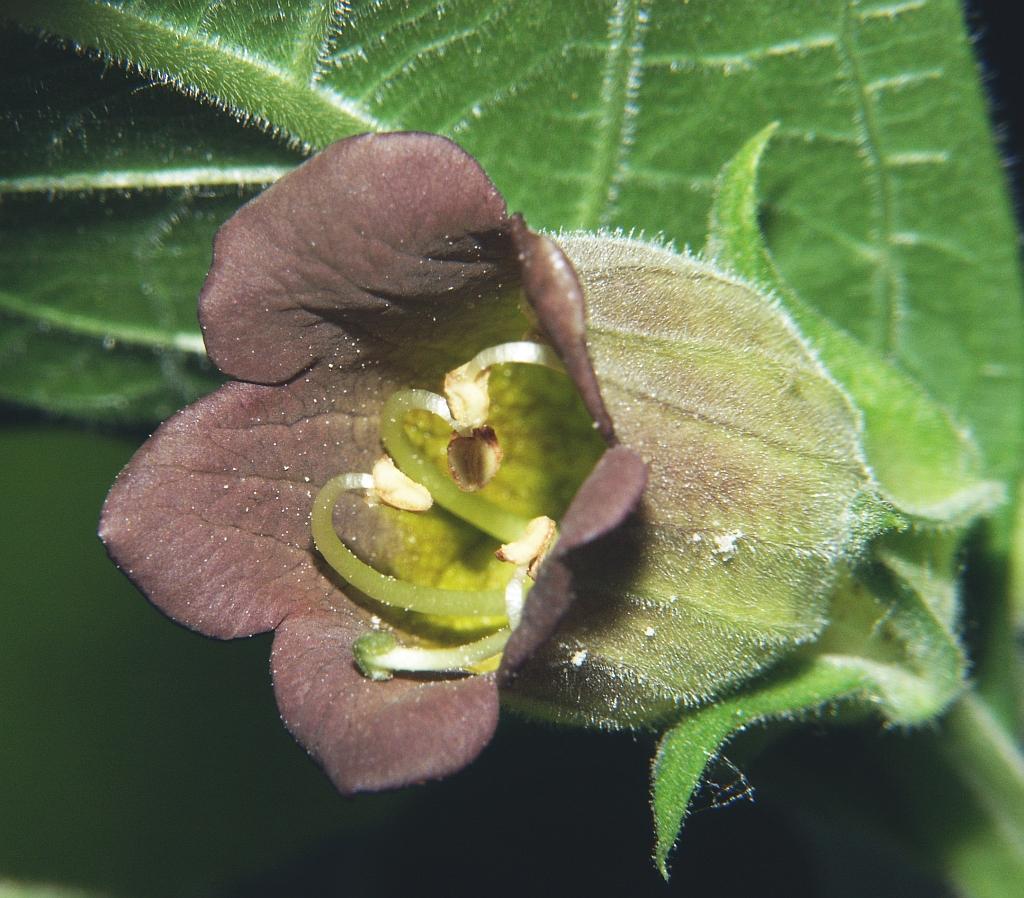
The flowers are bell-shaped and consist of five partially fused petals. They are brownish-purple and covered in downy hairs.
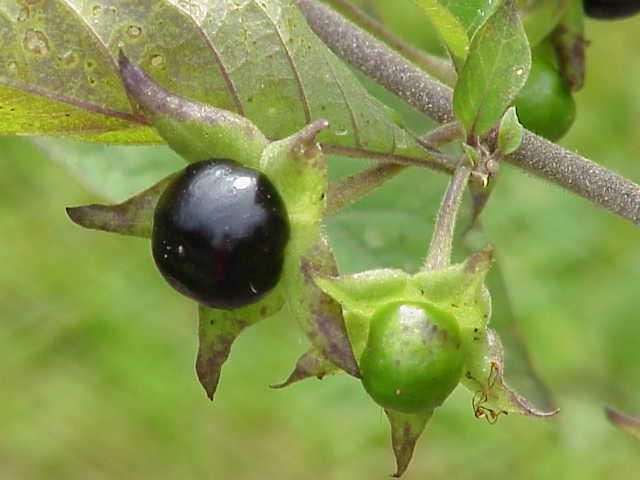
The fruits are berries that turn black as they ripen.
Features
Deadly nightshade
Atropa belladonna
highly poisonous
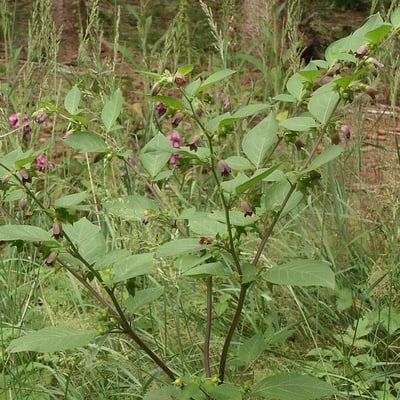
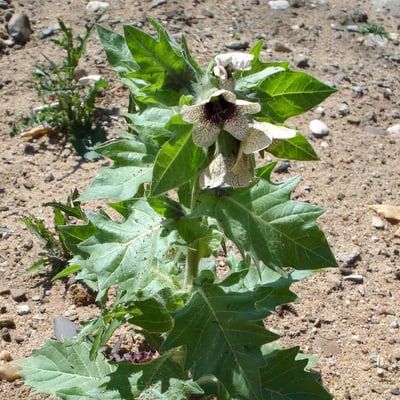
large brownish-purple bell-shaped flowers
black berries
In the city
In the city, deadly nightshade is rarely found in forest clearings and forest edges. It prefers fresh and nutrient-rich locations with chalky soil.
Fun Facts
The plant is occasionally used to produce recreational drugs, as it contains a hallucinogenic substance. However, the side effects of the other substances it contains are generally stronger than the intoxicating effect, and the risk of poisoning is very high.
The substances contained in deadly nightshade are used in ophthalmology.
The plant was formerly used to dilate pupils, which was considered a mark of beauty in former times. The substance responsible for this is called atropine.
It lives for several years and generally flowers and fruits annually (perennial plant).
- Endangerment level Germany: not endangered
Deadly nightshade contains a number of toxic substances and is highly poisonous to humans.
Sources
Habitus, Dendrofil, CC0, https://commons.wikimedia.org/wiki/File:Rul%C3%ADk_zlomocn%C3%BD_Podkomorsk%C3%A9_lesy.JPG

Früchte, Kurt Stüber, CC BY-SA 3.0, https://commons.wikimedia.org/wiki/File:Atropa_bella-donna0.jpg

Blüte, BerndH, CC BY-SA 2.5, https://commons.wikimedia.org/wiki/File:Atropa_belladonna_220605.jpg

Spohn, M., Golte-Bechtle, M. & Spohn, R. (2015) Was blüht denn da? Stuttgart: Franckh Kosmos Verlag.
Needon, C. & Petermann, J. (1991) Urania-Naturführer Pflanzen, Leipzig, Jena, Berlin: Urania-Verlag.
Schauer, T., Caspari, C. & Caspari, S. (2015) Der illustrierte BLV-Pflanzenführer für unterwegs. 1150 Blumen, Gräser, Bäume und Sträucher, München: BLV.
Page „Schwarze Tollkirsche“. : Wikipedia, The Free Encyclopedia. Date of last revision: 25.11.2016, 06:33 UTC. URL: https://de.wikipedia.org/w/index.php?title=Schwarze_Tollkirsche&oldid=160044457 (Accessed: 02.12.2016).