
Short Description
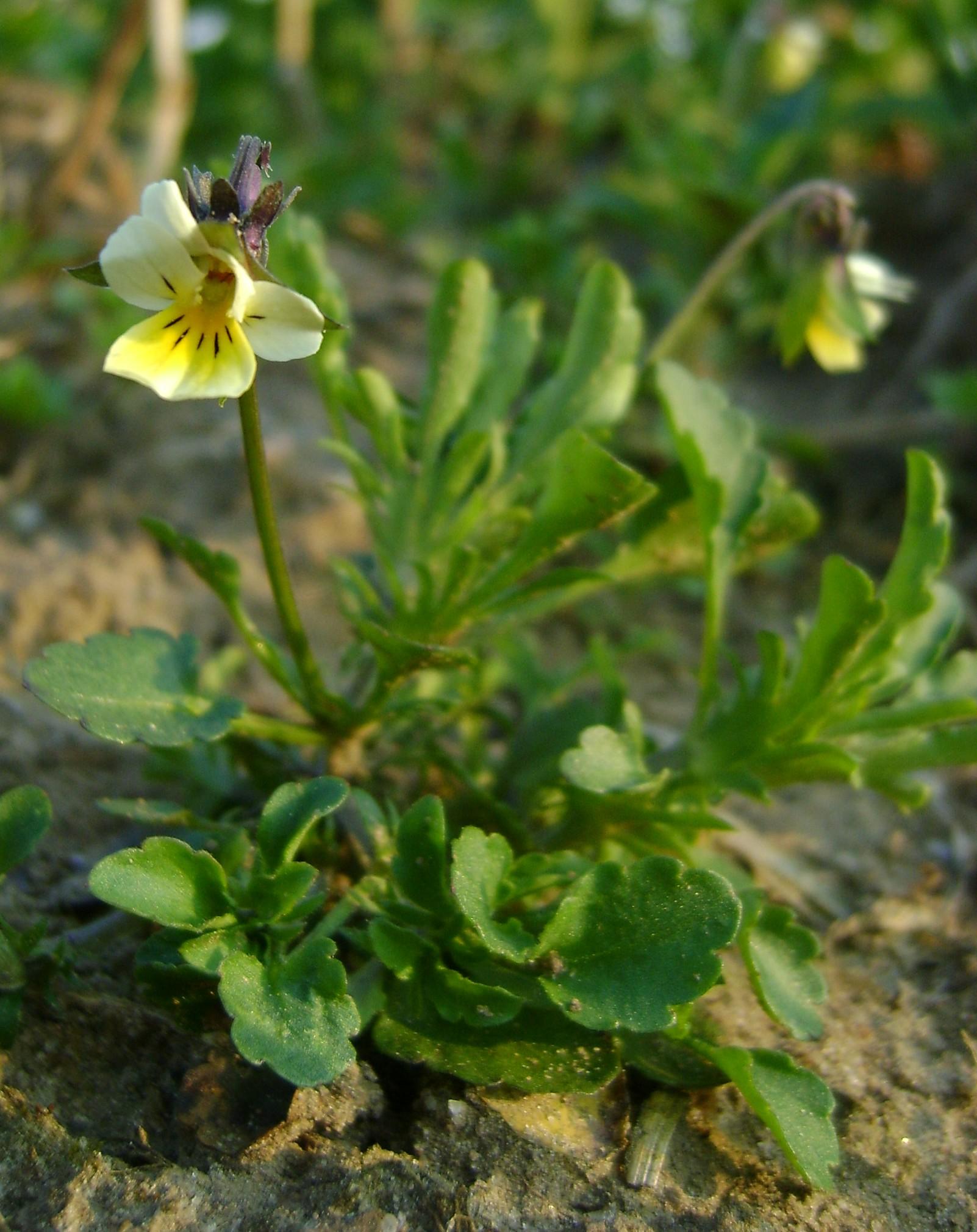
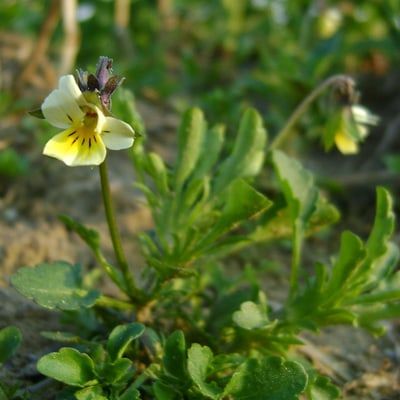
The field pansy can reach a growth height of up to 20 centimetres.
The leaves are roundish to elongated. They usually have five notches on both leaf edges.
The stem is branched.
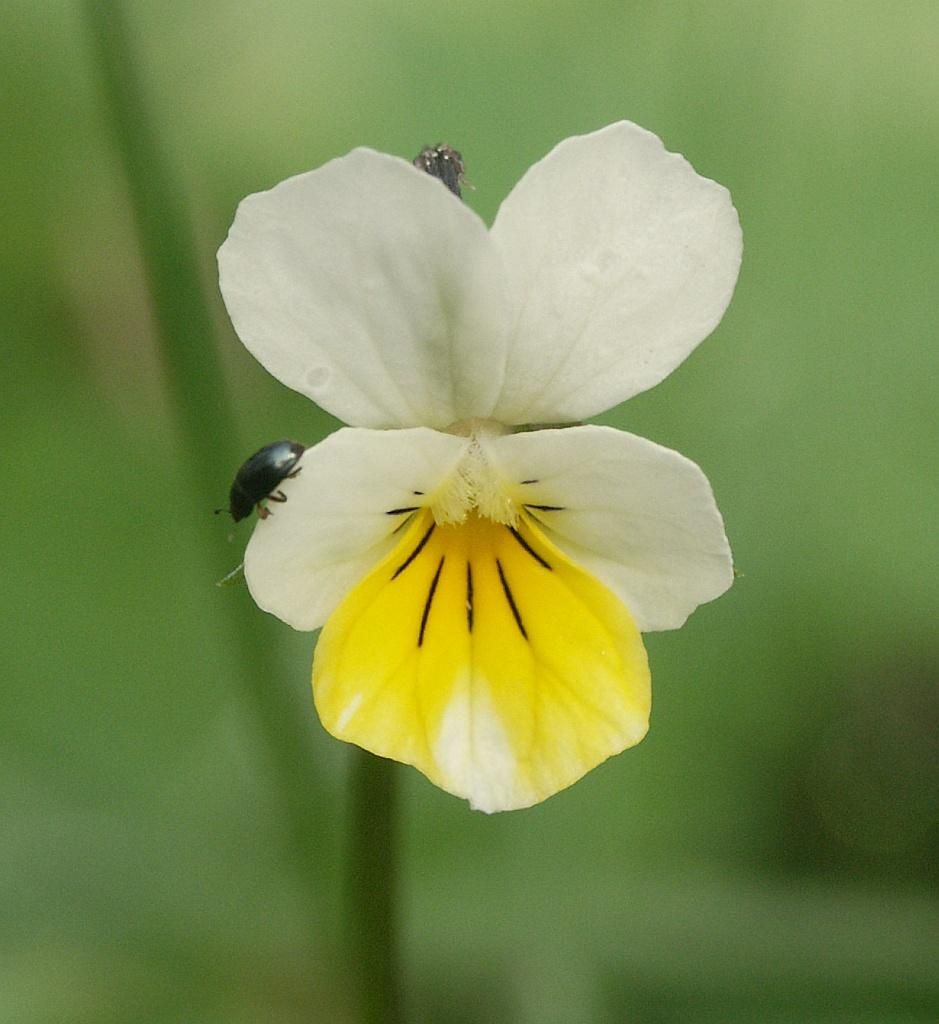
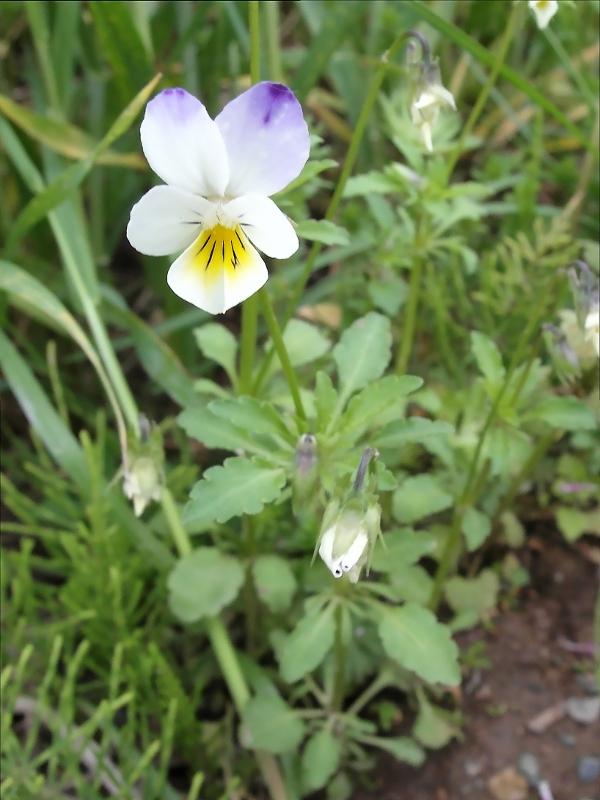
The flowers have five petals. The petals are mostly white, more rarely bluish, purple or yellow. These are only slightly longer or even shorter than the green sepals.
The capsule fruits are glabrous and burst open when ripe.
Features
Field pansy
Viola arvensis
Petals only slightly longer or shorter than the green sepals
Similar species
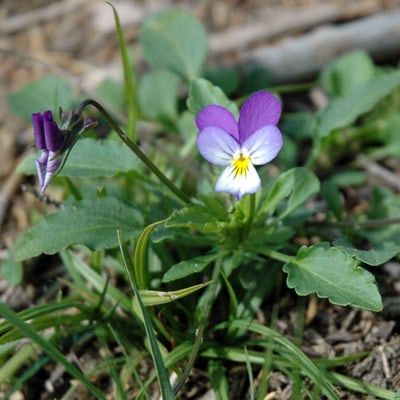
Viola tricolor
In the city
The field pansy, as the name suggests, grows in fields. It is also found on rubble tips and wastelands, as well as along paths. It prefers nutrient-rich soils.
In some areas it is resistant to certain weedkillers and therefore grows up to a metre high.
Fun Facts
The flowering period is from April to October.
The seeds of the field pansy remain germinable for over 20 years.
It is an annual plant, i.e. it flowers for only one summer and dies after the seeds have ripened.
- Endangerment level Germany: not endangered
The field pansy contains salicylates, mucilages and tannins. Baths and compresses can alleviate cradle cap and scaly skin diseases.
Sources
Habitus, Kenraiz, CC BY-SA 3.0 , https://commons.wikimedia.org/wiki/File:Viola_arvensis_kz1.jpg

Blüte, Bernd Haynold, CC BY-SA 3.0 , https://commons.wikimedia.org/wiki/File:Viola_arvensis_160405.jpg

Habitus, Wotan81, CC BY-SA 3.0, https://commons.wikimedia.org/wiki/File:Viola-Arvensis.jpeg

Spohn, M., Golte-Bechtle, M. & Spohn, R. (2015) Was blüht denn da? Stuttgart: Franckh Kosmos Verlag.
Schauer, T., Caspari, C. & Caspari, S. (2015) Der illustrierte BLV-Pflanzenführer für unterwegs. 1150 Blumen, Gräser, Bäume und Sträucher, München: BLV.
Seitz, B., Ristow, M., Meißner, J., Machatzi, B. & Sukopp, H. (2018) Rote Liste und Gesamtartenliste der etablierten Farn- und Blütenpflanzen von Berlin. : Der Landesbeauftragte für Naturschutz und Landschaftspflege / Senatsverwaltung für Umwelt, Klima und Verkehr (eds.) Rote Listen der gefährdeten Pflanzen, Pilze und Tiere von Berlin, URL: https://www.berlin.de/sen/uvk/natur-und-gruen/naturschutz/artenschutz/artenlisten-rote-listen/farn-und-bluetenpflanzen/ (Accessed: 26.03.2021).
Page „Acker-Stiefmütterchen“. : Wikipedia, The Free Encyclopedia. Date of last revision: 12.07.2018, 13:21 UTC. URL: https://de.wikipedia.org/w/index.php?title=Acker-Stiefm%C3%BCtterchen&oldid=179092786 (Accessed: 24.09.2018).
Bundesamt für Naturschutz (n.d.) Artensteckbriefe, URL: http://floraweb.de/pflanzenarten/artenhome.xsql?suchnr=6398& (Accessed: 24.09.2018).
Mayrhofer, R. (n.d.) Wildes Stiefmütterchen - Bestimmen, sammeln und verwenden! URL: https://www.pflanzen-vielfalt.net/wildpflanzen-a-z/%C3%BCbersicht-r-z/stiefm%C3%BCtterchen-wildes/ (Accessed: 24.09.2018).