
Short Description
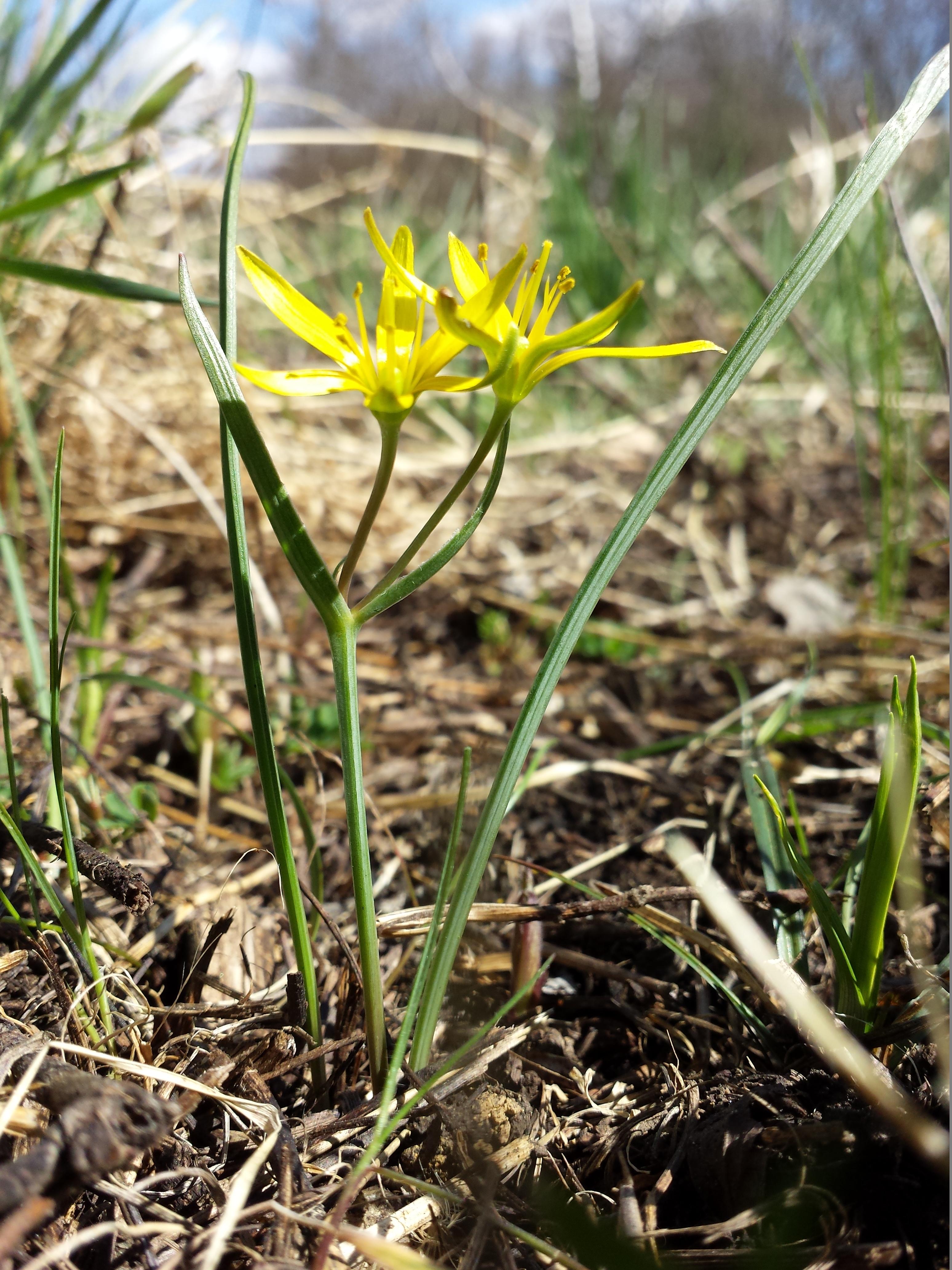
The meadow gagea can grow up to 20 cm high.
The single basal leaf is elongated and narrow. It has a V-shaped cross-section. It appears to come directly from the ground (basal) and emerges from the bulb lying underground. The leaves in the upper part of the stem are shorter and ciliated at the edges.
The stem grows erect and is glabrous except for the bracts. It is green and often slightly reddish.
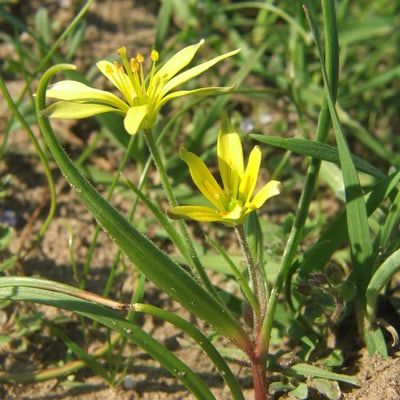
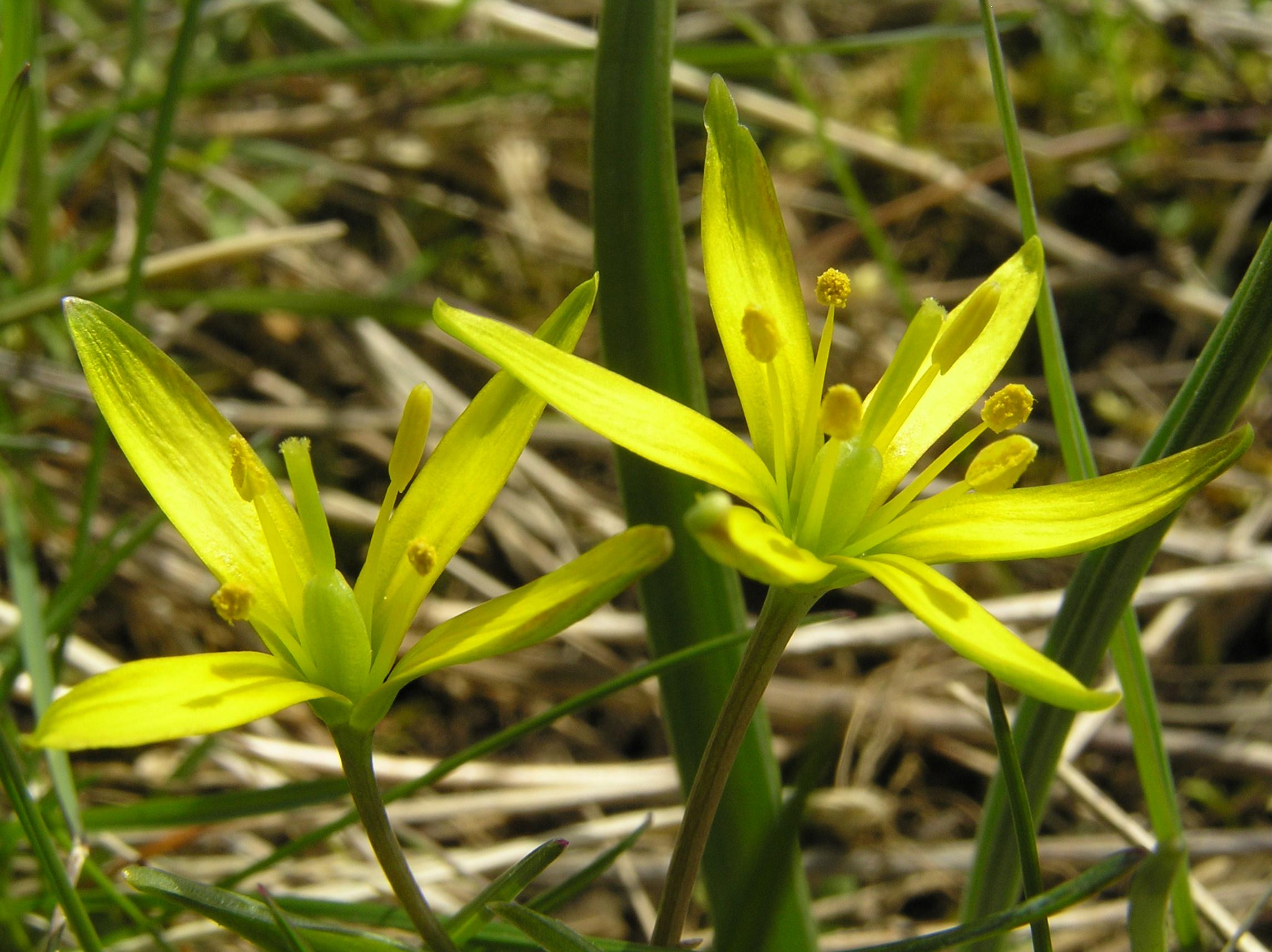
The flower has six petals arranged in a star shape. They are golden yellow or greenish yellow. There are one to six flowers on each plant.
The fruits are three-part capsules.
Features
Meadow gagea
Gagea pratensis
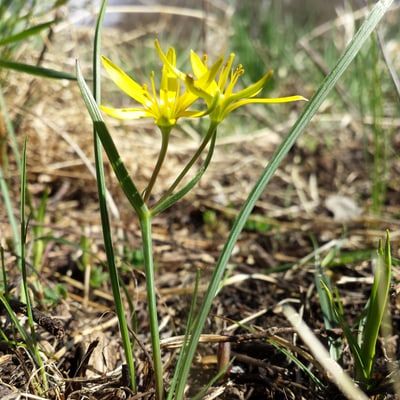
yellow star-shaped flower
ciliate upper leaves
V-shaped leaf cross-section
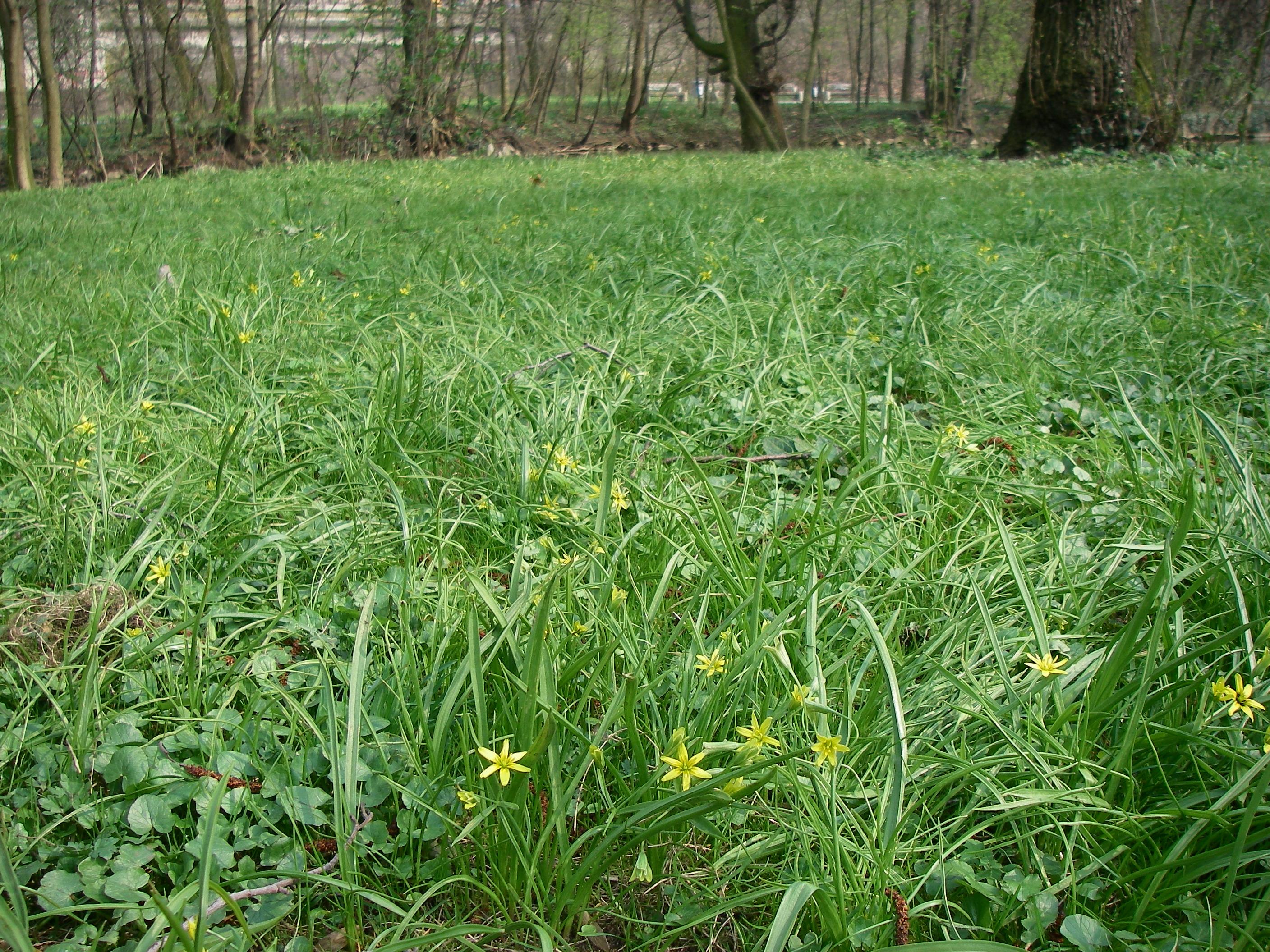
In the city
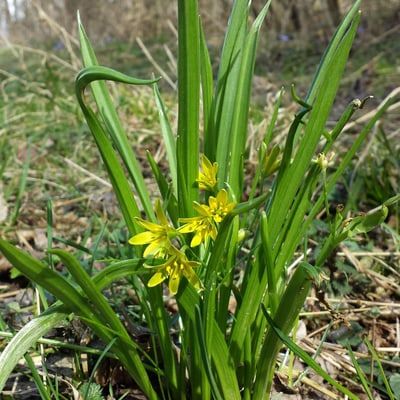
It used to be a typical plant in fields and pastures. Because of modern agricultural methods, it has become rarer today. In meadows it often grows near fruit trees. In the city, it can be found in cemeteries and parks. It prefers rather dry clay soils.
Fun Facts
In some years it is difficult to find due to lack of flowering.
The flowering period is from March to May.
- Endangerment level Germany: not endangered
It is native to Central and Eastern Europe.
Sources
Habitus, Stefan.lefnaer, CC BY-SA 4.0, https://commons.wikimedia.org/wiki/File:Gagea_pratensis_sl14.jpg

Blüten, B.Preuschhof, CC BY-SA 3.0, https://commons.wikimedia.org/wiki/File:Gagea_pratensis2.jpg

Habitus, Wolfgang1018, CC BY-SA 3.0, https://commons.wikimedia.org/wiki/File:Gagea_pratensis_on_Woehrder_Wiese.JPG

Page „Wiesen-Gelbstern“. : Wikipedia, The Free Encyclopedia. Date of last revision: 16.11.2017, 21:13 UTC. URL: https://de.wikipedia.org/w/index.php?title=Wiesen-Gelbstern&oldid=171079821 (Accessed: 06.02.2018).