
Short Description
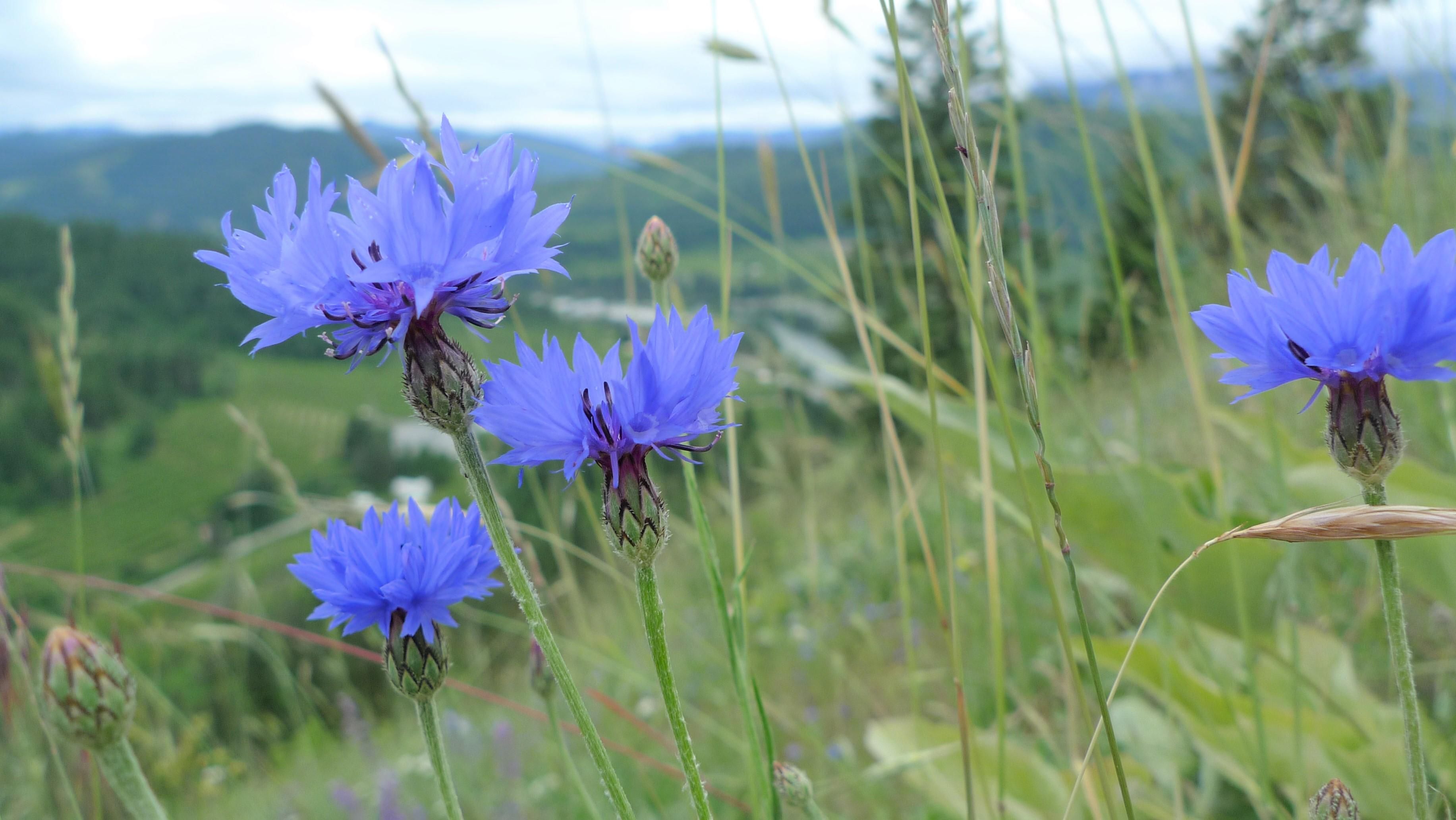
Cornflowers can grow up to one metre high.
Its leaves are linear to lance-shaped and covered in felt-like grey hairs. The leaf margin can be finely lobed.
The stem is covered in white hair.
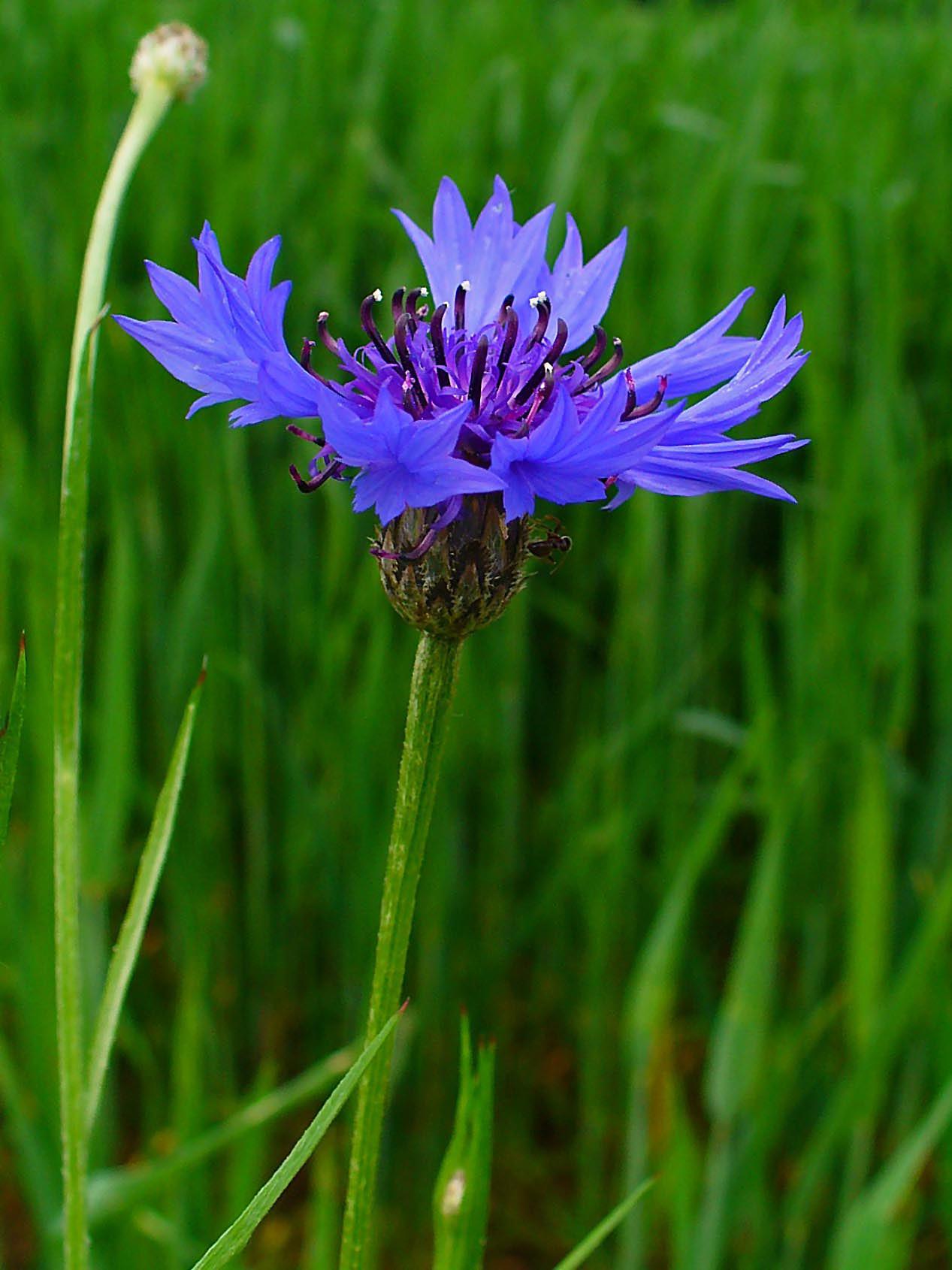
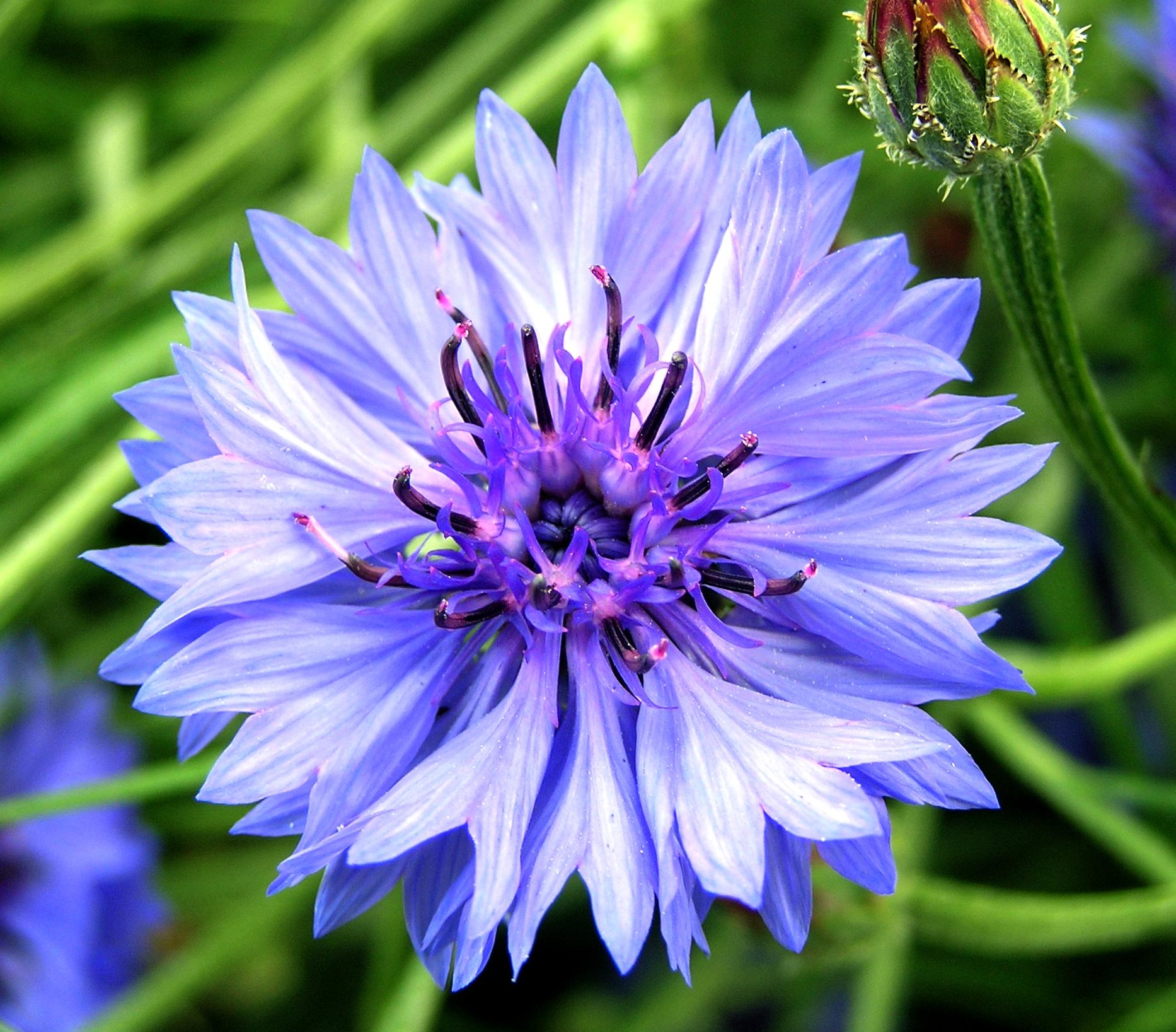
At first glance, the flower head can be mistaken for the flower itself. But it is a pseudanthium (“false flower”). The pseudanthium (“false flower”) consists of numerous individual light-purple ray florets and can reach a diameter of up to 3 cm. The marginal florets are larger.
The seeds are small nut fruits with a ring of bristly hairs.
Features
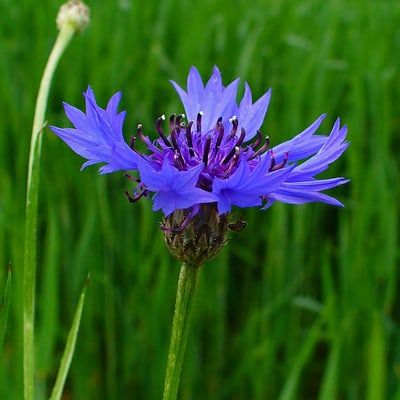
Cornflower
Centaurea cyanus
bright blue flowers
stem covered in felt-like white hairs
Similar species
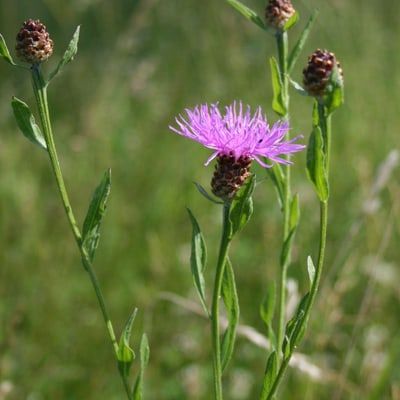
Brown knapweed
Centaurea jacea
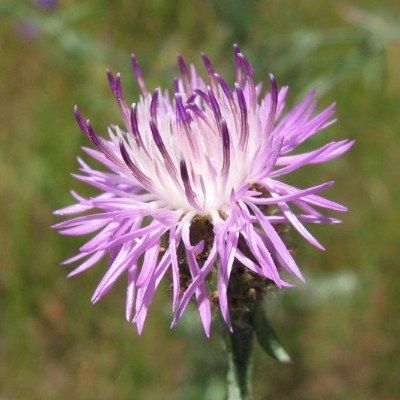
Spotted knapweed
Centaurea stoebe
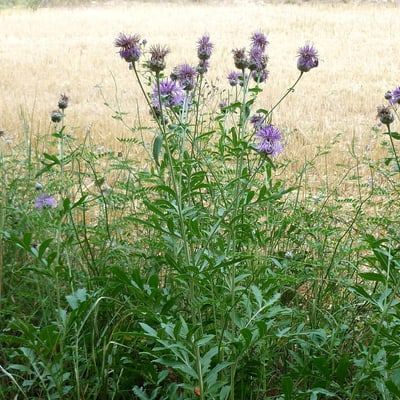
Greater knapweed
Centaurea scabiosa
In the city
In the city, cornflowers often grow in meadows., because it is a component in many seed mixtures.
With the increasing modernisation of seed cleaning and the use of herbicides in agriculture, cornflower populations have declined strongly.
Fun Facts
It flowers from June to October.
Beekeepers like cornflowers because of the high sugar content of its nectar.
The cornflower is the national flower of Estonia.
- Endangerment level Germany: Warning list
- Usage:
The flowers can be used to dye food.
The cornflower was considered a symbol of loyalty by the Hohenzollerns.
The plant originates from the Mediterranean. It has been a synanthrope (ecologically associated with humans) ever since the Neolithic. Sites newly created by humans such as cultivated fields were beneficial to its proliferation.
Flowers are used as tea to treat digestive disorders or conjunctivitis.
Sources
Blütenstand, H. Zell, CC BY-SA 3.0, https://commons.wikimedia.org/wiki/File:Centaurea_cyanus_0002.JPG

Blütenstand, Thayne Tuason, CC BY-SA 4.0, https://commons.wikimedia.org/wiki/File:Centaurea_cyanus_3.jpg

Blütenstand, Sedum, CC BY-SA 2.5, https://commons.wikimedia.org/wiki/File:Centaurea_cyanus_oiekroon.JPG

Page „Kornblume“. : Wikipedia, The Free Encyclopedia. Date of last revision: 21.07.2016, 14:51 UTC. URL: https://de.wikipedia.org/w/index.php?title=Kornblume&oldid=156341875 (Accessed: 05.08.2016).
Fitter, R., Fitter, A. & Blamey, M. (1986) Pareys Blumenbuch. Wildblühende Pflanzen Deutschlands und Nordwesteuropas, London: Verlag Collins Publishers.
Fleischhauer, S. G., Guthmann, J. & Spiegelberger, R. (2007) Essbare Wildpflanzen. 200 Arten bestimmen und verwenden, Baden und München: AT Verlag.
Lippert, W. & Podlech, D. (1993) GU Naturführer. Blumen: die wichtigen Blütenpflanzen Mitteleuropas erkennen und bestimmen, München: Gräfe und Unzer Verlag.
Needon, C. & Petermann, J. (1991) Urania-Naturführer Pflanzen, Leipzig, Jena, Berlin: Urania-Verlag.
Schauer, T., Caspari, C. & Caspari, S. (2015) Der illustrierte BLV-Pflanzenführer für unterwegs. 1150 Blumen, Gräser, Bäume und Sträucher, München: BLV.
Scherf, G. (2006) Wildpflanzen neu entdecken, München: BLV.
Schönfelder, I. & Schönfelder, P. (2010) Der Kosmos-Heilpflanzenführer. Über 600 Heil- und Giftpflanzen Europas, Stuttgart: Franckh Kosmos Verlag.
Weymar, H. (1988) Lernt Pflanzen kennen, Leipzig, Radebeul: Neumann Verlag.
Bundesamt für Naturschutz (n.d.) Artensteckbriefe, URL: http://floraweb.de/pflanzenarten/artenhome.xsql?suchnr=1344& (Accessed: 05.08.2016).