
Short Description
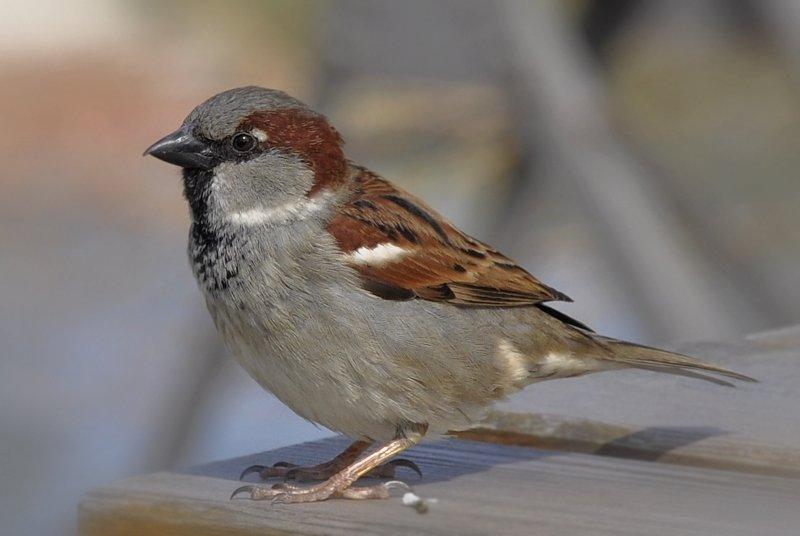
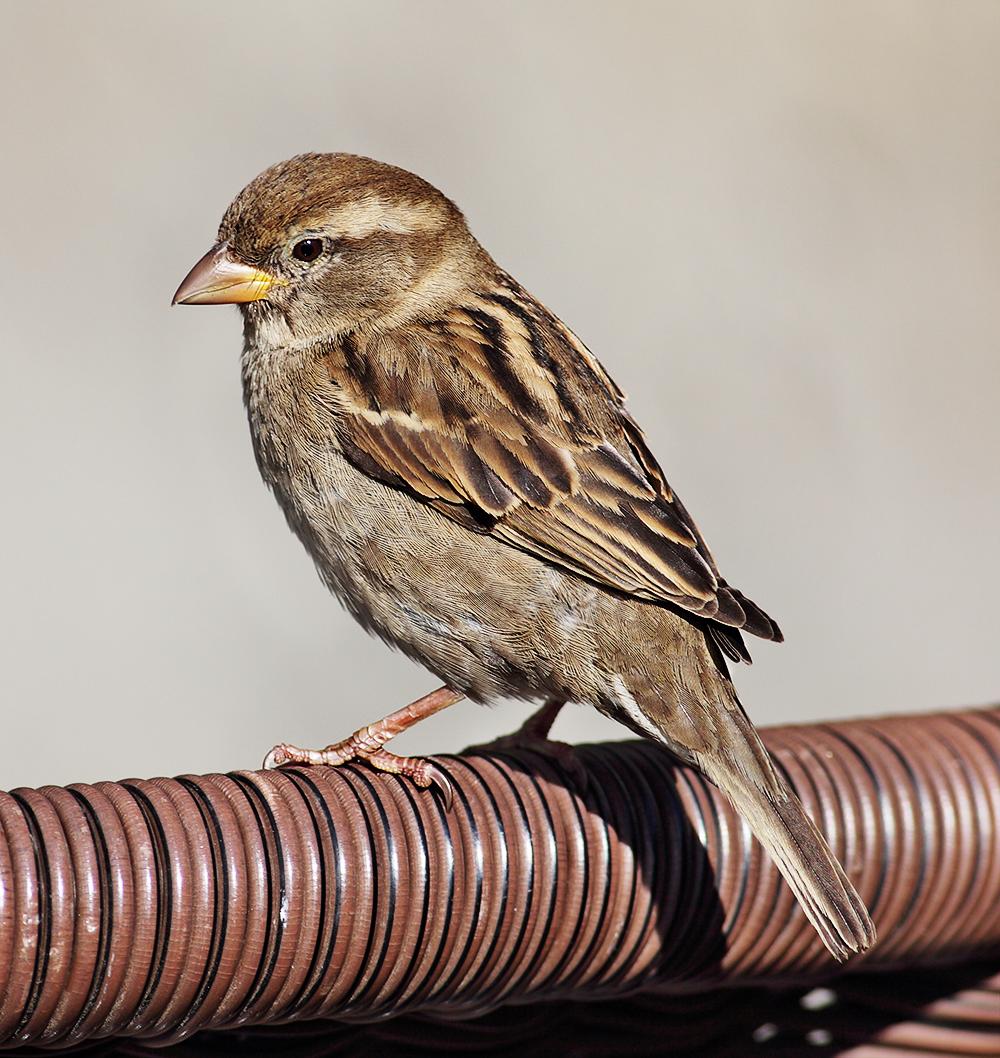
The house sparrow is a compact, somewhat stocky songbird with a large head and a powerful bill.
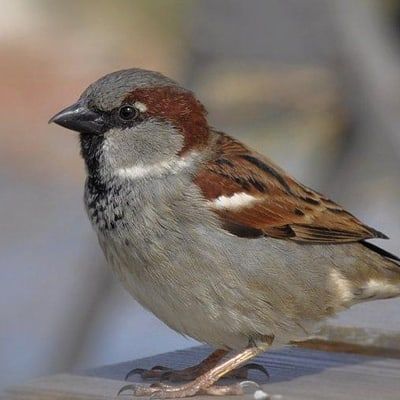
Male can be recognised by their black throat and their ash-grey colouring of cheeks, breast and belly.
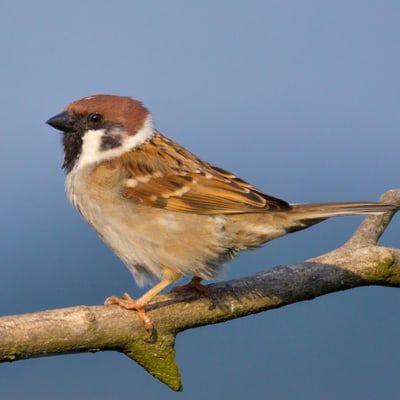
The female’s head is uniformly grey-brown with a pale supercilium (plumage on the head).
The young look like the females.
Features
House sparrow
Passer domesticus
black throat in males
not shy at all, sometimes even persistent
Rufe
Frommolt, CC BY-SA 3.0

In the city
House sparrows are typical urban birds. They generally breed on or in buildings. In addition to suitable nesting sites and food sources, it also requires sites for water and dust bathing.
House sparrows are not shy at all and often stay close to humans. It feeds on dropped crumbs and left-over food.
Fun Facts
House sparrow populations in Germany are in decline, and in some regions, the house sparrow is already classified as threatened. Not in Berlin, though. Here it is the most common bird and can be seen all over the city all year round.
The larger a flock of house sparrows, the more likely that they react with flight to human approach.
In German, a house sparrow is often derogatorily referred to as “Dreckspatz” (“dirt sparrow). The reason for this is its frequent sand and water baths.
It can stand in the air for a short time like a hummingbird when feeding.
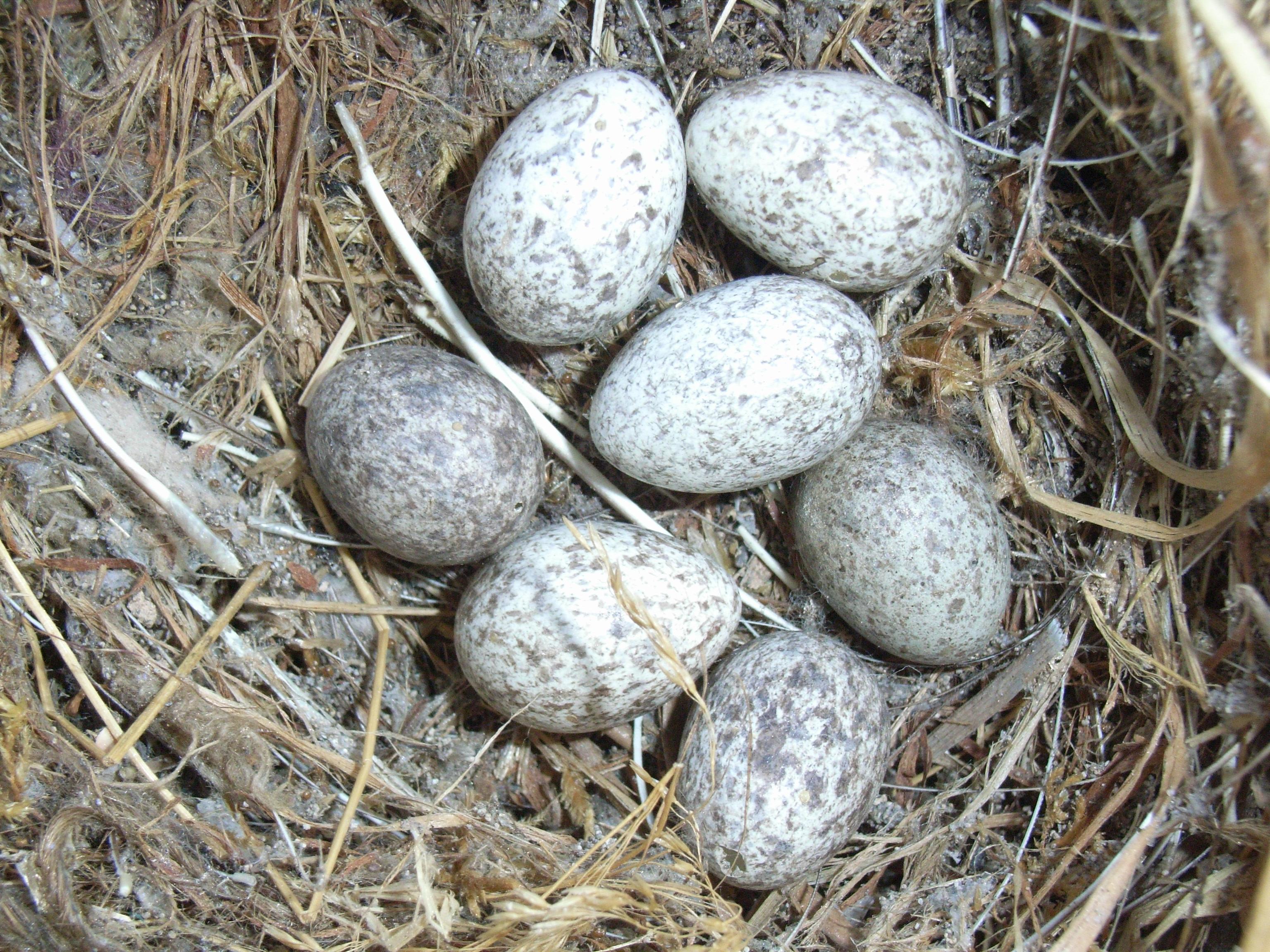
Both partners take turns in incubating the eggs and feeding the young.
- Endangerment level Germany: Warning list
Sources
male, Adamo, CC BY 2.0 de, https://commons.wikimedia.org/wiki/File:Passer_domesticus_male_%2815%29.jpg
.jpg)
eggs, Notafly, CC BY-SA 3.0, https://commons.wikimedia.org/wiki/File:Passerdomesticuseggs.JPG

female, Benjamint444, CC BY-SA 3.0, https://commons.wikimedia.org/wiki/File:House-Sparrow4.jpg

Page „Haussperling“. : Wikipedia, The Free Encyclopedia. Date of last revision: 26.11.2020, 16:56 UTC. URL: https://de.wikipedia.org/w/index.php?title=Haussperling&oldid=205960464 (Accessed: 11.02.2021).
Fiedler, W. (2015) Die Vögel Mitteleuropas sicher bestimmen - Schlüssel zur Art-, Alters- und Geschlechtsbestimmung, Wiebelsheim: Quelle & Meyer Verlag.
Makatsch, W. (1989) Wir bestimmen die Vögel Europas, Leipzig: Neumann Verlag.
Voigt, A. (2006) Exkursionsbuch zum Studium der Vogelstimmen, Heidelberg: Quelle & Meyer Verlag.
Svensson, L. (2011) Der Kosmos Vogelführer - Alle Arten Europas, Nordafrikas und Vorderasiens, Stuttgart: Franckh Kosmos Verlag.
Harrison, C. (1975) Jungvögel, Eier und Nester aller Vögel Europas, Nordafrikas und des Mittleren Ostens - Ein Naturführer zur Fortpflanzungsbiologie, Hamburg und Berlin: Verlag Paul Parey.
Witt, K. & Steiof, K. (2013) Rote Liste und Liste der Brutvögel von Berlin, 3. version, 15.11.2013. : Berliner Ornithologische Arbeitsgemeinschaft e.V. (eds.) Berliner Ornithologischer Bericht, volume 23, Berlin: Berliner Ornithologische Arbeitsgemeinschaft e.V., 1-23.
NABU – Naturschutzbund Deutschland e.V. (2016) Rote Liste der Brutvögel Deutschlands. 5. version, published August 2016, URL: https://www.nabu.de/tiere-und-pflanzen/voegel/artenschutz/rote-listen/10221.html (Accessed: 07.04.2017).