
Short Description
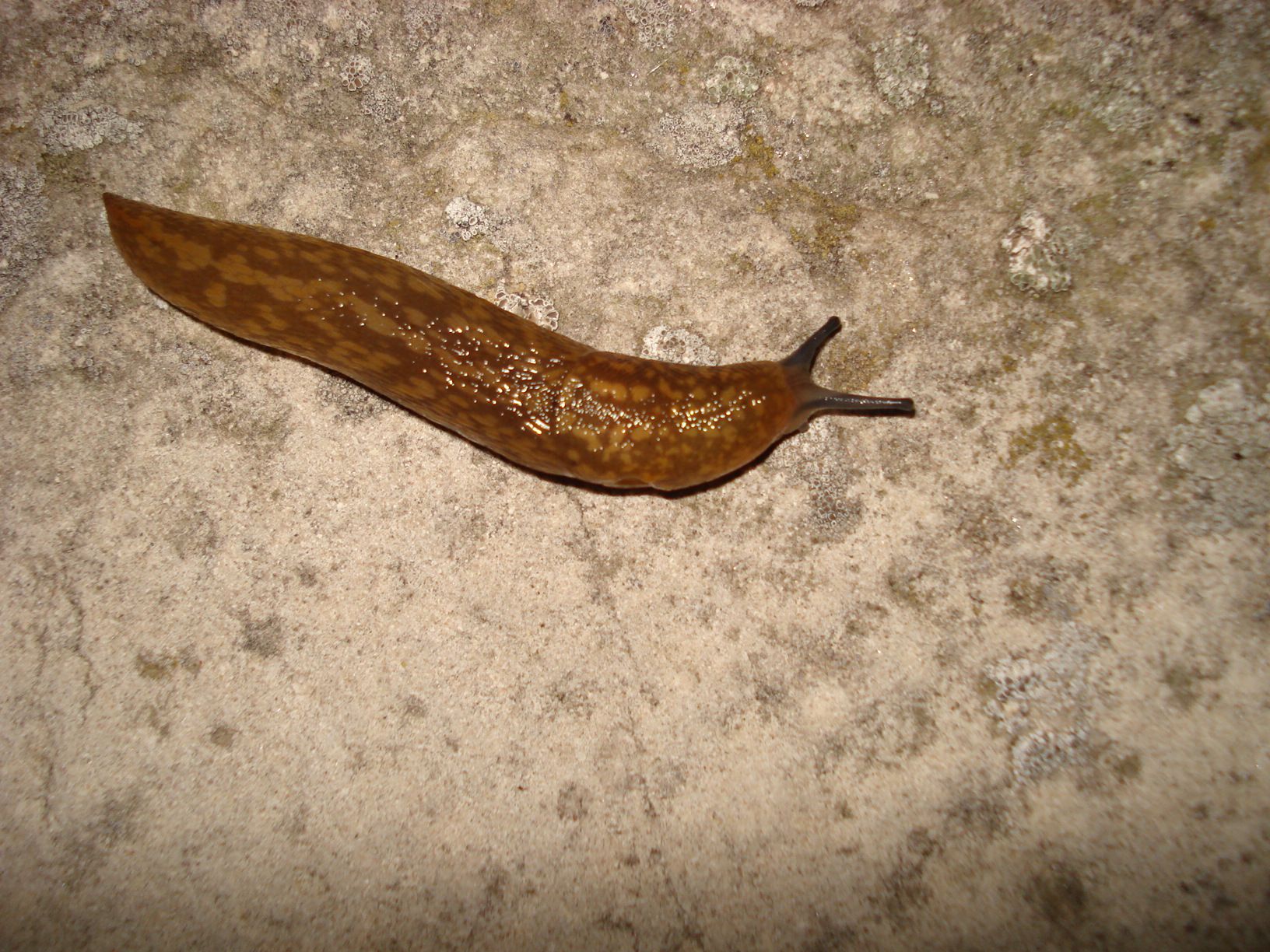
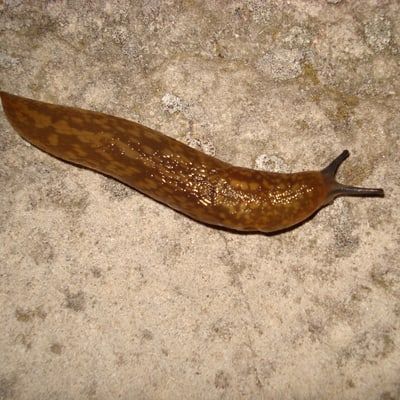
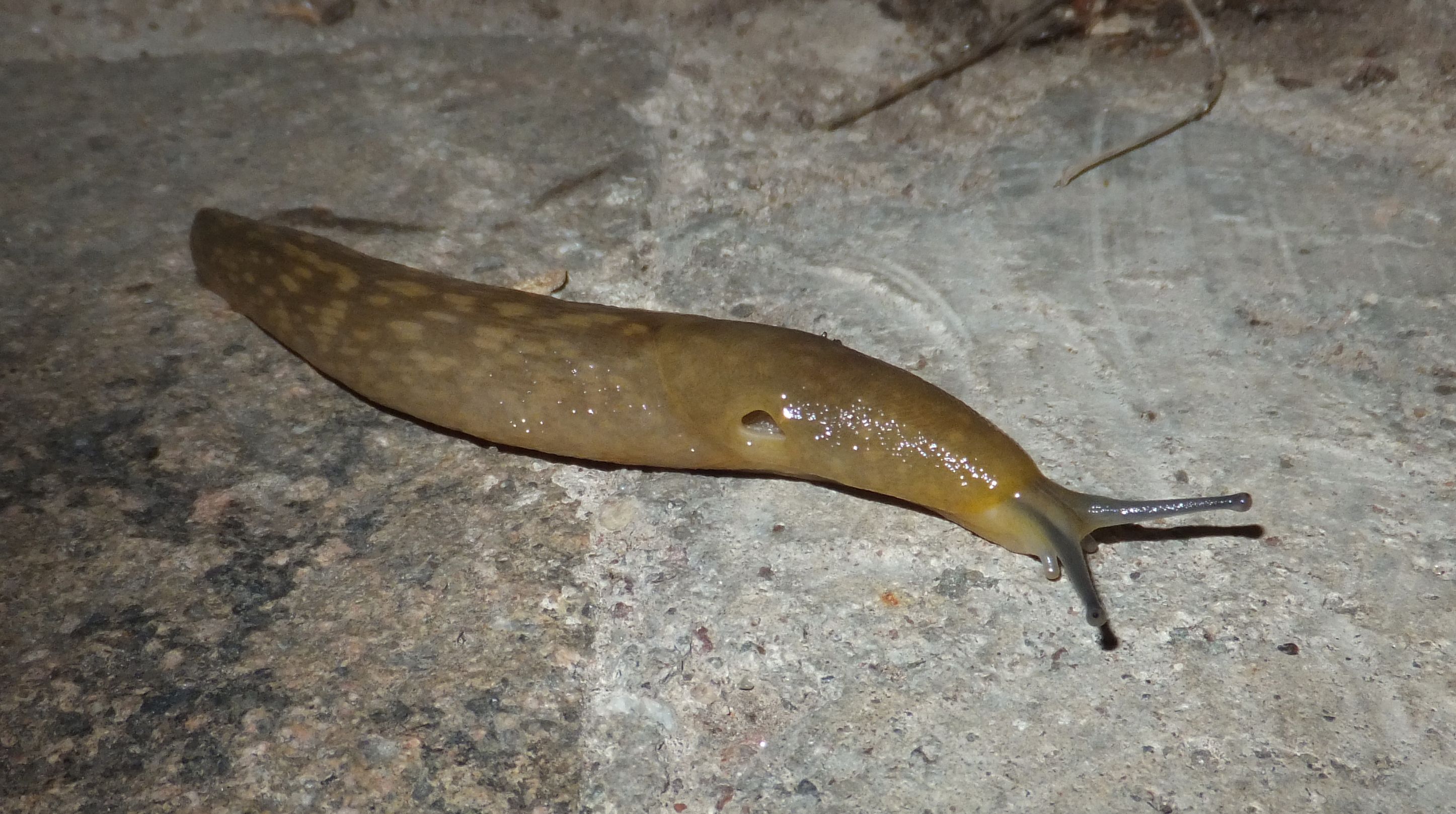
The yellow cellar slug is yellow to dark orange and has a characteristic grey spot pattern. The antennae are blue-grey. The wrinkles are fine and not very deep. They often coincide with the spot pattern. The underside of the body (sole) is white. The body mucus is yellowish to orange. The mucus of the sole, on the other hand, is colourless. It grows to about ten centimetres long.
Features
Yellow cellar slug
Limacus flavus
spot pattern
blue-grey antennae
Similar species
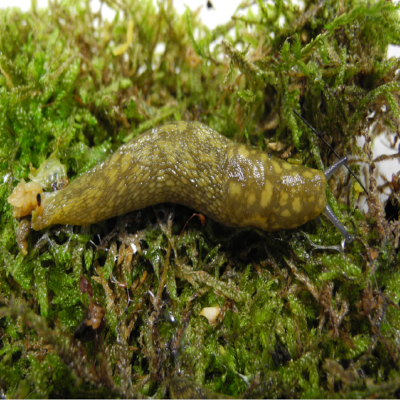
Green cellar slug
Limacus maculatus
In the city
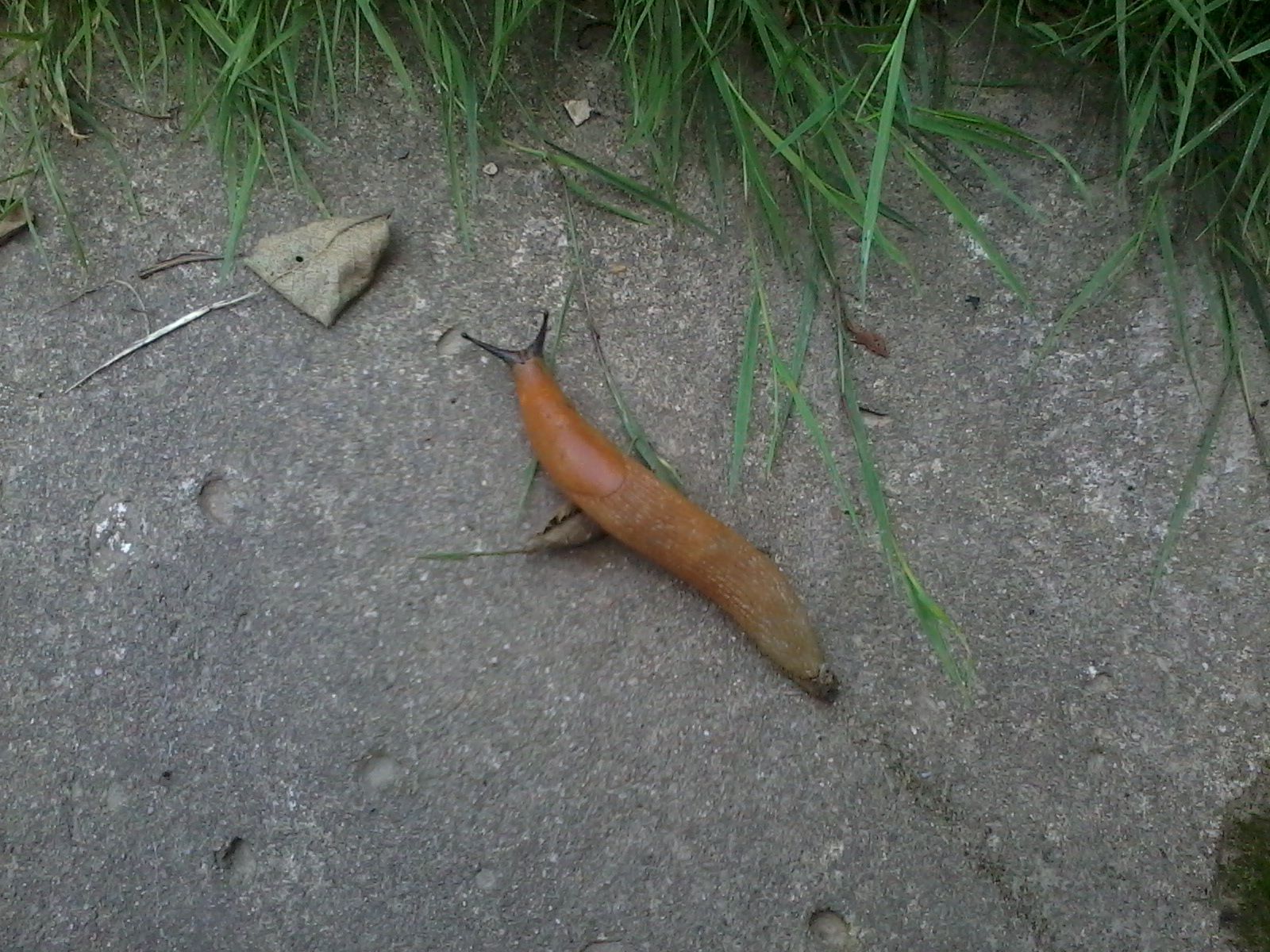
It prefers to live in damp cellars. More rarely, it can also be found in sheds or gardens. It used to be common in the city centre. It lives a very secluded life and hardly ever comes out of hiding before 10 pm.
Fun Facts
In Germany, it is found exclusively in human settlements. It feeds on vegetable stocks such as carrots and potatoes.
In the past, it was often found in damp brewery cellars, where it fed on supplies and waste from beer production. The German name refers to this.
The yellow cellar slug was already considered extinct in Berlin. In 2015, it was rediscovered at a goat farm.
It belongs to the land snails. These are hermaphrodites, i.e. they have female and male sexual characteristics.
- Endangerment level Germany: threatened with extinction
Sources
Habitus, I, Maderibeyza, CC BY-SA 3.0, https://commons.wikimedia.org/wiki/File:Salyangoz.JPG

Habitus, Karol Karolus, CC BY-SA 4.0, https://commons.wikimedia.org/wiki/File:Limax_flavus_Poland_Lublin_10-08-2014_1.jpg

Habitus, Syrio, CC BY-SA 4.0, https://commons.wikimedia.org/wiki/File:Limax_flavus_Piazzo_01.jpg

Page „Bierschnegel“. : Wikipedia, The Free Encyclopedia. Date of last revision: 19.07.2017, 10:44 UTC. URL: https://de.wikipedia.org/w/index.php?title=Bierschnegel&oldid=167394970 (Accessed: 10.10.2017).
Wiese, V. (2014) Die Landschnecken Deutschlands. Finden – Erkennen – Bestimmen, Wiebelsheim: Quelle & Meyer Verlag.
Hackenberg, E. & Müller, R. (2017) Rote Liste und Gesamtartenliste der Weichtiere (Mollusca: Gastropoda und Bivalvia) von Berlin. : Der Landesbeauftragte für Naturschutz und Landschaftspflege/Senatsverwaltung für Umwelt, Verkehr und Klimaschutz (eds.) Rote Listen der gefährdeten Pflanzen, Pilze und Tiere von Berlin, URL: http://dx.doi.org/10.14279/depositonce-5845 (Accessed: 09.10.2017).
Kerney, M. P., Cameron, R. A. D. & Jungbluth, J. H. (1983) Die Landschnecken Nord- und Mitteleuropas. Ein Bestimmungsbuch für Biologen und Naturfreunde, Hamburg und Berlin: Verlag Paul Parey.