
Short Description
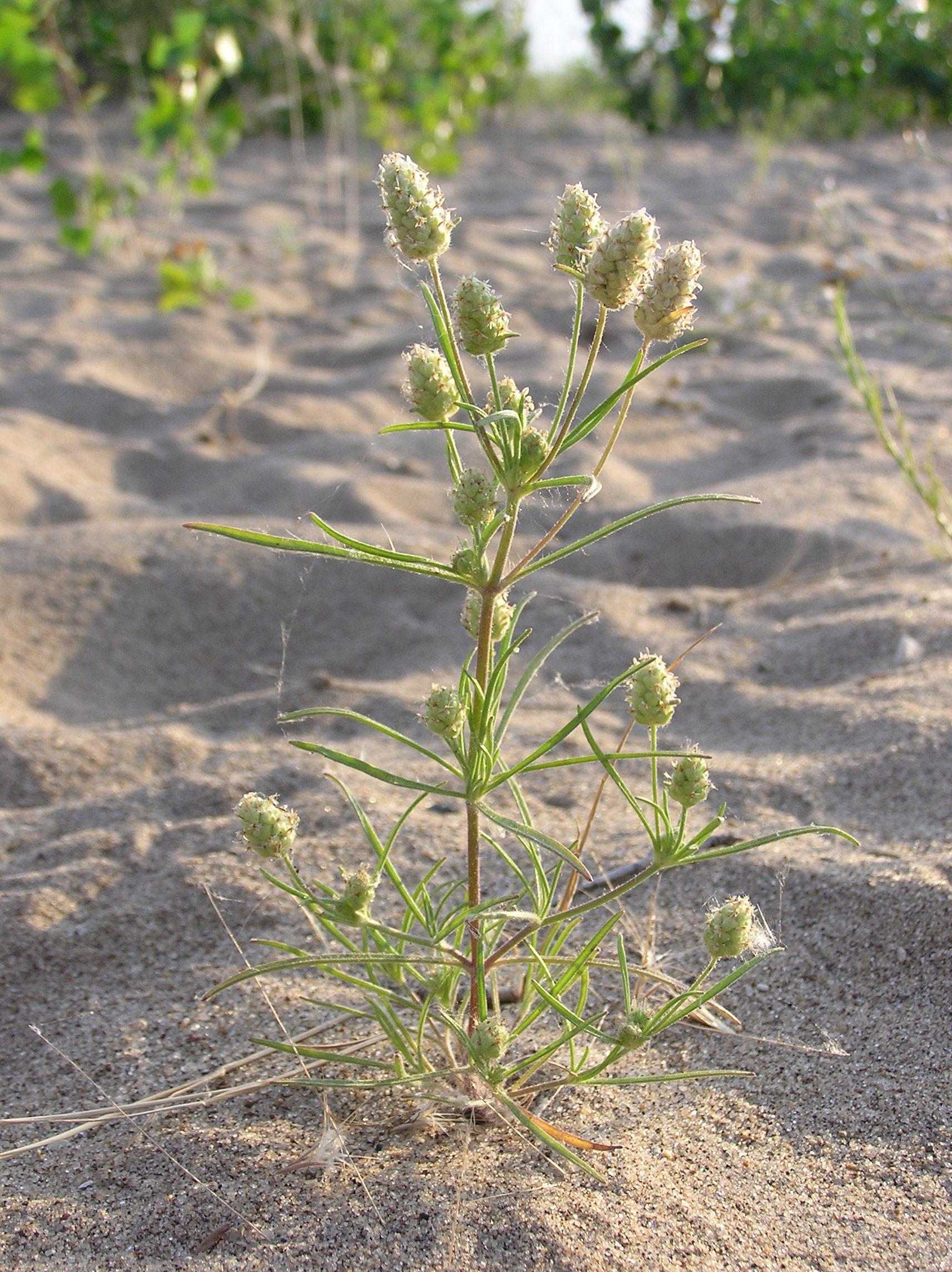
The branched plantain can grow up to 50 cm high.
The leaves are linear in shape. The leaves always sit opposite each other in pairs.
The stem grows erect and branched. It is loosely bristly or glandular-haired.
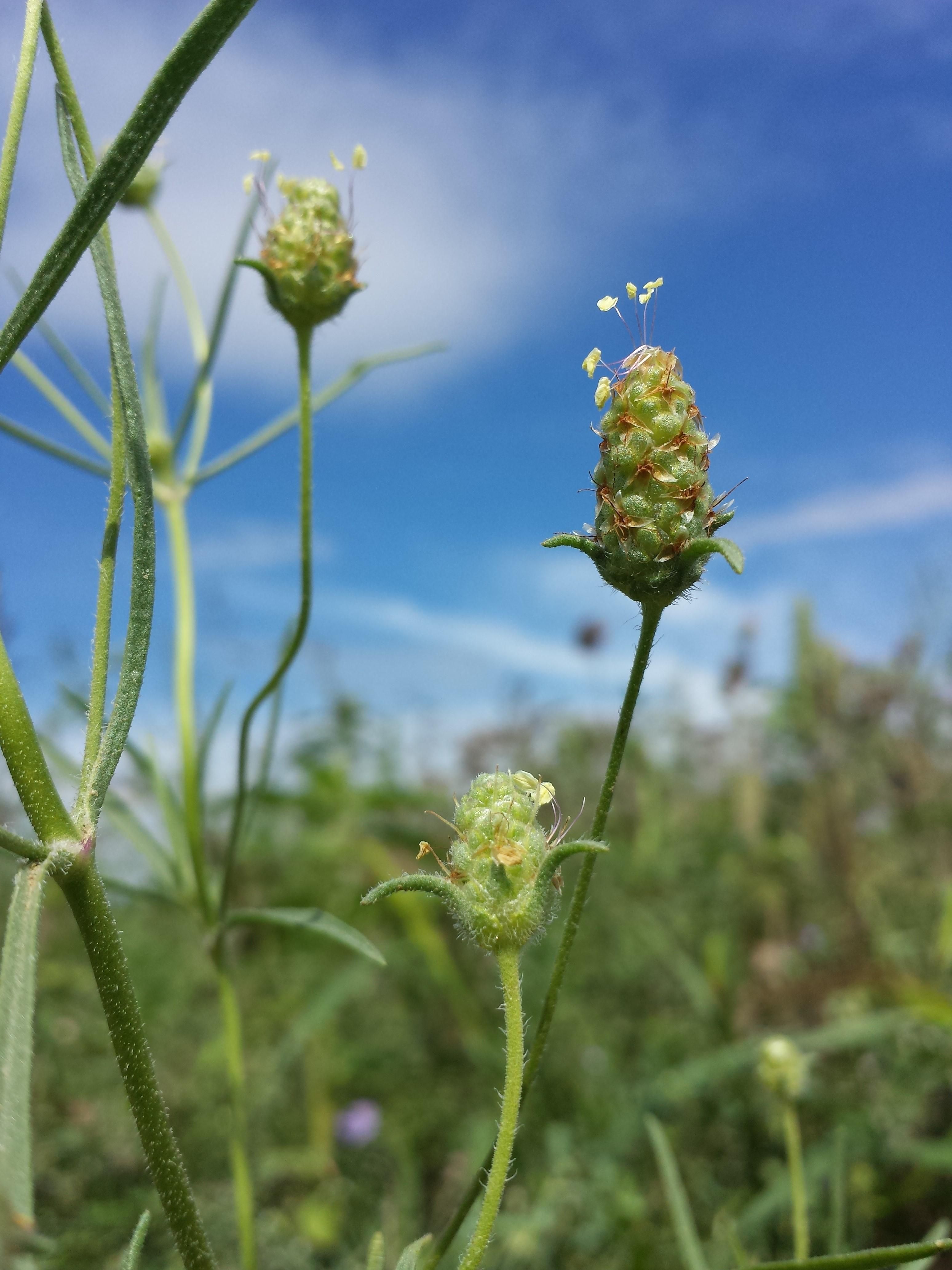
The inconspicuous, small flowers are in ovoid, long-stalked, head-like spikes that can look umbel-like in the upper part of the plant. They are brownish white.
The fruits are capsules, each containing two dark brown, shiny seeds.
Features
Branched plantain
Plantago arenaria
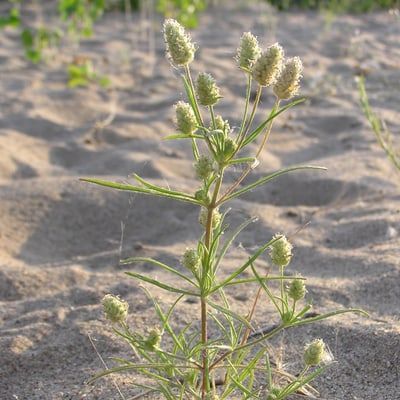
needle-shaped leaves
flowers in ovoid, long stemmed spikes
In the city
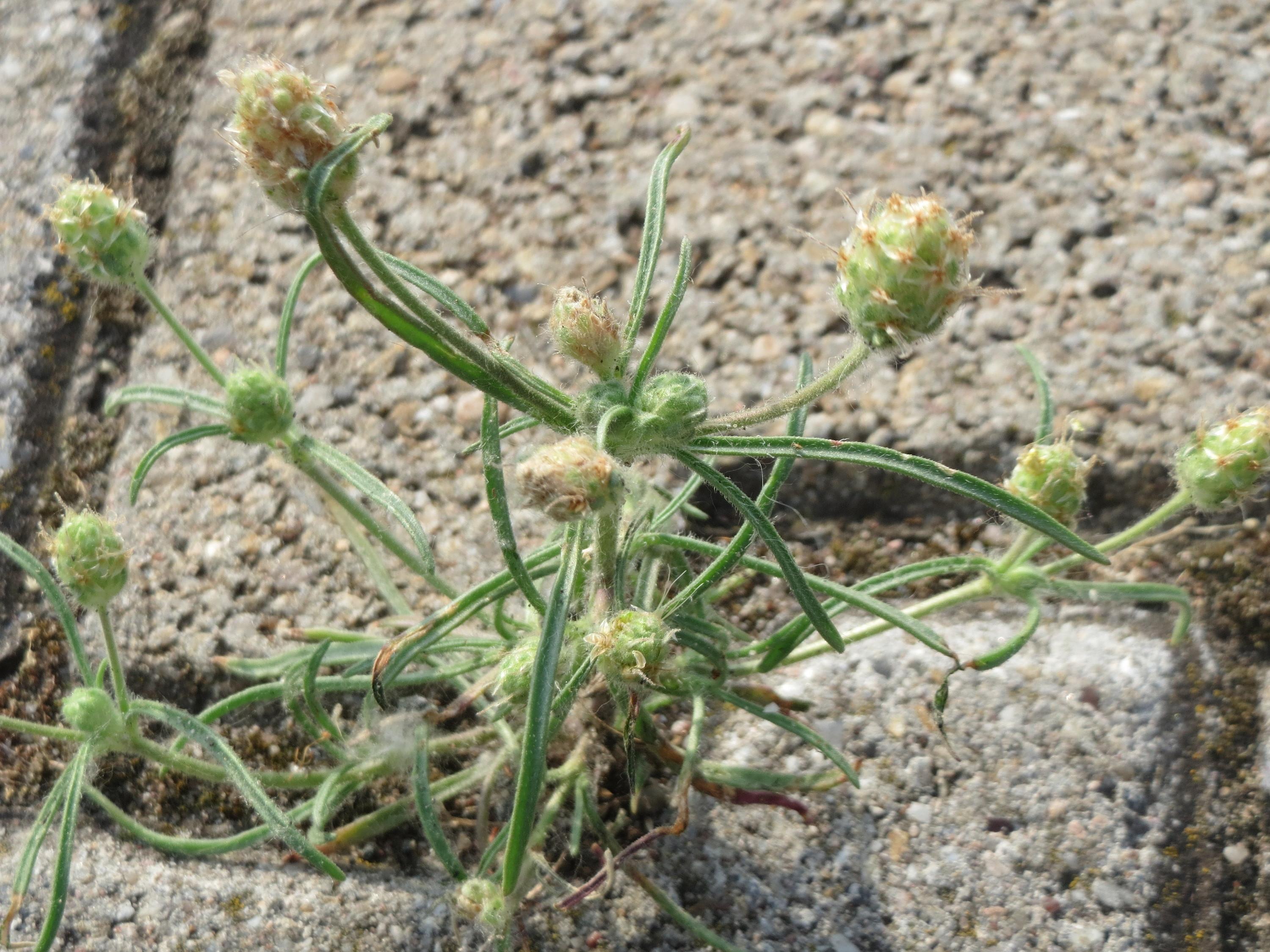
The branched plantain prefers to grow on sunny, moderately dry, mostly calcareous, at most moderately nutritious and loose sandy soils. However, it is also often found on railway ballast or other ruderal sites such as fallow land.
Fun Facts
The plant is pollinated by the wind, so it has no conspicuous flowers and no scent.
The flowering period is from June to September.
It is an annual plant. This means the plant dies in the first year after the seeds have ripened.
Capsules develop from the flowers, which contain the small seeds. These resemble fleas, which is why they are called flea seeds in Germany.
- Endangerment level Germany: not endangered
The branched plantain is native to the Mediterranean region. In Germany it belongs to the non-native plants (neophytes).
The shell of the seeds (so-called psyllium or ispaghula) contains mucilage, which swells strongly in the intestine. The seeds are used for constipation.
Sources
Habitus, Le.Loup.Gris, CC BY-SA 3.0, https://commons.wikimedia.org/wiki/File:Plantago_arenaria_(habitus).jpg
.jpg)
Blütenstand, Stefan.lefnaer, CC BY-SA 4.0, https://commons.wikimedia.org/wiki/File:Plantago_arenaria_sl10.jpg

Habitus, AnRo0002, CC0, https://commons.wikimedia.org/wiki/File:20170621Plantago_arenaria4.jpg

Schönfelder, I. & Schönfelder, P. (2010) Der Kosmos-Heilpflanzenführer. Über 600 Heil- und Giftpflanzen Europas, Stuttgart: Franckh Kosmos Verlag.
Page „Sand-Wegerich“. : Wikipedia, The Free Encyclopedia. Date of last revision: 28.03.2016, 16:26 UTC. URL: https://de.wikipedia.org/w/index.php?title=Sand-Wegerich&oldid=152944625 (Accessed: 26.03.2018).