
Short Description
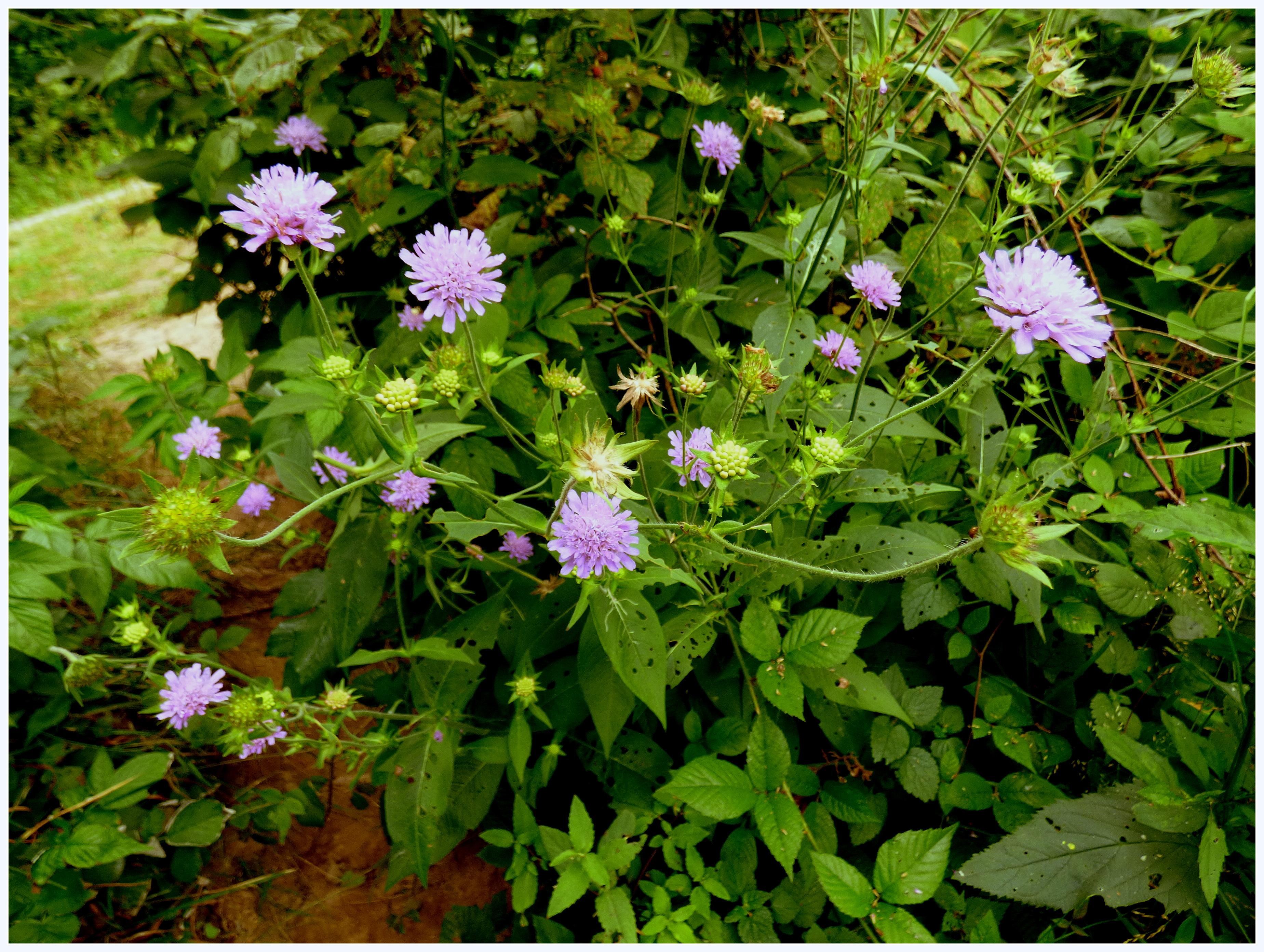
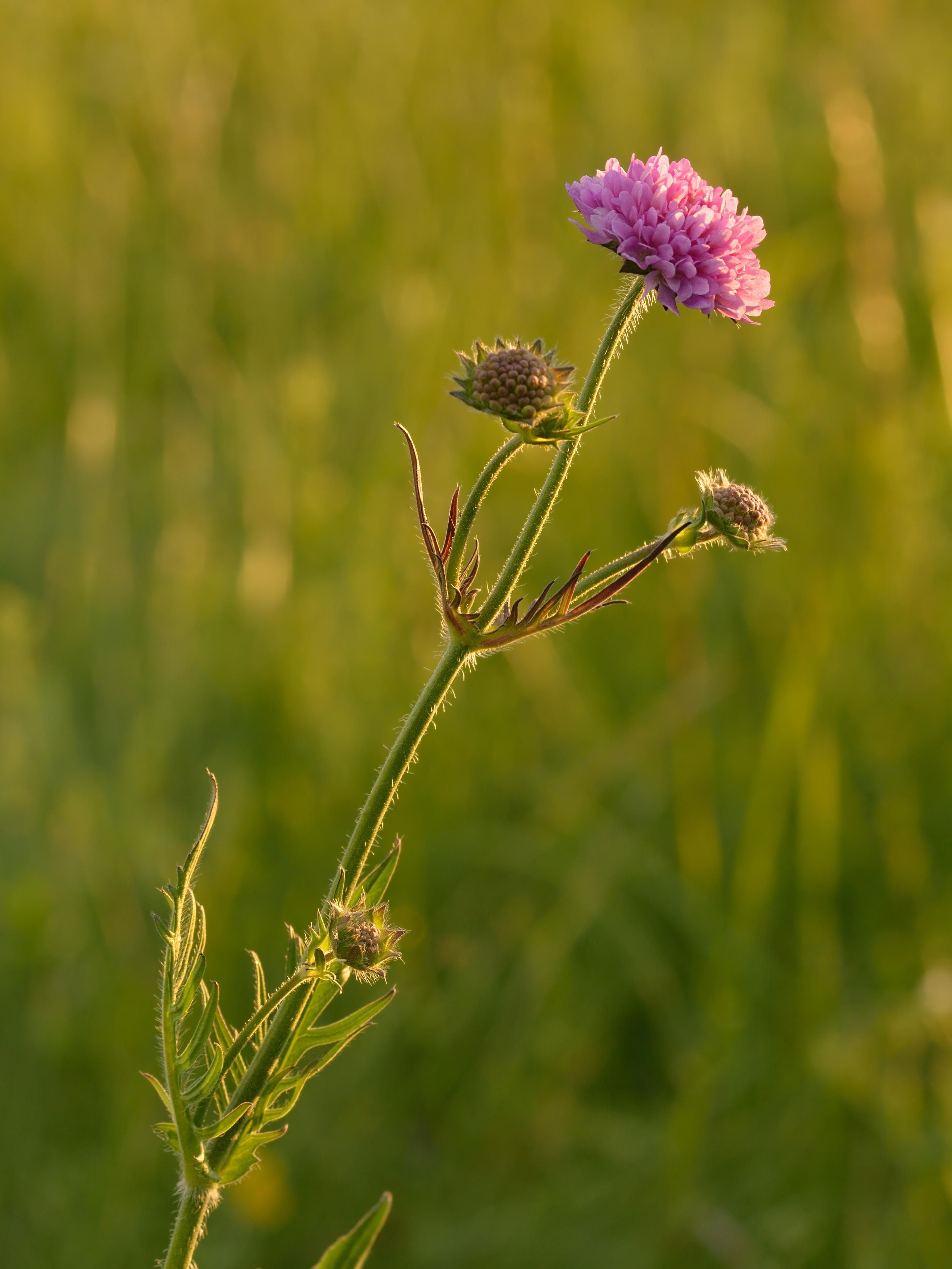
The field scabious grows up to 80 cm high.
The leaves are opposite each other on the stem. The lower leaves are undivided. The upper stem leaves are always deeply lobed.
The stem has bristly hairs.
The small individual flowers are blue to reddish-purple and narrow with four unequal petal tips. They sit close together in flat flower heads. The marginal flowers are larger.
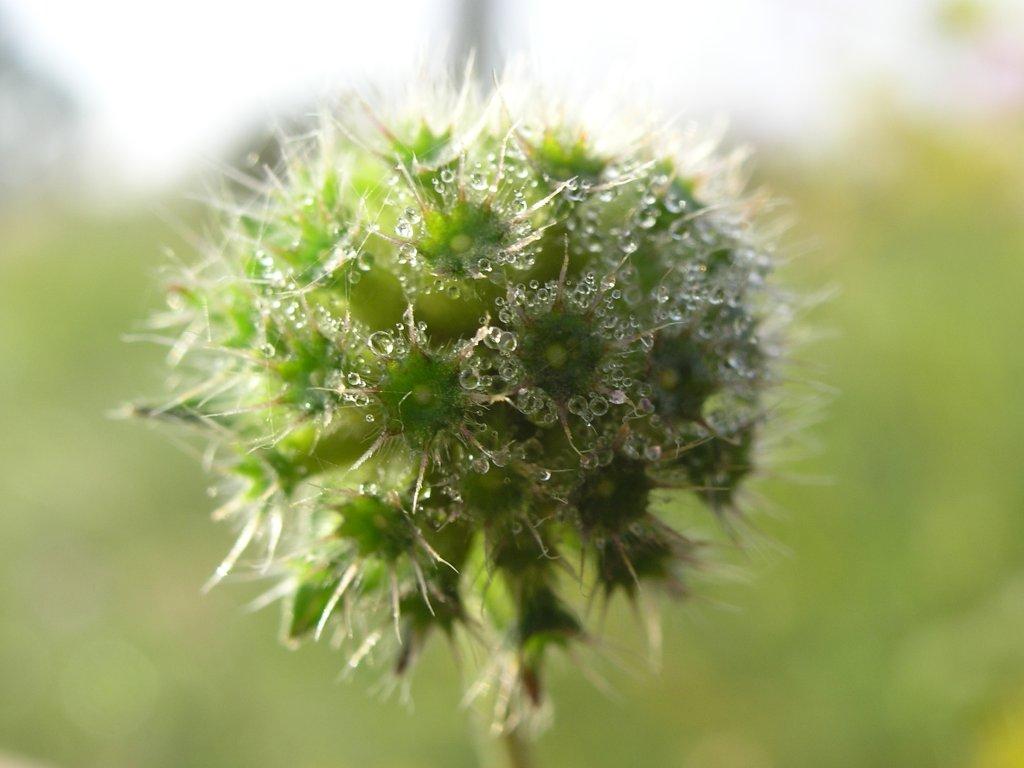
The plant develops small, nut-like fruits that have a bristle-like crown.
Features
Field scabious
Knautia arvensis
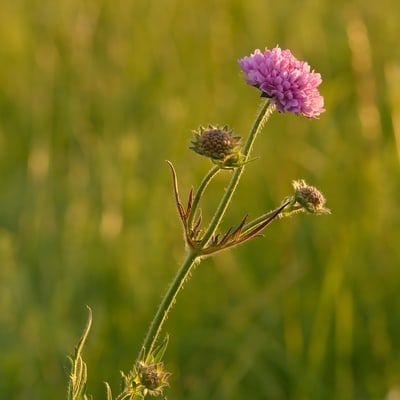
blue- to red-violet flowers
larger marginal flowers
In the city
In the city, it is mainly found in nutrient-rich meadows and along roadsides.
It is also commercially available as an ornamental plant.
Fun Facts
The flowering period is from July to August.
It attracts many bees and butterflies and is an important food source for numerous insects.
Its seeds remain germinable for over 35 years.
It lives for several years and usually flowers and fruits annually (perennial plant).
The fruit has both an oil body (elaiosome) for dispersal by ants and a bristle-haired crown for attachment and dispersal by animals and humans.
- Endangerment level Germany: not endangered
It was formerly used for skin diseases and eczema.
Sources
Habitus, Zbigniew Niepokój, CC BY-SA 4.0, https://commons.wikimedia.org/wiki/File:%C5%9Awierzbnica_polna._(Scabiosus_arvensis)_(Knautia_arvensis)_02.jpg
_(Knautia_arvensis)_02.jpg)
Fruchtstand, Guido Gerding, CC BY-SA 3.0, https://commons.wikimedia.org/wiki/File:XN_Knautia_arvensis_00.jpg

Habitus, Ivar Leidus, CC BY-SA 3.0, https://commons.wikimedia.org/wiki/File:Knautia_arvensis_-_harilik_%C3%A4iatar.jpg

Spohn, M., Golte-Bechtle, M. & Spohn, R. (2015) Was blüht denn da? Stuttgart: Franckh Kosmos Verlag.
Jäger, E. J. (2011) Rothmaler - Exkursionsflora von Deutschland. Gefäßpflanzen: Grundband, Heidelberg: Spektrum Akademischer Verlag.
Kammer, P. M. (2016) Pflanzen einfach bestimmen. Schritt für Schritt einheimische Arten kennenlernen, Bern: Haupt Verlag.
Schauer, T., Caspari, C. & Caspari, S. (2015) Der illustrierte BLV-Pflanzenführer für unterwegs. 1150 Blumen, Gräser, Bäume und Sträucher, München: BLV.
Page „Acker-Witwenblume“. : Wikipedia, The Free Encyclopedia. Date of last revision: 18.12.2016, 11:36 UTC. URL: https://de.wikipedia.org/w/index.php?title=Acker-Witwenblume&oldid=160765761 (Accessed: 25.04.2017).