
Short Description
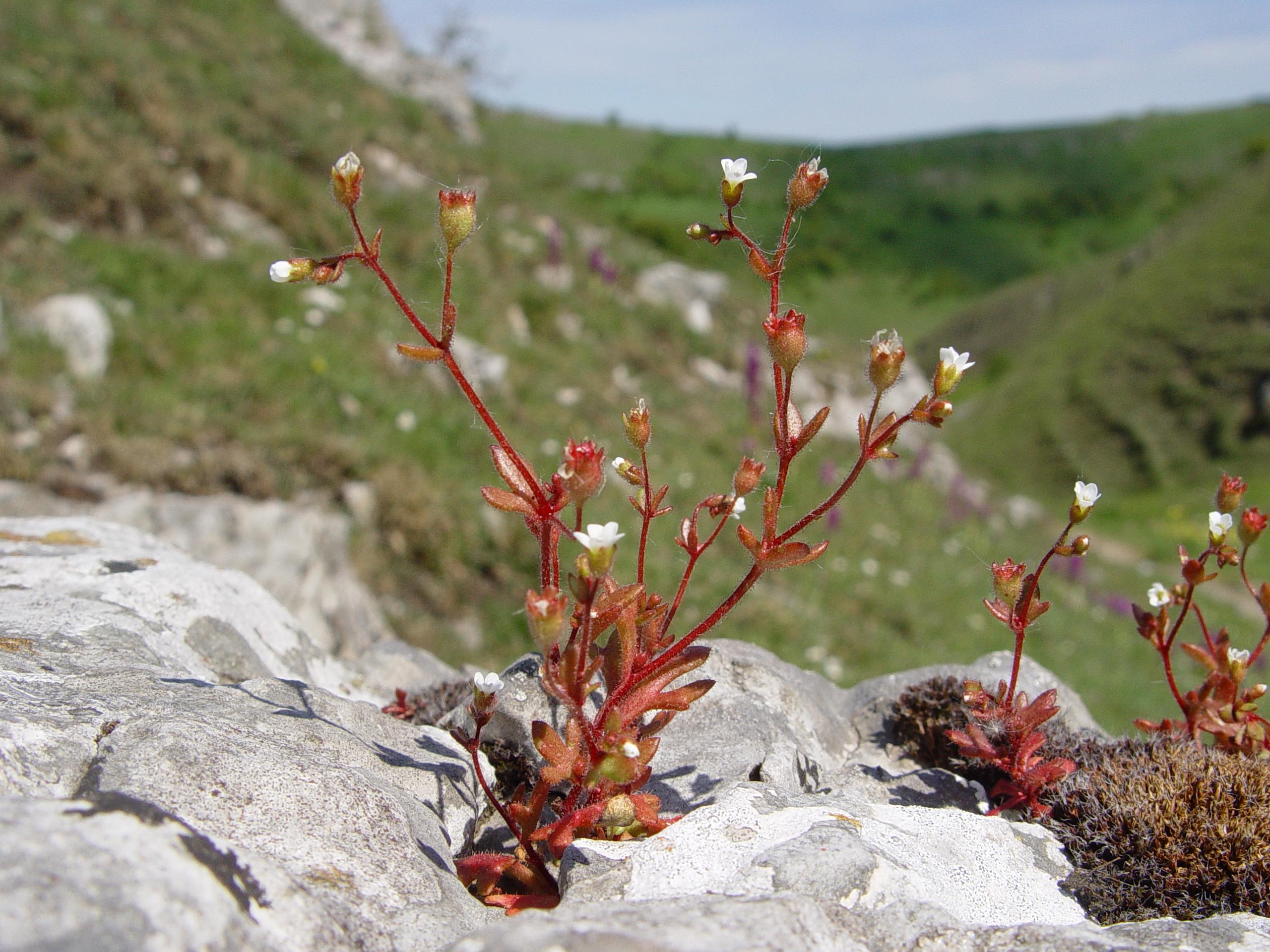
The rue-leaved saxifrage can grow up to 18 centimetres high.
The leaves appear to come directly from the soil as a rosette (basal) and on the stem. The leaves are always three-lobed. They become smaller and smaller towards the top.
The stem is erect, loosely branched and is usually strikingly red in colour.
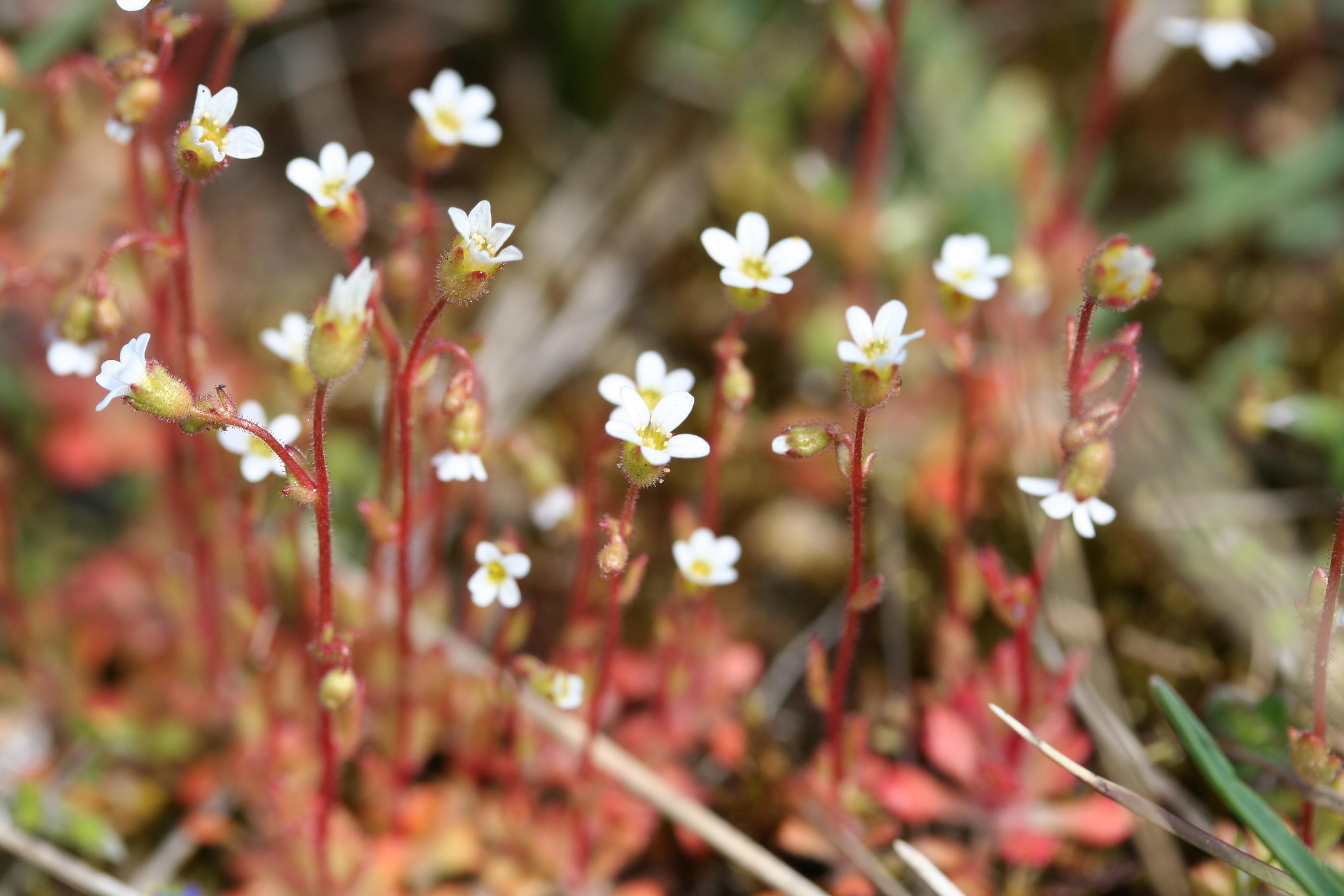
The few flowers are in a loose, panicled inflorescence. The individual flowers are long-stalked and have five white petals.
The rue-leaved saxifrage forms many-seeded capsules.
Features
Rue-leaved saxifrage
Saxifraga tridactylites
dreilappige Blätter
rote Stängel
In the city
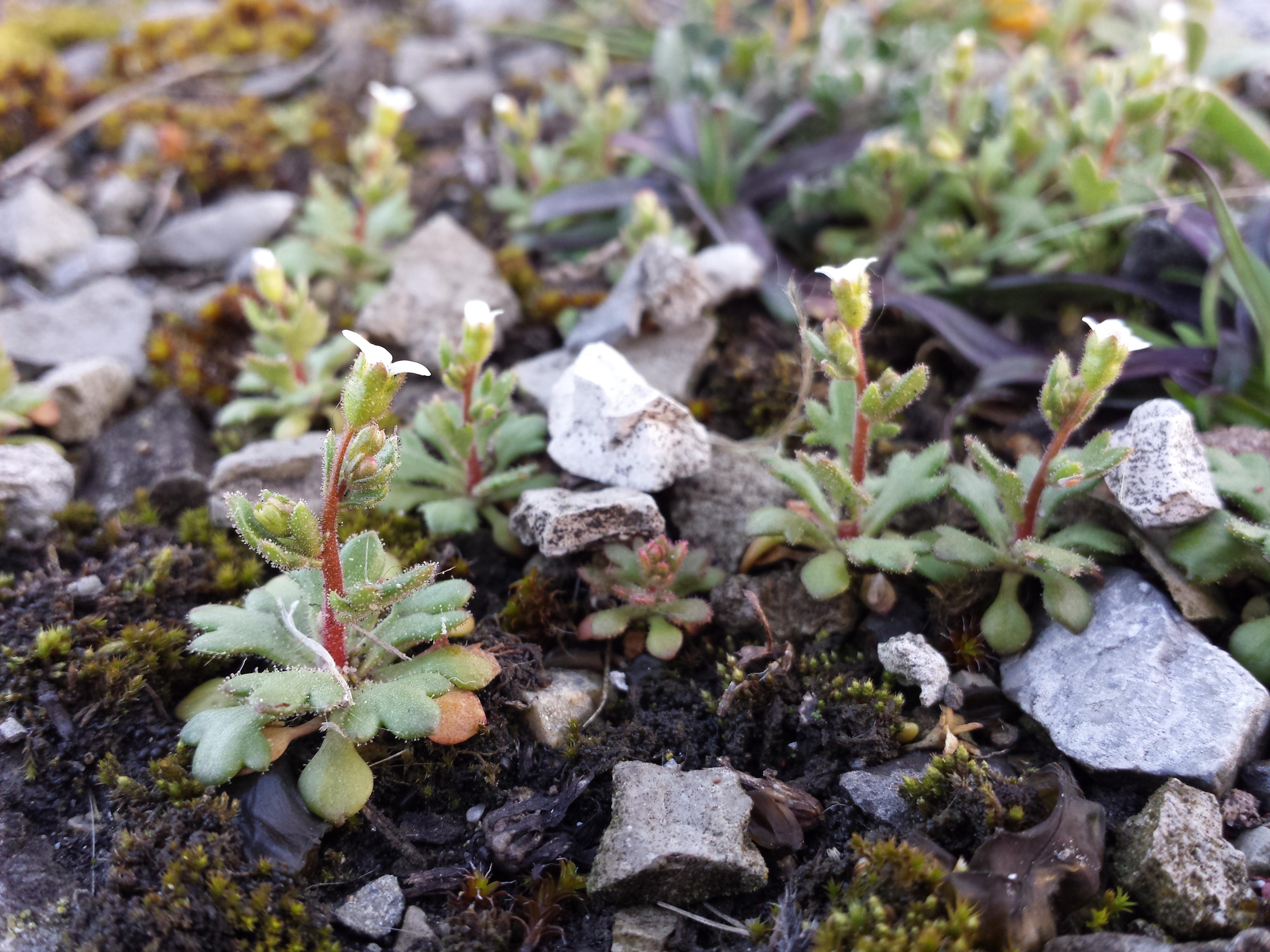
In the city, the finger saxifrage is relatively rare and can be found on dry ruderal areas such as roadsides, gravel roofs, industrial wastelands and railway lines. It prefers dry and warm sites with nutrient-poor, stony sandy and clay soils.
Fun Facts
The seeds spread as “granule" flyers and, as they are unwettable, they are also spread by alluvial rainfall.
The flowering period is from April to June.
It is an annual plant, i.e. it flowers for only one summer and dies after the seeds have ripened.
- Endangerment level Germany: not endangered
Sources
Habitus, Parkywiki, CC BY-SA 4.0, https://commons.wikimedia.org/wiki/File:Saxifraga_tridactylites_Derbyshire.JPG?uselang=de

Habitus, Stefan.lefnaer, CC BY-SA 3.0, https://commons.wikimedia.org/wiki/File:Saxifraga_tridactylites_sl4.jpg

Habitus, Svdmolen, CC BY-SA 3.0, https://commons.wikimedia.org/wiki/File:Saxifraga_tridactylites-01_(xndr).jpg
.jpg)
Spohn, M., Golte-Bechtle, M. & Spohn, R. (2015) Was blüht denn da? Stuttgart: Franckh Kosmos Verlag.
Page „Dreifinger-Steinbrech“. : Wikipedia, The Free Encyclopedia. Date of last revision: 20.02.2017, 16:34 UTC. URL: https://de.wikipedia.org/w/index.php?title=Dreifinger-Steinbrech&oldid=162840679 (Accessed:16.08.2017).
Bundesamt für Naturschutz (n.d.) Artensteckbriefe, URL: http://floraweb.de/pflanzenarten/artenhome.xsql?suchnr=5328& (Accessed:16.08.2017).