
Short Description
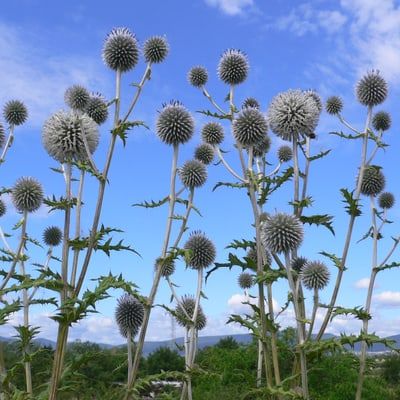
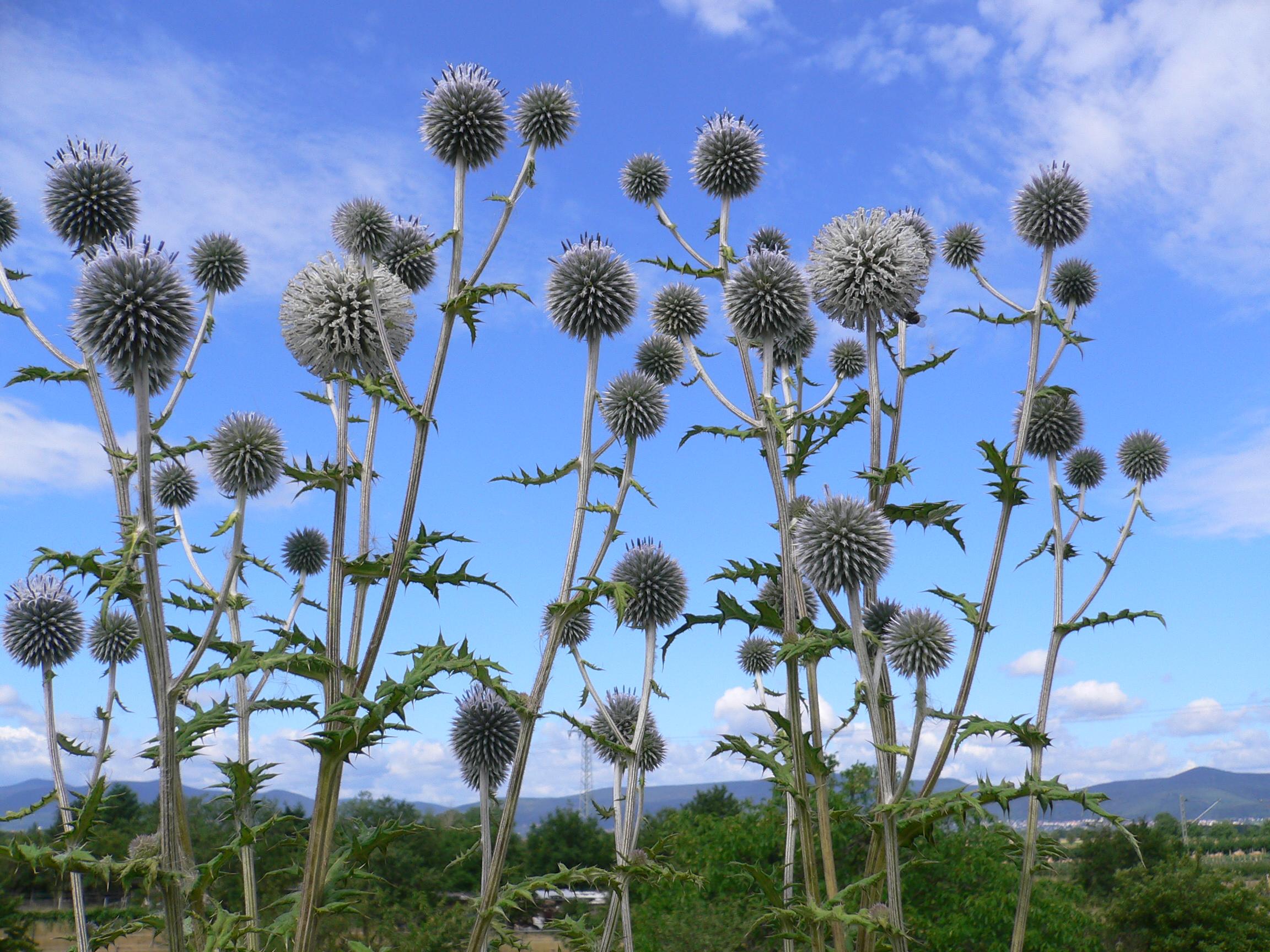
The glandular globe-thistle can grow up to 1.8 metres high.
The leaves are felt-like hairy. They are incised at the edge (pinnately lobed) and spiny. They can grow up to 40 centimetres long.
The reddish-brown stem is mostly branched and felt-like hairy.
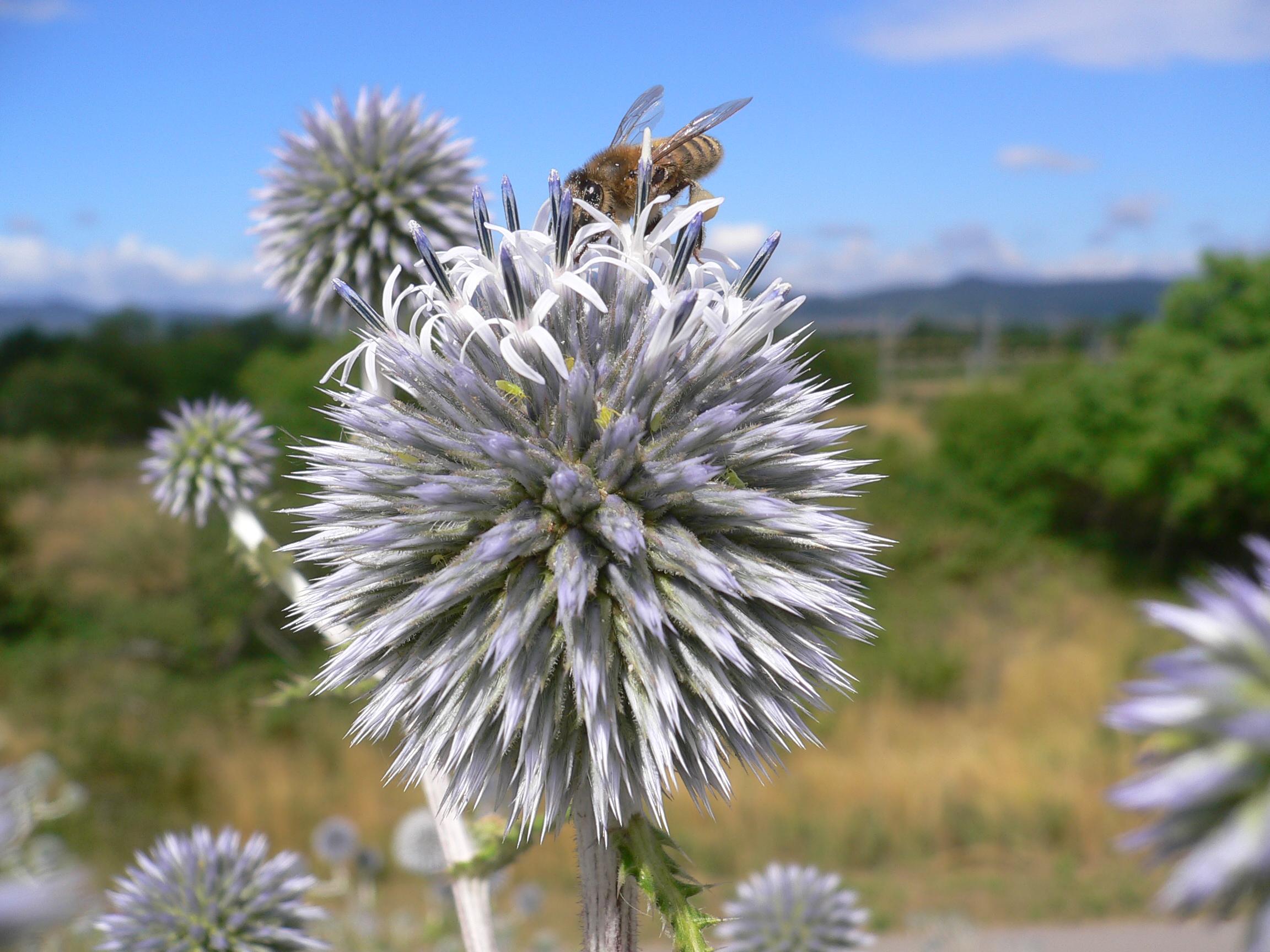
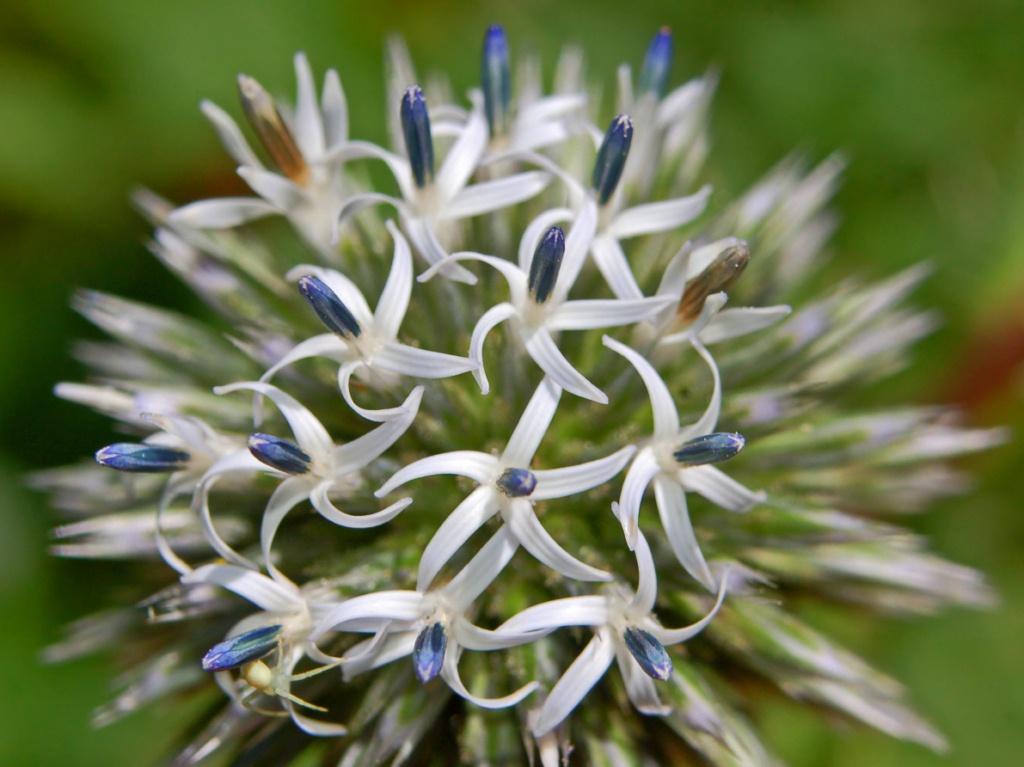
The flowers sit together in a spherical inflorescence. The individual flowers consist only of tubular florets that join together to form a capitulum. The petals are white and often overlaid with grey or light blue. The stamens are strikingly long and dark blue.
The fruits (achenes) are nut-like and have a light-coloured ring of hairs (pappus).
Features
Glandular globe-thistle
Echinops sphaerocephalus
spherical, light blue inflorescence
tomentose stem
In the city
In the middle of the 16th century, the glandular globe-thistle was introduced to Germany as an ornamental plant and can still be found in gardens today. Since it is well adapted to the nutrient-rich, stony soil in the city, it ran wild in some places. It is found on fallow land and railway embankments and along roadsides.
Fun Facts
The pollen is bluish in colour. This gives pollen-collecting insects blue "panties".
The flowering period is from June to August.
It is pollinated by bees, wasps and butterflies.
- Endangerment level Germany: not evaluated
The glandular globe-thistle originates from Southern Europe and was introduced as an ornamental plant. It belongs to the non-native plants (neophytes).
It is mainly planted as an ornamental and occasionally as a forage plant for wild bees.
Sources
Blütenstand, Georg Slickers, CC BY-SA 3.0, https://commons.wikimedia.org/wiki/File:Kugeldistel_20050705_554.jpg

Habitus, Georg Slickers, CC BY-SA 3.0, https://commons.wikimedia.org/wiki/Echinops_sphaerocephalus#/media/File:Kugeldistel_20050705_565.jpg

Blütenstand, Hectonichus, CC BY-SA 3.0, https://commons.wikimedia.org/wiki/File:Asteraceae_-_Echinops_sphaerocephalus.JPG?uselang=de

Spohn, M., Golte-Bechtle, M. & Spohn, R. (2015) Was blüht denn da? Stuttgart: Franckh Kosmos Verlag.
Page „Drüsenblättrige Kugeldistel“. : Wikipedia, The Free Encyclopedia. Date of last revision: 09.06.2016, 01:12 UTC. URL: https://de.wikipedia.org/w/index.php?title=Dr%C3%BCsenbl%C3%A4ttrige_Kugeldistel&oldid=155116229 (Accessed: 26.01.2018).