
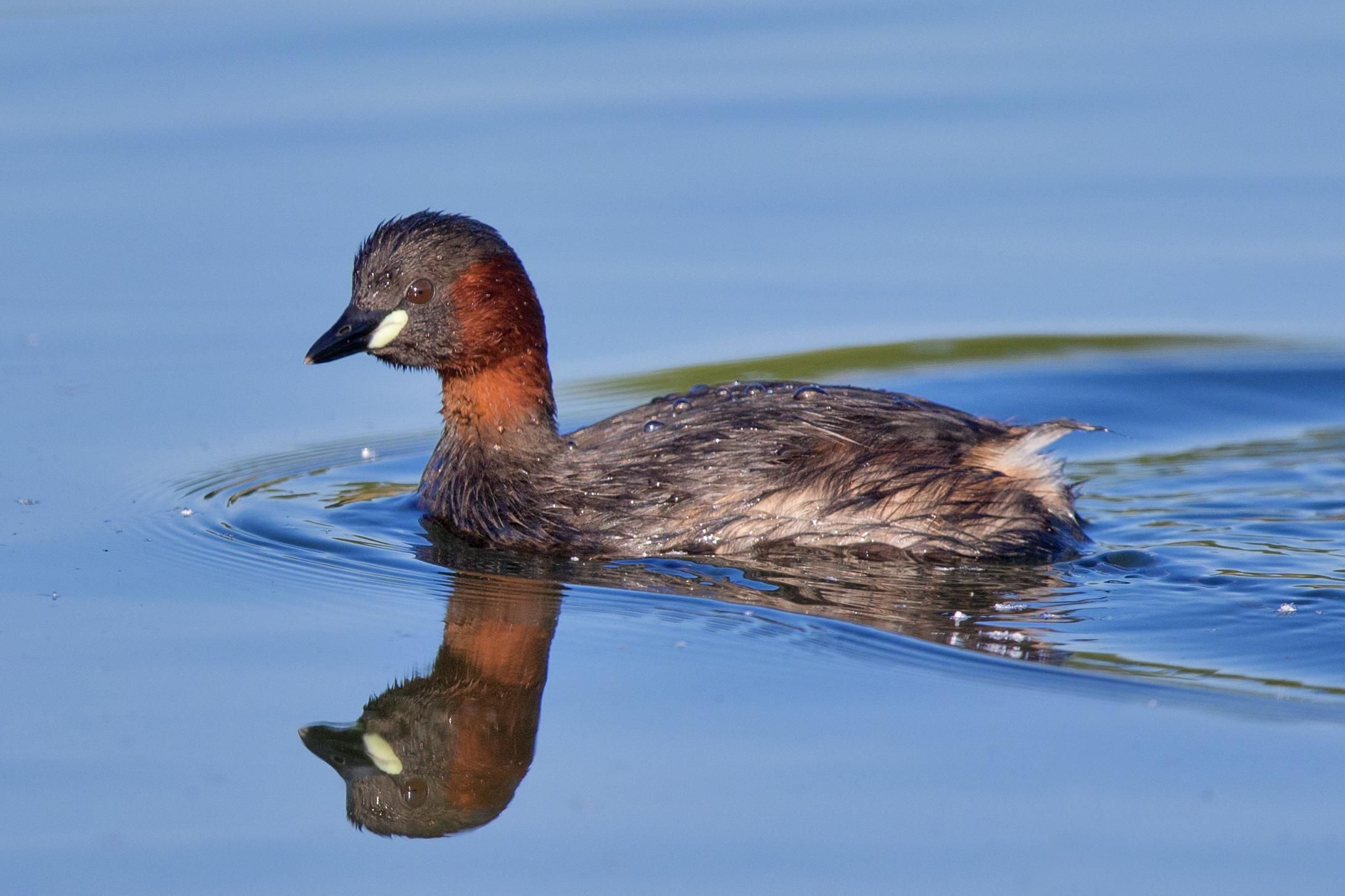
Short Description
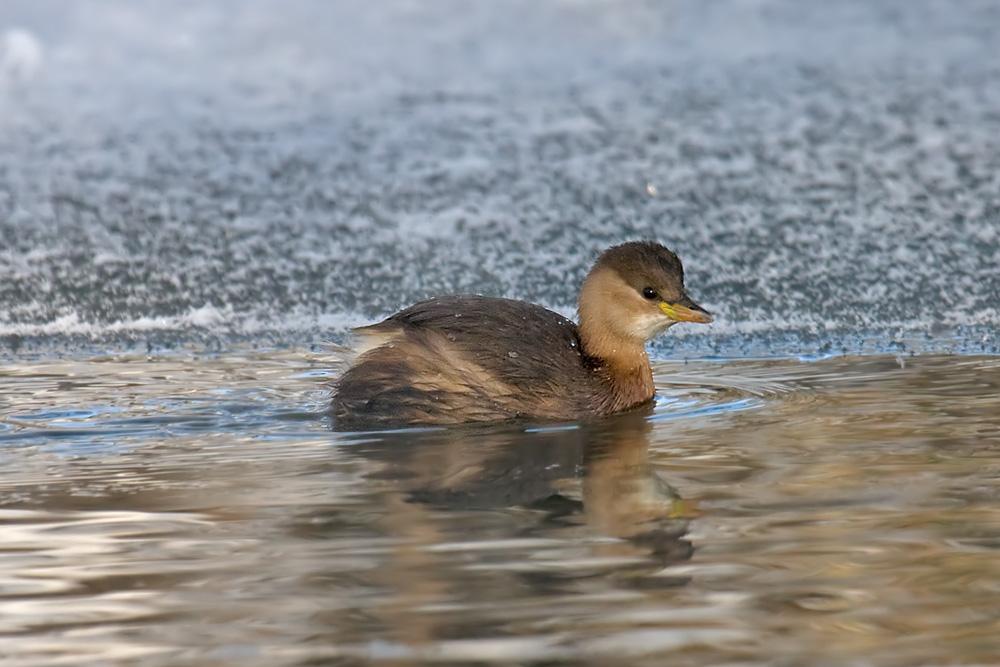
On the water, little grebe is reminiscent of a duck and because of its size is often confused with a chick. A typical feature is the pale-yellow spot at the base of the bill. In the breeding season (nuptial plumage), the plumage is black with chestnut-brown neck and ear-coverts. Outside of the breeding season (basic plumage), it is light-brown.
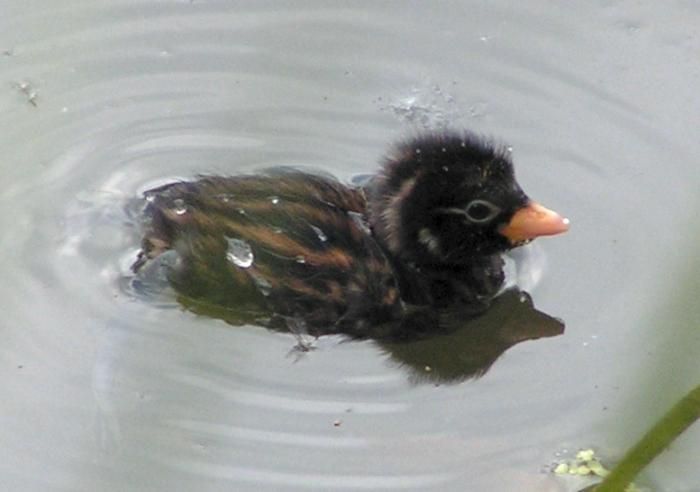
Nestlings are initially black-brown with silvery-white down on their foreheads. As they grow older, their plumage turns grey-brown to pale-brown with rust-red and white longitudinal stripes.

Features
Little grebe
Tachybaptus ruficollis
neck and ear-coverts in contrasting colours
pale-yellow spot at the base of the bill
Trillern von zumindest drei Zwergtauchern
Frommolt, CC BY-SA 3.0

Similar species
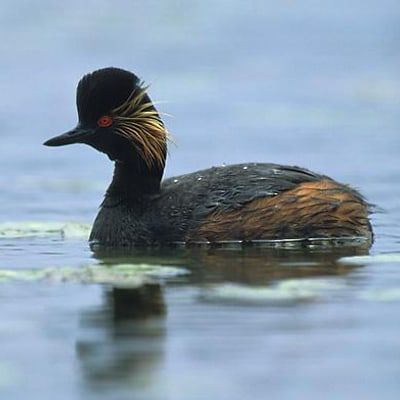
Black-necked grebe
Podiceps nigricollis
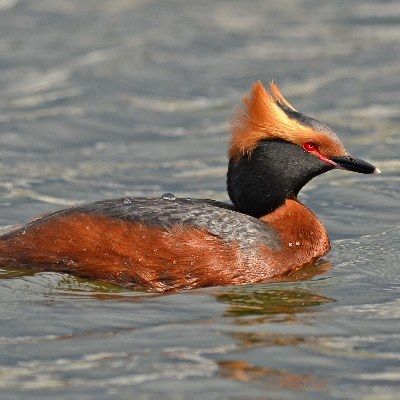
Horned grebe
Podiceps auritus
In the city
The natural habitat of the little grebe is particularly endangered through the draining of swamps and river meadows as well as through human interference by fishing, water sports and bathing.
Because of its minute size, the little grebe is not immediately spotted. But its loud warbling call during the mating season is characteristic.
Fun Facts
Little grebes can dive up to a depth of one metre.
hey feed on small fish, crustaceans, molluscs and insects that are caught in short dives. Occasionally, they also eat water plants.
Little grebes are migratory birds; from October to March, they fly south to ice-free waters. In mild and ice-free winters, they remain on site as resident birds.
- Endangerment level Germany: not endangered
Sources
Prachtkleid, Andreas Trepte, CC BY-SA 2.5, https://commons.wikimedia.org/wiki/File:Little_grebe_Zwergtaucher.jpg

Jungtier, Kristof vt, CC BY-SA 3.0, https://commons.wikimedia.org/wiki/File:Little_Grebe_chick_700.jpg

Schlichtkleid, Andreas Trepte, CC BY-SA 2.5, http://photo-natur.de/licence.html
Witt, K. & Steiof, K. (2013) Rote Liste und Liste der Brutvögel von Berlin, 3. version, 15.11.2013. : Berliner Ornithologische Arbeitsgemeinschaft e.V. (eds.) Berliner Ornithologischer Bericht, volume 23, Berlin: Berliner Ornithologische Arbeitsgemeinschaft e.V., 1-23.
Page „Zwergtaucher“. : Wikipedia, The Free Encyclopedia. Date of last revision: 05.01.2016, 09:41 UTC. URL: https://de.wikipedia.org/w/index.php?title=Zwergtaucher&oldid=149811638 (Accessed: 18.02.2016).
Artenfinder (2016) Tachybaptus ruficollis (Zwergtaucher), URL: https://arteninfo.net/elearning/voegel/speciesportrait/2812 (Accessed: 23.04.2016).