
Short Description
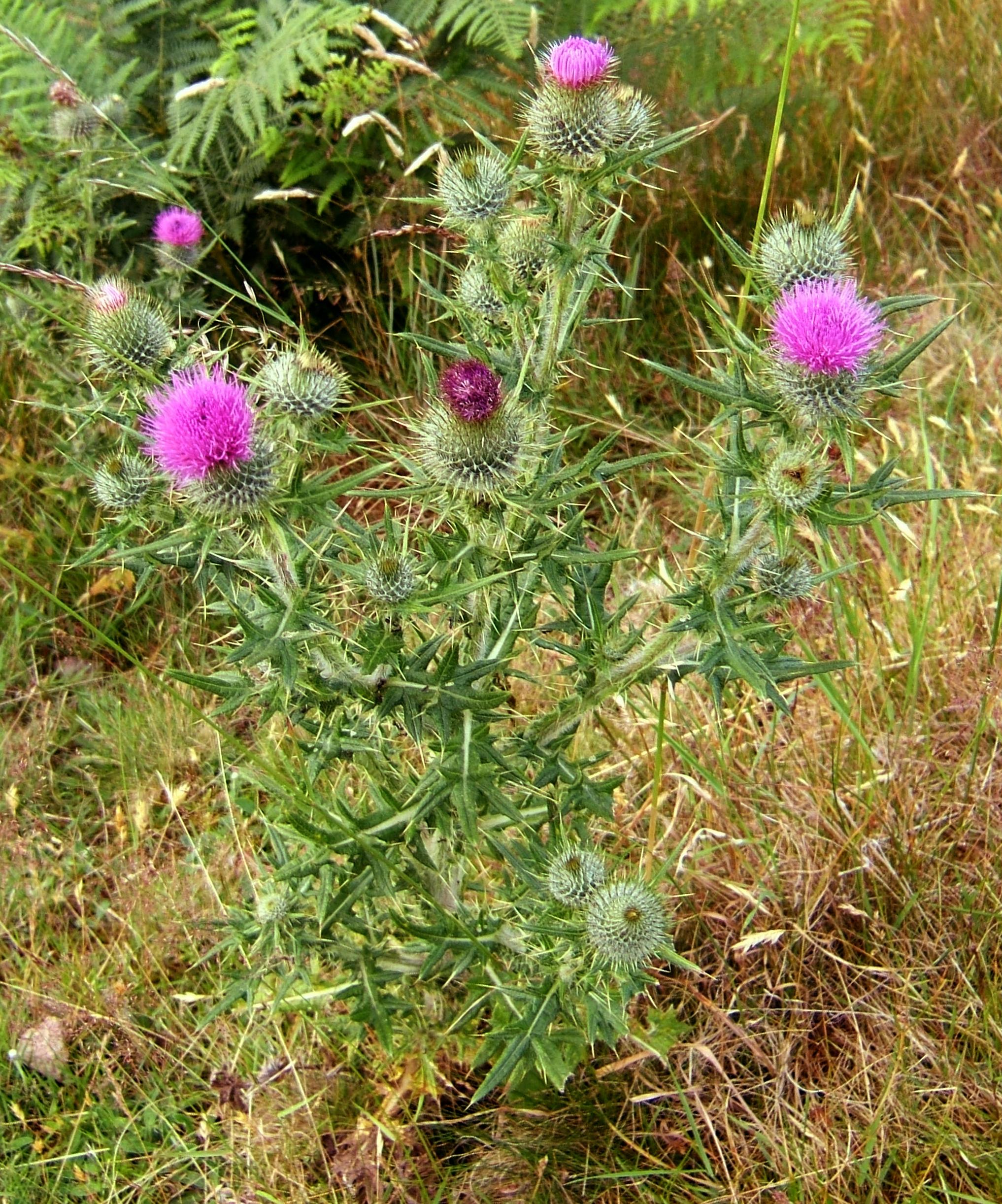
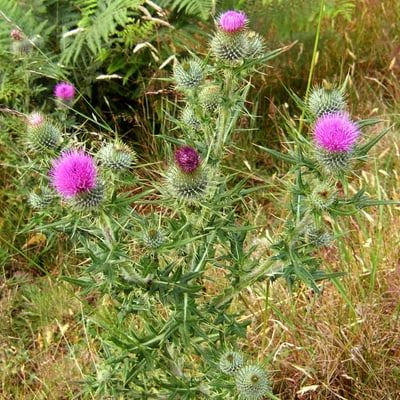
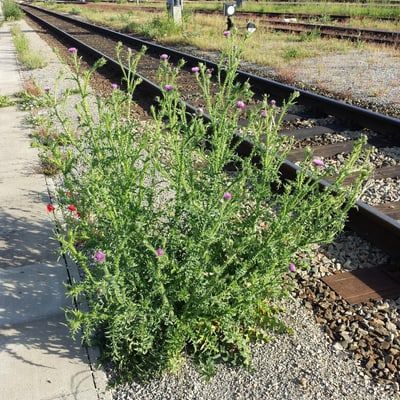
The spear thistle can grow up to 1.5 m in height.
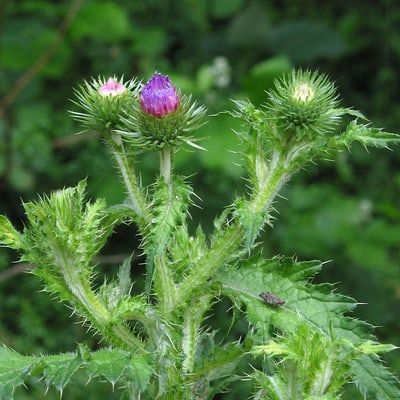
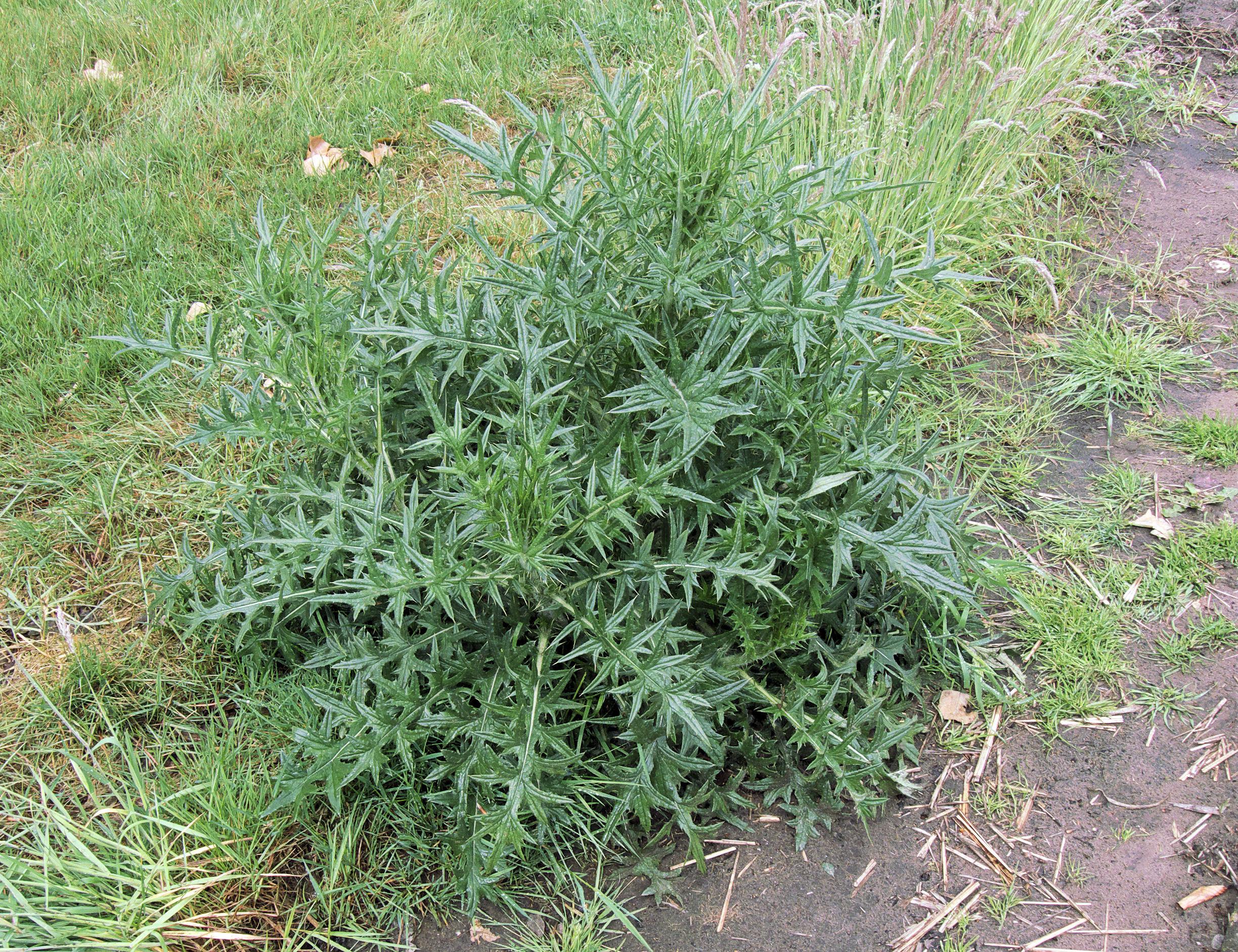
Its leaves are lance-shaped, lobed to incised (pinnate) and spined. Small spines give the top of the leaves a rough appearance.
The upright stem is generally branched, winged and very leafy. It has numerous spines and extends deep into the soil.
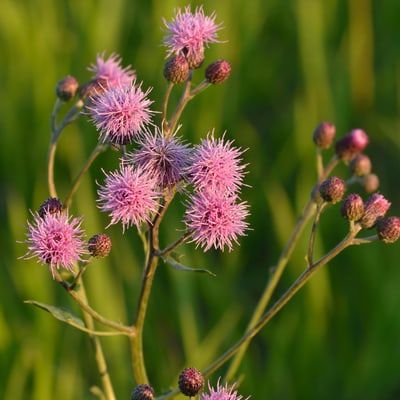
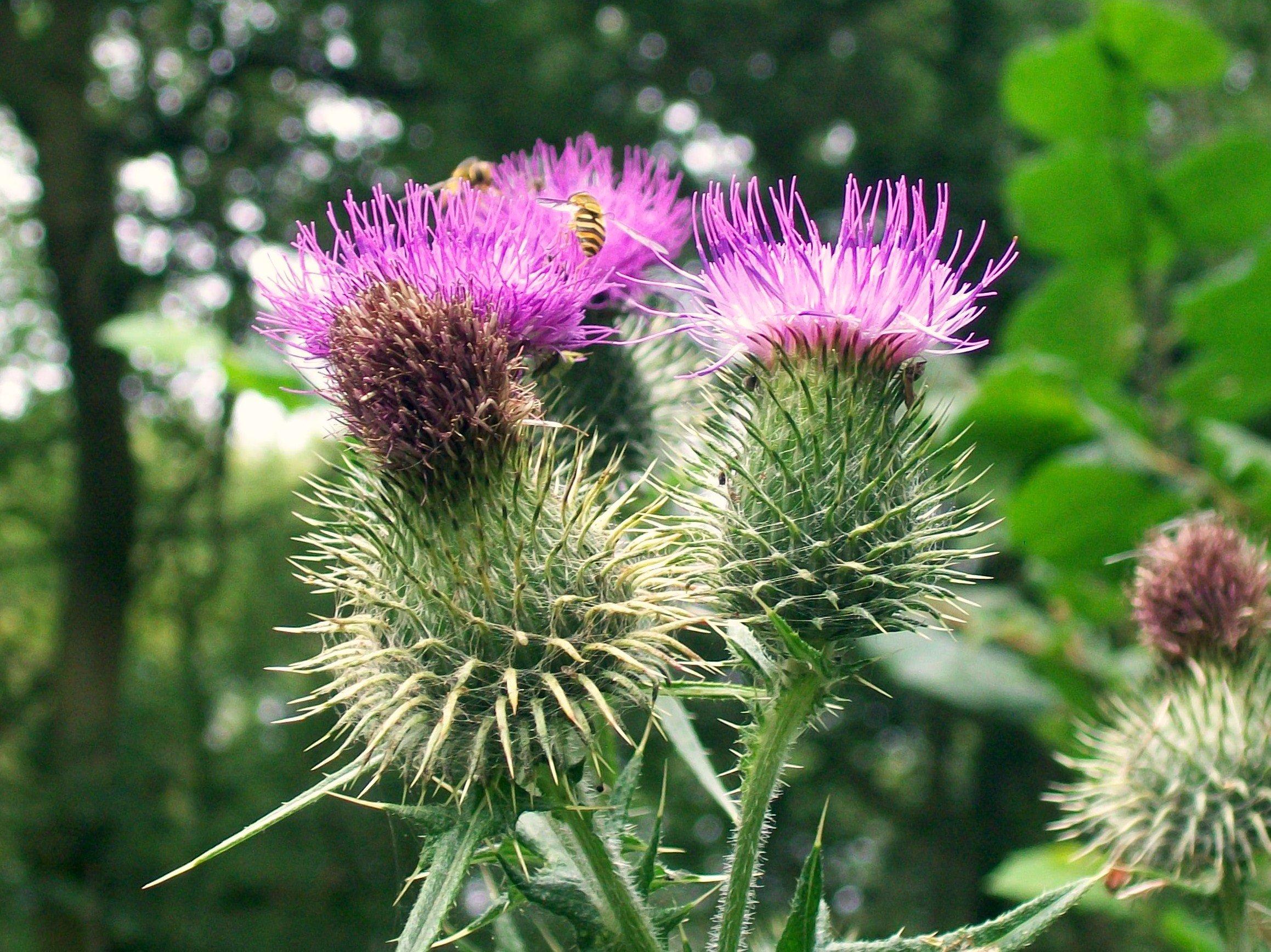
At first glance, the flower head can be mistaken for the flower itself. The pseudanthium (“false flower”) consists of numerous individual light-purple ray florets and can reach a diameter of up to 4 cm.
The seeds are small nut fruits with a ring of feathery hairs.
Features
Spear thistle
Cirsium vulgare
spiny upper side of the leaf
winged stem with spine-tipped wings
In the city
Spear thistles are often found in shrubby weed communities, in verges, wasteland, near watercourses and in forest clearings.
Fun Facts
It is the food plant for the caterpillars of the painted lady butterfly.
It is a plant that thrives in bright sunlight (heliophyte), an indicator plant for fresh, mildly alkaline and mildly acidic soils and a very distinctive nitrogen indicator.
The spear thistle is the national flower of Scotland.
It flowers from June to September.
With their sweet scent, thistles attract a lot of butterflies and are an important food source.
Thistles are said to keep away bad spirits.
- Endangerment level Germany: not endangered
- Usage:
Dried roots can be made into flour.
Roots and young shoots used to be made into soup.
Sources
Habitus, Sciadopitys, CC BY-SA 2.0, https://commons.wikimedia.org/wiki/File:Cirsium_vulgare_Harthope.jpg

Blütenstand, AnemoneProjectors, CC BY-SA 2.0, https://commons.wikimedia.org/wiki/File:Spear_Thistle_(Cirsium_vulgare).jpg
.jpg)
Blätter, Rasbak, CC BY-SA 3.0, https://commons.wikimedia.org/wiki/File:Cirsium_vulgare,_Speerdistel_plant_(1).jpg
.jpg)
Page „Gewöhnliche Kratzdistel“. : Wikipedia, The Free Encyclopedia. Date of last revision: 15.06.2016, 15:47 UTC. URL: https://de.wikipedia.org/w/index.php?title=Gew%C3%B6hnliche_Kratzdistel&oldid=155325657 (Accessed: 02.08.2016).
Fitter, R., Fitter, A. & Blamey, M. (1986) Pareys Blumenbuch. Wildblühende Pflanzen Deutschlands und Nordwesteuropas, London: Verlag Collins Publishers.
Fleischhauer, S. G., Guthmann, J. & Spiegelberger, R. (2007) Essbare Wildpflanzen. 200 Arten bestimmen und verwenden, Baden und München: AT Verlag.
Lippert, W. & Podlech, D. (1993) GU Naturführer. Blumen: die wichtigen Blütenpflanzen Mitteleuropas erkennen und bestimmen, München: Gräfe und Unzer Verlag.
Schauer, T., Caspari, C. & Caspari, S. (2015) Der illustrierte BLV-Pflanzenführer für unterwegs. 1150 Blumen, Gräser, Bäume und Sträucher, München: BLV.
Scherf, Gertrud (2006): Wildpflanzen neu entdecken, München: BLV Buchverlag
Bundesamt für Naturschutz (n.d.) Artensteckbriefe, URL: http://floraweb.de/pflanzenarten/artenhome.xsql?suchnr=4789& (Accessed: 02.08.2016).