
Short Description
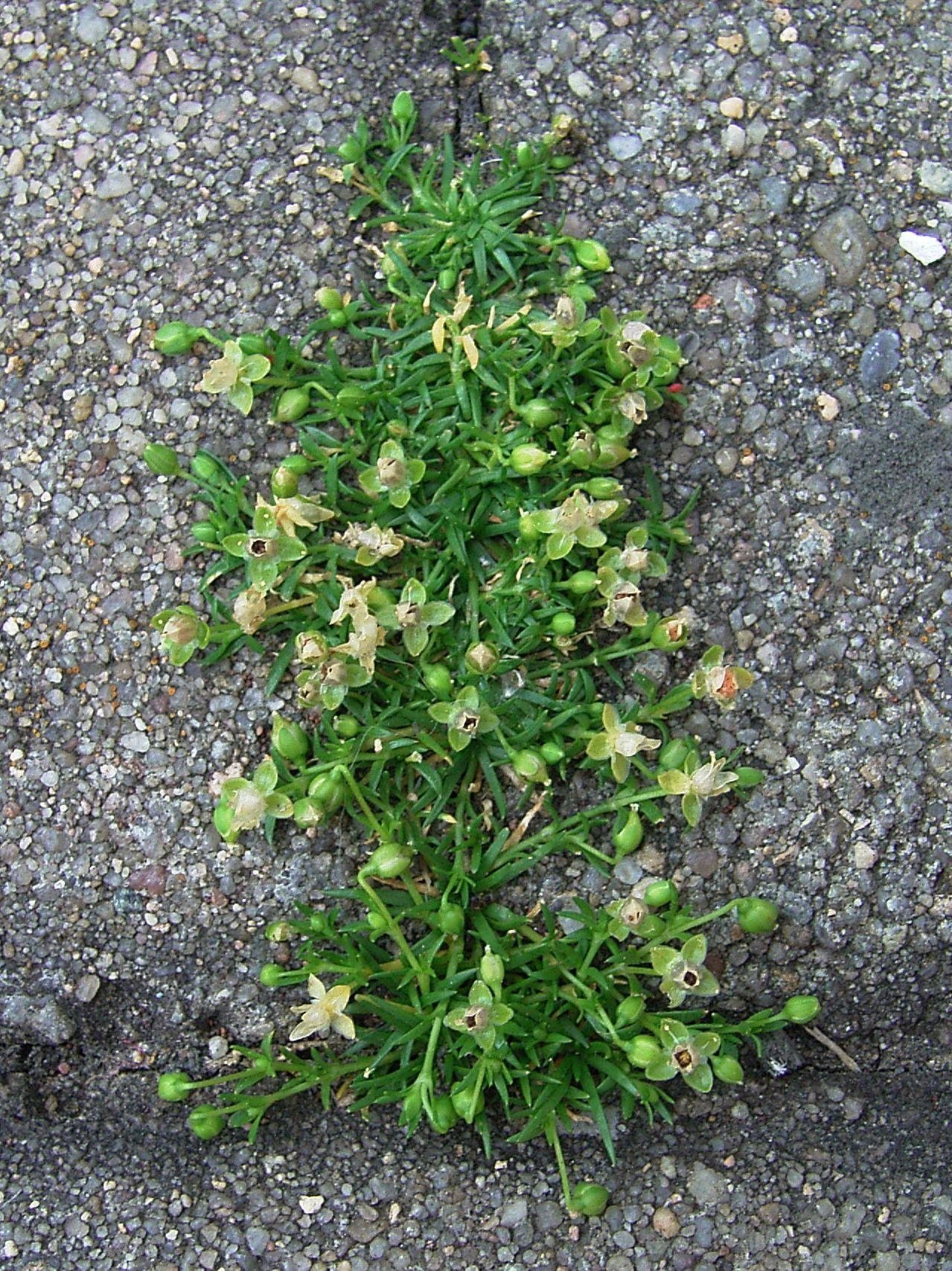
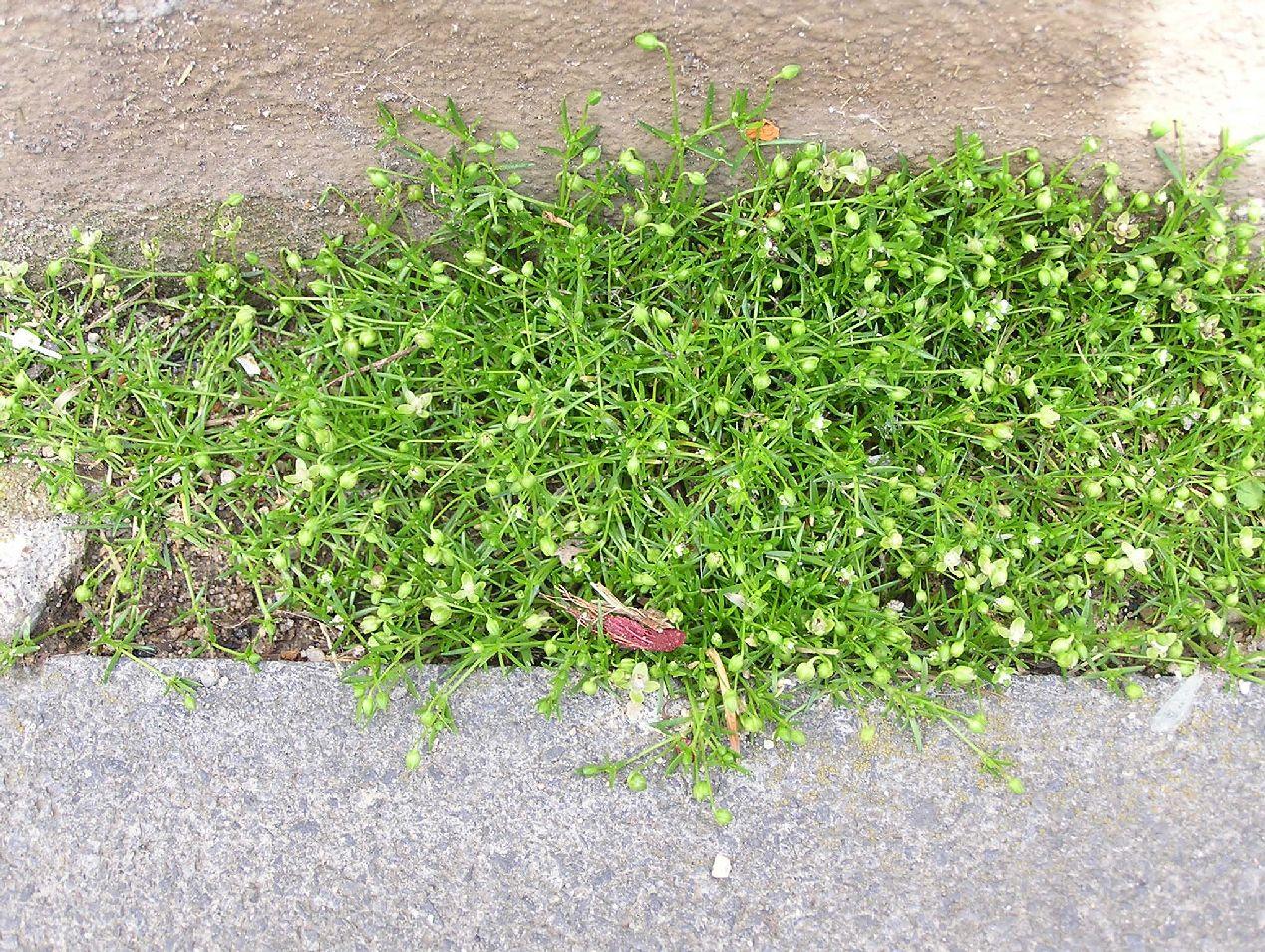
The procumbent pearlwort is very unremarkable and can grow to a maximum height of 15 cm.
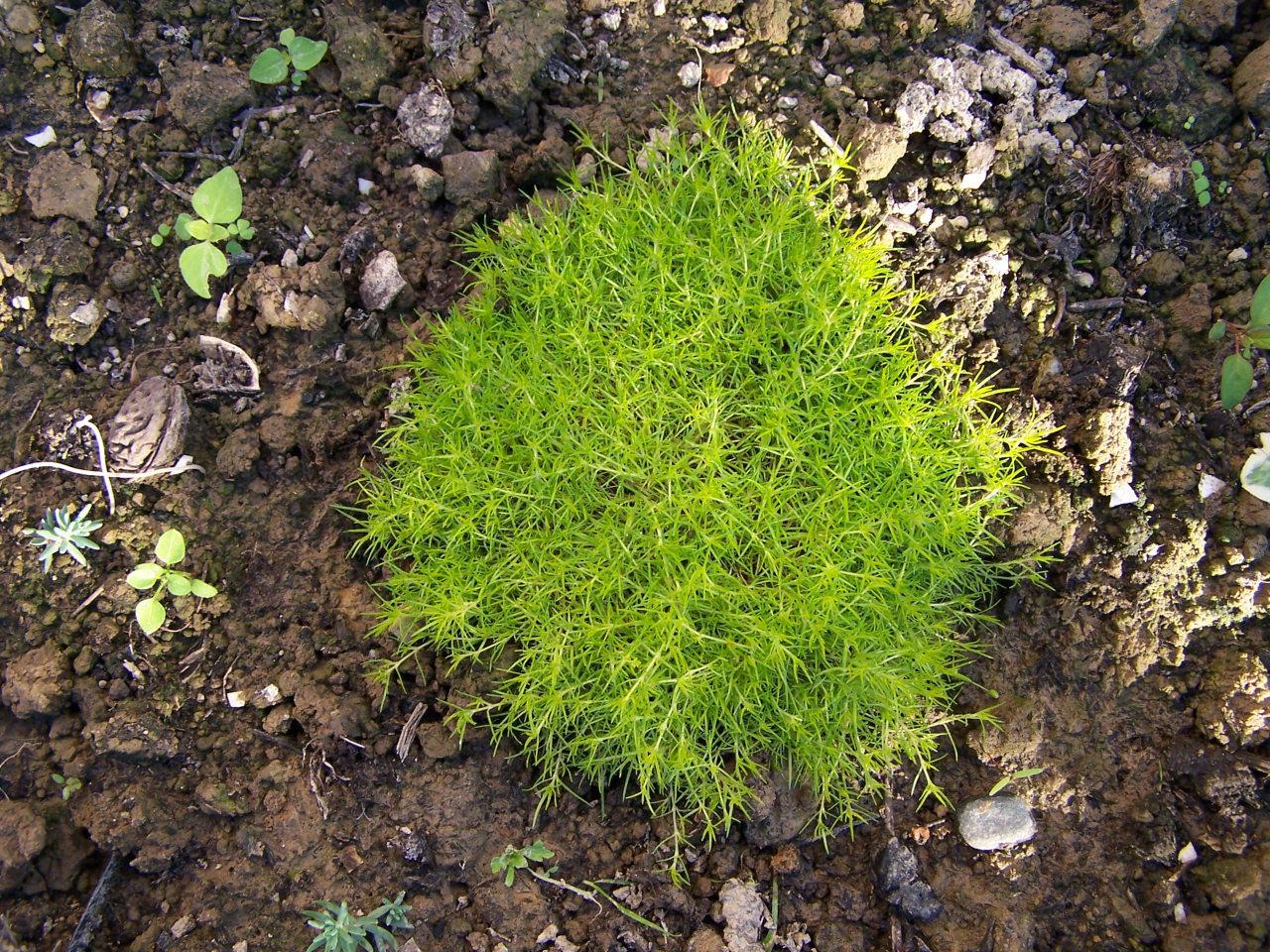
The leaves are very small, linear and sometimes slightly fleshy. They have a spiny tip. They sit either in a rosette directly above the ground (basal) or opposite each other on the stem.
The stem grows prostrate and ascends at the end. It is glabrous.
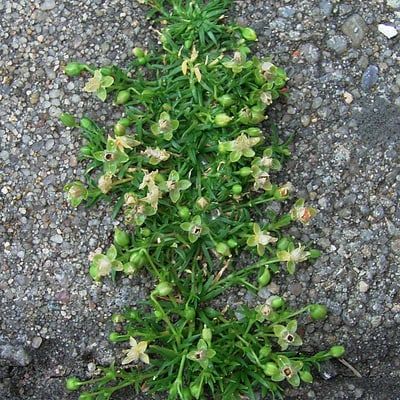
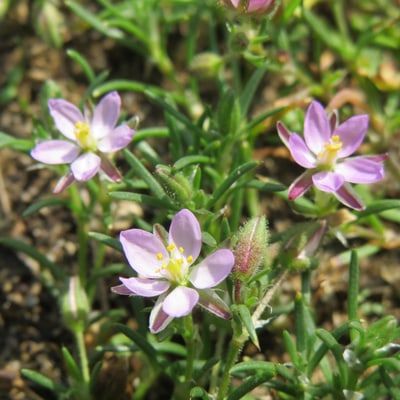
The inconspicuous flowers have four white petals and four green, clearly larger sepals. The petals often fall off early or are missing completely.
The fruits are egg-shaped, green capsules. They contain triangular, brown seeds.
Features
Procumbent pearlwort
Sagina procumbens
unremarkable, moss-like
In the city
The procumbent pearlwort prefers moist and lime-poor soils. It tolerates salt, compaction and foot traffic very well and is therefore very common in the city. It is found in fields, gardens, in pavement cracks and along paths and pavement edges.
The very small seeds stick to damp shoes and car tyres and are thus carried by humans over long distances.
Fun Facts
It is mainly pollinated by bees and small flies. In unfavourable weather, the flowers remain closed and self-pollinate.
It often forms a very dense groundcover.
The flowering period is from May to September.
It lives for several years and generally flowers and fruits annually (perennial plant).
- Endangerment level Germany: not endangered
Procumbent pearlwort is native to Europe, western Asia and North Africa.
Sources
Habitus, Density, CC BY-SA 3.0, https://commons.wikimedia.org/wiki/File:Sagina_procumbens.jpg

Habitus, Jerzy Opioła, CC BY-SA 3.0, https://commons.wikimedia.org/wiki/File:Sagina_procumbens_a1.jpg

Habitus, Michael Becker, CC BY-SA 3.0, https://commons.wikimedia.org/wiki/File:Sagina_procumbens_2005.05.08_12.49.10-p5080008.jpg

Kammer, P. M. (2016) Pflanzen einfach bestimmen. Schritt für Schritt einheimische Arten kennenlernen, Bern: Haupt Verlag.
Spohn, M., Golte-Bechtle, M. & Spohn, R. (2015) Was blüht denn da? Stuttgart: Franckh Kosmos Verlag.
Page „Niederliegendes Mastkraut“. : Wikipedia, The Free Encyclopedia. Date of last revision: 07.12.2017, 21:22 UTC. URL: https://de.wikipedia.org/w/index.php?title=Niederliegendes_Mastkraut&oldid=171763123 (Accessed: 28.08.2018).