
Short Description
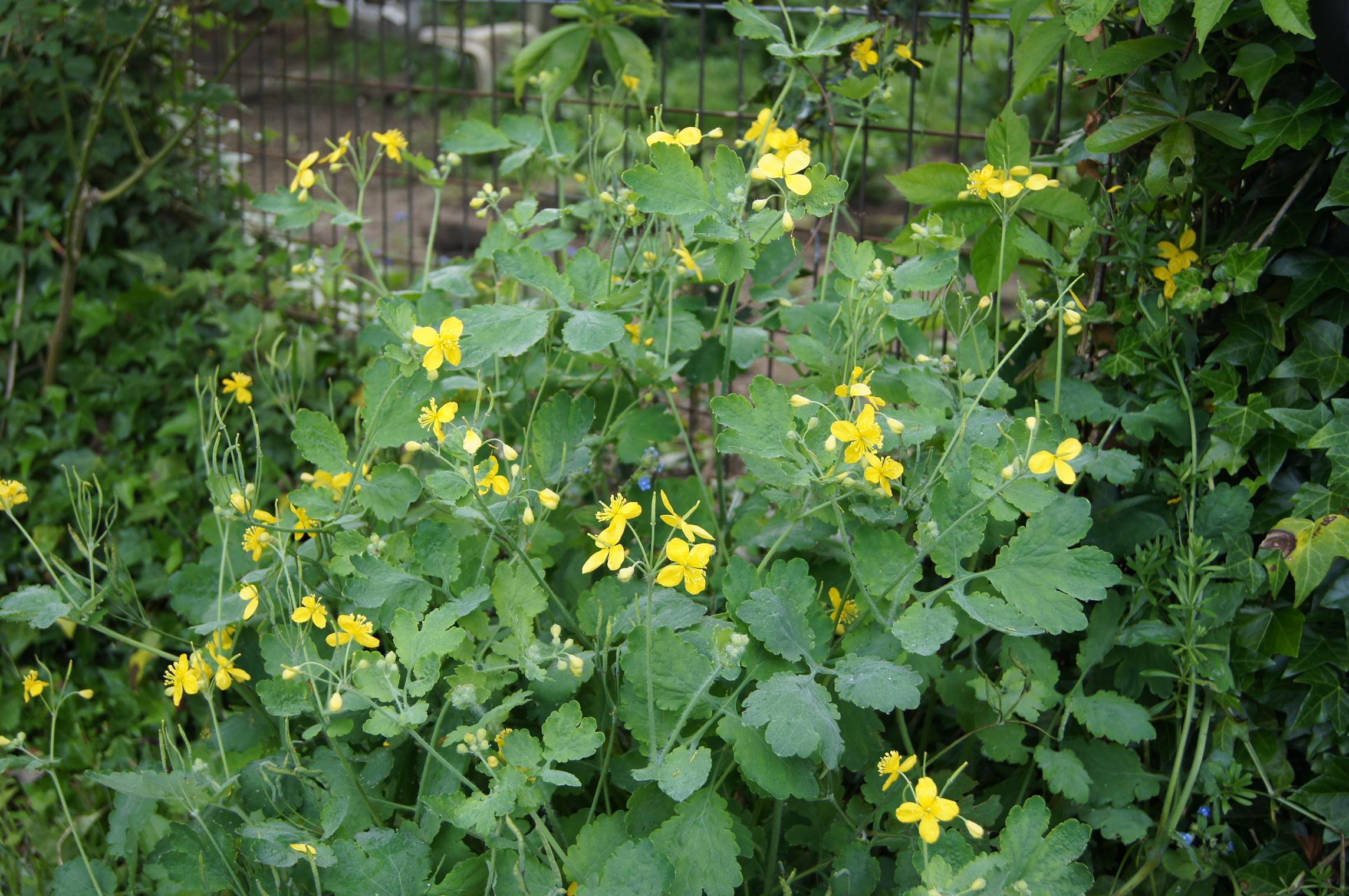
Greater celandine can grow to up to 70 cm in height.
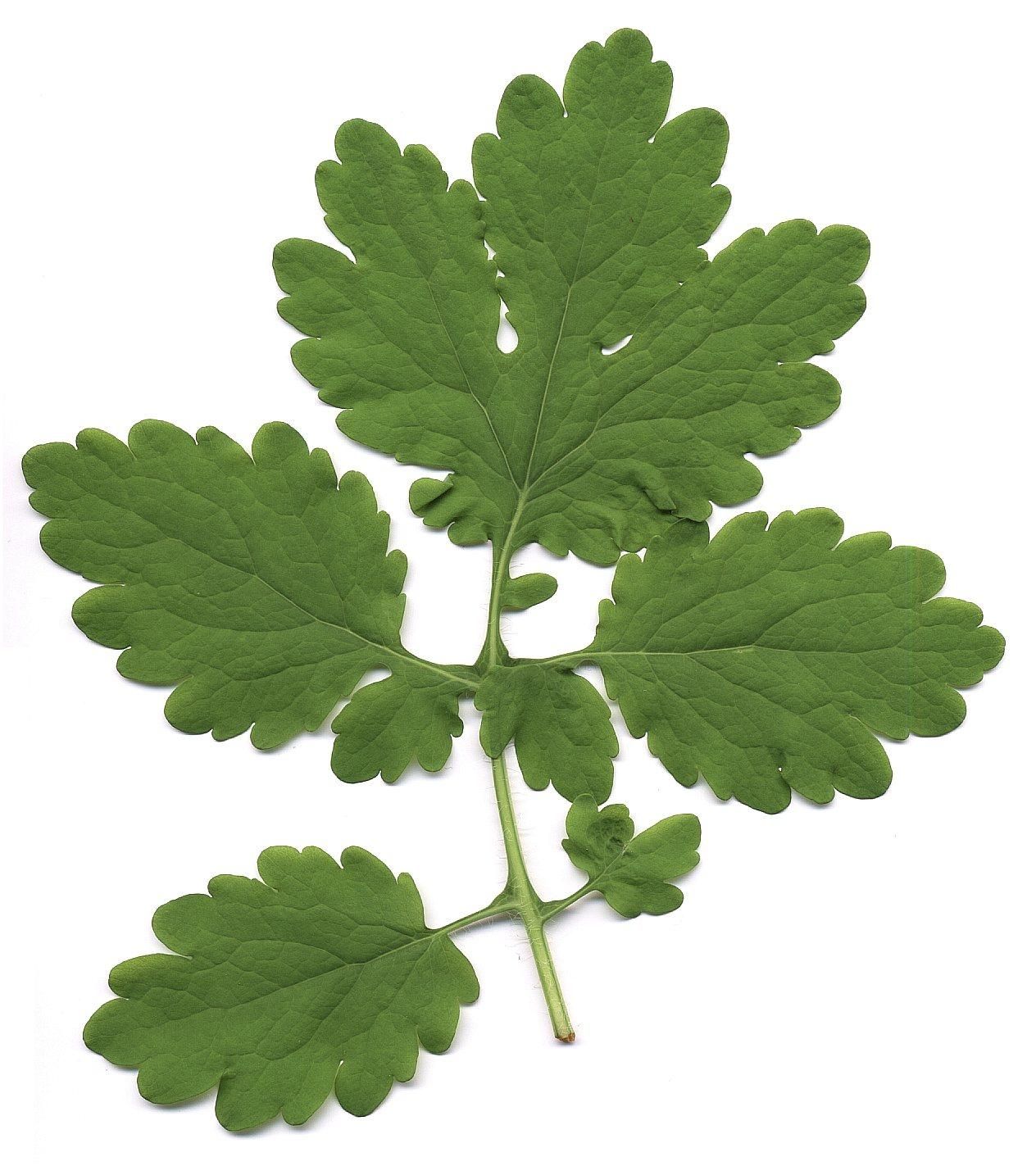
The leaves grow alternately on the stem. They are green on top and blue-green underneath. They are lobed (pinnately split) or consist of leaflets (unevenly pinnate).
The stem is upright, branched and covered in bristly hairs.
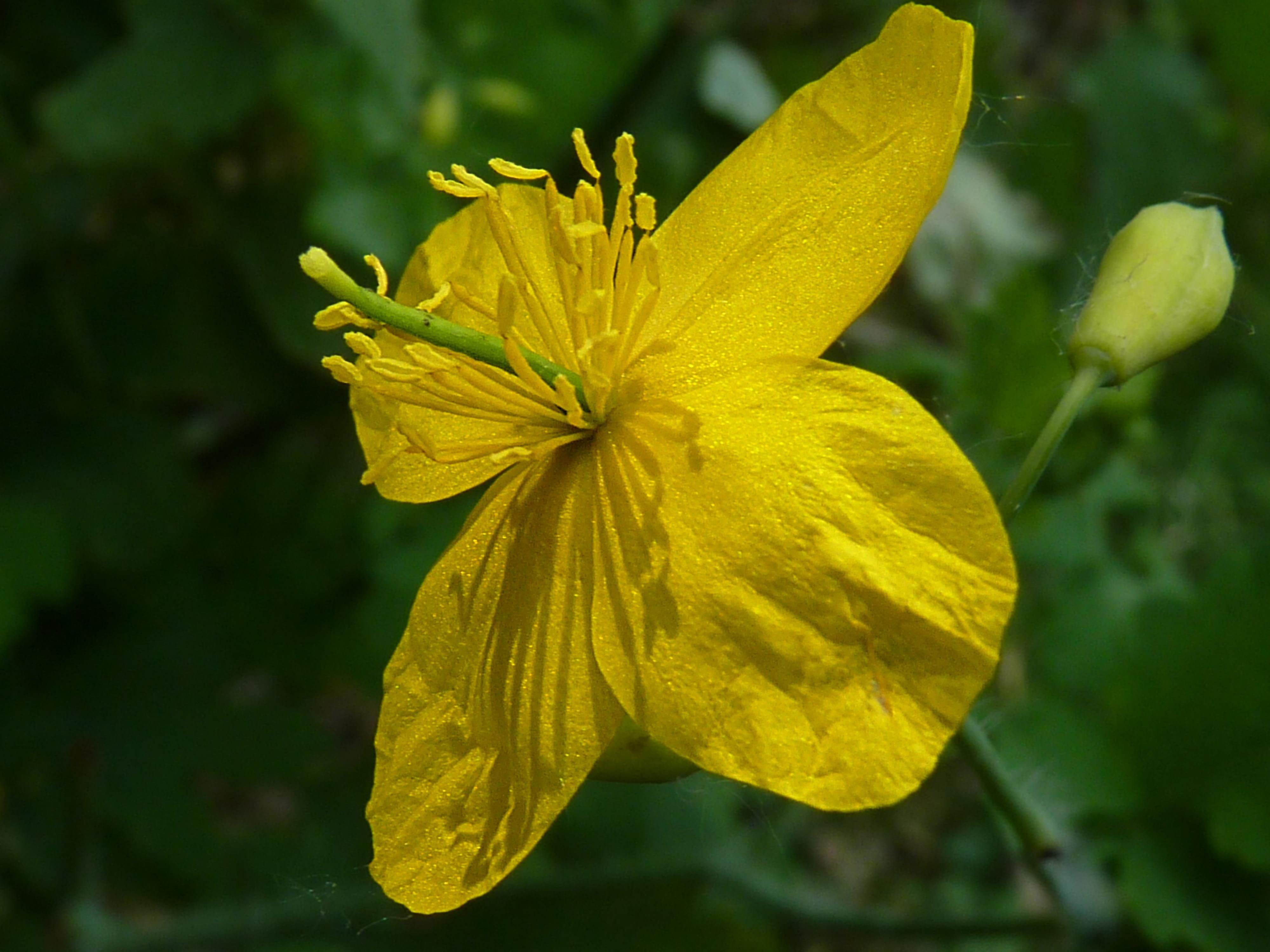
The flowers have four brilliantly yellow petals that tend to drop quickly.
The fruit is a narrow green pod.
Features
Greater celandine
Chelidonium majus
highly poisonous
orange-yellow milky sap
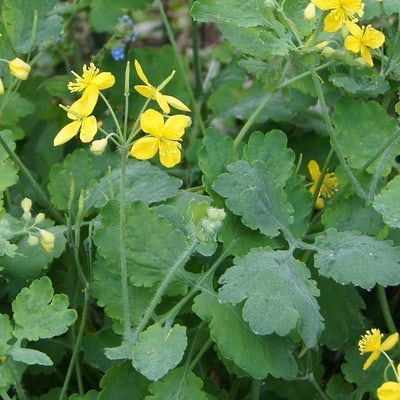
blue-green underside of leaf
In the city
Greater celandine with its preference for nutrient-rich soils has adapted well to an environment changed by humans and grows widely in wasteland, road verges and cracks in walls. It prefers nutrient-rich and sunny to semi-shaded sites.
Fun Facts
In natural medicine, greater celandine is used in the treatment of gastrointestinal complaints and cramps.
It flowers from May to October.
- Endangerment level Germany: not endangered
The entire plant and the milky sap (latex) in particular are highly poisonous.
Sources
Habitus, Aurora Puentes Graña, CC BY-SA 3.0, https://commons.wikimedia.org/wiki/File:Celidonia_majus.JPG

Blüte, Jamain, CC BY-SA 3.0, https://commons.wikimedia.org/wiki/File:Chelidonium_majus_J1.JPG

Blatt, Sigman, Public Domain, https://commons.wikimedia.org/wiki/File:Chelidonium_majus_scan.jpg

Fleischhauer, S. G., Guthmann, J. & Spiegelberger, R. (2007) Essbare Wildpflanzen. 200 Arten bestimmen und verwenden, Baden und München: AT Verlag.
Pabst, G. (eds.) (1887) Köhler’s Medizinal-Pflanzen in naturgetreuen Abbildungen mit kurz erläuterndem Texte. volume 1. Mit 88 Tafeln in Farbdruck nach Originalzeichnungen von Walther Müller in Gera, Gera: Verlag von Franz Eugen Köhler, Gera, URL: http://biodiversitylibrary.org/page/303332 (Accessed: 07.08.2017).
Lippert, W. & Podlech, D. (1993) GU Naturführer. Blumen: die wichtigen Blütenpflanzen Mitteleuropas erkennen und bestimmen, München: Gräfe und Unzer Verlag.
Schauer, T., Caspari, C. & Caspari, S. (2015) Der illustrierte BLV-Pflanzenführer für unterwegs. 1150 Blumen, Gräser, Bäume und Sträucher, München: BLV.
Scherf, G. (2006) Wildpflanzen neu entdecken, München: BLV.
Page „Schöllkraut“. : Wikipedia, The Free Encyclopedia. Date of last revision: 29.07.2016, 23:12 UTC. URL: https://de.wikipedia.org/w/index.php?title=Sch%C3%B6llkraut&oldid=156571313 (Accessed: 04.10.2016).
Bundesamt für Naturschutz (n.d.) Artensteckbriefe, URL: http://floraweb.de/pflanzenarten/artenhome.xsql?suchnr=1513& (Accessed: 04.10.2016).