
Short Description
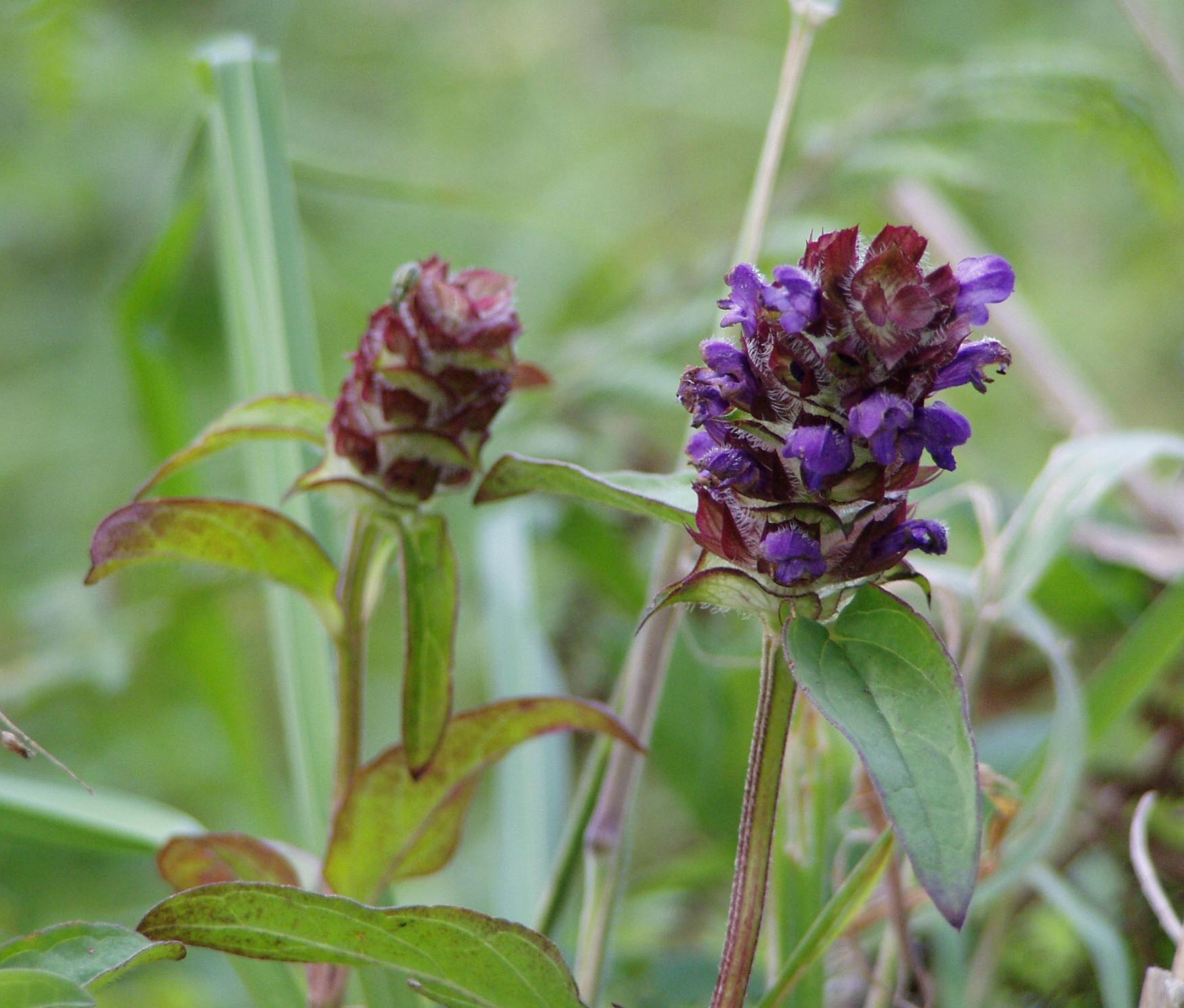
The common selfheal can grow up to 30 cm high.
The evergreen leaves are ovate and weakly serrated at the edge. They sit in pairs opposite each other on the stem.
The stem is square and slightly hairy. It grows erect.
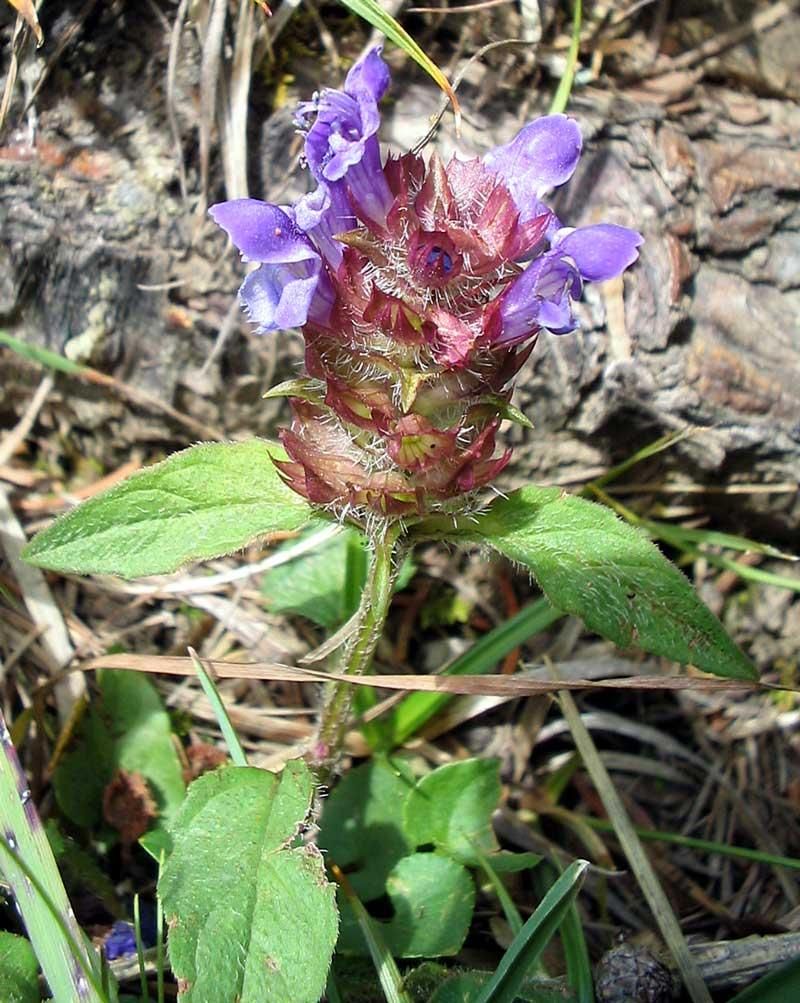
The flowers are clustered in heads and arranged in a circle directly above the uppermost pair of leaves. They are purple or blue-violet. The corolla consists of two lips. The upper lip is helmet-shaped. The lower lip is divided into three parts.
The fruits are small, single-seeded nutlets. There are always four of them in the calyx of the flower.
Features
Common selfheal
Prunella vulgaris
Inflorescence above the uppermost pair of leaves
In the city
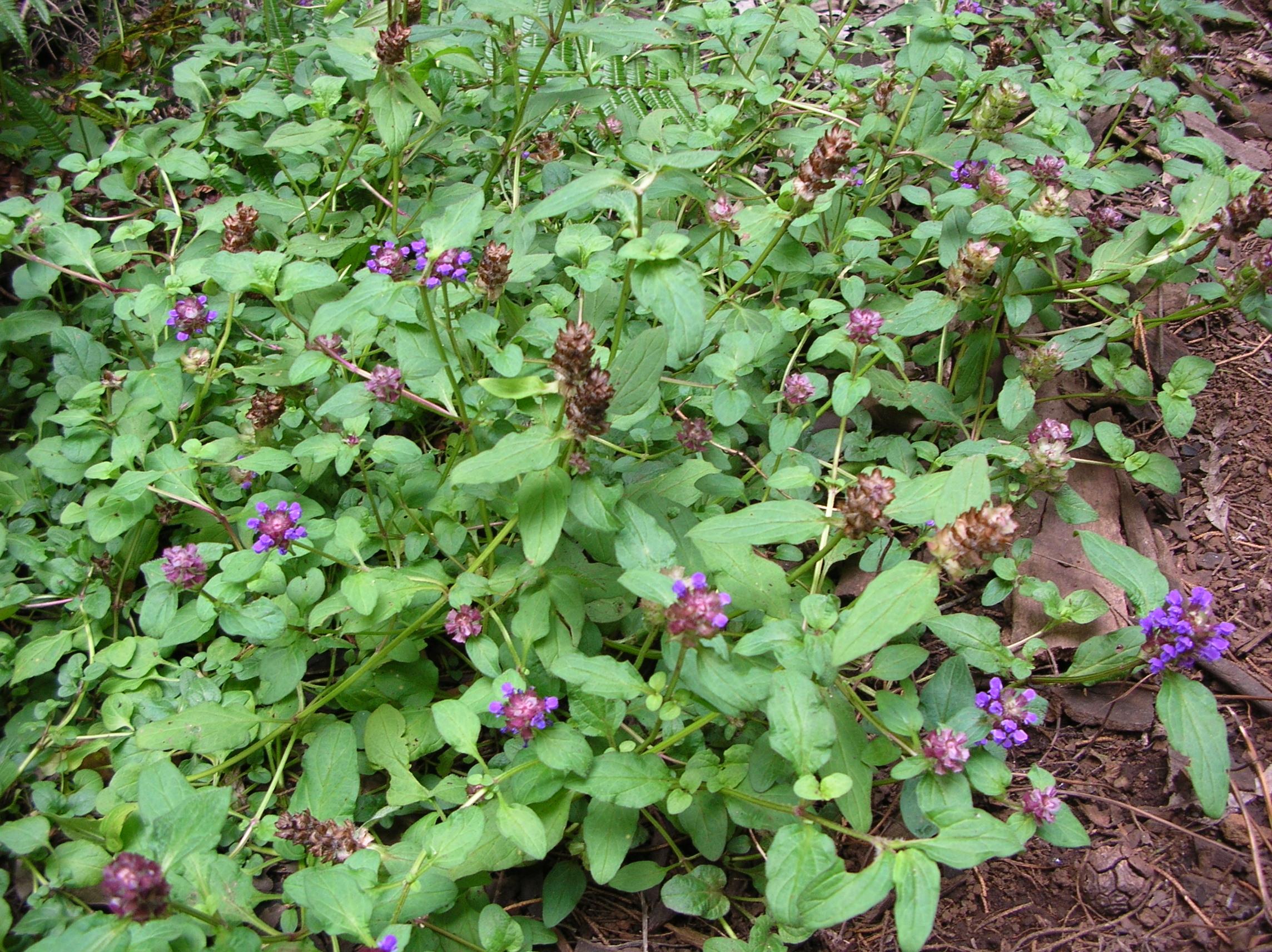
The common selfheal prefers damp and nutrient-rich habitats. In the city it grows in meadows, pastures, forest paths and on banks. It can also persist in frequently mown and heavily used ornamental lawns and is therefore often used in parks and garden lawns.
Fun Facts
The calyx around the fruit only opens when there is moisture. If it is hit by a drop, it bends downwards. When it snaps back, it then ejects the fruit.
The fruits are moist and sticky and remain attached to for example the soles of shoes. This is how they are spread by humans and animals.
The flowering period is from June to September.
Pollination is mainly by bumblebees and other Hymenoptera.
- Endangerment level Germany: not endangered
The common selfheal is native to Central Europe and Western Asia. Today, however, it occurs worldwide in temperate latitudes.
The herb was formerly used in folk medicine for stomach and intestinal diseases and as a wound healing agent.
Sources
Habitus, Júlio Reis, CC BY-SA 3.0 , https://commons.wikimedia.org/wiki/File:Prunella_vulgaris_two.jpg

Blütenstand, Michael Gasperl, CC BY-SA 3.0, https://commons.wikimedia.org/wiki/File:Prunella-vulgaris.jpg

Habitus, Forest & Kim Starr, CC BY-SA 3.0, https://commons.wikimedia.org/wiki/File:Starr_041221-1949_Prunella_vulgaris.jpg

Kammer, P. M. (2016) Pflanzen einfach bestimmen. Schritt für Schritt einheimische Arten kennenlernen, Bern: Haupt Verlag.
Schönfelder, I. & Schönfelder, P. (2010) Der Kosmos-Heilpflanzenführer. Über 600 Heil- und Giftpflanzen Europas, Stuttgart: Franckh Kosmos Verlag.
Spohn, M., Golte-Bechtle, M. & Spohn, R. (2015) Was blüht denn da? Stuttgart: Franckh Kosmos Verlag.
Page „Kleine Braunelle“. : Wikipedia, The Free Encyclopedia. Date of last revision: 14.02.2018, 15:16 UTC. URL: https://de.wikipedia.org/w/index.php?title=Kleine_Braunelle&oldid=174005815 (Accessed: 26.03.2018).
Bundesamt für Naturschutz (n.d.) Artensteckbriefe, URL: http://floraweb.de/pflanzenarten/artenhome.xsql?suchnr=4581& (Accessed: 26.03.2018).