
Short Description
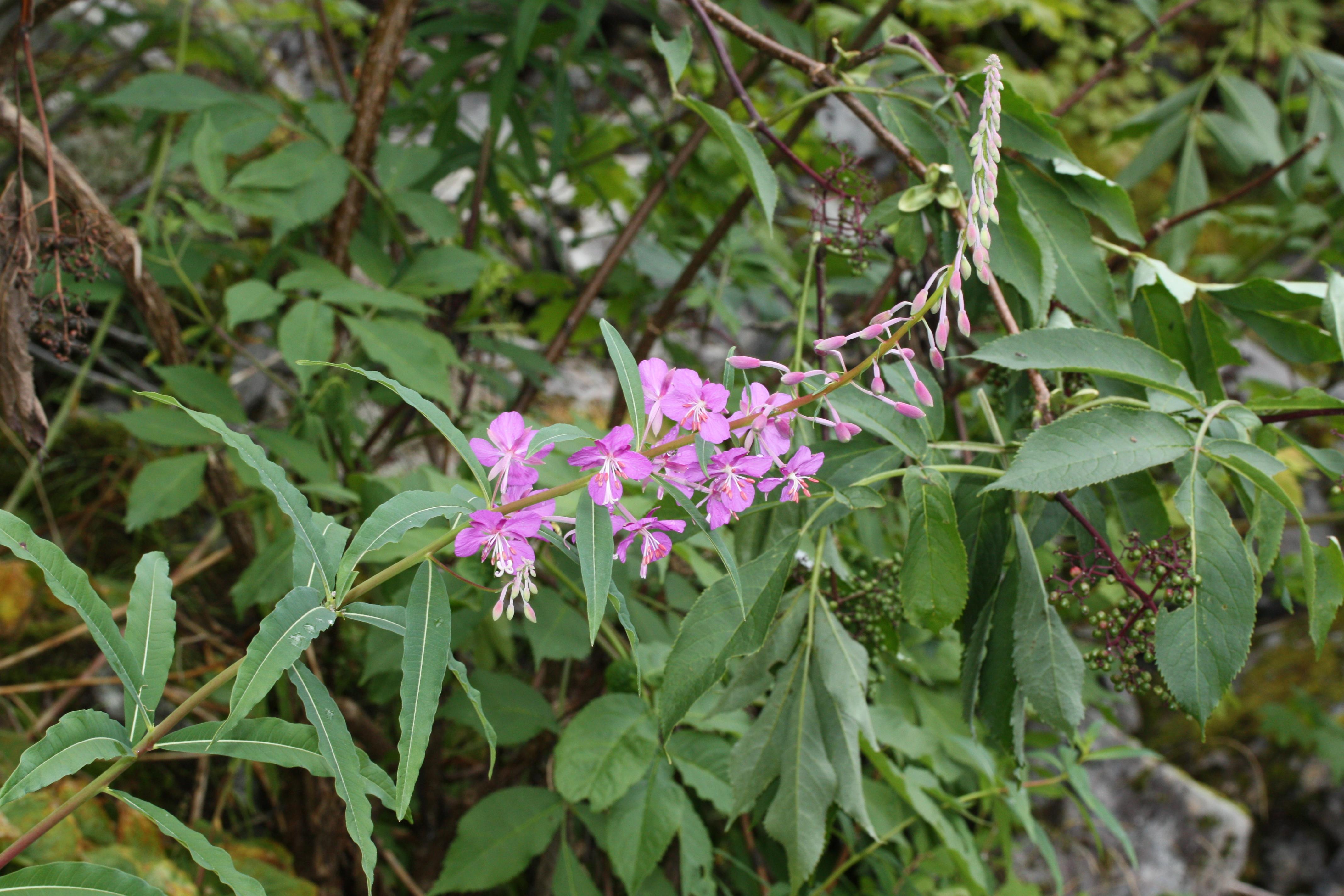
The rosebay willowherb can grow up to 180 cm high.
The leaves are narrow and elongated. The leaf margin is curved downwards. The underside is blue-green.
The stem grows upright and mostly unbranched. It is glabrous and dark purple.
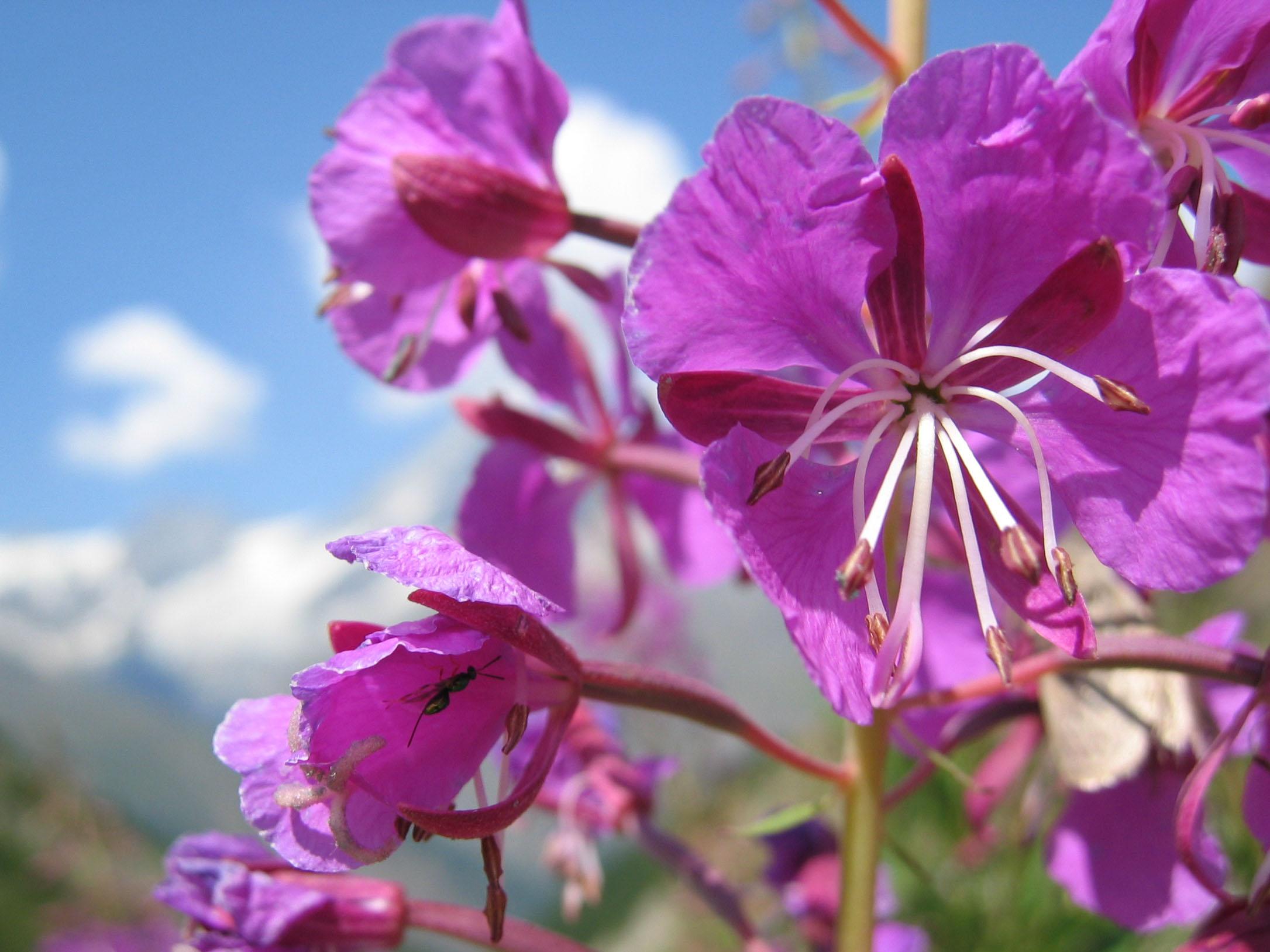
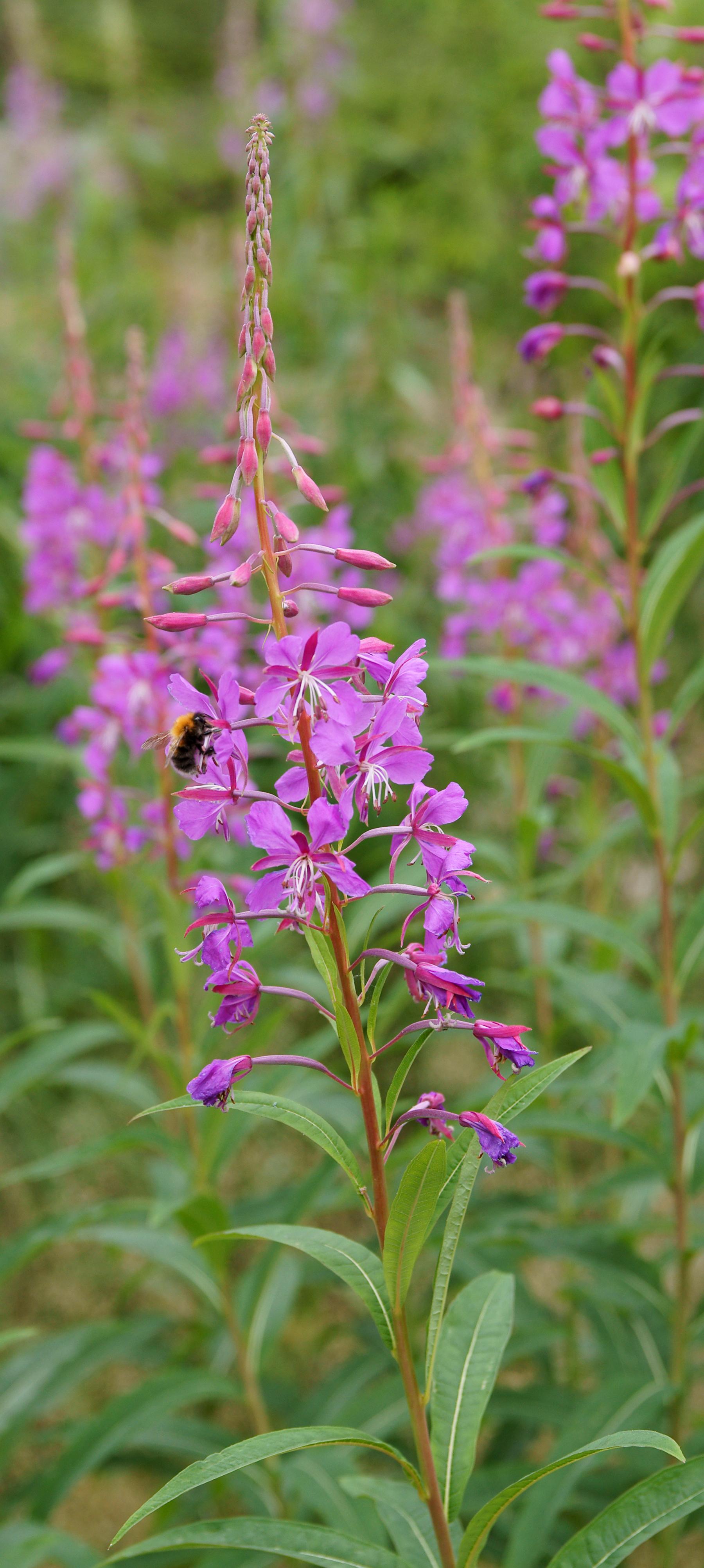
The flowers have four pink petals and four narrow red-pink sepals. They grow in a clustered flower head in the upper part of the stem.
The fruits are long, thin capsule fruits. As soon as the seeds are ripe, the four flaps of the capsule pop open and roll in. The seeds are surrounded by a white tuft of hairs.
Features
Rosebay willowherb
Epilobium angustifolium
large pink flowers
long capsule fruits
In the city
It prefers to grow in forests. As it needs a lot of light, it is mainly found in clearings and along roadsides. As a pioneer of raw soil, it can also colonise rubble and fallow land. Especially after the Second World War, it established itself in cities.
Fun Facts
There are usually flowers, buds and fruits on the inflorescence at the same time.
The seeds can fly up to ten kilometres.
The flowering period is from July to August.
It lives for several years and generally flowers and fruits annually (perennial plant).
The numerous flowers serve as good bee forage.
- Endangerment level Germany: not endangered
- Usage:
The seed hairs used to be woven into candle wicks.
It is widespread throughout the northern hemisphere.
In Russia, the leaves are used as a substitute for black tea. Young leaves and shoots are suitable as wild vegetables.
Sources
Habitus, Walter Siegmund , CC BY-SA 3.0, https://commons.wikimedia.org/wiki/File:Chamerion_angustifolium_9513.JPG

Blossom, Michael Schmid, CC BY-SA 2.0, https://commons.wikimedia.org/wiki/File:Epilobum_augustifolium_Aug2003.jpg

Blossom, kallerna, CC BY-SA 3.0, https://commons.wikimedia.org/wiki/File:Maitohorsma_(Epilobium_angustifolium).JPG
.JPG)
Kammer, P. M. (2016) Pflanzen einfach bestimmen. Schritt für Schritt einheimische Arten kennenlernen, Bern: Haupt Verlag.
Schauer, T., Caspari, C. & Caspari, S. (2015) Der illustrierte BLV-Pflanzenführer für unterwegs. 1150 Blumen, Gräser, Bäume und Sträucher, München: BLV.
Spohn, M., Golte-Bechtle, M. & Spohn, R. (2015) Was blüht denn da? Stuttgart: Franckh Kosmos Verlag.
Page „Schmalblättriges Weidenröschen“. : Wikipedia, The Free Encyclopedia. Date of last revision: 10.09.2017, 06:39 UTC. URL: https://de.wikipedia.org/w/index.php?title=Schmalbl%C3%A4ttriges_Weidenr%C3%B6schen&oldid=168942741 (Accessed: 26.01.2018).