
Short Description
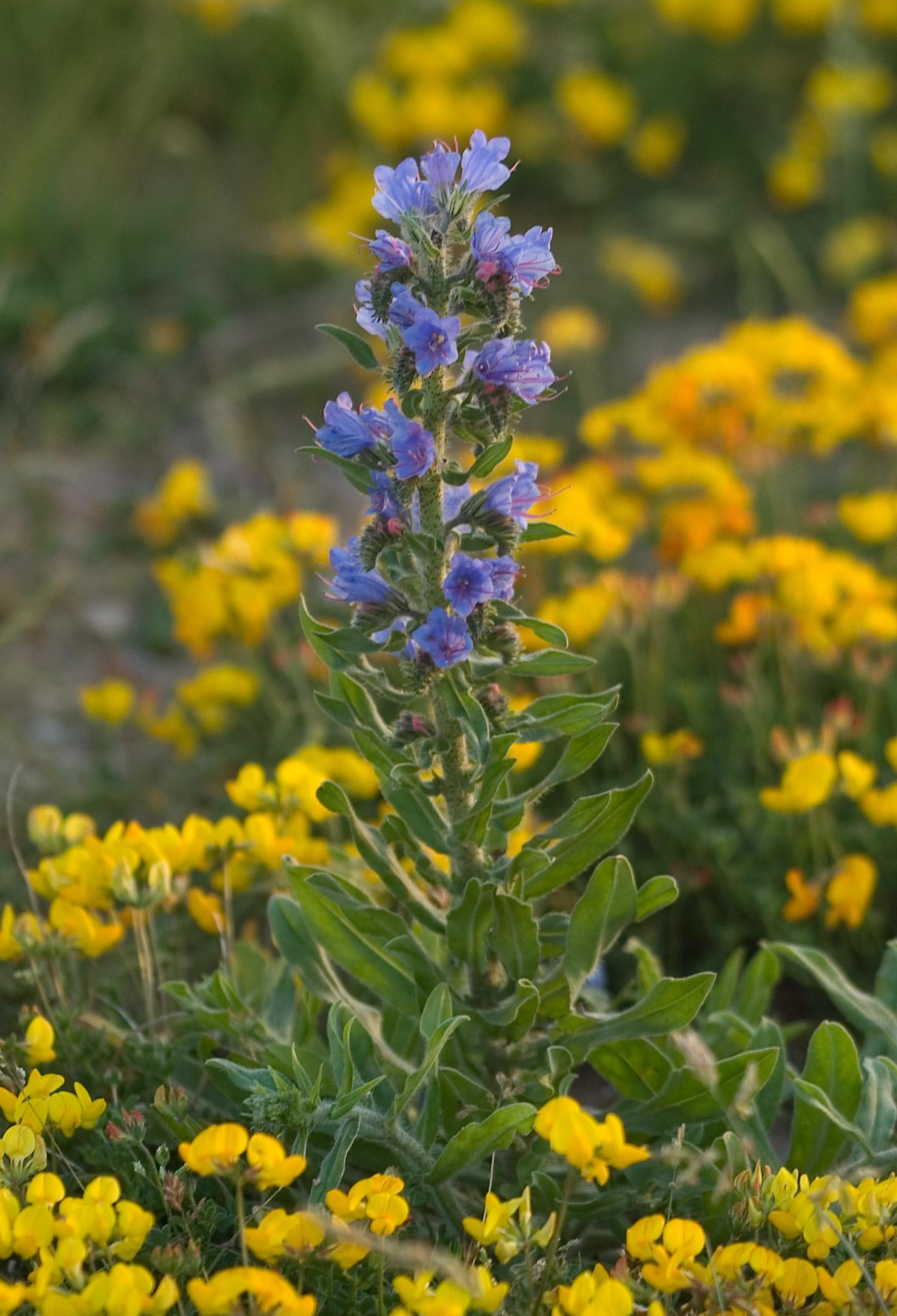
Viper’s bugloss can grow to a height of one metre.
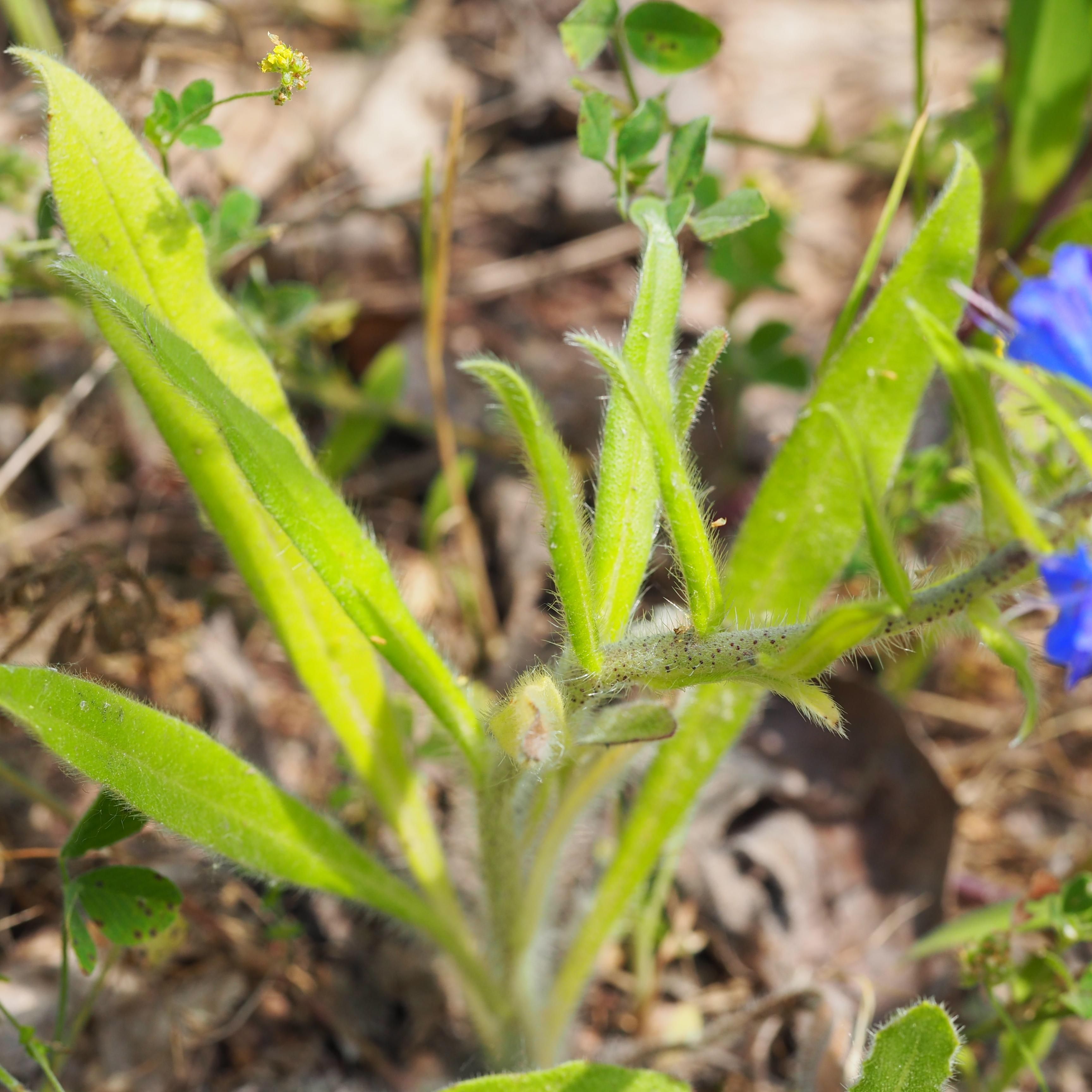
The leaves seem to grow directly out of the ground (basal) or from the stem. They are alternate and elongated to lance-shaped. They are rough and covered in bristly hairs.
The stem is upright and covered in bristly hair.
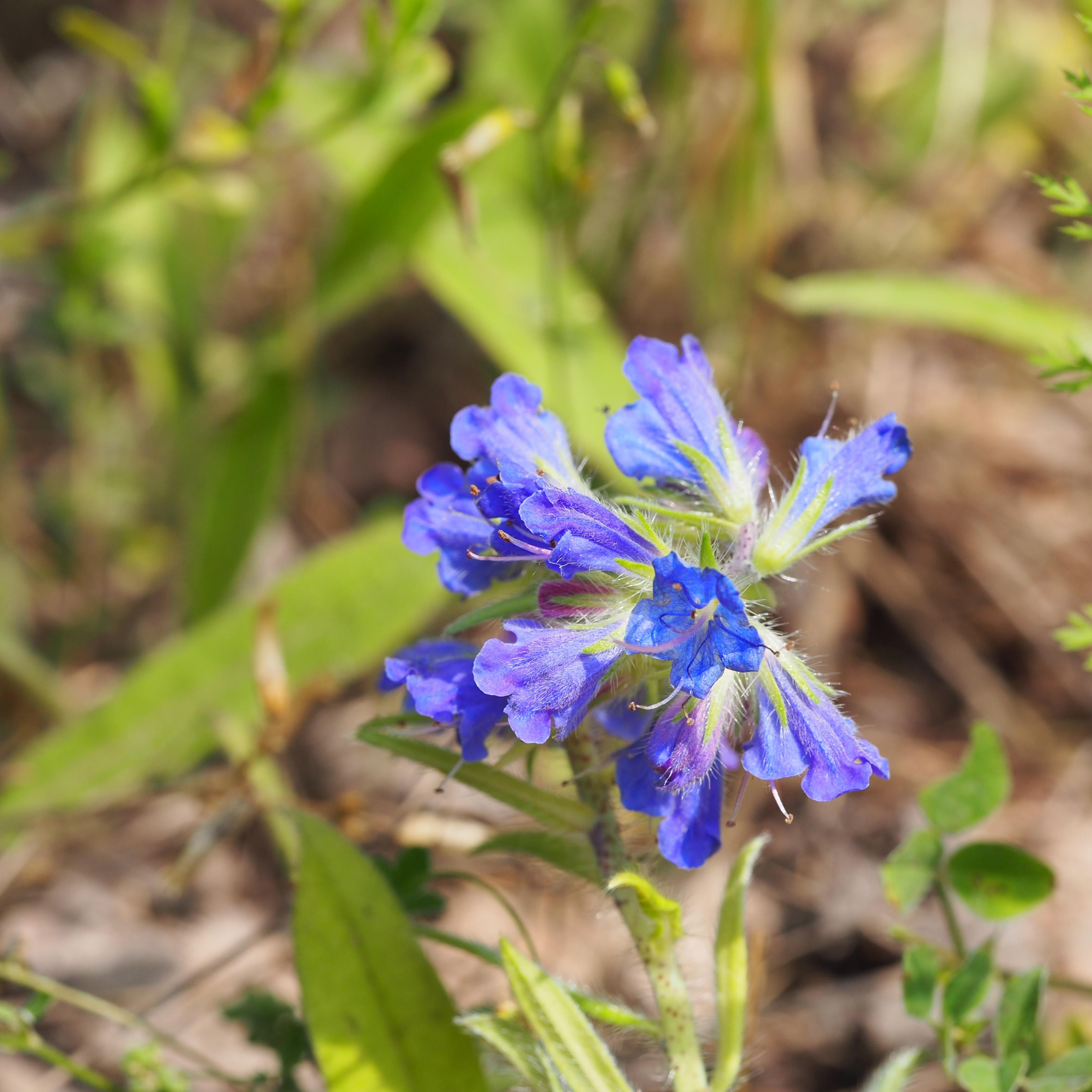
The numerous flowers are arranged in long, cone-shaped flower heads. The individual florets are funnel-shaped and have five petals. The colour of the flowers changes over time from pink to blue. Purple stamens extend from the flower (corolla).
The fruit consists of four mericarps (mericarpic nutlets). Mericarps are fruits that split into several sections after ripening.
Features
Viper’s bugloss
Echium vulgare
poisonous
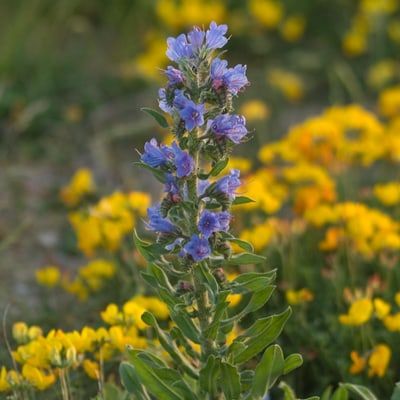
coarsely haired
long, purple stamens
In the city
The viper's bugloss prefers warm and moderately dry, nutrient-rich sites with loam and clay soils. Nutrient-rich soils are common in the city, so it can spread well here. It is often found along paths and railway lines.
Fun Facts
ver the course of their development, flowers change in colour from pink to blue. This is caused by a change in the flower’s pH value.
It flowers from May to October.
It is an important forage plant for numerous pollinators. Its nectar has a very high sugar content of 25%.
Over 40 different butterfly species feed on its nectar.
It can easily survive on surfaces contaminated with heavy metals.
- Endangerment level Germany: not endangered
The plant contains carcinogenic and liver-damaging substances and should thus not be used as a medicinal plant.
Sources
Habitus, Kurt Kulac, CC BY-SA 3.0, https://commons.wikimedia.org/wiki/File:Echium_vulgare_helgoland01.jpg

Blütenstand, Alice Kracht, CC BY-SA 4.0, https://offene-naturfuehrer.de/web/Datei:Echium_vulgare_(3).JPG
.JPG)
Blätter, Alice Kracht, CC BY-SA 4.0, https://offene-naturfuehrer.de/web/Datei:Echium_vulgare_(1).JPG
.JPG)
Lippert, W. & Podlech, D. (1993) GU Naturführer. Blumen: die wichtigen Blütenpflanzen Mitteleuropas erkennen und bestimmen, München: Gräfe und Unzer Verlag.
Needon, C. & Petermann, J. (1991) Urania-Naturführer Pflanzen, Leipzig, Jena, Berlin: Urania-Verlag.
Schauer, T., Caspari, C. & Caspari, S. (2015) Der illustrierte BLV-Pflanzenführer für unterwegs. 1150 Blumen, Gräser, Bäume und Sträucher, München: BLV.
Spohn, M., Golte-Bechtle, M. & Spohn, R. (2015) Was blüht denn da? Stuttgart: Franckh Kosmos Verlag.
Page „Gewöhnlicher Natternkopf“. : Wikipedia, The Free Encyclopedia. Date of last revision: 03.07.2016, 13:58 UTC. URL: https://de.wikipedia.org/w/index.php?title=Gew%C3%B6hnlicher_Natternkopf&oldid=155830182 (Accessed: 15.12.2016).
Bundesamt für Naturschutz (n.d.) Artensteckbriefe, URL: http://floraweb.de/pflanzenarten/artenhome.xsql?suchnr=2067& (Accessed: 15.12.2016).