
Short Description
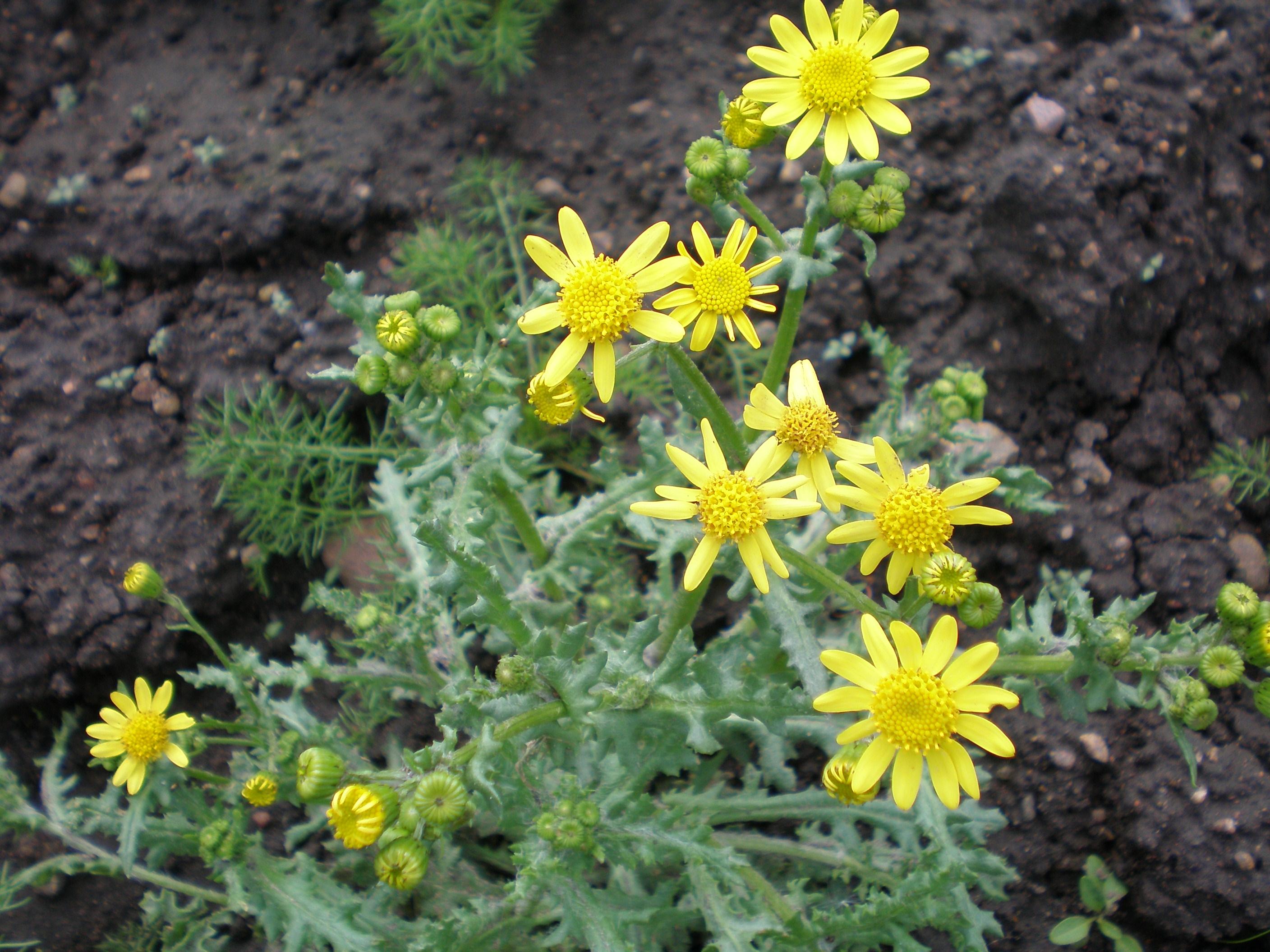
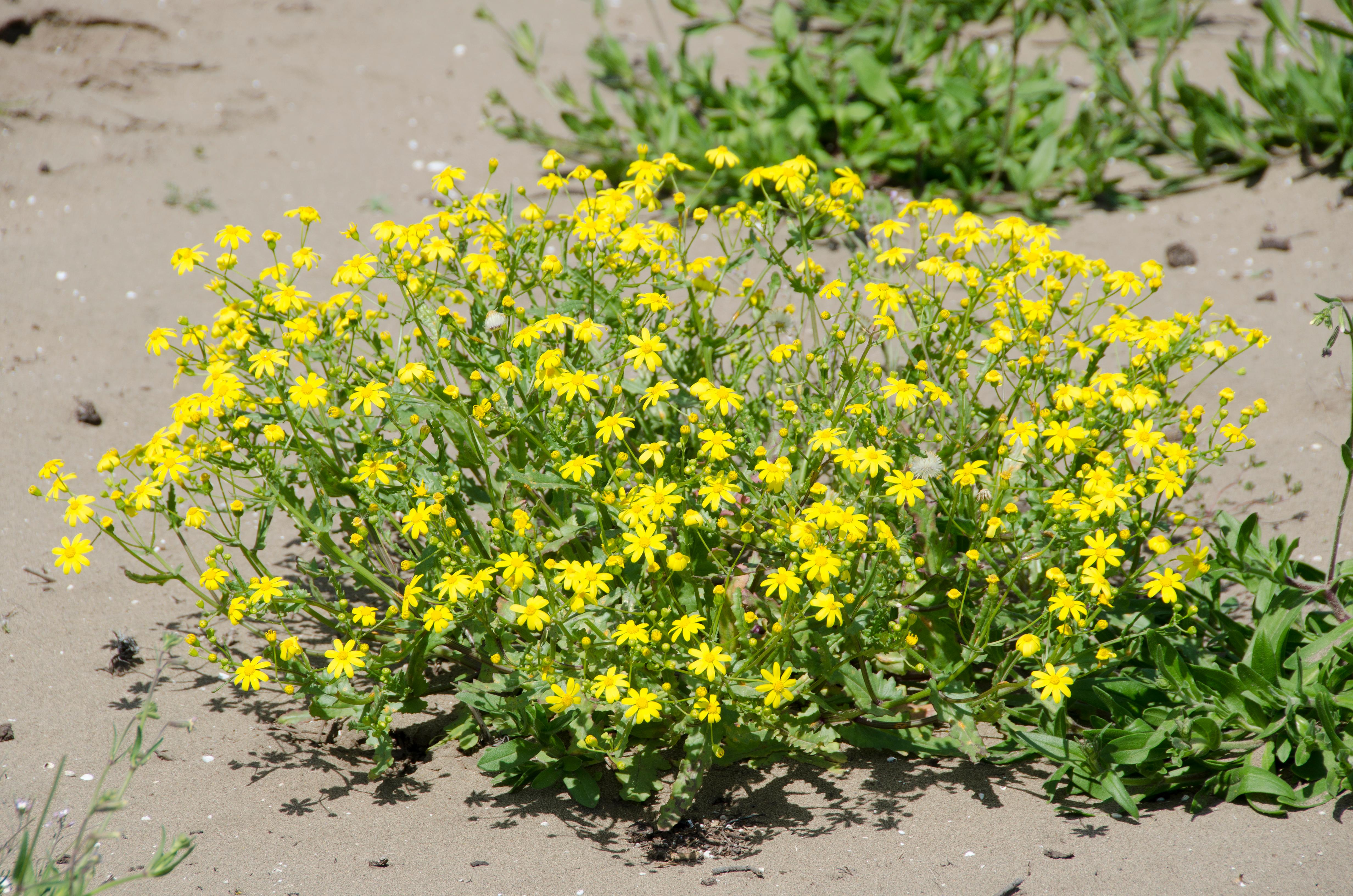
The eastern groundsel can grow to a height of half a metre.
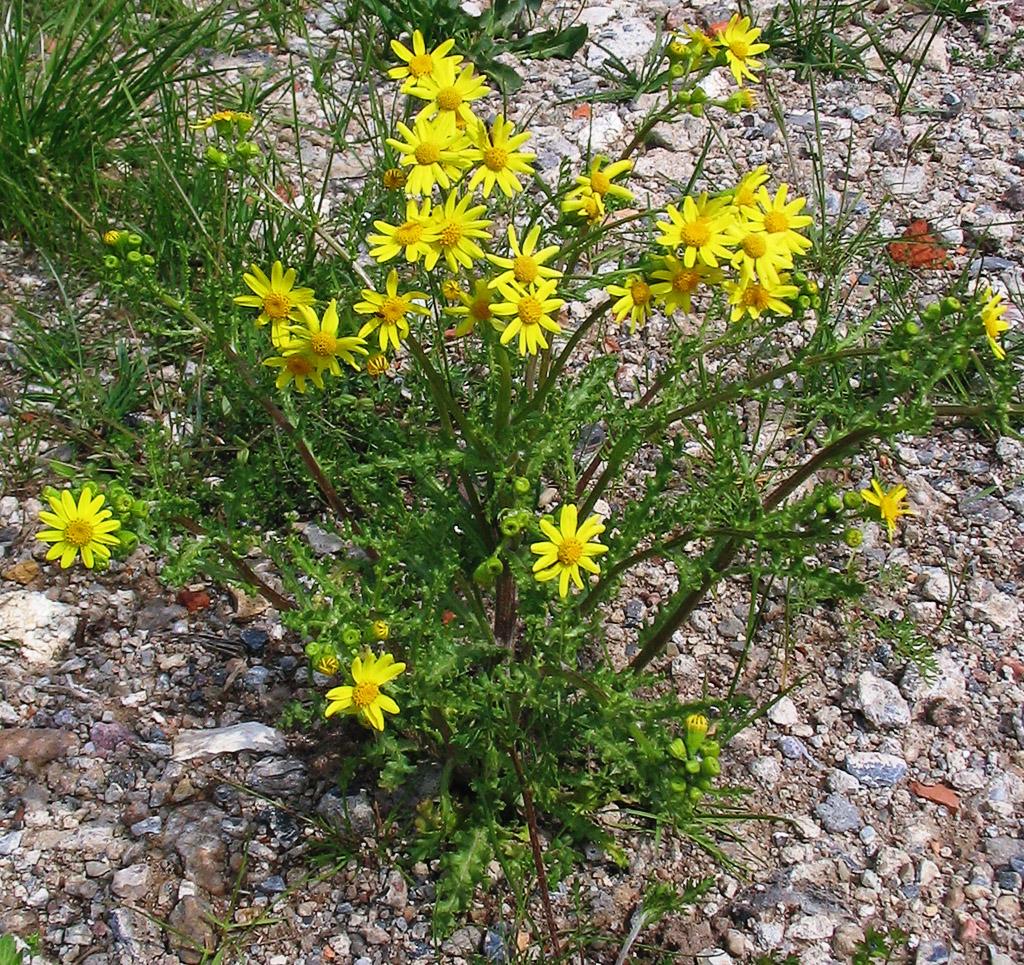
The leaves are cleft with coarsely and curly toothed segments.
The stem and leaves are initially cobwebby-like or woolly haired, later they become glabrous.
The flower-heads are yellow.
The small, nut-like fruits have a white ring of hairs.
Features
Eastern groundsel
Senecio vernalis
poisonous
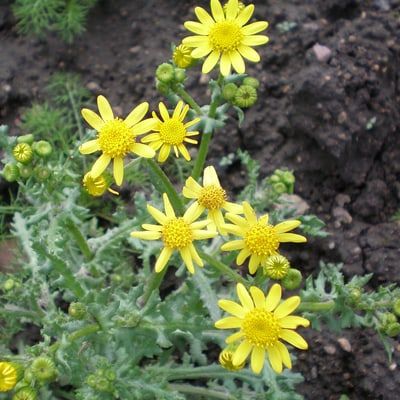
coarsely toothed leaves
Similar species
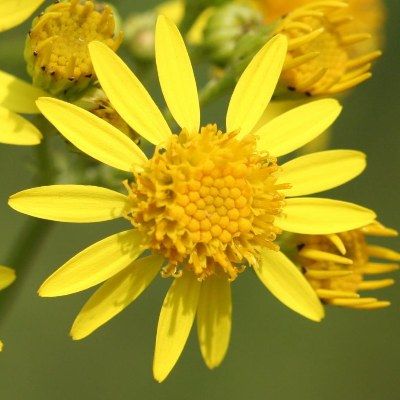
Common ragwort
Senecio jacobaea
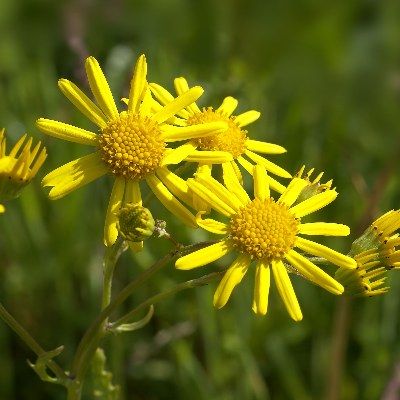
Water ragwort
Senecio aquaticus
In the city
The eastern groundsel grows in fields, clover fields, fallow land and rubble patches as well as along paths. It prefers moderately dry, mostly calcareous, also saline soils. It occurs scattered in lowlands, especially in the north and north-east of Germany.
Fun Facts
The flowering period is from May to November.
The flowers are pollinated by insects. The seeds are spread by the wind.
The eastern groundsel can be attacked by the rust fungus.
It is an annual plant, i.e. it flowers for only one summer and dies after the seeds have ripened.
- Endangerment level Germany: not evaluated
The eastern groundsel originates from warm sand steppes in southern Eastern Europe and the Near East. It came to Germany around 1850 and is thus a non-native plant (neophyte).
All parts of the plant are poisonous. The poison can damage the liver and cause cancer. The symptoms of poisoning can even still occur through cow's milk.
Sources
Habitus, I, Hugo.arg, CC BY-SA 3.0, https://commons.wikimedia.org/wiki/File:Senecio_vernalis001.JPG

Habitus, Zeynel Cebeci, CC BY-SA 4.0, https://commons.wikimedia.org/wiki/File:Senecio_vernalis_-_Eastern_groundsel_-_Kanaryaotu_01.jpg

Habitus, Darkone, CC BY-SA 2.5, https://commons.wikimedia.org/wiki/File:Fr%C3%BChlings-Greiskraut_(Senecio_vernalis)_2.jpg
_2.jpg)
Bundesamt für Naturschutz (n.d.) Artensteckbriefe, URL: http://floraweb.de/pflanzenarten/artenhome.xsql?suchnr=5514& (Accessed: 03.09.2018).
Spohn, M., Golte-Bechtle, M. & Spohn, R. (2015) Was blüht denn da? Stuttgart: Franckh Kosmos Verlag.
Schauer, T., Caspari, C. & Caspari, S. (2015) Der illustrierte BLV-Pflanzenführer für unterwegs. 1150 Blumen, Gräser, Bäume und Sträucher, München: BLV.
Seitz, B., Ristow, M., Meißner, J., Machatzi, B. & Sukopp, H. (2018) Rote Liste und Gesamtartenliste der etablierten Farn- und Blütenpflanzen von Berlin. : Der Landesbeauftragte für Naturschutz und Landschaftspflege / Senatsverwaltung für Umwelt, Klima und Verkehr (eds.) Rote Listen der gefährdeten Pflanzen, Pilze und Tiere von Berlin, URL: https://www.berlin.de/sen/uvk/natur-und-gruen/naturschutz/artenschutz/artenlisten-rote-listen/farn-und-bluetenpflanzen/ (Accessed: 26.03.2021).
Page „Frühlings-Greiskraut“. : Wikipedia, The Free Encyclopedia. Date of last revision: 23.03.2018, 17:53 UTC. URL: https://de.wikipedia.org/w/index.php?title=Fr%C3%BChlings-Greiskraut&oldid=175316929 (Accessed: 03.09.2018).